
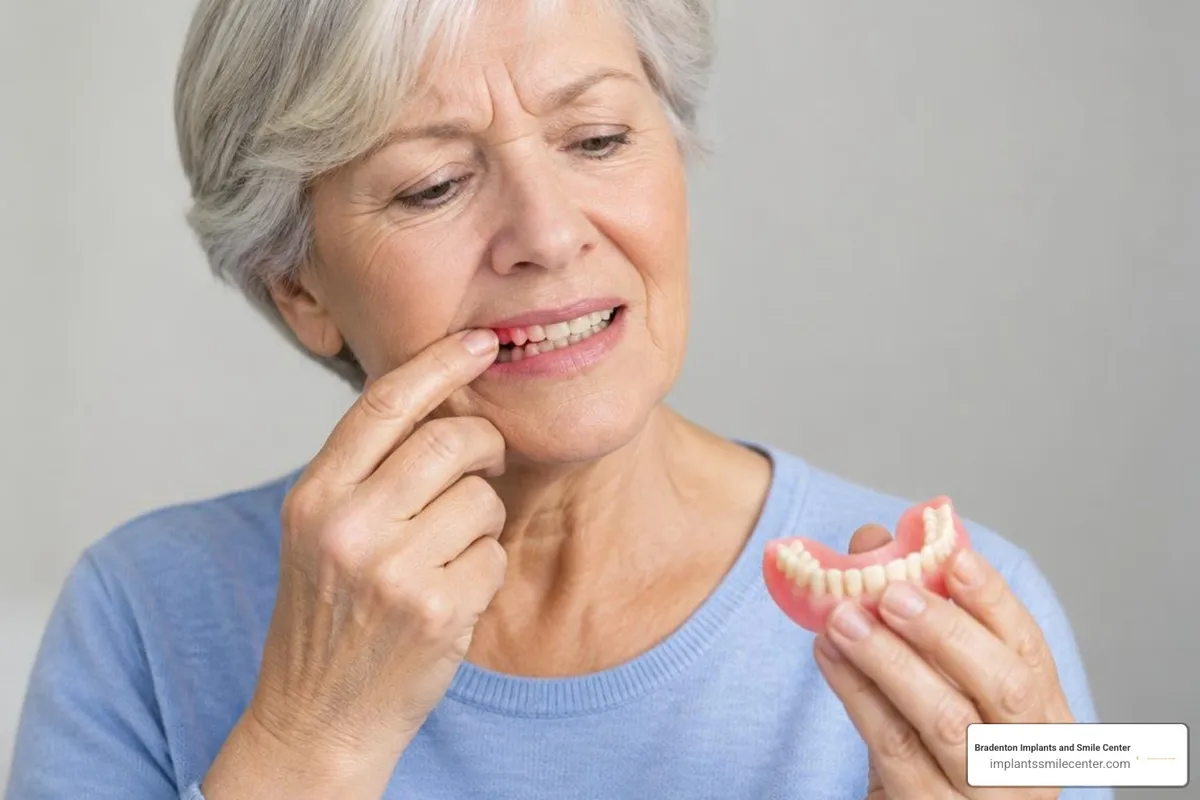
Don't Just Grin and Bear It When Exploring Denture Pain Relief Options
Denture Pain Relief Options That Help Now and Fix the Cause
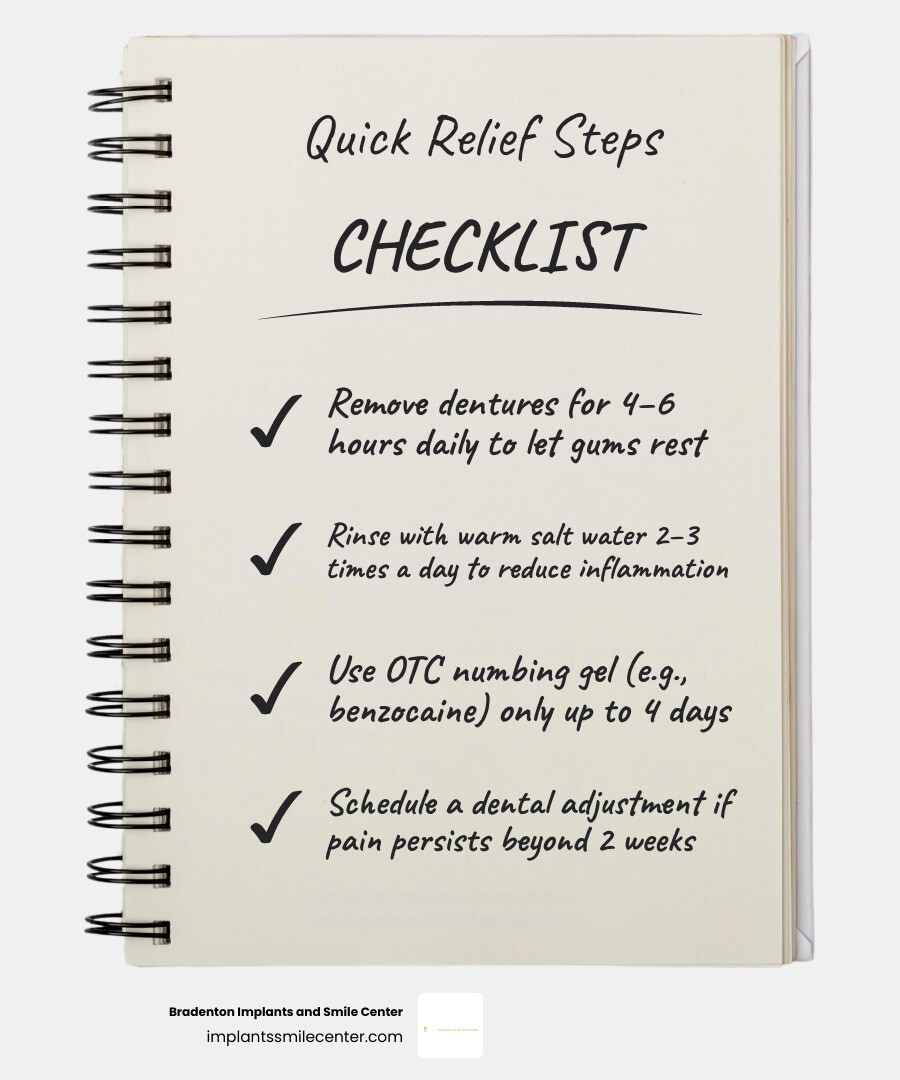
For quick relief, remove your dentures to rest sore gums, rinse with warm salt water, and choose soft foods. Clean your dentures before wearing them again. An oral numbing gel may ease a sore spot for a short time, but follow the label and don't use it to push through ongoing pain. If your dentures rub, slip, or keep causing sores, see a dentist for a fit check. A small adjustment may help more than another tube of gel.
Some soreness is common with new dentures. Pain that persists, gets worse, or comes with swelling or bleeding needs attention.
I'm Dr. John Hegazin, owner of Bradenton Implants and Smile Center. With more than eight years of dental experience, including work with dentures, snap-on dentures, and implants, I help patients weigh denture pain relief options that fit their needs.
Common Causes of Oral Discomfort and What to Expect
Denture wearers often expect their new prosthetics to feel completely natural right away. However, your mouth is a dynamic, living environment, and full or partial appliances rest directly on delicate oral tissue. Understanding what triggers your discomfort makes finding the right fix much simpler.
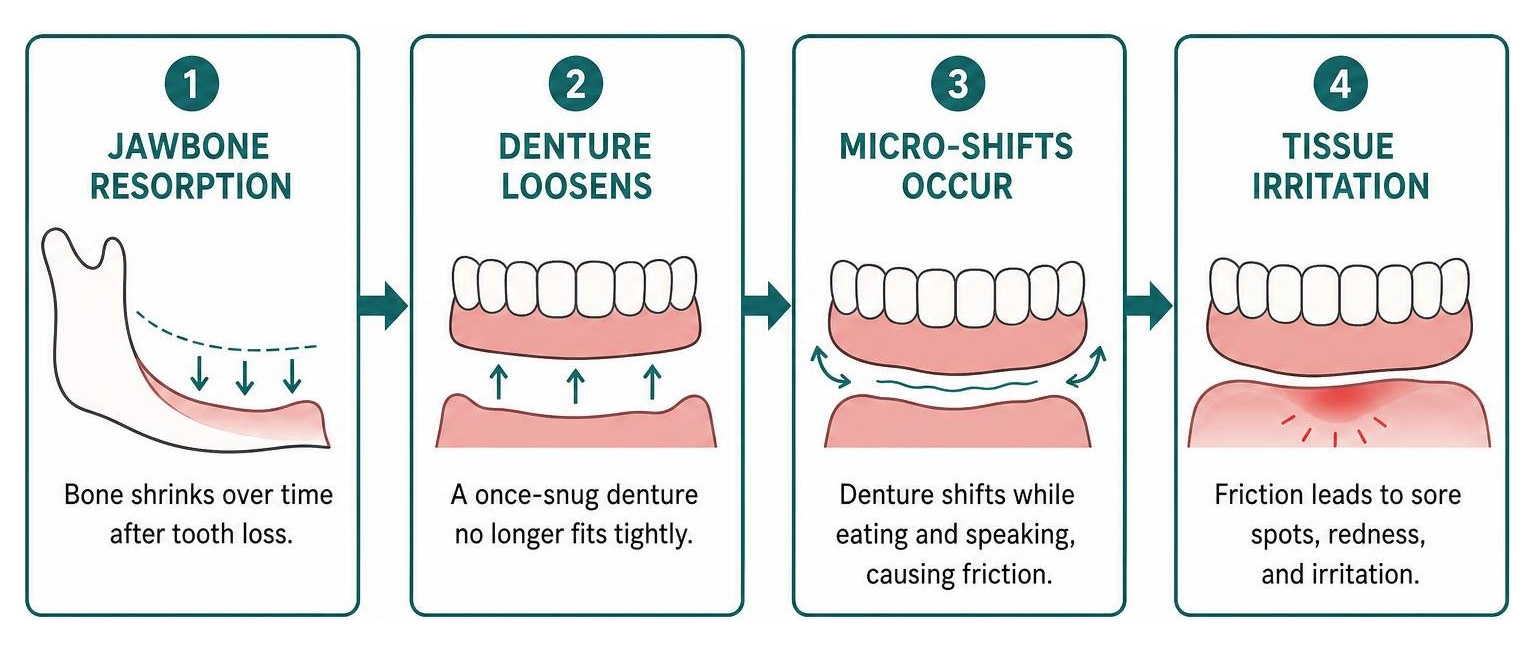
The primary culprit behind persistent denture pain is natural jawbone resorption. Once natural teeth are gone, the underlying alveolar bone no longer receives stimulation from chewing forces. Over time, the bone resorbs and shrinks. A denture base that fit snugly two years ago will gradually become loose, shifting against the ridges and creating localized friction spots.
Other frequent contributors to oral discomfort include:
Trapped Food Debris: Tiny seeds or hard particles slipping under the acrylic base concentrate bite pressure directly onto the gums, causing sudden, sharp pinpoint pain.
Overnight Wear: Keeping dentures in 24 hours a day deprives your mucosa of oxygen and circulation. This habit dramatically elevates the risk of fungal overgrowth and chronic tissue inflammation.
Uneven Occlusal Forces: If your bite does not meet evenly on both sides, one quadrant of your jaw bears excessive force, bruising the underlying ridge.
Poor Hygiene Practices: Plaque and bacterial accumulation on the porous acrylic base irritate the gums, leading to widespread redness and burning sensations.
Is It Normal for New Dentures to Hurt During the Adjustment Period?
Yes, experiencing mild soreness during the initial adjustment window is completely normal. When you first receive an appliance, your facial muscles, cheeks, and tongue must learn how to coordinate and keep the base stable while speaking and chewing.
During the first 2 to 4 weeks, your mouth goes through a predictable settling phase. The hard acrylic plate presses into the mucosal tissues, which can produce minor pressure spots. In our complete guide to dentures, we walk patients through the milestones of this adaptation period.
While light tenderness is anticipated, sharp or agonizing pain is not something you should tolerate. If your appliance causes deep abrasions or prevents you from eating soft meals, your prosthetist needs to perform minor chairside adjustments to relieve high-pressure areas.
Denture Pain vs. Dentin Hypersensitivity: Key Diagnostic Differences
If you wear partial dentures and experience sharp, sudden discomfort, it is crucial to determine whether the issue stems from mucosal friction or dentin hypersensitivity (DHS).
Dentin hypersensitivity occurs when the protective enamel or cementum wears away, exposing underlying dentin tubules. According to the hydrodynamic theory (Liu et al., 2020), fluid movement within these microscopic tubules stimulates pulpal nerve endings when exposed to thermal, tactile, or chemical changes. Clinical studies highlight that DHS prevalence ranges widely from 1% to 98%, and roughly 50% of dental professionals note the diagnostic challenges associated with pinpointing sensitivity triggers (Liu et al., 2020). For deeper clinical context, you can review published research on dentin hypersensitivity diagnosis.
Diagnostic Feature | Denture-Related Soreness | Dentin Hypersensitivity (DHS) |
|---|---|---|
Primary Location | Edentulous ridges, gums, palate | Natural abutment teeth supporting clasps |
Pain Character | Dull ache, raw burning, friction soreness | Sharp, sudden, transient sting |
Main Triggers | Chewing pressure, movement of appliance | Hot, cold, acidic foods, or cold air blasts |
Underlying Mechanism | Mechanical friction and mucosal compression | Fluid movement in exposed dentin tubules (Liu et al., 2020) |
Primary Treatment | Denture relining, base adjustment, gels | Desensitizing toothpastes, bonding agents |
Over-the-Counter and At-Home Denture Pain Relief Options
When sudden irritation strikes, conservative home measures provide prompt comfort while you wait for a dental consultation.
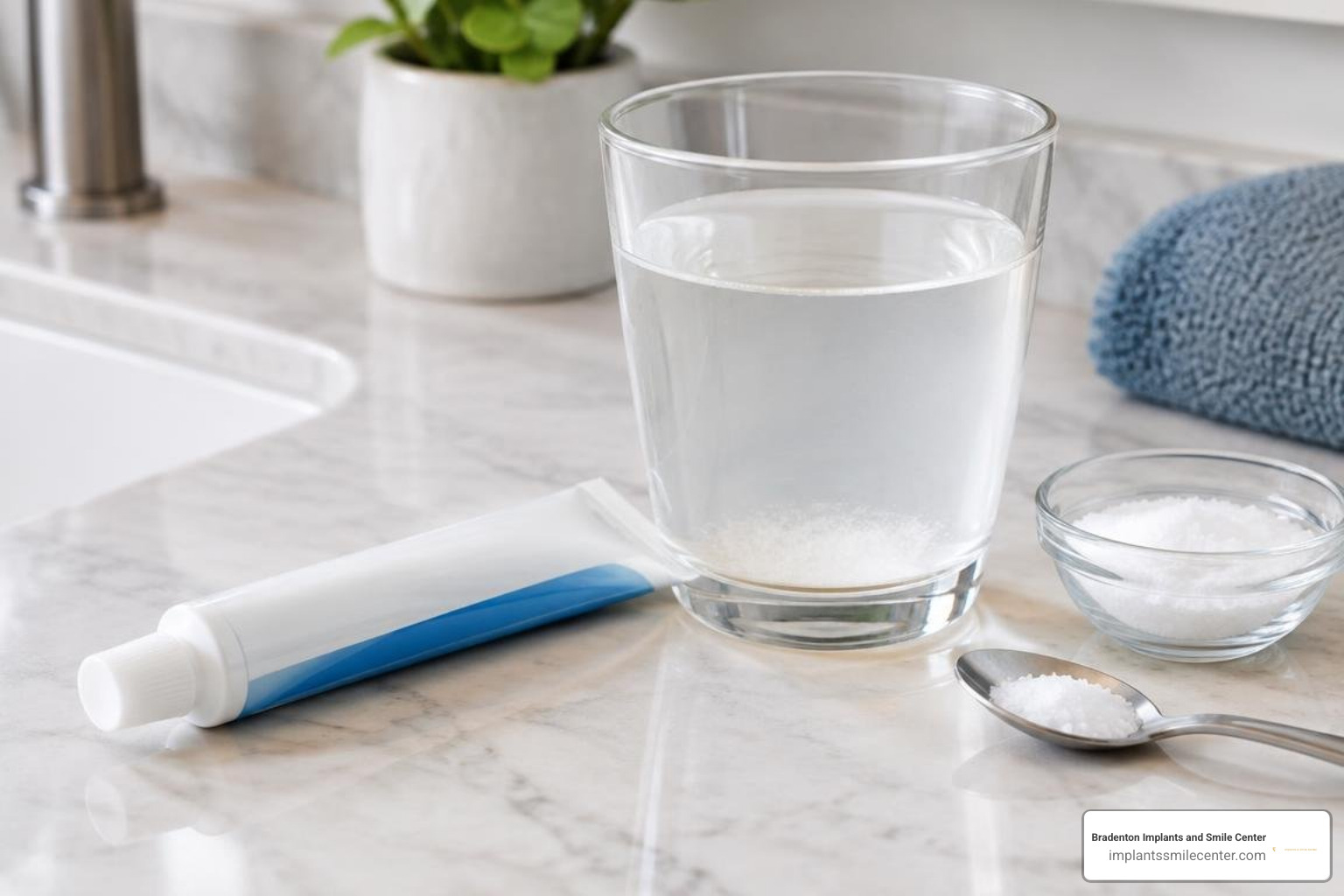
Warm Saline Rinses: Dissolve half a teaspoon of table salt into a glass of warm water. Swishing this solution three to four times daily reduces localized tissue edema, cleanses minor sores, and promotes natural healing without harsh chemical irritation.
Strategic Dietary Adjustments: Stick to soft, nutrient-dense foods like scrambled eggs, yogurt, flaked fish, and smoothies. Distribute food evenly on both sides of your mouth to balance bite pressure across the entire arch.
Nightly Tissue Recovery: Always remove your dentures before sleeping. Soak them in an antimicrobial cleansing solution and let your gum tissues rest for 6 to 8 hours to restore natural capillary blood flow.
Gentle Oral Hygiene: Use an ultra-soft toothbrush or clean, damp washcloth to massage your gums, palate, and tongue every morning and evening. Keeping your mouth free of plaque prevents secondary bacterial infections.
Topical Numbing Gels and Anesthetic Denture Pain Relief Options
When conservative rinses are not enough, topical anesthetics offer fast-acting, localized numbing by blocking sodium channels along peripheral nerve fibers, stopping pain signals before they reach your brain.
Several established over-the-counter and clinical options exist:
Benzocaine-Based Gels: Products like Orajel Mouth Ulcer & Denture Pain Relief Gel utilize 10% benzocaine to quickly blunt acute surface pain. Other commercial variations, such as Equate Maximum Strength Orasol Gel and Anbesol Maximum Strength (both rated 4.6 out of 5 stars by hundreds of users), feature 20% benzocaine for immediate numbing.
Medicated Barrier Creams: Benzodent Dental Pain Relieving Cream (rated 4.6 out of 5 stars from 609 reviews) provides 20% benzocaine within a thick, adherent base. It clings to tender mucosal areas and stays put even under a denture plate.
Professional Anesthetic Adhesives: Formulations such as Cora-Caine medicated ointment combine 16% benzocaine with an adhesive vehicle. Originally formulated for clinical delivery during new denture insertions, it cushions the ridge while delivering extended relief for up to 24 hours per application.
Product Name | Active Ingredient | Concentration | Best For | Typical Relief Window |
|---|---|---|---|---|
Orajel Denture Gel | Benzocaine | 10% | Pinpoint mouth sores & ulcers | 1 to 2 hours |
Benzodent Cream | Benzocaine | 20% | Cushioning active pressure points | 2 to 4 hours |
Anbesol Max Strength | Benzocaine | 20% | Rapid numbing before meals | 1 to 2 hours |
Cora-Caine Ointment | Benzocaine | 16% | Medicated retention & sore spots | Up to 24 hours |
Essential Safety Precautions and Risks of Overusing Topical Gels
While topical anesthetics deliver quick comfort, they are temporary measures, not permanent cures. Overusing these products carries health risks that every patient must understand.
The most serious risk associated with benzocaine overuse is methemoglobinemia, a rare but potentially life-threatening blood disorder in which an abnormal amount of methemoglobin is produced, drastically reducing the oxygen-carrying capacity of red blood cells. Symptoms include pale, gray, or blue-colored skin and nail beds, lightheadedness, shortness of breath, and rapid heart rates.
To use topical anesthetics safely:
Apply only a conservative, pea-sized amount directly to dried tissue using a clean cotton swab or fingertip.
Limit application frequency to no more than 4 times daily.
Never use topical benzocaine gels continuously for more than 4 consecutive days without professional dental supervision.
If soreness lingers past several days, stop self-medicating and schedule an evaluation. Masking pain with numbing agents allows underlying ulcers to worsen.
Evaluating Temporary Fixes: Adhesives and Home Remedies
Denture adhesives serve a clear clinical purpose: enhancing retention, improving bite stability, and preventing stray food debris from lodging beneath the plate. High-rated products like Fixodent Plus Scope (boasting a 4.7 out of 5-star rating across more than 9,000 reviews) help many wearers feel more confident during social interactions and meals.
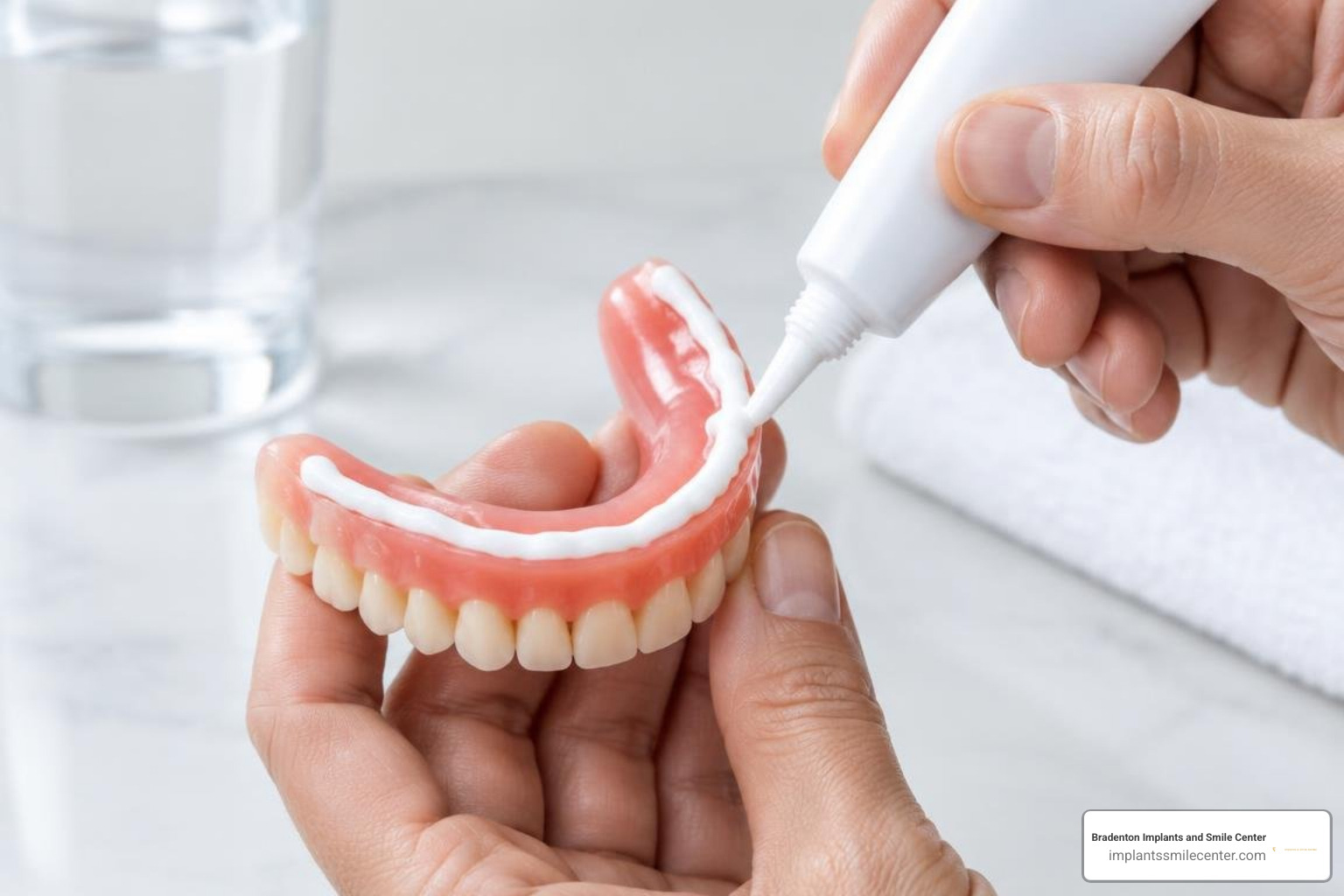
However, adhesives must never be used to compensate for a fundamentally unstable or poorly fitting denture. Over-relying on thick layers of paste creates an unstable hydraulic cushion that shifts chewing forces unpredictably, accelerating jawbone resorption.
Furthermore, long-term excessive ingestion of zinc-containing adhesives can lead to elevated systemic zinc levels and secondary copper deficiency, which can trigger neurological symptoms such as numbness and balance problems. Always opt for zinc-free, waterproof formulas when possible, apply minimal strips, and clean your appliance thoroughly every night to avoid sticky bacterial buildup.
When to Use Adhesives for Short-Term Denture Pain Relief Options
Adhesives make sense as a temporary stabilization tool when you are in the middle of your initial adjustment period or awaiting an upcoming dental visit. By minimizing the micro-movement of the acrylic base against your gums, a small dot of adhesive stops the repetitive friction that creates raw spots.
If your appliance has suffered physical damage, such as a fractured clasp or a cracked flange, do not attempt to glue it together with adhesive or store-bought superglue. Household glues contain toxic solvents that burn oral tissues. Instead, contact a dedicated professional for denture repair in Bradenton to restore the base safely.
Professional Treatment Solutions for Lasting Comfort
If at-home measures only bring brief relief, the underlying issue is almost certainly mechanical. Professional care permanently resolves the anatomical mismatch between your shifting jawbone and the rigid acrylic plate.
Depending on your oral tissues and the age of your appliance, your dentist may recommend several paths forward:
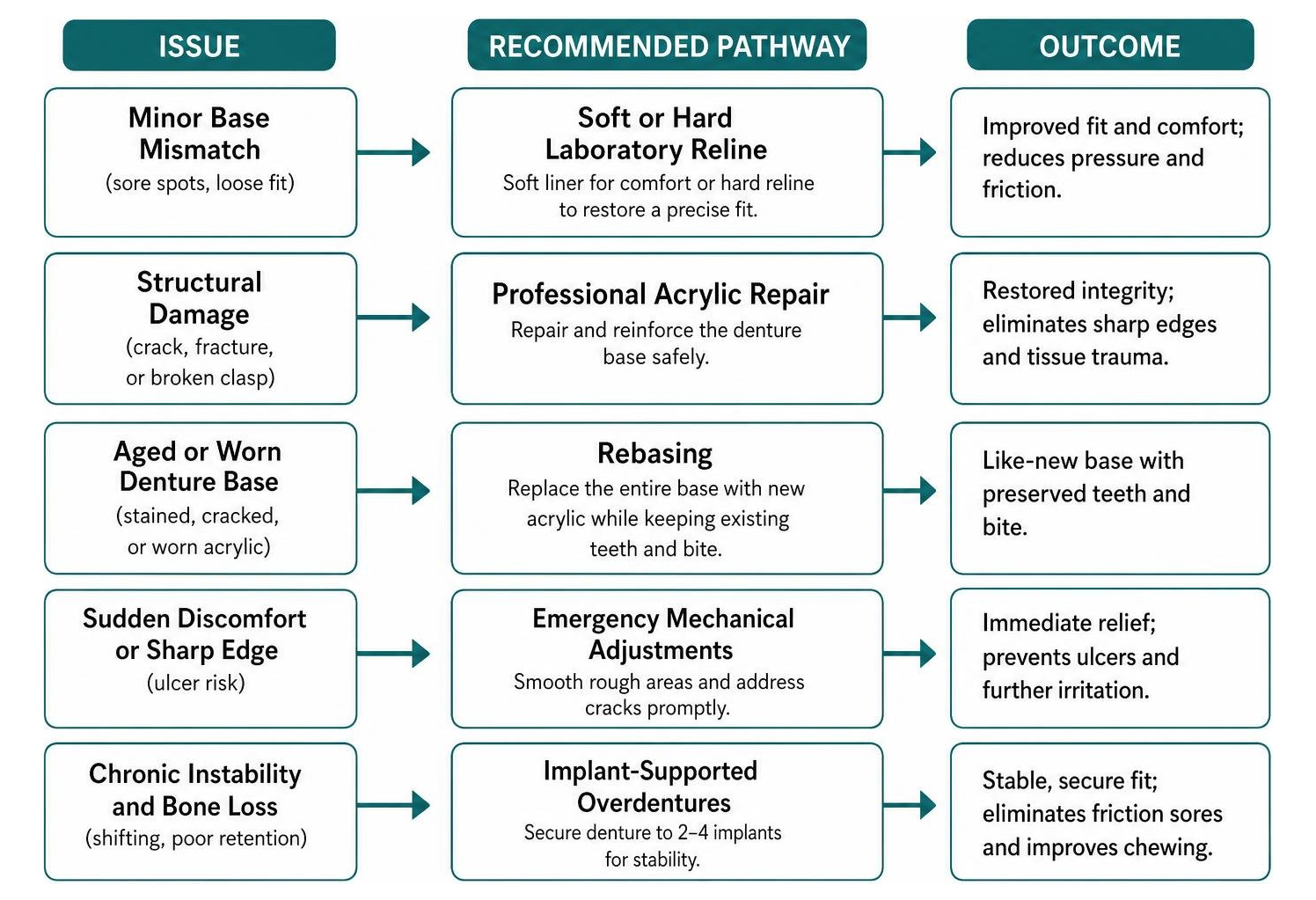
Soft Relining: Ideal for patients with thin, sensitive gums or those recovering from extractions. A pliable, medical-grade polymer liner is placed on the tissue side of your denture. This soft layer acts as a shock absorber, easing pressure on bony ridges for several months while tissues stabilize.
Hard Laboratory Relining: When the base is intact but your jaw ridge has shrunk, your dentist removes a layer of acrylic and takes a precise impression inside your existing denture. A dental laboratory fills the void with durable, heat-cured acrylic, restoring an exact, customized fit.
Rebasing: If the denture acrylic is aged, stained, or cracked, but the artificial prosthetic teeth remain in prime condition, rebasing replaces the entire pink base with brand-new acrylic while preserving your existing teeth and bite.
Emergency Mechanical Adjustments: When a sudden sharp edge or crack develops, prompt intervention via emergency denture repair smooths the offending area and eliminates tissue trauma before deep ulcers develop.
Implant-Supported Overdentures: Traditional removable plates rest entirely on your mucosal ridges, inevitably speeding up bone loss. Modern restorative dentistry solves this problem through snap-on dentures. By securing the denture onto two to four strategically placed dental implants, the appliance snaps firmly into position. This eliminates shifting, completely prevents friction sores, and restores up to 80% or more of natural chewing efficiency.
Frequently Asked Questions about Denture Discomfort
How long does it typically take for gums to adjust to new dentures?
For most patients, the primary mucosal adaptation period lasts between 2 and 4 weeks. During this window, your mouth adjusts to the physical presence of the appliance, your saliva flow normalizes, and your facial muscles learn to support the base. However, full bone remodeling following recent tooth extractions can take anywhere from 6 to 12 months, usually requiring at least one professional reline during the first year.
Can ill-fitting dentures cause permanent damage or oral infections?
Yes. Chronic irritation from an unstable denture frequently leads to denture stomatitis, an inflammatory condition characterized by widespread redness, burning, and secondary fungal (Candida albicans) overgrowth. Prolonged mechanical trauma can also cause epulis fissuratum, a condition where benign but painful fibrous tissue folds develop along the denture border, often requiring surgical removal before a new appliance can be worn.
What should I do if my denture breaks or develops sharp edges?
Never attempt DIY repairs using household superglue, sandpaper, or craft tools. Glues release toxic chemicals into the oral environment, and filing the plate yourself alters your bite alignment, worsening joint and muscle strain. Remove the broken appliance immediately, rinse your mouth with warm salt water, and schedule an emergency clinical adjustment to have the acrylic repaired professionally.
Conclusion
Living with persistent oral discomfort is not an unavoidable part of wearing dentures. While over-the-counter numbing gels, warm salt water rinses, and quality adhesives provide temporary relief, they cannot fix an appliance that has lost its structural harmony with your jaw.
If you are dealing with chronic sore spots, slipping plates, or difficulty enjoying meals, our team at Bradenton Implants & Smile Center is here to help. Located conveniently at 7270 55th Ave E in Bradenton, FL, we offer comprehensive evaluations, personalized relines, precision repairs, and modern implant solutions designed to restore your comfort and confidence.
Schedule an appointment today to discuss your long-term options, review the cost of a full set of dentures, and explore advanced implant restorations.
Scientific References
Liu XX, Tenenbaum HC, Wilder RS, Quock R, Hewlett ER, Ren YF. "Pathogenesis, diagnosis and management of dentin hypersensitivity: an evidence-based overview for dental practitioners.." BMC oral health, 2020. PMCID PMC7409672.