
Full Mouth Implants in 34203: Procedure Types, Costs, and Local Care
Finding Full Mouth Implants Near 34203
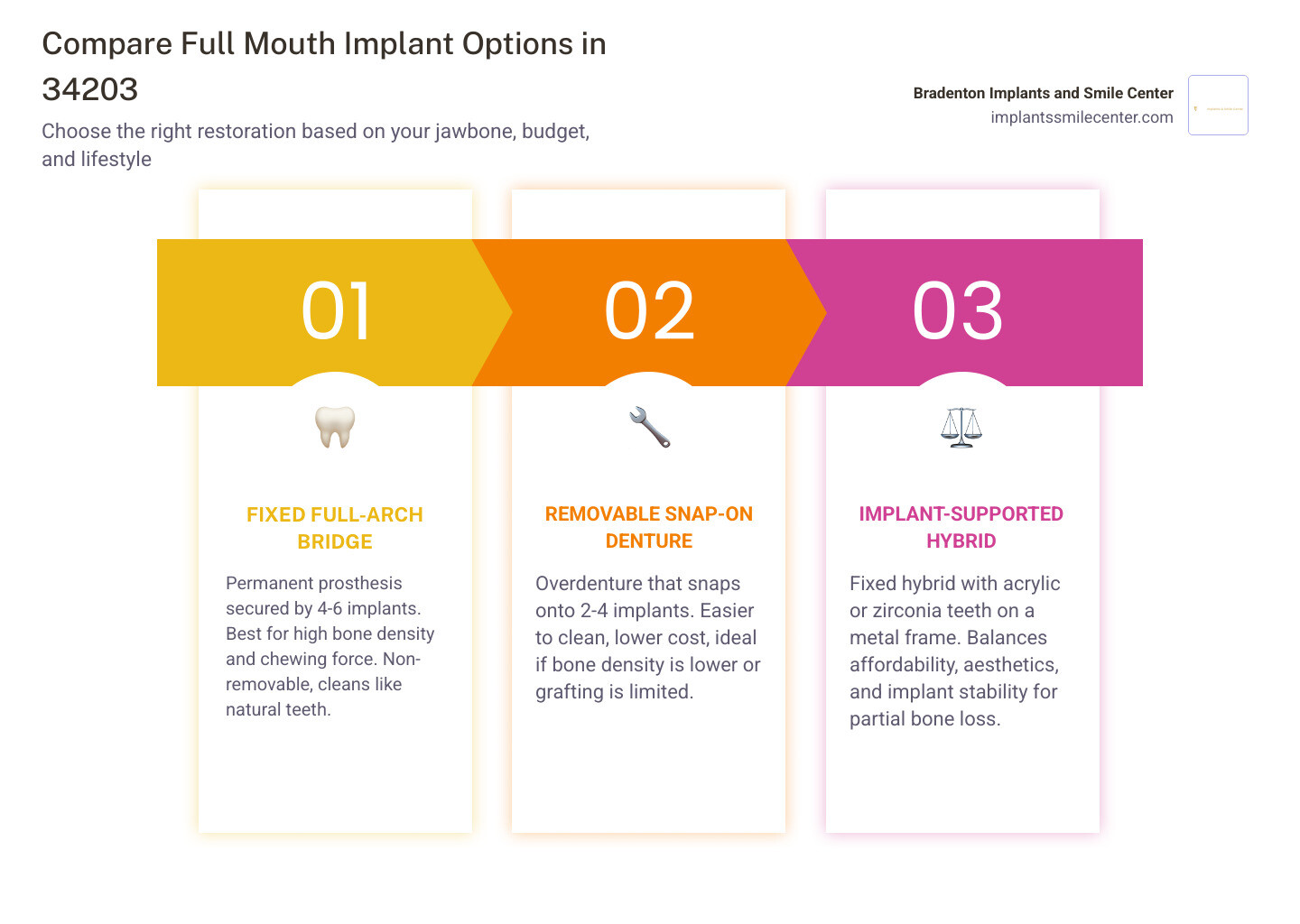
If you live in 34203 and need to replace most or all of your teeth, start with an implant consultation. Bradenton Implants and Smile Center can help you compare a fixed full-arch bridge with a removable snap-on denture. Ask for a written treatment plan and cost estimate. Your price will depend on the implants, replacement teeth, and any extractions or bone grafting you need.
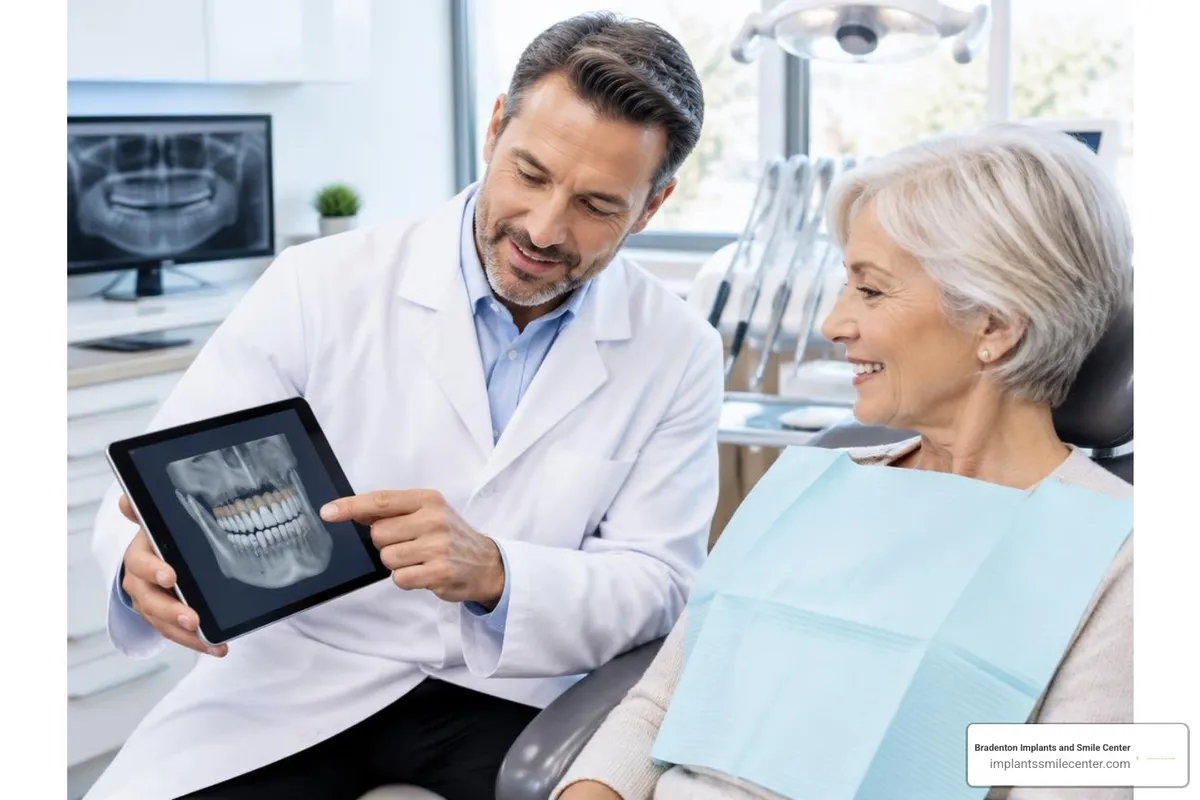
A 3D scan can help your dentist check your jawbone and plan where implants may go. The scan is one part of the decision, alongside your health, goals, and budget. For many patients, full mouth implants in 34203 offer a long-term alternative to loose dentures and failing teeth, but the right prosthetic choice depends on your bone volume, bite forces, and financial priorities.
I'm Dr. John Hegazin, owner of Bradenton Implants and Smile Center, with over eight years of dental care experience that includes full mouth implants and bone grafting. If you searched for "full mouth implants 34203," this guide will help you understand your options before you book a visit.
Diagnostic Precision: CBCT Bone Density Assessment for Full Mouth Implants 34203
Restoring an entire arch of teeth requires a firm biological foundation. In full-arch dental reconstruction, bone density dictates where implants can be positioned, the stability they achieve on day one, and the timing of your replacement teeth. Modern diagnostic workflows rely on Cone Beam Computed Tomography (CBCT) to evaluate your jaw structure before surgery. A peer-reviewed CBCT study on bone density for implant planning explains how grayscale values can support this evaluation.
While conventional medical CT scans measure bone mineral density in standardized Hounsfield units (HU), dental CBCT imaging captures data in grayscale values (GV). Medical studies evaluating volumetric imaging have developed conversion models that translate these raw grayscale readings into standardized Hounsfield units, allowing clinicians to objectively determine bone quality across different anatomical zones. In an analysis of 75 CBCT scans—powered at 90% statistical power with a 0.5 alpha error and 0.2 effect size—researchers quantified these site-specific variations between the front and back of the jaw (AlQahtani, 2023).
Anatomical Region | Mean Grayscale Value (GV) | Mean Hounsfield Units (HU) | Conversion Factor (GV to HU) | Clinical Density Characteristics |
|---|---|---|---|---|
Anterior Mandible / Maxilla | 1,837 (SD: 288.76) | 270 (SD: 125.4) | 6.8 | Thicker cortical plates, highly localized density |
Posterior Mandible / Maxilla | 2,880 (SD: 489.99) | 640 (SD: 204.6) | 4.5 | Porous trabecular patterns, structural volume variation |
Understanding these anatomical differences ensures that surgical plans are tailored to your bone architecture rather than using a one-size-fits-all approach. Bone quality is typically categorized from D1 (dense cortical bone) to D4 (fine trabecular, porous bone). Identifying these classifications in advance allows our surgical team to customize drill sequences, instrument speeds, and implant threading profiles to optimize mechanical grip.
Evaluating Trabecular Architecture for Full Mouth Implants 34203
The internal network of your jawbone—known as trabecular bone—acts like an internal scaffolding. When evaluating your 3D scan, we assess both the dense outer layer (cortical bone) and the spongy inner structure (cancellous or trabecular bone).
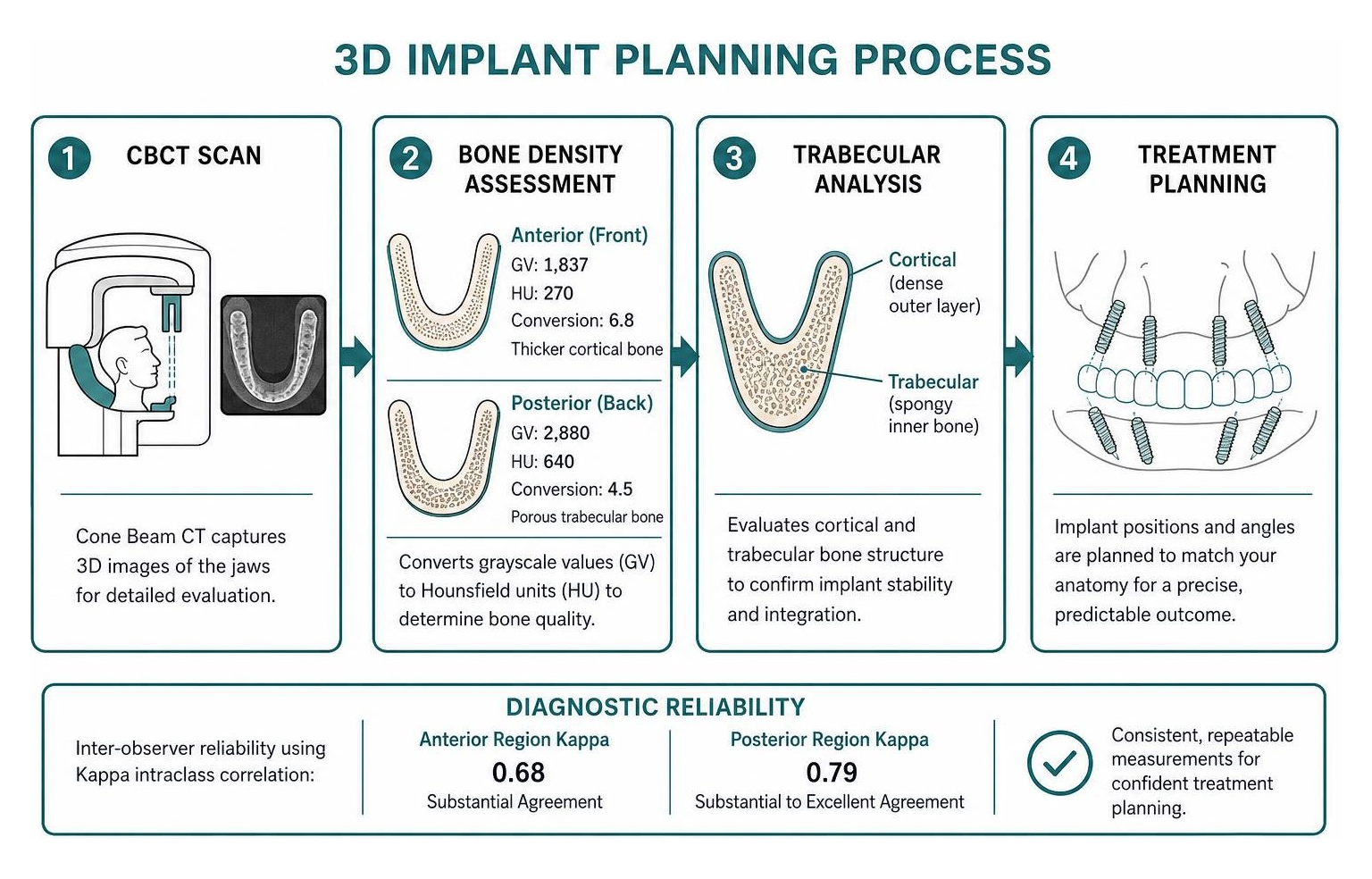
Diagnostic reliability is essential when interpreting these scans. Statistical validation using Kappa intraclass correlation demonstrates substantial to excellent inter-observer reliability for bone density measurements:
Anterior Region Kappa: 0.68
Posterior Region Kappa: 0.79
These consistency metrics show that standard diagnostic assessments during the dental implants procedure produce dependable, repeatable measurements. Because the lower jaw (mandible) displays high natural radiopacity, measuring internal trabecular density helps prevent complications, protects critical anatomical structures such as the inferior alveolar nerve, and confirms that every implant will integrate securely with your bone.
Anterior Versus Posterior Conversion Factors in Treatment Planning
The conversion relationship between raw grayscale values and Hounsfield units changes depending on the area of your mouth:
Anterior Sites: Grayscale values average 1,837 with corresponding HUs of 270, yielding a conversion factor of 6.8.
Posterior Sites: Grayscale values average 2,880 with corresponding HUs of 640, reflecting a conversion factor of 4.5.
By calibrating raw DICOM data with these conversion factors, we can build a personalized dental implant plan that accounts for structural differences. In anterior zones, implants often engage thick cortical bone for high initial stability. In posterior zones, lower density may call for specialized wide-diameter implants, under-drilling protocols, or targeted bone enhancement to create a dependable, long-term foundation.
Full Mouth Implant Procedure Types and Prosthetic Options
Full-arch rehabilitation can be customized around several restorative configurations depending on your anatomy, bite mechanics, and budget.
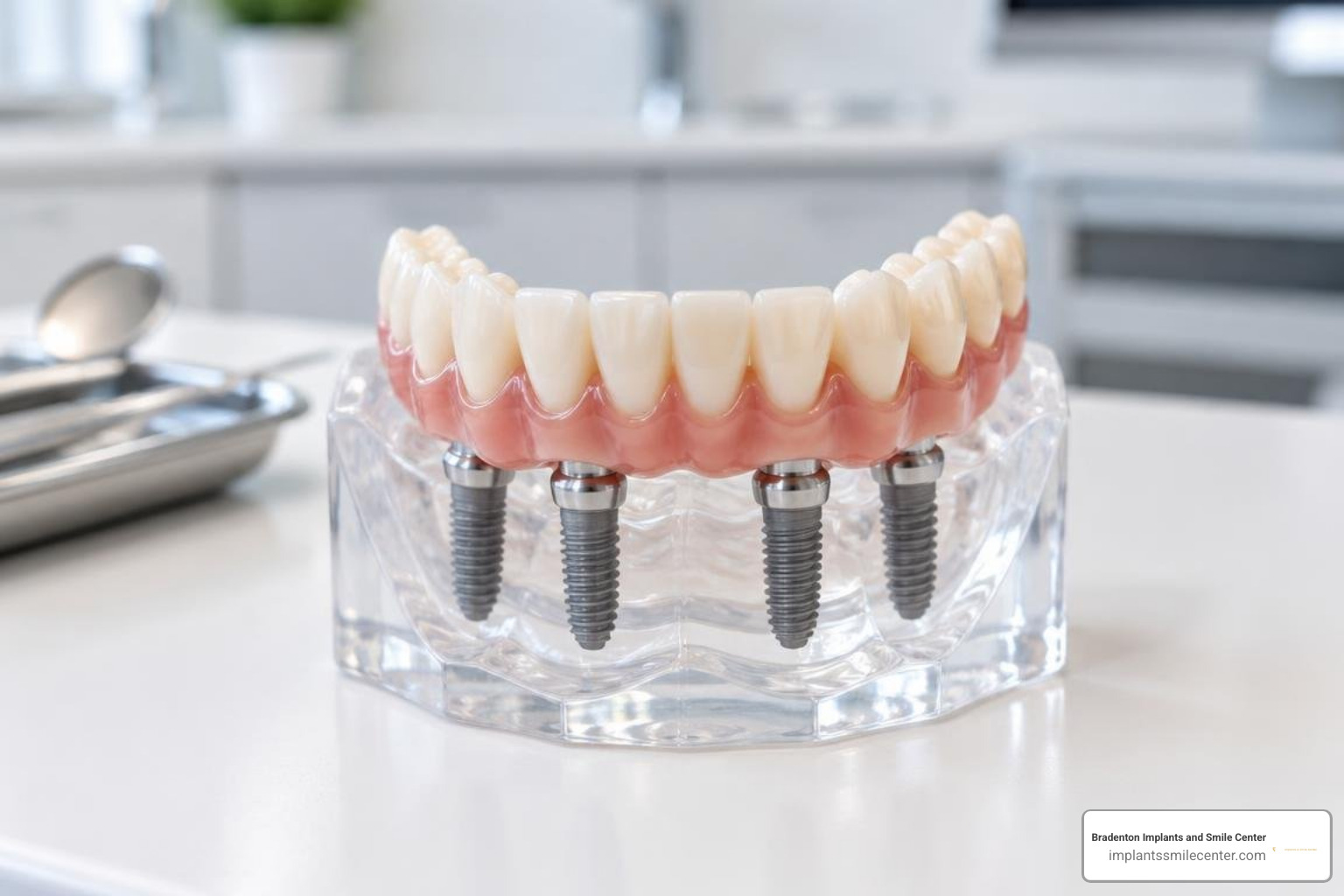
When exploring full arch implants, you will generally choose between fixed prostheses and removable overdentures.
Fixed Bridges Versus Removable Overdentures
Fixed Full-Arch Bridges (All-on-4 / All-on-6): These restorations are anchored securely to four, six, or more dental implants per arch.
Materials: Crafted from monolithic zirconia or a high-strength titanium substructure layered with ceramic. Monolithic zirconia offers exceptional fracture resistance and resists bacterial plaque accumulation along the gumline.
Design: Completely fixed in place; only your dentist can remove them for routine maintenance. They feature an open-palate upper arch design that preserves your natural taste and speech.
Functionality: Restores near-natural bite force, letting you eat crunchy, fibrous foods with ease. By utilizing tilted posterior implants (up to 45 degrees), All-on-4 protocols maximize contact with existing bone and often eliminate the need for extensive sinus lift surgeries.
Removable Implant-Supported Overdentures: Often called snap-on dentures, these prostheses attach to two to four implants using locator attachments.
Design: You snap the teeth off at night for cleaning and snap them back into place in the morning.
Affordability: Provides a secure, budget-friendly alternative to traditional floating dentures without requiring extensive implant hardware.
Surgical Execution and Loading Strategies for Full Mouth Implants 34203
Achieving long-term stability begins in the surgical suite. We measure insertion torque and implant stability quotients (ISQ) using resonance frequency analysis to determine how firmly the implant is seated within your bone.
When bone density and primary stability meet strict mechanical thresholds (typically ≥35 Ncm of insertion torque), patients often qualify for immediate implant placement and same-day provisionalization. You can arrive with failing teeth and leave the same afternoon with an attractive, securely attached temporary bridge while your bone heals.
Over the next three to six months, osseointegration occurs as your living bone cells grow directly onto the textured titanium implant surface. Multi-unit abutments maintain passive fit across the entire arch, preventing micro-motion. Once biological bonding is complete, we replace your temporary teeth with your permanent custom zirconia bridge.
Cost Factors and Financial Planning for Full Arch Restoration in 2026
Every smile is unique, which means the investment for full-arch reconstruction varies from patient to patient.

Key variables influencing overall fees include:
Surgical Complexity: The number of failing teeth requiring extraction, infection debridement, and soft-tissue contouring.
Bone Reconstruction: Whether you need ridge augmentation, sinus floor elevation, or localized bone grafting.
Prosthetic Materials: Premium monolithic zirconia versus composite acrylic frameworks reinforced with titanium bars.
Implant Count and Type: Choosing between four, six, or eight implants per arch, along with specialized components such as angled multi-unit abutments.
Sedation and Anesthesia Options: Intravenous (IV) conscious sedation or oral conscious sedation for complete procedural comfort.
To better understand your investment, review our detailed guide on the cost of full mouth dental implants. At Bradenton Implants & Smile Center, we believe exceptional care should be accessible. We provide transparent, itemized quotes alongside options for financing full mouth dental implants through low-interest and flexible monthly payment plans designed to fit your family budget.
Frequently Asked Questions About Full Mouth Implants
How does CBCT bone density affect my implant candidacy?
Low bone density does not rule you out for dental implants. Modern angled implant techniques and bone grafting for implants can restore lost bone volume, ensuring there is enough structural support to anchor your new teeth safely. High-resolution CBCT scans allow us to identify dense cortical zones that provide immediate stability even if surrounding bone volume is limited.
What is the expected recovery time for full mouth restoration?
Most patients return to light daily activities within 48 to 72 hours. While your soft gum tissue typically heals within 10 to 14 days, complete bone osseointegration takes three to six months. During this healing phase, maintaining a soft-food diet protects the integration process from excessive chewing forces. We provide comprehensive protocols for a pain-free implant procedure and clear dietary guidelines to keep you comfortable throughout recovery.
How long do full arch dental implants last?
Dental implants can last a lifetime with proper oral hygiene and regular dental checkups. The prosthetic bridge may experience normal wear over 15 to 20+ years, but maintaining routine care, wearing a nightguard if you grind your teeth, and following our complete dental implants guide will help protect your investment for decades to come.
Conclusion
Full-arch tooth replacement is a life-changing investment in your overall health, self-confidence, and quality of life. By combining advanced 3D CBCT diagnostic imaging with personalized treatment planning, we take the guesswork out of implant dentistry to deliver predictable, long-lasting outcomes.
Located conveniently at 7270 55th Ave E, Bradenton, FL 34203, Bradenton Implants & Smile Center delivers modern restorative care in a warm, welcoming environment. Whether you are struggling with failing teeth or looking for a permanent alternative to loose dentures, our team is here to help you smile with confidence again.
Take the first step toward restoring your smile: schedule your full mouth dental implants consultation with our team today!
References
AlQahtani SM. "A novel method of assessment of BMD using CBCT for implant placement: A retrospective study.." Medicine, 2023. PMID 37417616.