
Single Tooth Repair: A Realistic Price and Procedure Guide
Comprehensive Breakdown of One Teeth Fixing Cost by Treatment Type
When you chip, break, or lose a tooth, the path to restoring your smile depends directly on the remaining healthy structure. In 2026, single tooth repair covers a wide spectrum of clinical solutions—ranging from simple composite resin applications completed in thirty minutes to multi-stage surgical replacements. The cost of fixing one tooth typically starts around $100 for minor bonding and can reach $5,600 or more for a complete dental implant, depending on the severity of damage and the restoration you choose.
Understanding what drives the price of each solution allows you to plan effectively. Minor surface chips require minimal chair time and lab involvement, while extensive structural decay or tooth loss necessitates custom laboratory fabrication and biocompatible materials.
Treatment Option | Average Cost Range (U.S.) | Typical Longevity | Primary Purpose |
|---|---|---|---|
Composite Dental Bonding | $100 – $600 | 3 – 10 years | Small chips, minor gaps, light enamel reshaping |
Porcelain Veneer | $900 – $2,500 | 10 – 15+ years | Front tooth aesthetic repair, severe discoloration |
Dental Crown | $800 – $3,500 | 15 – 20 years | Large fractures, post-root canal protection |
Root Canal + Crown | $1,500 – $6,000 | 15 – 20+ years | Deep fractures involving pulp infection |
3-Unit Fixed Bridge | $2,000 – $5,000 | 5 – 15 years | Replacing a single missing tooth via adjacent crowns |
Single Dental Implant (Complete) | $2,800 – $5,600 | Post: Lifetime / Crown: 15+ yrs | Permanent standalone root and crown replacement |
Removable Partial Denture | $1,425 – $2,785 | 7 – 10 years | Budget-friendly removable replacement |
Minor Repairs: Dental Bonding and Enamel Reshaping
For superficial cosmetic issues or minor enamel fractures where the tooth's inner pulp remains untouched, dental bonding serves as the most conservative and cost-effective approach. Composite bonding uses a specialized, tooth-colored resin that we shape directly over the defect and cure with a high-intensity light. Most minor chips land right in the $300 to $400 range per tooth.
Enamel reshaping (contouring) often accompanies bonding to smooth out rough, jagged edges left behind after trauma. Because bonding does not require off-site dental laboratory fabrication, you walk out with a completely restored tooth in a single appointment.
Structural Restoration: Crowns, Inlays, and Root Canals
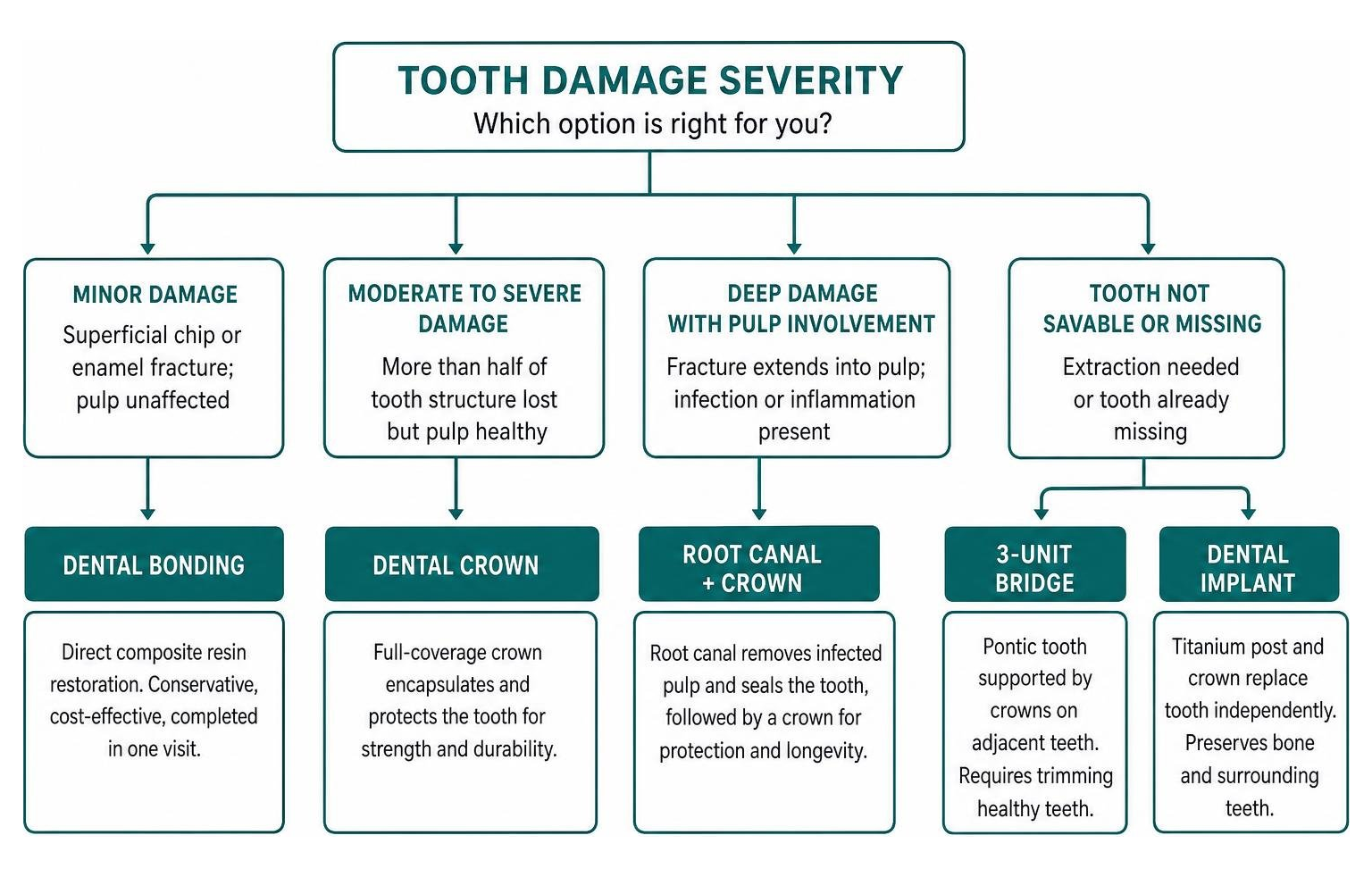
When trauma or extensive decay compromises more than half of the natural tooth structure, composite resin alone cannot withstand daily chewing forces. A full-coverage dental crown—fabricated from durable porcelain, porcelain-fused-to-metal, or solid zirconia—encapsulates the entire visible portion above the gum line.
If the fracture extends into the inner chamber and exposes the dental pulp, pulpal infection and inflammation quickly follow. In these instances, endodontic therapy (a root canal) is necessary to clear out the compromised nerve tissue, disinfect the canal walls, and seal the interior before placing a core buildup and a protective crown. Without the crown, a root-canal-treated tooth becomes brittle and prone to catastrophic vertical root fractures.
Complete Replacement: Dental Bridges vs. Implants
When a tooth cannot be saved and requires extraction—or is already missing—you must decide between a traditional bridge and a dental implant.
A traditional three-unit bridge suspends a false tooth (pontic) between two crowns cemented onto the natural adjacent teeth. While effective upfront, it requires grinding down healthy enamel on neighboring teeth and does nothing to stop jawbone resorption beneath the gap.
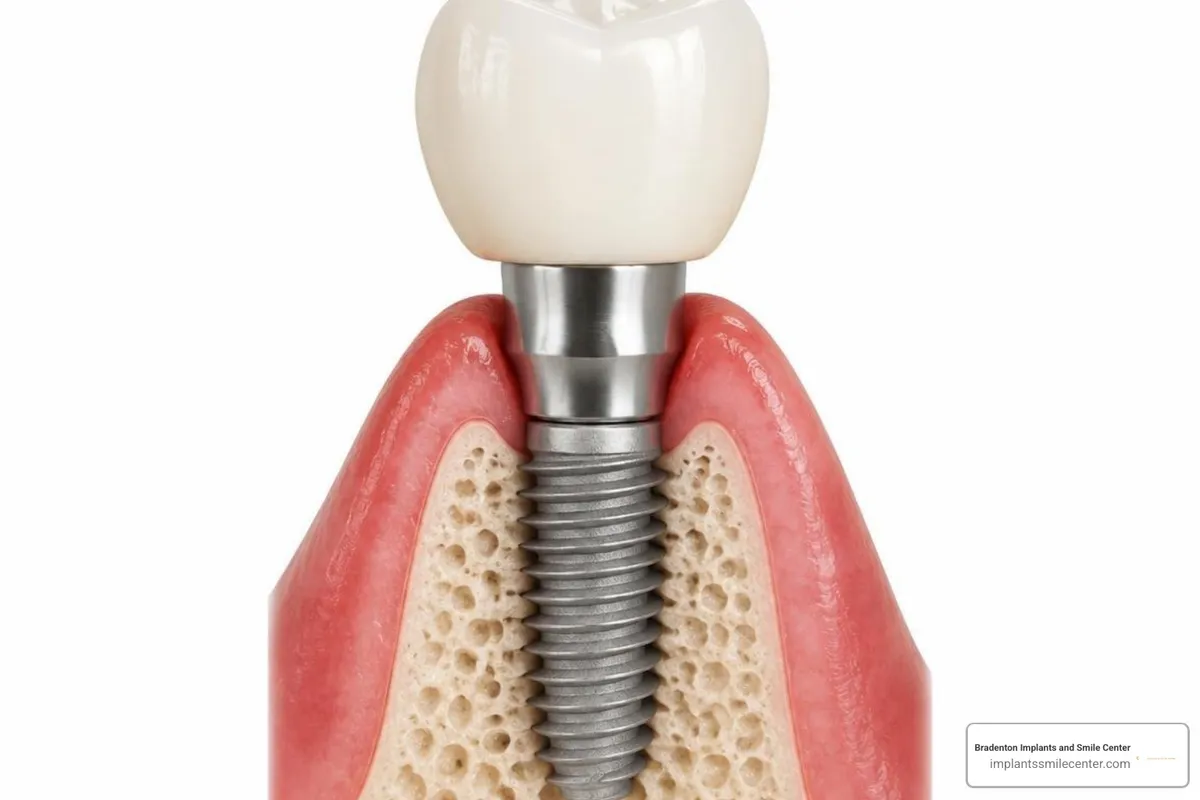
In contrast, a single dental implant replaces the missing tooth independently. The titanium post acts as a prosthetic root, preserving jawbone density and shielding neighboring teeth from unnecessary alteration. Reviewing our comprehensive breakdown of dental implant costs will help you budget for each structural component. For additional clinical context on implant success rates and long-term outcomes, the American Academy of Implant Dentistry provides detailed information on single tooth implants.
Which Single Tooth Repair Option Is Right for You?
Selecting the ideal treatment involves weighing clinical feasibility, aesthetics, and long-term financial value. During an examination, we look at where the tooth is located, how deeply the break extends, and how much healthy natural tooth remains.
Comparing Bonding, Crowns, Bridges, and Implants
Enamel Preservation: Bonding preserves almost 100% of your natural enamel. Crowns require reshaping the outer millimeter or two of the tooth, while fixed bridges require trimming down two adjacent healthy teeth. Implants preserve the entire surrounding dentition without touching neighbor teeth.
Structural Integrity: Bonding handles low-stress areas well but can chip under heavy biting forces. For molars and premolars that absorb hundreds of pounds of pressure, full-coverage zirconia or porcelain crowns deliver unmatched strength.
Bone Resorption: Bridges and partial dentures sit above the gumline; without a root stimulating the bone, the jaw ridge slowly shrinks over time. Choosing permanent teeth implants provides mechanical stimulation to the jawbone, halting bone loss permanently.
Understanding the Escalating Cost of Fixing One Tooth When Delaying Care
A common financial mistake is postponing treatment for a tooth that does not hurt yet. Teeth cannot heal themselves because enamel and dentin lack a cellular blood supply.
A minor craze line or small enamel chip ($200–$400 for bonding) can easily progress into cracked tooth syndrome as bite pressure wedges the crack deeper. Once bacteria penetrate the pulp chamber, severe pain and infection require a root canal and crown ($2,400+). If the crack splits vertically below the bone level, saving the tooth becomes impossible, forcing an extraction, bone graft, and implant ($4,500+). Treating tooth damage early protects both your health and your wallet.
Diagnostic, Surgical, and Hidden Fees to Budget For
When reviewing quotes for single tooth repair, ensure you are looking at the all-inclusive figure rather than just a baseline surgical or restorative fee.
Imaging, Extractions, and Preparatory Bone Grafts
Accurate diagnostics and surgical preparation form the foundation of a successful procedure:
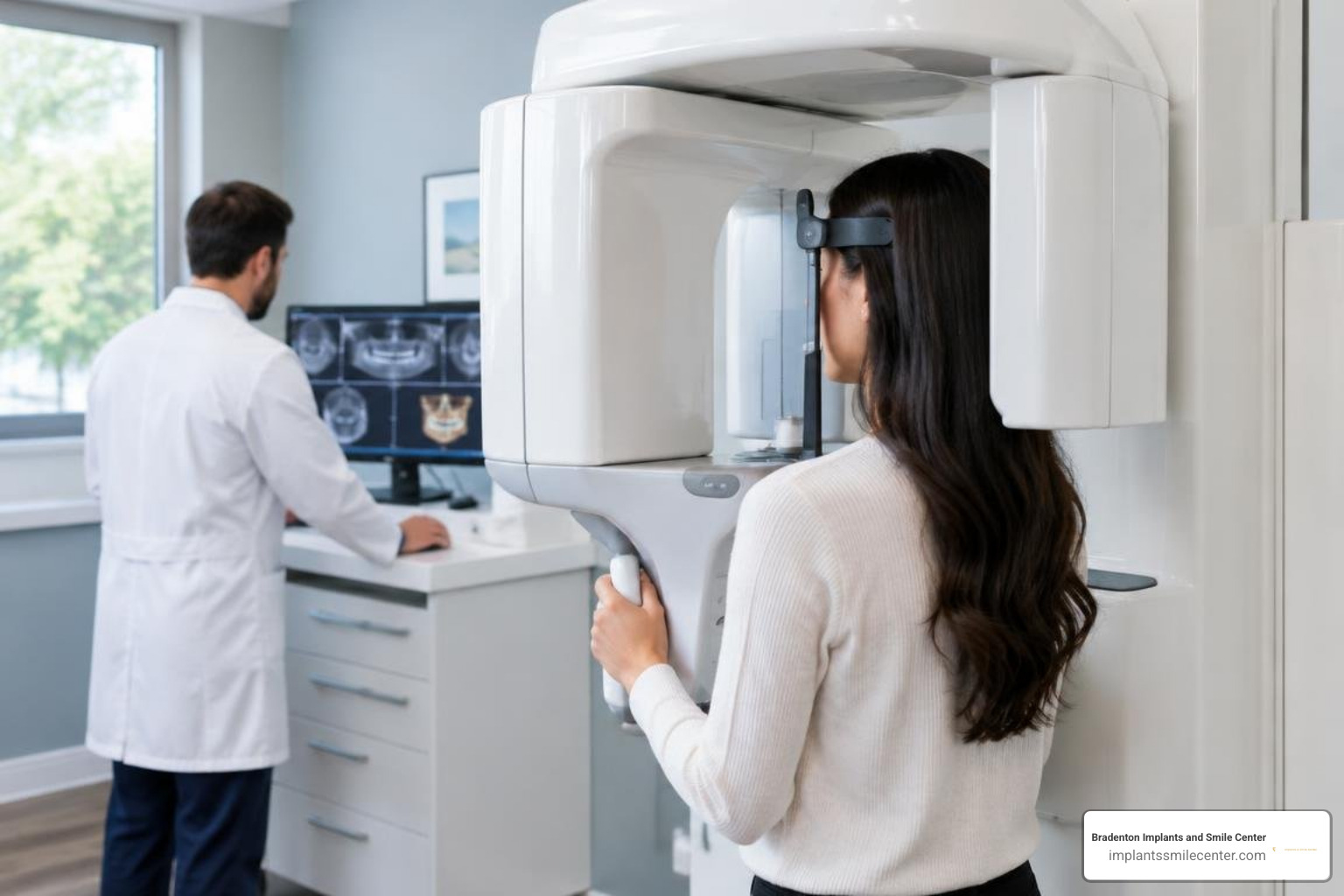
Diagnostic CBCT 3D Scans ($150 – $600): Standard 2D X-rays cannot show cross-sectional bone thickness, sinus locations, or hidden vertical cracks.
Transillumination Diagnostics ($0 – $50): Uses specialized light transmission to track microscopic fracture lines through enamel.
Tooth Extraction ($150 – $650): Simple extractions cost less, while broken roots fractured below the gumline require surgical removal.
Bone Grafting ($400 – $2,500): Averages $558 nationally. Placing specialized bone graft material into an extraction socket prevents ridge collapse and creates a solid foundation for an implant.
Sinus Lift ($1,500 – $3,500): Averages $2,022. Frequently required when replacing upper back molars with minimal natural bone height below the maxillary sinus cavity.
Soft-Tissue Grafts ($800 – $1,500): Rebuilds thin or receded gum tissue around the repair site.
Sedation, Temporary Restorations, and Follow-Up Care
Comfort and interim aesthetics also factor into your total investment:
Sedation Services ($300 – $800): Nitrous oxide averages $100–$200, while IV conscious sedation or deeper anesthesia averages $639 per session.
Temporary Restorations ($300 – $600): A single-tooth transitional flipper or temporary custom crown maintains your appearance and keeps teeth from shifting while your permanent restoration is being fabricated.
Insurance Coverage, Payment Plans, and Affordability Strategies
Restorative treatments are treated differently by dental insurance than purely elective cosmetic enhancements.
Navigating Dental Benefits and Out-of-Pocket Maximums
Most dental PPO plans cover restorative procedures under clear tier percentages:
Basic Restorative (Fillings, Bonding for decay/trauma): Covered at 70% to 80% after meeting your deductible.
Major Restorative (Crowns, Bridges, Root Canals, Implants): Typically covered at 50%.
Standard dental policies typically cap annual benefits between $1,000 and $2,500. A comprehensive procedure like an extraction, bone graft, and crown can quickly meet that ceiling. To manage these expenses, explore our detailed analysis of the cost of dental implants in 2026 to see how insurance benefits apply across multi-stage care. If your treatment spans late autumn into winter, you can often split the surgical and restorative phases across two calendar years to use two consecutive annual maximums.
Actionable Ways to Lower the Cost of Fixing One Tooth
HSA and FSA Funds: Pay for medically necessary crowns, root canals, and implants using pre-tax dollars, saving 20% to 35% based on your tax bracket.
Third-Party Patient Financing: Work with dedicated dentists offering payment plans through providers like CareCredit, which offer 0% promotional interest terms over 6 to 24 months.
Specialized Lending: Patients rebuilding their credit can look into dental loans with no credit check to secure treatment before damage worsens.
In-House Dental Membership Plans: If you do not have private insurance, our in-office membership plans provide flat 15% to 30% savings on restorative and surgical procedures without waiting periods or claim denials.
The Dental Implant Timeline from Consultation to Final Crown
Replacing a single tooth with an implant is a precise, multi-phase clinical journey designed to ensure the replacement integrates naturally with your bone structure.
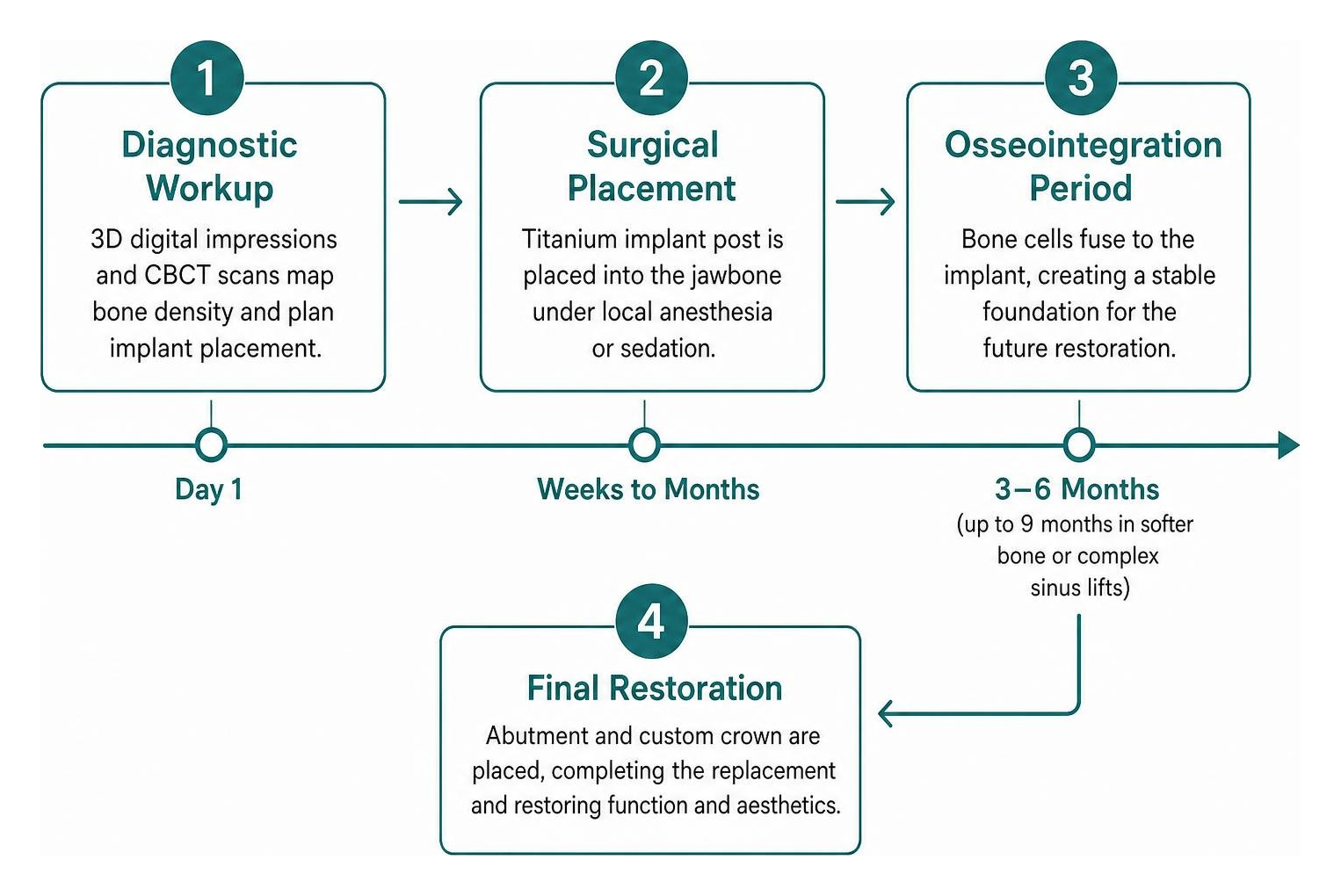
Initial Assessment and Osseointegration Phase
Diagnostic Workup: We capture high-resolution 3D digital impressions and CBCT scans to map bone density and plan exact computer-guided surgical placement.
Surgical Placement: The titanium implant post is placed into the jawbone under local anesthesia or sedation. If an unsalvageable tooth is present, extraction and grafting often occur in this same visit.
Osseointegration Period: Over the next 3 to 6 months (up to 9 months in softer bone or complex sinus lifts), living bone cells attach directly to the microscopic porous surface of the titanium post, creating a stable foundation.
Abutment Placement and Final Restoration
Tissue Shaping & Abutment Connection: Once osseointegration is confirmed on X-ray, a small healing cap or custom titanium/zirconia abutment is connected to the post to guide healthy gum contouring.
Custom Crown Milling: A digital scan captures the exact dimensions of your abutment and neighboring teeth. The dental lab creates a custom ceramic crown matched to your natural tooth shade.
Final Delivery & Calibration: The crown is securely screwed or cemented into place, and your bite is calibrated to ensure comfortable chewing.
Frequently Asked Questions About Single Tooth Repair
How long does each tooth restoration method typically last?
Composite bonding lasts 3 to 10 years, depending on your biting habits and oral hygiene. Porcelain crowns and fixed bridges average 10 to 20 years before the underlying tooth or marginal cement requires attention. The titanium implant post is designed to last a lifetime, boasting documented clinical success rates above 95% over 10 years, while the ceramic crown attached on top typically lasts 15 years or longer before normal wear calls for replacement.
What questions should I ask my dentist to get an accurate itemized estimate?
To ensure total pricing transparency before starting treatment, ask your provider:
Does this estimate include the diagnostic 3D CBCT imaging, surgical guide, and follow-up visits?
What specific ADA procedure codes will be submitted to my dental insurance?
Is the abutment and final crown included in this single-tooth quote, or is that billed separately?
If bone grafting or a sinus lift becomes necessary during extraction, what are the additional fees?
Can an untreated cracked tooth heal on its own?
No. Enamel and dentin do not contain regenerative cells or a vascular supply. A crack will not heal or re-fuse. Leaving a cracked tooth untreated allows dynamic chewing pressure to drive the split deeper toward the root, introducing oral bacteria into the pulp and turning an easily restorable tooth into an emergency extraction.
Conclusion
Restoring a single compromised tooth preserves your dental health, prevents neighboring teeth from drifting, and protects your jawbone structure. Whether you need composite bonding for a small chip, a crown to protect fractured enamel, or a permanent implant to replace a missing tooth, addressing the issue early is the most reliable way to minimize your total restorative costs.
At Bradenton Implants & Smile Center, located at 7270 55th Ave E, Bradenton, FL 34203, we provide personalized, compassionate care utilizing modern 3D technology and accessible financing options for adults and seniors. If you are dealing with a broken or missing tooth, schedule your consultation for single-tooth dental implant services today, and let us help you restore your smile with confidence.