


The Ultimate Guide to 4 Types of Dental Fillings
Understanding the 4 Types of Fillings
Understanding the 4 types of fillings is the first step toward making a smart, informed decision about your dental care. Here's a quick answer:
Amalgam — Silver-colored, metal-based, highly durable, best for back teeth
Composite Resin — Tooth-colored, blends naturally, most commonly used
Gold — Longest-lasting, custom-made, most expensive option
Ceramic (Porcelain) — Stain-resistant, natural-looking, great for visible teeth
Cavities are incredibly common — approximately 90% of American adults have had at least one cavity. When decay is caught early, a filling is usually all it takes to stop the damage and restore your tooth.
But not all fillings are the same. The material your dentist uses affects how long it lasts, what it looks like, how much it costs, and which teeth it works best on. Knowing your options helps you have a better conversation with your dentist — and feel more confident about your treatment.
I'm Dr. John Hegazin, owner of Bradenton Implants and Smile Center, and with over 8 years of experience placing and restoring dental fillings, I've helped hundreds of patients navigate the 4 types of fillings to find the right fit for their smile, budget, and long-term oral health. In this guide, I'll walk you through everything you need to know to make that choice with confidence.
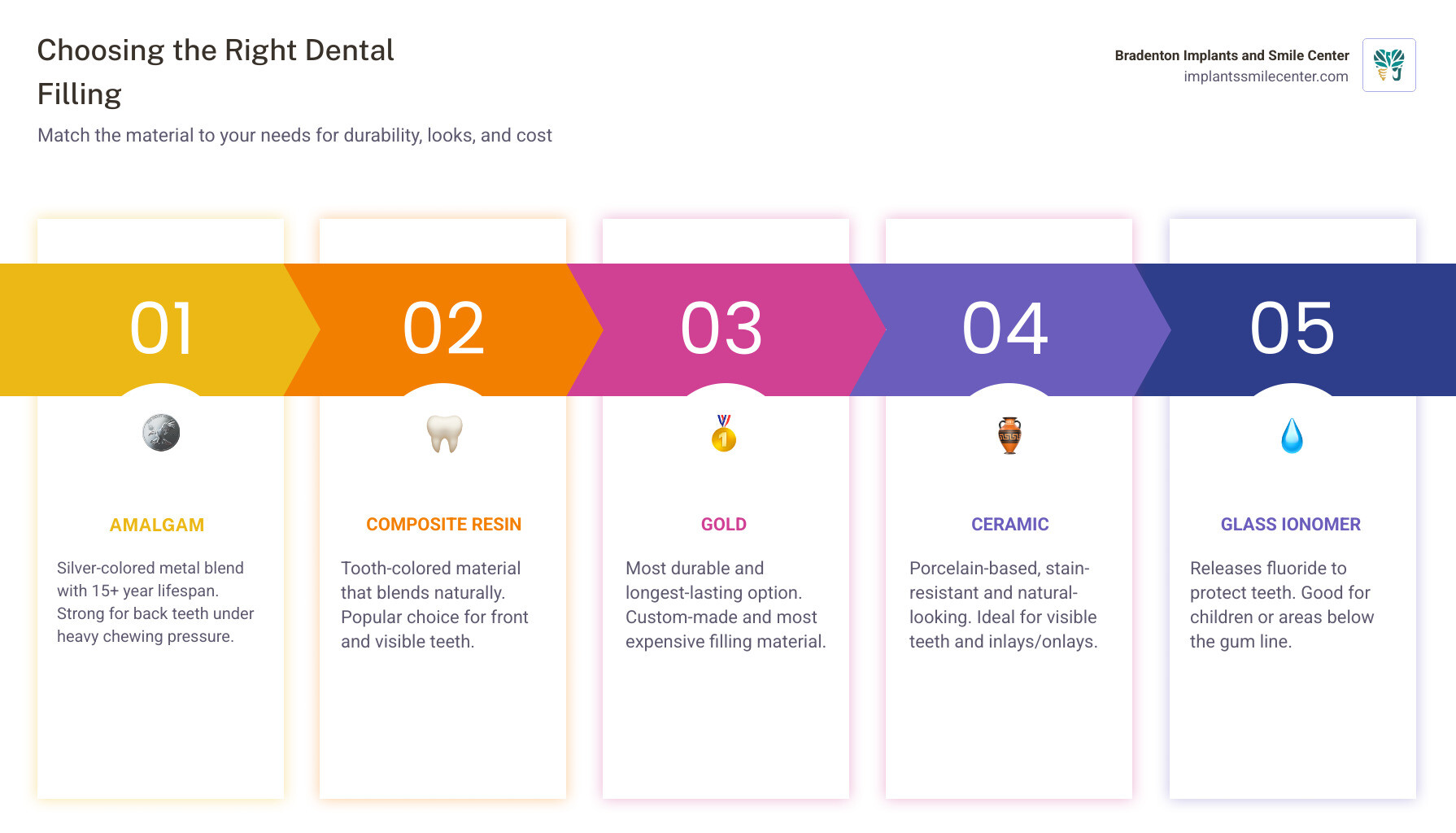
When we talk about the 4 types of fillings, we are looking at the primary materials used in modern restorative dentistry. Each material has a specific "job" it excels at. For instance, some materials are like the heavy-duty work boots of the dental world—built for the high-pressure environment of your back molars. Others are more like designer shoes—crafted to look beautiful and blend in perfectly with your natural smile.
Choosing the right one isn't just about price; it's about the size of the cavity, where it is in your mouth, and even your personal habits (like whether you grind your teeth at night).

Feature Amalgam Composite Gold Ceramic Appearance Silver/Metallic Tooth-colored Gold/Yellow Tooth-colored Average Lifespan 10–15 Years 5–10 Years 15–30 Years 10–15+ Years Cost Most Affordable Moderate Most Expensive High Best For Back Teeth Visible Teeth Heavy Chewers Visible/Large Cavities
According to the Dental Filling Options | MouthHealthy - ADA, patients have the right to decide on their treatment materials after a thorough consultation with their dentist. We believe in that partnership here in Bradenton.
Amalgam and Gold: Metal-Based Durability
Metal-based fillings have been the backbone of dentistry for over a century. If you have older relatives, you’ve likely seen the "silver" or "gold" glint in their smiles.
Amalgam Fillings Amalgam is a mixture of metals, including silver, tin, copper, and about 50% mercury. Don't let the "m-word" scare you—it’s the binder that keeps the other metals together. Amalgam is incredibly tough. Because it can withstand significant chewing pressure, it is often the go-to for large cavities in the back molars. It’s also the most budget-friendly option. However, because it is silver (and eventually turns darker), it isn't the best choice for a tooth that shows when you laugh.
Gold Fillings Gold is widely considered the "gold standard" (pun intended) for longevity. These aren't pure 24k gold; they are usually an alloy of about 75% gold mixed with copper and other metals. They can last up to 30 years—sometimes even longer with excellent care. Gold is highly biocompatible, meaning your gums usually tolerate it very well. The downside? It’s the most expensive of the 4 types of fillings and requires at least two visits because it must be custom-made in a dental lab.
For more technical details on metal vs. non-metal options, the Dental Fillings: Types, Materials & What They're For guide provides a deep dive into these classic materials.
Composite Resin: The Most Popular of the 4 Types of Fillings
If you’ve had a cavity filled in the last decade, there’s a high chance you received a composite resin filling. This is the most common choice today because it satisfies the "invisible" look most patients want.
Composite resin is made of a mixture of plastic (acrylic) and fine glass particles. The beauty of this material is its versatility. We can match the shade of the resin to your specific tooth color so perfectly that even you might forget where the cavity was!
One of the unique benefits of composite is how it attaches to your tooth. Unlike amalgam, which requires a specific "pocket" to be drilled to hold the material in place, composite bonds chemically to the tooth structure. This often means we can preserve more of your natural tooth. Once the material is placed, we use a high-powered curing light to harden it instantly.
At Bradenton Implants and Smile Center, we often recommend this for visible teeth or small-to-mid-size cavities. You can learn more about our specific approach to the Dental Filling on our service page.
Ceramic and Glass Ionomer Options
While we focus on the main 4 types of fillings, there are specialized variations like ceramic and glass ionomer that offer unique benefits.
Ceramic Fillings Usually made of porcelain, ceramic fillings are a premium option. They are highly resistant to staining (even more than composite) and are very durable. Like gold, these are usually "indirect" fillings, meaning they are fabricated in a lab or using CAD/CAM technology in the office. They are chemically fused to the tooth, which can actually increase the tooth's strength.
Glass Ionomer This is a unique material made of acrylic and a specific type of glass. Its superpower? It releases fluoride over time. This helps protect the tooth from further decay. However, glass ionomer is weaker than the other materials and typically lasts only about 5 years. We often use it for cavities near the gum line or for "baby" teeth in children where the filling doesn't need to last for decades.
The Dental Filling Procedure: Step-by-Step
We know—no one wakes up excited to get a filling. But at our Bradenton office, we use modern technology and a gentle touch to make the process as boring as possible (and in dentistry, boring is good!).

Here is exactly what you can expect during the procedure:
Numbing the Area: We start with a local anesthetic to numb the tooth and the surrounding gum tissue. You might feel a tiny pinch, but after that, the area should be completely numb.
Removing the Decay: Once you're comfortable, we use a dental drill or laser to remove the decayed or damaged portion of the tooth. We’ll also clean the area to ensure no bacteria are left behind.
Etching and Bonding: For composite fillings, we "etch" the tooth with a mild acid gel to roughen the surface slightly, which helps the material stick. Then, we apply a bonding agent.
Placing the Filling: We pack the material into the cavity in layers. If it’s composite, we’ll use a special light to "cure" or harden each layer.
Shaping and Polishing: Once the cavity is filled, we shape the material to match the natural contours of your tooth. We’ll also check your bite to make sure your teeth fit together comfortably.
Final Polish: We smooth out any rough edges so the filling feels natural to your tongue.
For a broader look at the mechanics of this process, check out this resource: What is a Filling.
Longevity and Maintenance of Restorations
A filling is an investment in your health, and like any investment, you want it to last. While the material choice is a huge factor in longevity, your daily habits are just as important.
How long do they really last?
Amalgam: 10–15 years
Composite: 5–10 years
Gold: 15–30 years
Ceramic: 10–15+ years
Tips for Maintenance:
Brush and Floss: This sounds obvious, but cavities can actually form under or around a filling if plaque is allowed to build up.
Watch Your Diet: Extremely hard or sticky foods (like ice or hard taffy) can crack or pull a filling loose.
Night Guards: If you grind your teeth (bruxism), the constant pressure can wear down even the strongest gold or amalgam filling. A custom night guard can protect your restorations.
Regular Checkups: During your routine exams at our Bradenton office, we check the margins of your fillings. If we see a tiny crack or a "leak," we can often fix it before it becomes a painful problem.
Factors for Selecting the Best of the 4 Types of Fillings
When we sit down with you to choose a material, we aren't just picking at random. We consider several clinical and personal factors:
Location: Is it a front tooth (needs to look pretty) or a back molar (needs to be strong)?
Size: Very large cavities often require the strength of gold or ceramic, whereas small ones are perfect for composite.
Allergies: While rare, some patients have sensitivities to specific metals.
Budget: We provide financing options to help make the best long-term choice affordable, but we always respect your budget.
Chewing Pressure: If you have a very strong bite, we might steer you toward amalgam or gold for back teeth.
Frequently Asked Questions about Dental Fillings
Are silver amalgam fillings safe?
Yes. The American Dental Association (ADA), the FDA, and numerous global health organizations consider dental amalgam safe for adults and children over the age of six. While they do contain mercury, it is part of a stable metal alloy. However, the FDA does suggest that certain high-risk groups—such as pregnant women, women planning to become pregnant, nursing mothers, children under six, and people with pre-existing neurological conditions or impaired kidney function—may want to opt for non-mercury alternatives like composite or ceramic when possible. We are happy to discuss these options with you during your visit.
How long do fillings typically last?
Most fillings last between 7 and 15 years, though gold can easily double that. You’ll know it’s time for a replacement if you feel sudden sensitivity to cold or heat, if you feel a "sharp" edge with your tongue, or if the filling feels loose. Sometimes, there are no symptoms at all, which is why X-rays are so important—they let us see decay hiding under an old filling.
Can I eat immediately after a filling?
It depends on the material!
Composite Resin: Since we use a specialized curing light to harden it instantly, you can technically eat right away.
Amalgam: This material takes longer to fully set. We usually recommend waiting at least 24 hours before chewing directly on that side of your mouth.
The "Numbness" Factor: Regardless of the material, we strongly advise waiting until the anesthesia wears off before eating. It is very easy to accidentally bite your cheek or tongue while you’re numb, which can lead to a painful injury once the feeling returns!
Conclusion
Choosing between the 4 types of fillings doesn't have to be overwhelming. Whether you prioritize a natural look with composite resin, the legendary durability of gold, the stain-resistance of ceramic, or the cost-effectiveness of amalgam, there is a solution that fits your life.
At Bradenton Implants and Smile Center, we pride ourselves on providing personalized, compassionate care. We use modern technology and advanced techniques to ensure your restorative treatment is comfortable and long-lasting. Located right here at 7270 55th Ave E in Bradenton, we are ready to help you restore your smile and your confidence.
If you think you might have a cavity or have an old filling that feels a bit "off," don't wait for the pain to start. More info about dental filling services is just a click away, or you can call us to schedule a consultation. Let's keep your smile healthy for years to come!