
Drills, Needles, and Fear No More
You Don't Have to Be Afraid of the Dentist Anymore
Dental anxiety solutions range from simple breathing techniques to sedation dentistry, and the right approach depends on how severe your fear is. Here's a quick overview:
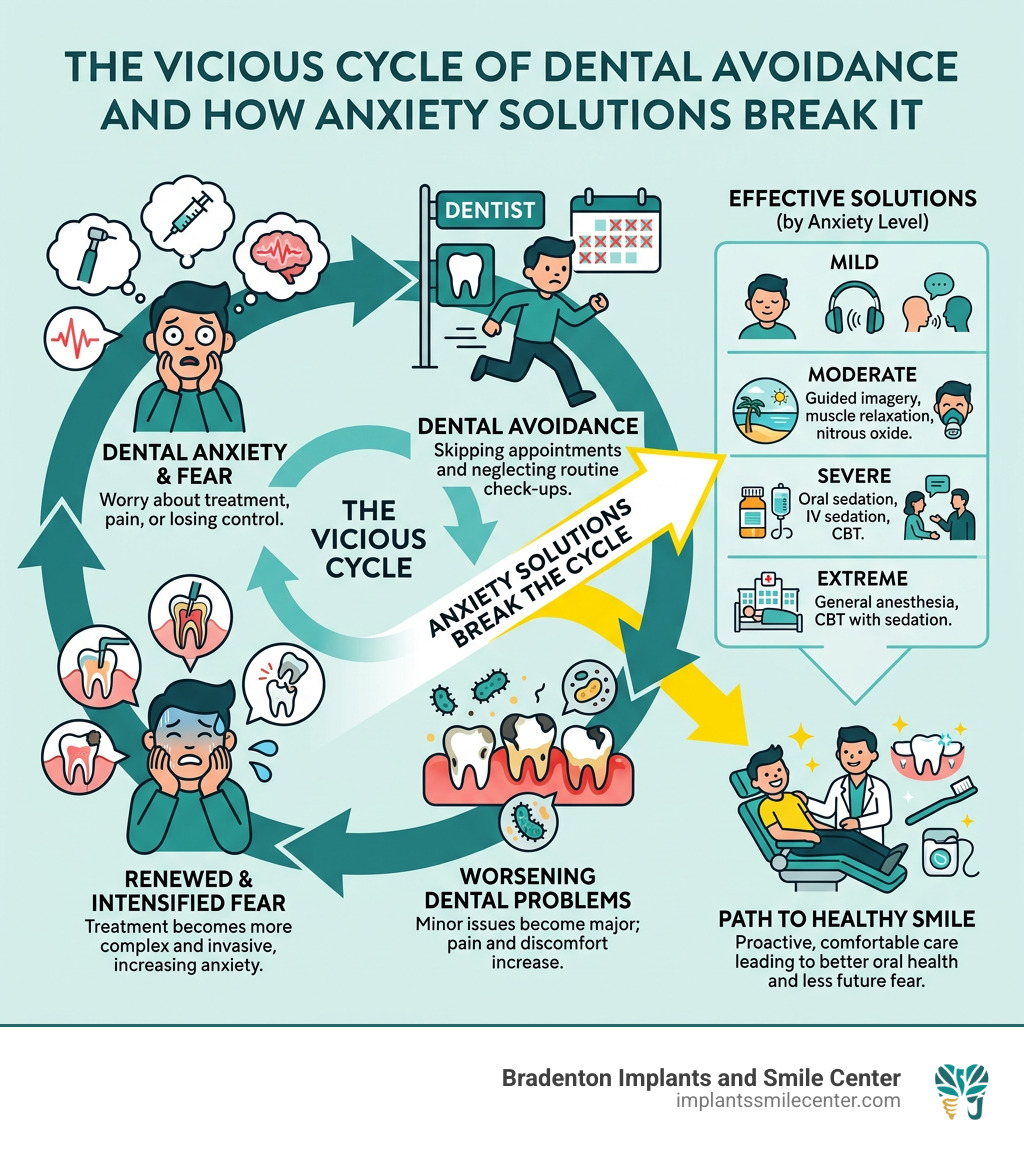
Anxiety Level Effective Solutions Mild Deep breathing, music, communication with your dentist Moderate Guided imagery, muscle relaxation, nitrous oxide ("laughing gas") Severe Oral sedation, IV sedation, cognitive behavioral therapy (CBT) Extreme (phobia) General anesthesia, CBT combined with sedation
You're not alone if the thought of sitting in a dental chair makes your heart race. About 36% of people in the U.S. fear dental treatment, and 12% describe their fear as extreme. For some, it goes even further — roughly 3% of adults in industrialized countries avoid the dentist entirely, even when they're in pain.
That avoidance has real consequences. Skipping routine care means small problems quietly become big ones. A minor cavity turns into a root canal. Gum disease goes untreated until teeth are at risk. The longer you wait, the more complex the treatment — and often, the more anxiety it triggers. It's a cycle that's hard to break on its own.
The good news? It absolutely can be broken. Modern dentistry has come a long way, and there are more tools than ever to help you get the care you need — comfortably and on your terms.
I'm Dr. John Hegazin, dentist and owner of Bradenton Implants and Smile Center, and with over 8 years of experience helping patients navigate dental anxiety solutions — including advanced sedation options — I've seen how the right approach can transform a fearful patient into a confident one. In this guide, I'll walk you through every option available so you can find what works best for you.
Understanding the Roots of Dental Anxiety
To find the right dental anxiety solutions, we first need to understand what we are up against. While many people use the terms "fear" and "anxiety" interchangeably, clinical experts often make a distinction. Dental anxiety is a general feeling of unease or worry before an appointment. However, when that fear becomes so intense that it leads to total avoidance—even when you are in physical pain—it may be classified as odontophobia.
Common Fear Triggers
Anxiety doesn't usually appear out of thin air. It is often a biological response to specific triggers found in the dental office:
The "Drill": The high-pitched sound of dental handpieces is a top trigger for many.
Needles: Trypanophobia (fear of needles) is a major hurdle for patients requiring local anesthesia.
Loss of Control: Being reclined in a chair with someone working in your personal space can trigger a "fight-or-flight" response.
Past Trauma: Many fears start in childhood due to a painful or negative experience.
Sensory Overload: The distinct smells of a dental office or the sight of clinical instruments can spike stress levels.
Dental Anxiety vs. Dental Phobia
It is helpful to see where you fall on the spectrum. This helps us tailor the right dental anxiety solutions for your specific needs.
Feature Dental Anxiety Dental Phobia (Odontophobia) Severity Mild to moderate unease. Extreme, paralyzing terror. Behavior May worry but still attends appointments. Avoids the dentist for years, even in agony. Physical Symptoms Slight butterflies, "fidgety" in the chair. Panic attacks, nausea, insomnia before visits. Impact Minimal impact on long-term health. Severe neglect leading to tooth loss and infection.
Effective Non-Pharmacological Dental Anxiety Solutions
Not every solution requires a pill or a mask. For many of our neighbors in Bradenton, the best dental anxiety solutions involve retraining the mind and body to stay calm.
Cognitive Behavioral Therapy (CBT)
Cognitive behavioral therapy is considered the "gold standard" for long-term psychological management of dental fear. It involves working with a professional to identify negative thought patterns—like "I'm going to choke" or "The numbing won't work"—and replacing them with realistic, calm thoughts. Research shows CBT can have a lasting impact, helping patients return to regular care without needing heavy sedation forever.
Relaxation Techniques
You carry a powerful toolset with you at all times: your breath and your muscles.
Deep Breathing: Inhaling slowly through your nose for four counts, holding for four, and exhaling through your mouth for four can physically lower your heart rate.
Progressive Muscle Relaxation: This involves tensing and then releasing each muscle group, starting from your toes and moving up to your jaw. It helps you recognize where you are holding tension.
Distraction and Comfort
Sometimes, the best way to handle a procedure is to "not be there" mentally. We encourage patients to use several distraction techniques:
Music or Audiobooks: Noise-canceling headphones are excellent for drowning out the sound of the equipment.
Stress Balls: Squeezing a fidget toy or stress ball gives your nervous energy an outlet.
Guided Imagery: Visualizing a "happy place," like a quiet beach or a favorite memory, can distract the brain from the clinical environment.
The Power of Scent
Smell is a direct line to the brain's emotional center. Many modern offices use aromatherapy to mask the "dentist smell."
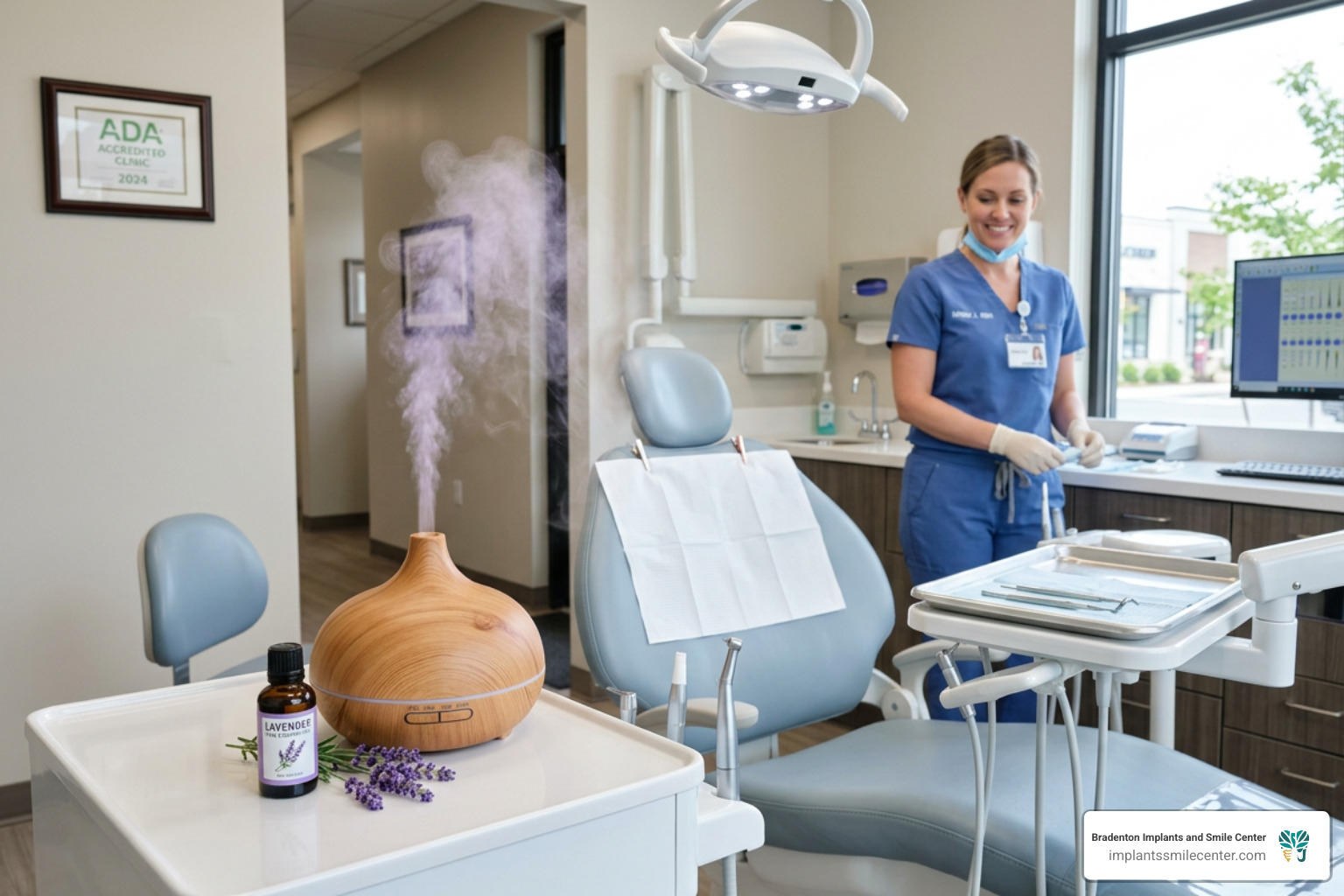
Studies have shown that ambient scents like lavender and orange can significantly reduce pulse rates and improve the mood of patients in the waiting room.
Sedation and Medical Dental Anxiety Solutions
When relaxation techniques aren't enough, we turn to pharmacological dental anxiety solutions. These allow us to perform necessary work while you remain in a state of total comfort.
Nitrous Oxide ("Laughing Gas")
This is the most common form of sedation. You breathe a colorless, odorless gas through a small nose piece. It works within minutes to create a feeling of euphoria and relaxation. The best part? The effects wear off almost immediately once the gas is turned off, meaning you can usually drive yourself home after the appointment.
Oral Anti-Anxiety Medication
For those who feel "pre-appointment jitters" the night before, dentists can prescribe anti-anxiety drugs like diazepam or triazolam. You take a pill about an hour before your visit. By the time you arrive, you feel drowsy and relaxed. Because these medications linger in the system, you will need a companion to drive you to and from the office.
IV Sedation (Conscious Sedation)
For severe anxiety or longer procedures like dental implants, IV sedation is a game-changer. The medication is administered directly into the bloodstream, allowing for a deeper level of relaxation often called "twilight sleep." You remain conscious and able to respond to the dentist, but you likely won't remember much of the procedure afterward. For safety, we often look to experts in the field, such as those referenced on Dr. Atlas’ website, to understand the high standards of anesthesiology required for these advanced options.
General Anesthesia
This is reserved for the most extreme cases of phobia or for highly invasive surgeries. Under general anesthesia, you are completely unconscious. This is typically performed in a hospital setting or a specialized surgical suite with an anesthesiologist present to monitor your vitals.
Choosing the Right Sedation for Dental Anxiety Solutions
We don't believe in a one-size-fits-all approach. Choosing the right method involves a careful patient assessment:
Medical History: We review your current medications and health conditions to ensure the sedative is safe for you.
Anxiety Level: Mild jitters might only need nitrous, while a history of panic attacks might require IV options.
Procedure Length: A quick filling is different from a full-mouth restoration.
Safety Protocols: We always follow strict monitoring guidelines to ensure your heart rate and oxygen levels remain stable throughout.
Long-Term Benefits of Clinical Dental Anxiety Solutions
Utilizing these medical options isn't just about getting through one day; it's about your future. Sedation leads to:
Pain Reduction: Relaxed muscles and a calm mind actually perceive less pain.
Treatment Compliance: You are more likely to finish a multi-step treatment plan if you aren't dreading the next visit.
Better Health Outcomes: Breaking the cycle of avoidance prevents systemic issues like heart disease and diabetes complications, which are often linked to poor oral health.
Modern Technology and Office Environment
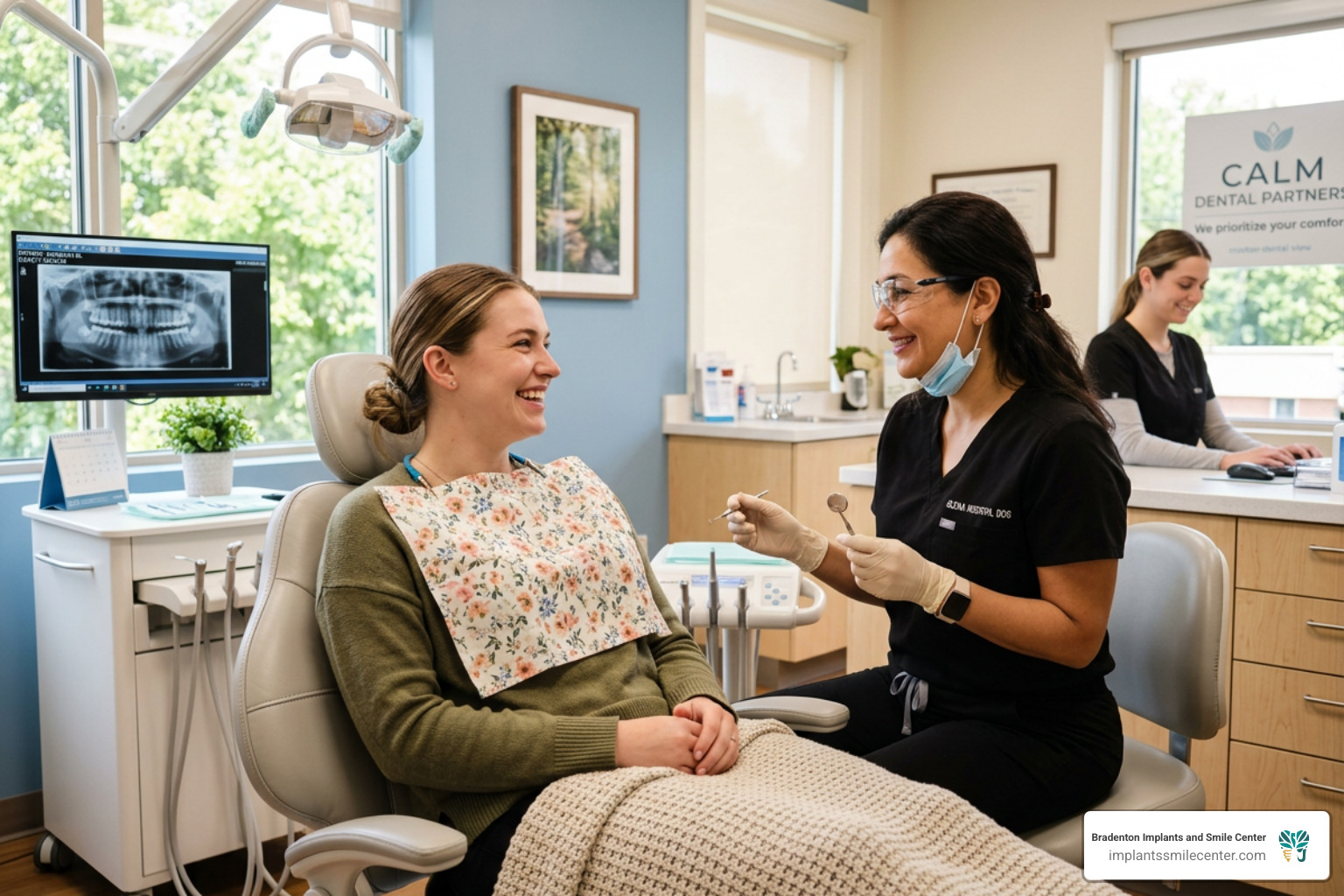
The "scary" dentist office of the past is being replaced by environments designed for peace. At Bradenton Implants & Smile Center, we focus on sensory adaptation to make the experience feel less clinical and more like a spa.
The Wand and Computer-Controlled Anesthesia
One of the biggest breakthroughs in dental anxiety solutions is how we deliver numbing medication. "The Wand" is a computer-controlled system that delivers anesthesia at a slow, steady rate that is below the threshold of pain. Most patients don't even realize they've received an injection. This is a massive win for those with needle phobias.
Helping Control Gum and Bone Health
By using technology like 3D digital scanners, we can help control gum and bone health without the need for those messy, "goopy" impressions that trigger gag reflexes. Modern tech makes diagnostics faster, more accurate, and significantly more comfortable.
Communication Styles: Tell-Show-Do
We find that the "fear of the unknown" is often worse than the procedure itself. We use the "Tell-Show-Do" method:
Tell: We explain what we are going to do in simple language.
Show: We show you the instrument and how it works (perhaps on your fingernail).
Do: We perform the procedure exactly as described. This builds rapport and trust, which are the ultimate foundations for a fear-free experience.
Frequently Asked Questions about Dental Anxiety
How common is dental anxiety?
It is incredibly common. Statistics show that nearly 36% of the U.S. population experiences some form of dental fear. Interestingly, research indicates that these fears are slightly more common in females (nearly 5%) than in males (nearly 3%) when it comes to clinical phobia. It is the fifth-most common cause of anxiety globally.
Can I be completely asleep during my procedure?
Yes. While "conscious sedation" (IV or oral) keeps you technically awake but very relaxed, "general anesthesia" allows you to be completely asleep. We discuss these options during your consultation to decide which is safest and most appropriate for your treatment.
What is the "vicious cycle" of dental fear?
The vicious cycle begins when fear leads to avoiding the dentist. This avoidance leads to worsening dental issues. Eventually, the pain becomes unbearable, forcing an emergency visit for a complex procedure. This traumatic emergency experience then reinforces the original fear, starting the cycle over again. You can learn more about the interplay of these factors via the Creative Commons licensed research on dental fear cycles.
Conclusion
At Bradenton Implants & Smile Center, we know that your oral health is the gateway to your overall well-being. Neglecting your teeth due to fear doesn't just hurt your smile; it can impact your heart, your confidence, and your quality of life.
We are committed to providing personalized, compassionate care for the adults and seniors of Bradenton. Whether you need a simple cleaning or a complex implant procedure, our team is here to listen to your concerns and provide the dental anxiety solutions that make sense for you. You deserve a healthy smile without the hurdle of fear.
Ready to take the first step toward a fear-free smile? Visit us at 7270 55th Ave E, Bradenton, FL 34203, or explore our Advanced Sedation Options to see how we can help you today.