

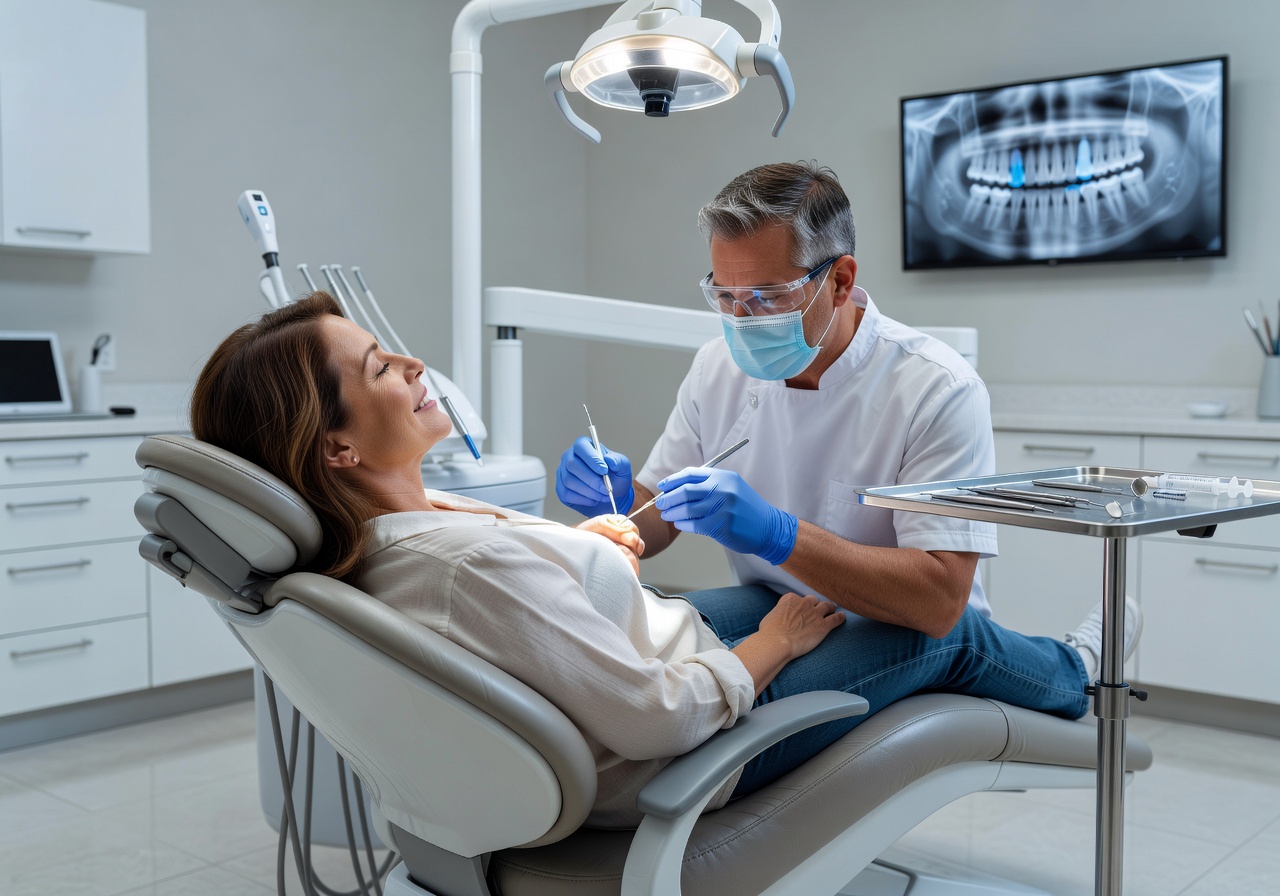
The Definitive Guide to Dental Sealants for Adults
Most Adults Don't Know They Qualify for Dental Sealants — Here's What You Need to Know
Dental sealant for adults is a simple, painless preventive treatment that coats the grooves of your back teeth to help block bacteria and lower the risk of cavities.
Quick answer: Can adults get dental sealants?
Yes — some adults with healthy molars that are free of fillings, crowns, or active decay may be candidates for sealants
Sealants are used to help reduce cavity risk in back teeth
The procedure is painless, takes just a few minutes per tooth, and requires no drilling
Cost is often $30–$60 per tooth — typically less than a filling
Many sealants can last for years with routine checkups
Most people assume dental sealants are just for kids. That assumption can cause adults to overlook a conservative preventive option.
About 90% of adults over 20 have had at least one cavity, and about 1 in 4 currently has untreated decay. Adults aged 20 to 34 have high rates of untreated cavities in their back teeth. Yet sealants are still used far less often in adults than in children.
The back teeth — your molars and premolars — are common sites for cavities because their deep grooves can trap food and bacteria that are hard to remove fully with brushing alone. Sealants cover those grooves with a thin protective coating to make the surface easier to keep clean.
This guide breaks down everything you need to know: how sealants work, who benefits most, what the procedure involves, and whether the cost makes sense for you.
I'm Dr. John Hegazin, owner of Bradenton Implants and Smile Center, with over 8 years of experience in preventive and restorative dental care — including dental sealant for adults as part of comprehensive treatment planning. Whether you're trying to protect healthy teeth or prevent further decay, I'll walk you through exactly what this treatment involves and whether it's right for you.
What Is a Dental Sealant for Adults and How Does It Work?
A dental sealant for adults is a very thin protective coating placed on the chewing surfaces of molars and sometimes premolars. These are the teeth with pits and fissures, which is the dental way of saying "tiny grooves that love trapping food."
Most sealants are resin-based, though some are made from glass ionomer or other fluoride-releasing materials. Once placed, the sealant flows into the grooves and hardens, creating a smoother surface that is easier to keep clean.
Think of it like a raincoat for your molars. It does not make your teeth invincible, but it does give cavity-causing bacteria a much harder time.

Why back teeth are most vulnerable
Back teeth do the heavy lifting when you chew. They also have the deepest grooves. Those grooves are ideal hiding places for plaque, food debris, and acid-producing bacteria.
That matters because:
9 in 10 cavities occur in back teeth
Grooves in molars are much harder to clean than smooth tooth surfaces
Even adults with good brushing habits can miss the bottoms of deep fissures
Adults ages 20 to 34 have especially high levels of untreated decay in back teeth
A toothbrush is great, but it is not magic. If the groove is narrower than a toothbrush bristle, bacteria can still camp out there rent-free.
How a dental sealant for adults prevents cavities
Sealants work by forming a physical barrier over vulnerable grooves. That barrier helps:
Block food particles from packing into pits and fissures
Reduce plaque buildup in hard-to-clean areas
Limit acid attacks on enamel
Make the chewing surface smoother and easier to brush
Sealants are preventive, not restorative. They are designed to stop decay before it starts or, in select cases, help manage very early non-cavitated lesions.
Who can and cannot get sealants
Adults can be good candidates for sealants if they have:
Molars or premolars with deep grooves
Teeth without fillings or crowns on the chewing surface
No obvious cavitated decay
Higher cavity risk due to dry mouth, diet, or decay history
Early non-cavitated occlusal lesions in carefully selected cases
Sealants are usually not the best option if a tooth already has:
A large filling
A crown
A visible cavity or cavitated decay
Structural damage that needs restorative care
The best way to know if you qualify is with an exam. We evaluate tooth anatomy, caries risk, and whether the surface is healthy enough to seal. You can learn more about our dental sealant service.
Are Dental Sealants Effective for Adults?
Yes, when used on the right teeth and the right patients, sealants can be effective for adults.
They have long been associated with pediatric dentistry, but the basic principle behind pit-and-fissure protection can also apply to adults. Adult molars still have grooves that can retain plaque and food debris, so sealants may still be appropriate in selected cases.
What the research says about sealants in adults
A few big-picture facts explain why this matters:
About 90% of adults age 20 and older have had at least one cavity
About 1 in 4 adults ages 20 to 64 currently has at least one cavity
Adults ages 20 to 34 have high levels of untreated decay in back teeth
Sealants have been shown to reduce cavities in back teeth, especially in children and adolescents, and may also benefit selected adults
At the same time, sealants are underused in adults. Adult dentistry often focuses on fixing damage after it appears, but prevention is usually cheaper and simpler than restorative treatment.
Evidence for non-cavitated occlusal caries in adults
One of the most interesting areas of research is the use of sealants on non-cavitated occlusal caries. These are very early lesions on the chewing surface that have not yet formed an actual hole.
Some clinical research suggests sealants may help manage carefully selected, non-cavitated lesions by limiting their progression. That does not mean every early spot should automatically be sealed, but it does mean some early lesions can sometimes be managed conservatively rather than drilled and filled right away. If you want to review the study itself, see this adult non-cavitated occlusal caries sealant research.
Dental sealant for adults vs fluoride treatments
Sealants and fluoride are not enemies. They do different jobs.
Fluoride works especially well on smooth tooth surfaces by helping enamel resist acid and remineralize early weak spots. Sealants work especially well on pits and fissures by physically covering vulnerable grooves.
Here is the simple comparison:
Sealants:
Best for chewing surfaces with deep grooves
Create a physical barrier
Usually placed once, then monitored and repaired as needed
Especially useful for molars and premolars
Fluoride:
Best for smooth surfaces and overall enamel support
Strengthens enamel and supports remineralization
May need repeated application depending on risk level
Especially helpful for dry mouth and widespread cavity risk
For many adults, the best plan is not sealants or fluoride. It is sealants plus fluoride, combined with home care and regular exams.
Which Adults Benefit Most From Sealants?
Not every adult needs sealants, but some benefit much more than others. We use a personalized approach because preventive care should fit the person, not just the tooth chart.
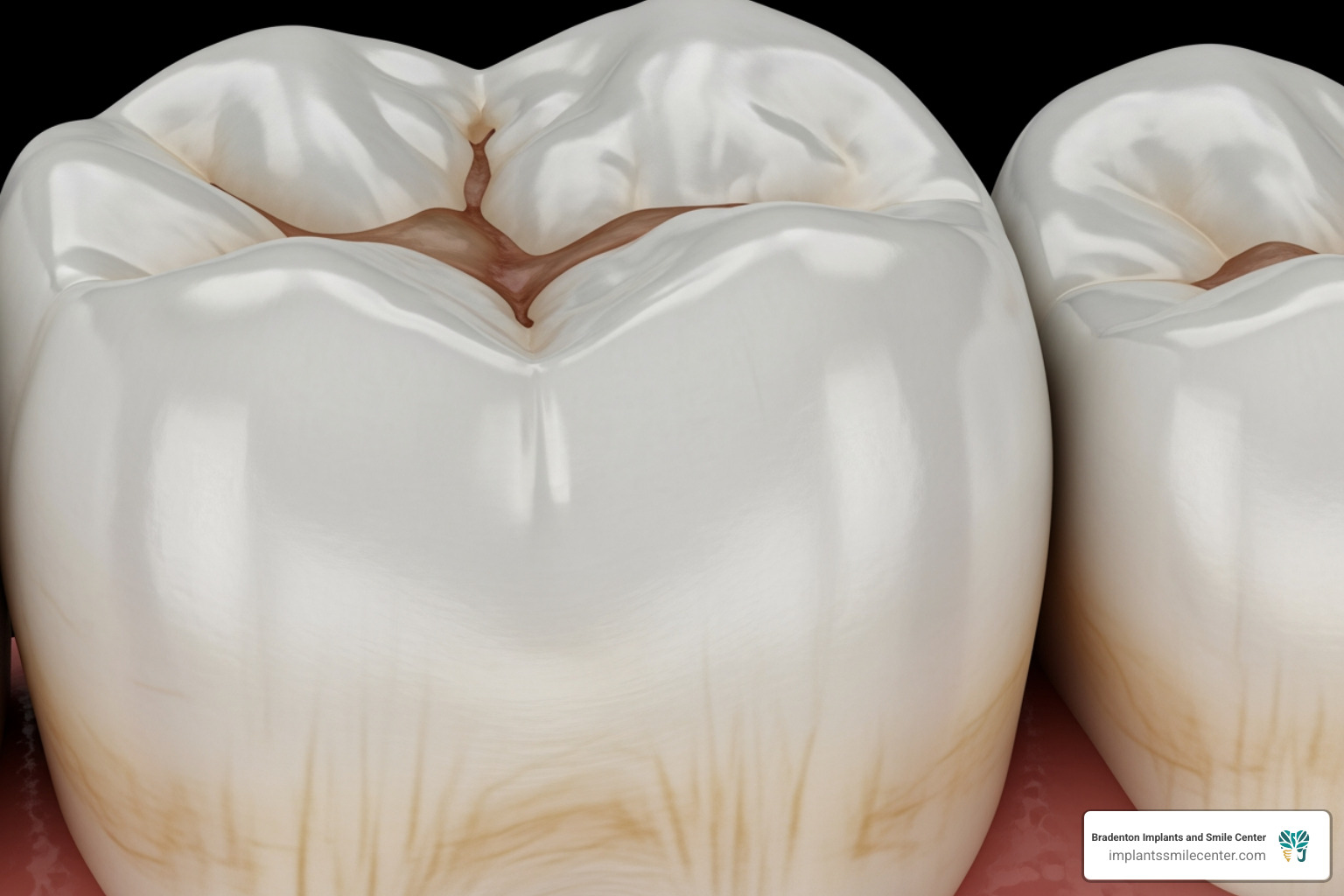
Dental sealant for adults with deep grooves, dry mouth, or cavity history
Adults who often benefit most include those with:
Deep pits and fissures in molars
A history of cavities
Dry mouth from medications or health conditions
Family history of frequent decay
Thin or worn enamel
Brittle teeth related to aging or long-term wear
Dry mouth deserves special attention. Saliva helps wash away food particles and neutralize acids. When saliva is reduced, cavity risk rises. That is one reason adults taking certain medications may be strong candidates for sealants.
Adults without fillings or active decay in their molars can also benefit, even if they have never had a cavity there before. Prevention is much easier than trying to undo damage later.
Adults with orthodontics, grinding, or hard-to-clean molars
Other adults who may benefit include:
People with braces or other orthodontic appliances
Patients who grind or clench their teeth
Adults with molar anatomy that is hard to clean
People whose brushing is good overall but cannot fully reach deep grooves
Orthodontic hardware can make hygiene more difficult. Bruxism can wear enamel and create stress on teeth. Deep fissures remain deep fissures no matter how disciplined your brushing routine is.
That said, heavy grinding may also shorten the life of a sealant, so we consider wear patterns carefully before recommending treatment.
When sealants may not be the best choice
Sealants may not be ideal if you have:
A tooth with a large existing restoration
A cavitated lesion that already needs a filling
Poor moisture control during placement
Severe wear on the chewing surface
Tooth anatomy better treated another way
If there is already decay that has progressed into a cavity, sealing over it is not appropriate. In that case, the right next step may be a dental filling or other treatment. Good prevention also starts with regular dental cleaning, since plaque and tartar control support every part of oral health.
The Procedure, Safety, Cost, and Longevity of Adult Sealants
Sealants are one of the easiest preventive treatments we offer.
What happens during the appointment
The appointment is quick and usually painless. The steps generally include:
We clean the tooth thoroughly.
We isolate and dry the area.
We apply a gentle etching gel to roughen the enamel slightly.
We rinse and dry again.
We place the liquid sealant into the grooves.
We harden it with a curing light.
We check your bite and make any small adjustments.
It usually takes only a few minutes per tooth. No anesthesia is typically needed because no drilling is involved.
Are sealants safe for adults?
For most adults, yes, sealants are considered safe.
A few common concerns come up:
BPA concerns: Some modern sealant materials are BPA-free. Material details depend on the specific product used.
Sealing in bacteria: This is why diagnosis matters. We do not place sealants blindly. Teeth must be properly evaluated so active cavitated decay is not overlooked.
Comfort: Sealants are noninvasive and generally painless.
Recovery: There is essentially no downtime. You can usually eat normally soon after placement unless we advise otherwise.
When sealants are placed correctly on appropriate teeth, the benefits generally outweigh the risks.
How long sealants last and when they need repair
A common question is how long they last. A practical answer is:
Many sealants last several years
Some may last 5 to 10 years depending on the material, bite forces, and oral habits
They should be checked at routine dental exams
Retention matters. If part of a sealant wears away and a groove becomes exposed, we may be able to repair it rather than replace the entire thing.
This is why regular checkups matter. A sealant only protects the area it still covers.
Cost and insurance coverage for adults
Typical sealant cost is about:
$30 to $50 per tooth
Sometimes up to $60 per tooth depending on the case
That compares favorably with fillings, which commonly cost more per tooth.
Insurance coverage for adults is less predictable than coverage for children. Many dental plans only cover sealants for minors, though some plans may offer exceptions or preventive benefits depending on risk and plan design. We always recommend checking your specific policy.
If you are weighing cost versus value, think of sealants as a relatively small investment that may help you avoid larger restorative bills later. You can explore our full range of services if sealants are part of a broader preventive plan.
Types of Sealants and How Newer Materials Compare
Not all sealants are identical. Material choice can affect retention, moisture tolerance, and fluoride or bioactive behavior.
Resin-based, glass ionomer, and moisture-tolerant sealants
The main categories include:
Resin-based sealants
Often have the best retention
Commonly used for long-term pit-and-fissure sealing
Require good moisture control
Glass ionomer sealants
Release fluoride
Can be helpful when moisture control is difficult
Often have lower retention than resin-based sealants
Moisture-tolerant or hydrophilic resin sealants
Designed to perform better when perfect dryness is hard to achieve
Useful in deeper fissures or harder-to-isolate situations
For example, product information for UltraSeal XT plus describes a hydrophobic resin-based, fluoride-releasing sealant, while UltraSeal XT hydro is designed to be more moisture-tolerant. The right choice depends on clinical conditions, not marketing buzzwords.
Bioactive or fluoride-releasing sealants: what adults should know
Newer materials may release fluoride or use bioactive technology intended to support remineralization around the sealed area.
The emerging evidence is promising. In the adult 24-month trial mentioned earlier, the bioactive material performed better than the fluoride-releasing comparator in retention and caries control for non-cavitated occlusal lesions.
That said, material choice is only part of the equation. A great product placed poorly is still a poorly performing sealant.
Why placement technique matters as much as material
Technique is huge. The best material in the world cannot compensate for contamination or weak enamel preparation.
Success depends on:
Proper tooth selection
Good isolation from saliva
Correct etching and enamel preparation
Full coverage of pits and fissures
Adequate curing
Follow-up checks for retention
This is one reason adult sealants should be part of comprehensive preventive care, not just a quick add-on. Ongoing monitoring during hygiene visits is important. If you are interested in how minimally invasive care fits into broader treatment planning, you can also learn about laser dentistry and review this professional article on adult sealant retention and prevention.
Frequently Asked Questions About Dental Sealant for Adults
Is a dental sealant for adults worth it if I already brush and floss well?
Often, yes.
Brushing and flossing are essential, but they do not always clean the bottom of deep molar grooves. Sealants add a layer of protection in the exact place where toothbrush bristles may not reach well. We think of them as backup for high-risk anatomy, not a replacement for good home care.
Can sealants be placed over early decay?
Sometimes, yes, but only in carefully selected cases.
If the lesion is non-cavitated, meaning there is early demineralization without a true hole, sealing may help stop progression by cutting off bacteria from nutrients. This must be diagnosed properly and monitored over time. If the decay is cavitated, a sealant is not the right treatment.
Will my dental insurance cover sealants after age 18?
Sometimes, but often not.
Many plans limit sealant benefits to children and teens. Some adult plans may offer preventive exceptions, especially if there is documented need. The only reliable answer is to verify your specific benefits before treatment. We can help you review coverage and provide an estimate.
Conclusion: When to Ask About Sealants
If you are an adult with deep molar grooves, a history of cavities, dry mouth, or hard-to-clean back teeth, sealants are worth discussing. They are simple, conservative, and often far less expensive than restorative treatment later.
At Bradenton Implants & Smile Center, we look at the whole picture: your cavity risk, tooth anatomy, current restorations, and long-term goals. Sometimes sealants are the right move. Sometimes another preventive or restorative option makes more sense. Either way, the decision should be personalized.
If it has been a while since your last exam, this is a great time to ask whether your molars are good candidates for sealants. Preventive care today can help you avoid bigger problems tomorrow.
Learn more about gum treatment, explore more topics on our blog, or see all of our care options at Bradenton Implants & Smile Center.