

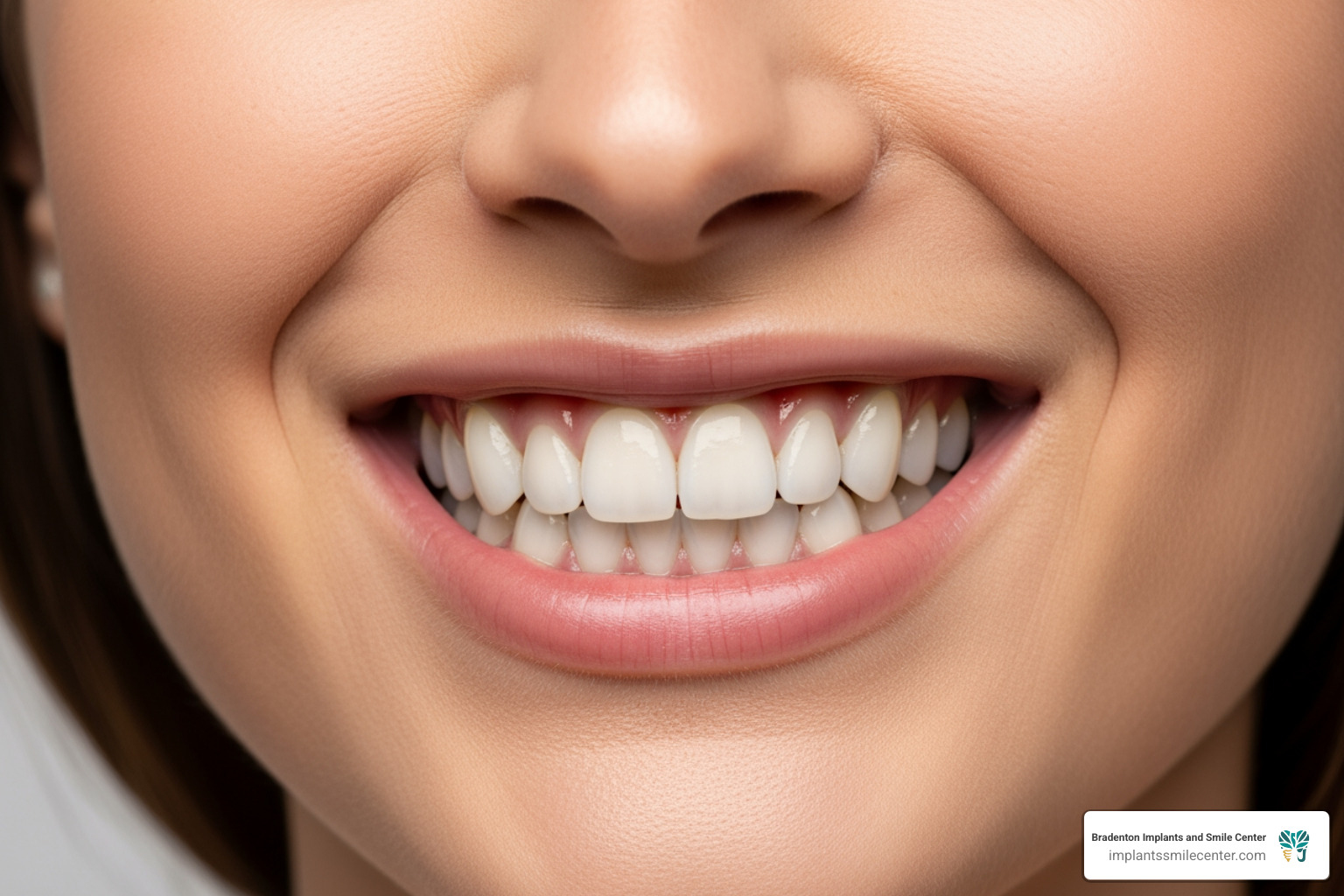
Get Your Grin Back with These Easy False Teeth Veneers
Why So Many Adults Are Searching for False Teeth Veneers Right Now
False teeth veneers are thin, removable shells designed to snap over your existing teeth — giving you a whiter, more even smile without drilling, injections, or dental visits.
Here's a quick snapshot of what they are and how they compare:
Type Removable? Dentist Needed? Approx. Cost Lifespan Snap-on / false teeth veneers Yes No $35 – $900+ per set 1 – 10 years Composite veneers No Yes $400 – $2,500 per tooth ~4 years Ceramic veneers No Yes $400 – $2,500 per tooth 10 – 15 years Porcelain veneers No Yes $925 – $2,500 per tooth 10 – 30 years
If you're dealing with chipped, stained, gapped, or missing teeth — and you're not ready for a permanent procedure — snap-on veneers can be a fast, affordable starting point. But they're not a replacement for damaged or missing teeth, and they come with real trade-offs worth understanding before you buy.
Over half of American adults visit the dentist every year for issues like discolored, chipped, or missing teeth. And with permanent porcelain veneers averaging around $1,500 per tooth, it's no surprise that more people are exploring lower-cost removable options first.
This guide walks you through exactly how false teeth veneers work, what they can and can't fix, how much they really cost, and when a more permanent solution — like implants or professional veneers — makes more sense for your long-term smile and health.
I'm Dr. John Hegazin, owner of Bradenton Implants and Smile Center, with over 8 years of experience helping patients find the right solution for damaged, missing, or cosmetically imperfect teeth — including professional veneers and alternatives to false teeth veneers. Let's break down everything you need to know so you can make a confident, informed decision.
What Are False Teeth Veneers and How Do They Work?
At the simplest level, false teeth veneers are removable cosmetic covers. They fit over the front of your smile, and sometimes over more of the visible tooth surface, to make teeth look straighter, whiter, fuller, or more complete.
Most people searching this term are not looking for traditional dentist-bonded veneers. They are usually looking for:
Snap-on teeth
Removable veneers
Clip-in cosmetic teeth
At-home smile covers
Temporary options for photos, events, or daily confidence
These products are usually made from resin, thermoplastic, or similar lightweight materials. Some are made from home-molded materials, while others are custom-made from impressions you send in.
False teeth veneers vs traditional dental veneers
This is the most important distinction.
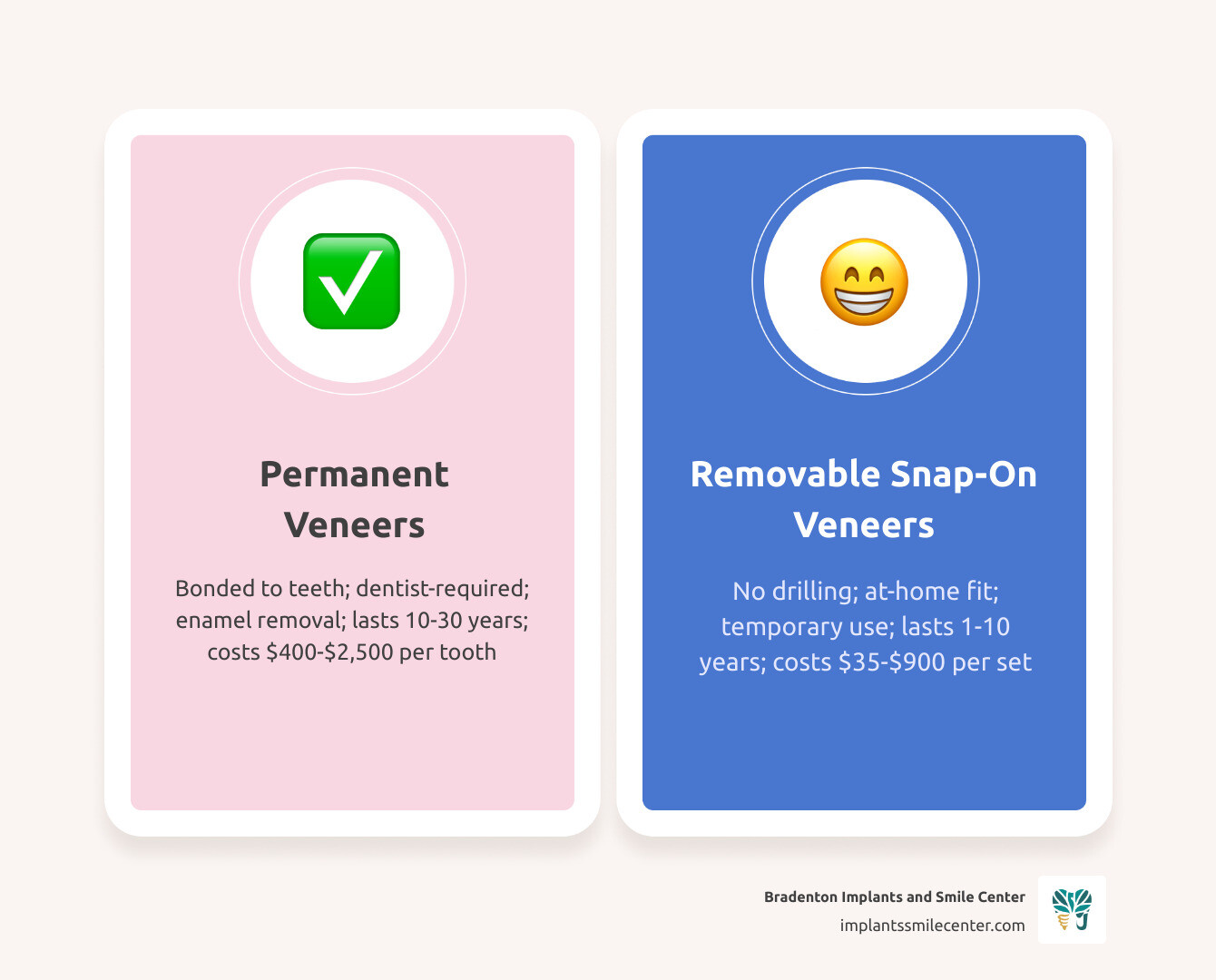
Traditional dental veneers are thin shells, usually porcelain or composite, that a dentist bonds directly to your real teeth. They are part of cosmetic dentistry and usually require enamel removal, which makes treatment irreversible. You can learn more from this clinical overview from Cleveland Clinic and from our page on veneers.
False teeth veneers are different:
They are removable
They are not bonded permanently
They usually do not require drilling
They can often be ordered without a dental visit
They are mainly cosmetic, not restorative
In plain English: traditional veneers are like custom tile permanently attached to a wall. False teeth veneers are more like a fitted cover you can pop on and off. Same idea visually, very different in function.
What false teeth veneers can and cannot fix
False teeth veneers can help hide:
Stains and discoloration
Small chips
Minor gaps
Slightly uneven teeth
Misshapen teeth
The appearance of a missing tooth in some cases
But they cannot truly fix:
Tooth decay
Gum disease
Loose teeth
Bite problems
Major crowding
Advanced tooth damage
Bone loss
Actual missing-tooth function
That last point matters. A removable veneer may hide a gap, but it does not replace the root, preserve bone, or restore normal chewing strength. If you have actual missing teeth, options like tooth replacement, dentures, or dental implants are often more appropriate long term.
Also, realistic expectations matter. Some removable products look surprisingly natural in photos or short conversations. Others can affect speech, feel bulky, or make eating awkward. A smile upgrade is great. A surprise whistle on the letter "s" is less exciting.
How at-home snap-on veneers stay in place
Most at-home snap-on veneers stay in place through one of these methods:
A friction fit over existing teeth
Light retention around "anchor" teeth
A custom-fitted tray design
Minimal adhesive in some systems
They usually require some natural teeth to hold onto. If someone has very few remaining teeth, or unstable teeth, fit can be poor or impossible.
The basic process usually looks like this:
You receive an impression kit or moldable tray.
You make an impression at home.
The company fabricates the veneer from that model, or you mold it yourself if it is a boil-and-fit type.
You snap the appliance over your upper or lower teeth.
Comfort depends heavily on fit. A custom-made removable veneer generally fits better than a generic one-size product.
Types of False Teeth Veneers Compared
Not all veneers are the same, and the word "veneers" often gets used for very different products.
Porcelain and ceramic veneers for existing teeth
Porcelain and ceramic veneers are professional treatments used on existing teeth. They are best for people who have healthy tooth roots and gums but want to improve the visible look of front teeth.
Common benefits include:
Very natural appearance
Good translucency and color match
Better stain resistance than composite
Long lifespan with proper care
Important limitations include:
Usually require enamel shaving
Irreversible in most cases
Need dental exams and multiple visits
Can chip or fracture
Cost significantly more than removable options
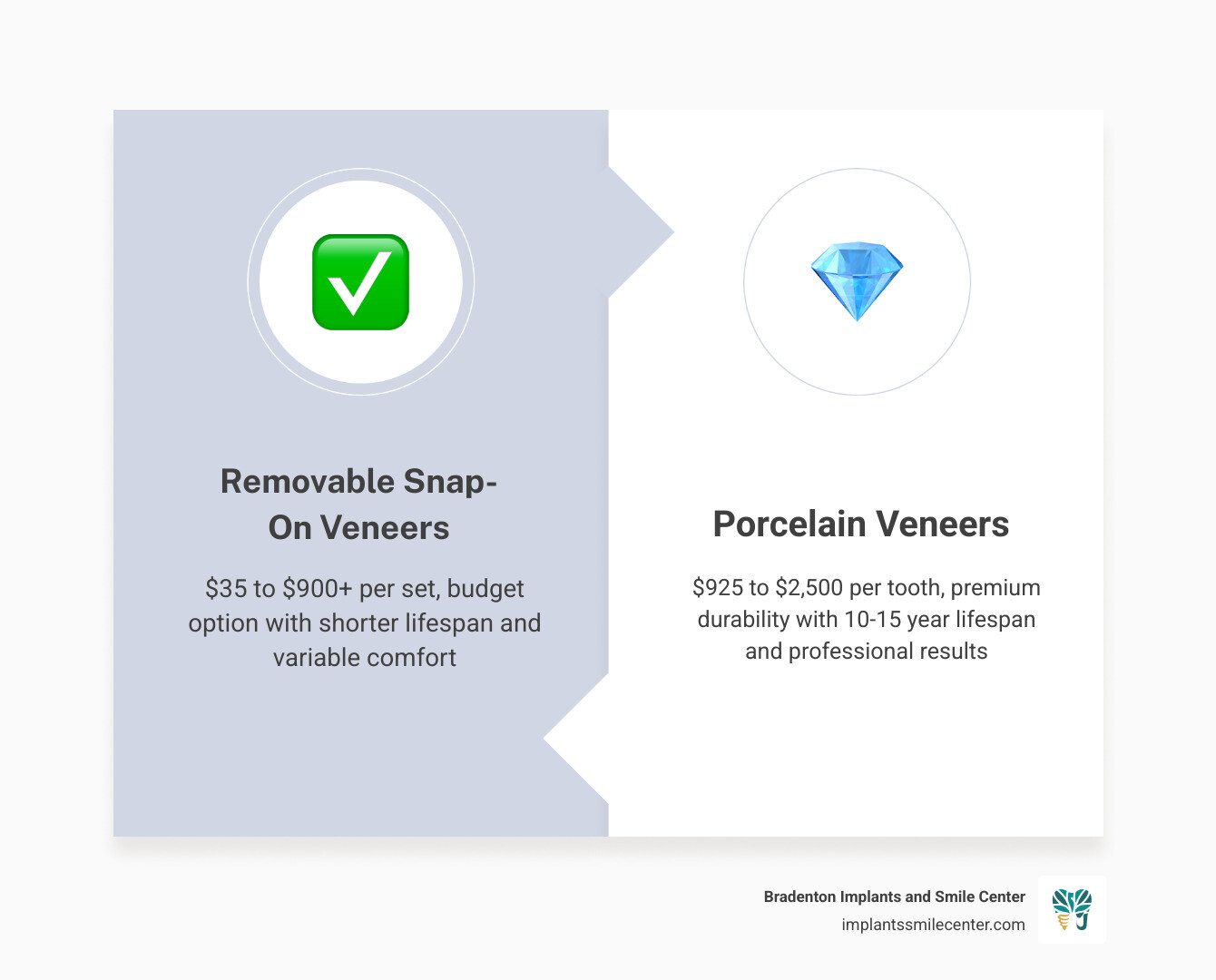
Research in your brief shows porcelain veneers often cost $925 to $2,500 per tooth, with averages around $1,500 per tooth. Lifespan is often around 10 to 15 years, though some can last longer with good care.
If a tooth needs more full-coverage protection rather than just cosmetic enhancement, dental crowns may be the better option.
Snap-on and temporary false teeth veneers
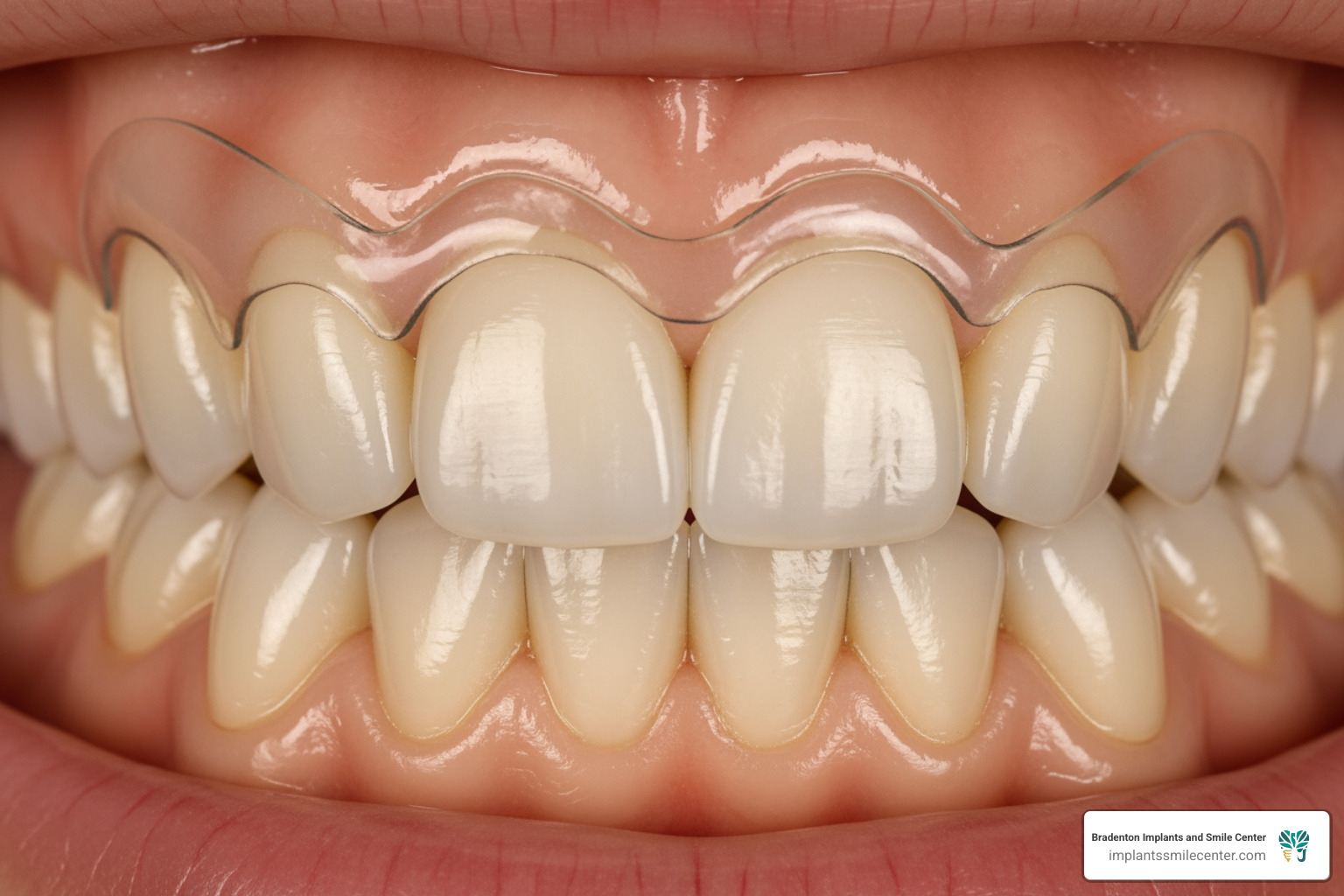
Snap-on and temporary false teeth veneers are the category most online shoppers mean. These are removable appliances made from resin, thermoplastic, or similar materials. Some are lab-made from impressions, while others are DIY boil-and-fit products.
Their appeal is easy to see:
No drilling
No enamel removal
Lower upfront cost
Fast cosmetic improvement
Often available without a dentist visit
Their trade-offs are just as real:
Bulkier than permanent veneers
May affect speech
Usually less natural up close
Can trap plaque if worn improperly
May not be ideal for daily heavy chewing
Need periodic replacement
Some higher-end removable veneers may last several years with proper care, while heavy daily use can shorten that lifespan significantly.
Which veneer type looks best, feels best, and lasts longest?
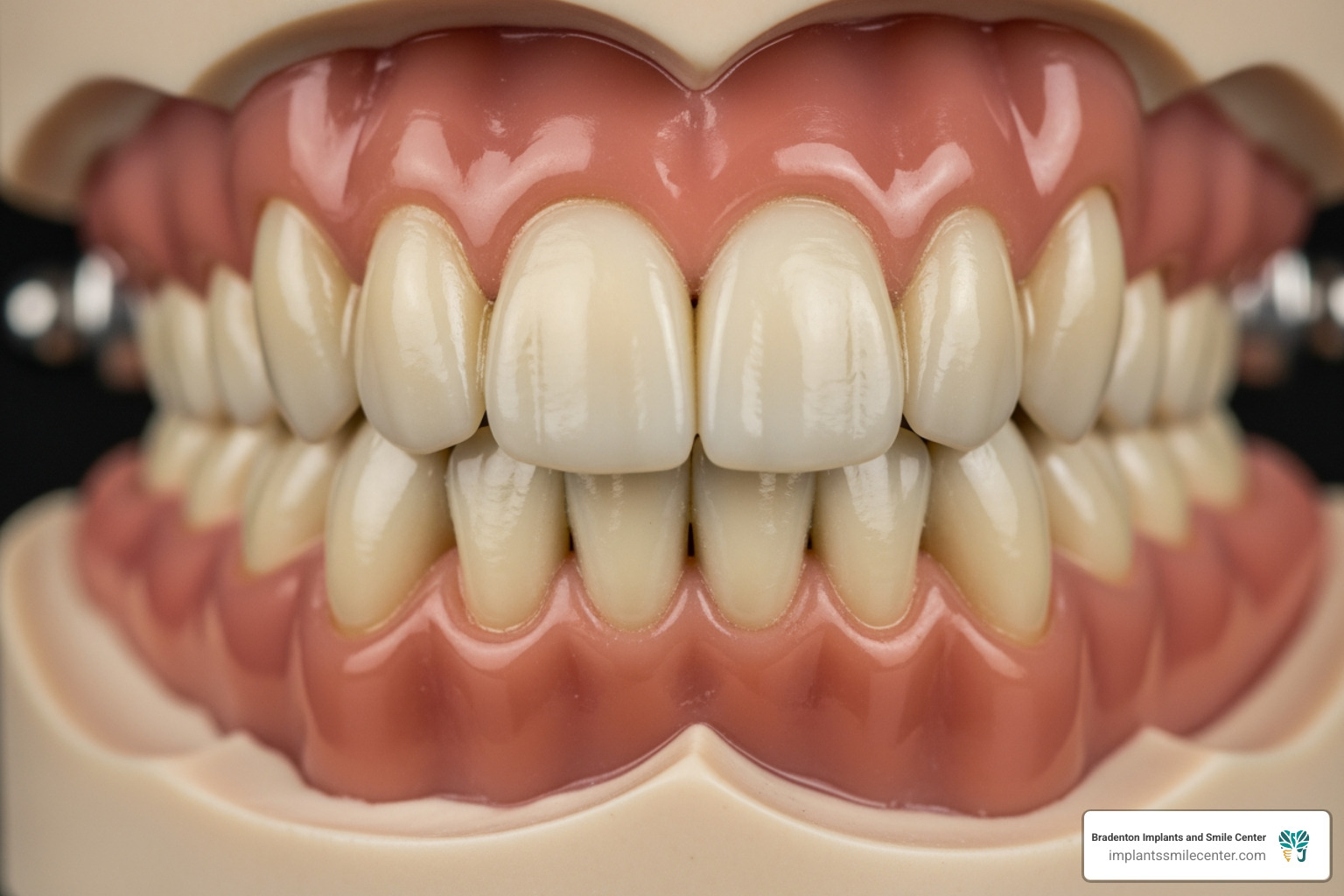
Here is the practical side-by-side comparison most people want:
Veneer type Looks most natural Feels most natural Lasts longest Best for Porcelain Yes Yes after adjustment Yes Long-term cosmetic smile makeover Ceramic Very good Very good Very good Cosmetic improvement with professional care Snap-on false teeth veneers Fair to good Variable Shorter Temporary cosmetic coverage on a budget
In general:
Best appearance: porcelain
Best long-term comfort: professionally designed permanent veneers
Best durability: porcelain
Lowest invasiveness: removable snap-on veneers
Lowest upfront price: removable snap-on veneers
For value, it depends on your goal. If you want a short-term cosmetic solution for events, confidence, or photos, removable veneers may be enough. If you want a durable smile upgrade and have healthy teeth, professional veneers are in another league.
Cost of False Teeth Veneers in 2026
Cost is one reason this topic is so popular in 2026. The price gap between removable and permanent options is huge.
Typical price ranges by veneer type
Based on the research provided, here are common ranges:
Snap-on or removable veneers: about $35 to $900+ per set
Composite veneers: about $400 to $2,500 per tooth
Ceramic veneers: about $400 to $2,500 per tooth
Porcelain veneers: about $925 to $2,500 per tooth
That means a full cosmetic smile with porcelain veneers on 8 front teeth can easily run into the five-figure range.
Meanwhile, removable options are usually sold by the arch or set, not by the tooth. That makes them much cheaper upfront, but not always cheaper over time if they need frequent replacement.
Hidden and ongoing expenses to watch for
The sticker price is not the whole story. Consumers should also watch for:
Impression kit fees
Shipping costs
Rush production fees
Warranty add-ons
Replacement fees if fit is wrong
Remake charges for updated impressions
Cleaning tablets or special cleaners
Dental exams if irritation develops
Replacement every 1 to 3 years for lower-end products
For permanent veneers, hidden costs can include:
Consultation fees
X-rays
Temporary veneers
Bite adjustments
Future replacement if a veneer chips
Night guards for grinding
Gum treatment or fillings before treatment
Insurance is another issue. Because veneers are usually cosmetic, dental insurance often provides limited or no coverage. Financing can help, though, especially for professional treatment.
Are cheaper online false teeth veneers worth it?
Sometimes. Often not.
A low-cost product may work for a short-term event, but buyers should be careful. The biggest issue with very cheap online veneers is not just appearance. It is fit, hygiene, and safety.
Red flags include:
No mention of materials used
No clear return or remake policy
Claims that one size fits everyone
No guidance about oral health limitations
Promises to replace multiple missing teeth without enough support teeth
No cleaning instructions
No discussion of speech or chewing limitations
No warning about cavities, gum disease, or loose teeth
Unrealistic before-and-after claims
A removable product that fits badly can rub the gums, trap food, press on teeth unevenly, and create frustration fast.
False Teeth Veneers vs Dentures vs Dental Implants
These options are often confused, but they solve different problems.
Veneers vs dentures: best for looks, comfort, and daily life
Veneers cover existing teeth. Dentures replace missing teeth.
That means if you still have front teeth that are stained, chipped, or uneven, veneers may be a cosmetic option. If you have multiple missing teeth or no teeth in an arch, dentures are designed for replacement.
Dentures can be:
Full dentures
Partial dentures
Implant-supported snap-on dentures
Learn more about dentures and snap-on dentures.
Compared with false teeth veneers, dentures generally:
Replace more missing teeth
Restore more function
Require daily cleaning
May need removal at night
May need relining as gums and bone change
Can affect chewing and speech at first
Compared with dentures, removable veneers generally:
Feel less like a full prosthetic
Are used more for appearance than function
May be lighter and less bulky
Do not replace a full arch of lost teeth well
If your goal is to actually replace teeth, dentures are more appropriate than false teeth veneers.
Veneers vs implants: when a cosmetic cover-up is not enough
A veneer covers a visible surface. An implant replaces a missing tooth from the root up.
That difference is huge.
Implants can:
Replace one missing tooth
Support bridges
Support full-arch replacement
Help preserve jawbone
Provide stronger chewing function
Offer a more permanent solution
See our pages on dental implants and tooth replacement.
If a tooth is missing, severely broken, infected, or structurally unsound, a cosmetic cover-up is often not enough. In those cases, long-term planning matters more than a quick fix.
Who is a good candidate and who should avoid veneers?
A good candidate for permanent veneers usually has:
Healthy gums
Good oral hygiene
Enough enamel
Teeth that are mostly healthy structurally
Cosmetic concerns like stains, chips, or mild spacing
People who may not be good candidates include those with:
Active cavities
Gum disease
Weak or heavily damaged teeth
Severe grinding or clenching
Poor oral hygiene
Major bite issues
Unrealistic expectations
Significant tooth loss
These cautions are consistent with the clinical guidance in the Cleveland Clinic veneer guide.
For removable false teeth veneers, candidacy is a little different. People may use them as a temporary cosmetic option, but they should still avoid them or get professional advice first if they have:
Loose teeth
Pain
Swelling
Bleeding gums
Untreated decay
A poor fit from existing dental work
Very few anchor teeth
Process, Lifespan, Risks, and Maintenance
The dentist process for permanent veneers
Professional veneers involve planning, precision, and usually at least two visits.
A typical process includes:
Exam and discussion of goals
X-rays or photos if needed
Shade matching
Tooth preparation
Impressions
Temporary veneers in some cases
Lab fabrication
Bonding appointment
Final bite check and follow-up
You can learn more about our veneers services if you want a professional evaluation.
The at-home process for removable false teeth veneers
At-home removable veneer systems usually follow one of two paths:
Mail-order custom fit
DIY boil-and-fit
Mail-order custom fit usually works like this:
Order a kit
Take impressions at home
Mail them back
Wait for fabrication
Receive and test the veneer
DIY boil-and-fit products are simpler but usually less accurate:
Heat the material
Mold it over teeth
Let it cool
Trim if needed
Wear and adjust
The biggest difference is precision. A lab-made custom appliance generally fits better than a self-molded product.
How long veneers last and what care they need
Lifespan varies a lot by type:
Porcelain veneers: about 10 to 30 years
Ceramic veneers: often 10 to 15 years
Composite veneers: around 4 years
Removable veneers: often 1 to 10 years depending on quality and use
Care for permanent veneers includes:
Brush twice daily with a soft brush
Use non-abrasive toothpaste
Floss daily
Avoid using teeth as tools
Wear a night guard if you grind
Keep regular dental cleanings
Care for removable false teeth veneers includes:
Remove and clean them as directed
Brush gently with a soft brush
Avoid hot water unless instructions say otherwise
Store them safely when not in use
Rinse after staining foods or drinks
Do not wear a cracked or warped appliance
Risks, side effects, and long-term concerns
Every option has trade-offs.
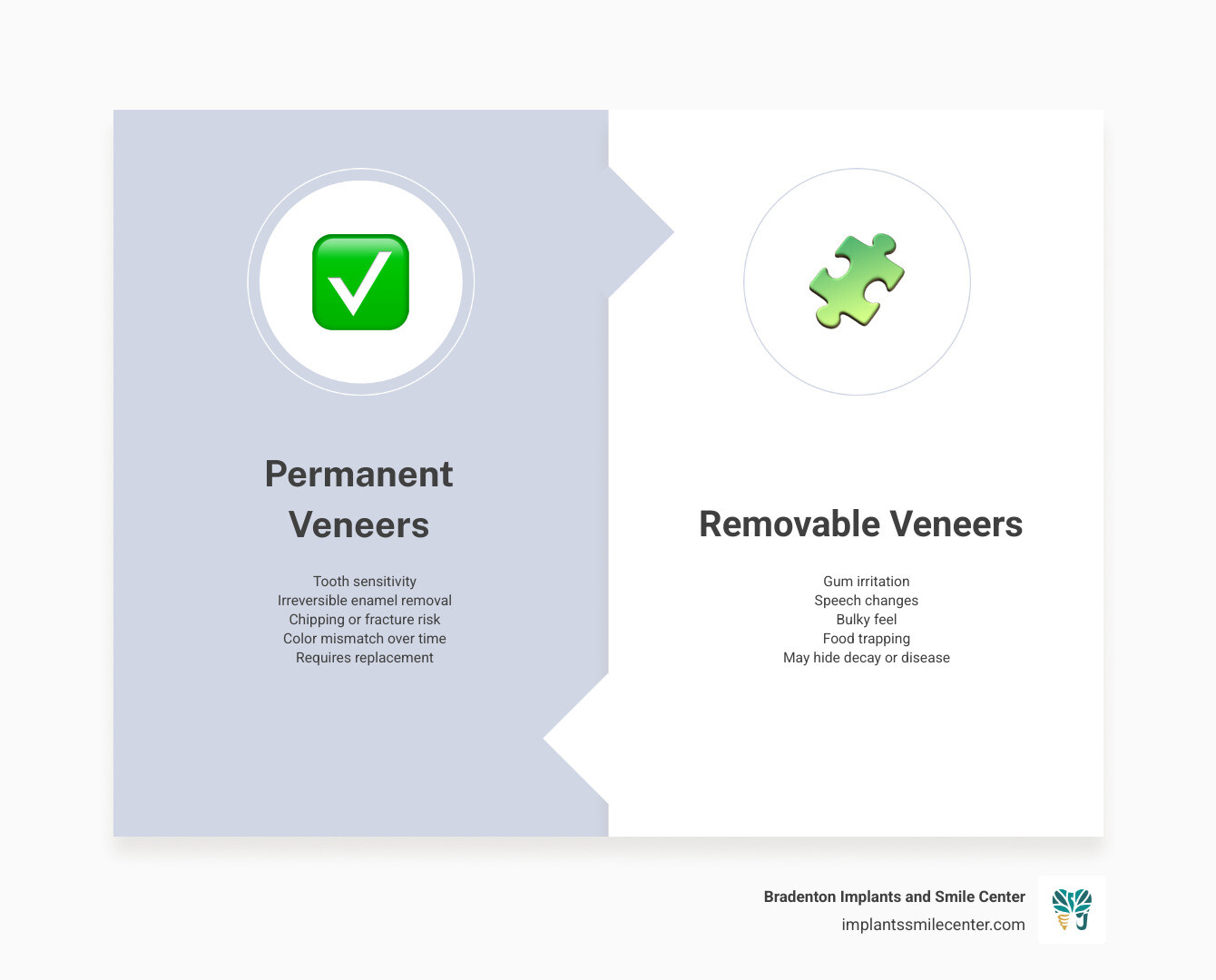
Permanent veneer risks may include:
Tooth sensitivity
Irreversible enamel removal
Chipping or fracture
Need for replacement
Color mismatch over time if nearby teeth change shade
Removable veneer risks may include:
Gum irritation
Speech changes
Bulky feel
Difficulty chewing certain foods
Plaque and food trapping
Bad fit
Pressure on weak teeth
Covering up a problem that still needs treatment
One important long-term point: removable veneers can hide problems from view. If someone uses them to mask decay, gum disease, or broken teeth without getting care, the underlying issue can worsen.
Frequently Asked Questions About False Teeth Veneers
Can false teeth veneers replace missing teeth?
Not really. They can sometimes hide the look of a missing tooth if there are enough nearby teeth to support the appliance, but they do not replace the root or restore normal function. For actual tooth replacement, dentures or implants are more appropriate.
Can you eat and drink with false teeth veneers?
It depends on the product. Some are marketed for eating and drinking, but even then, sticky, hard, or very hot foods can be a problem. In general, permanent veneers handle normal eating better than removable ones. For snap-on styles, softer foods are safer, and following the manufacturer's instructions matters.
Do false teeth veneers damage your real teeth?
Removable ones usually do not require enamel removal, so they are more reversible. But a poor fit can still irritate gums, trap plaque, or put uneven pressure on teeth. Permanent veneers often do require enamel removal, which is irreversible. That is why a professional exam matters before choosing a treatment.
Conclusion: Choosing the Right Smile Solution
False teeth veneers can be a helpful short-term option if you want a fast cosmetic improvement without drilling, surgery, or a large upfront investment. They can hide stains, gaps, chips, and some minor smile flaws surprisingly well.
But they are still a cosmetic cover, not a true fix for decay, gum disease, weak teeth, or missing teeth. If you want the best appearance and long-term stability, professional veneers may be the better route. If you need real replacement for missing teeth, more complete options may be the smarter investment.
At Bradenton Implants & Smile Center, we help adults and seniors in Bradenton sort through these choices with honest guidance, modern technology, and personalized care. If you want to talk through veneers, dentures, implants, or which option fits your goals and budget, contact us.