
How to ensure a fast recovery wisdom teeth process
Why a Fast Recovery After Wisdom Teeth Removal Is More Achievable Than You Think
Achieving a fast recovery wisdom teeth removal patients can count on comes down to a few key habits - and knowing what to expect before you even leave the dental chair.
Here's the short version if you need it now:
How to recover from wisdom teeth removal as fast as possible:
Protect the blood clot - no straws, no smoking, no spitting for at least 72 hours
Ice your cheeks - 20 minutes on, 20 minutes off for the first 48 hours
Keep your head elevated - even while sleeping, for the first 3 nights
Eat soft foods only - yogurt, mashed potatoes, smoothies (with a spoon), broth
Take pain medication on schedule - don't wait until the pain peaks
Rinse gently with salt water - starting 24 hours after surgery, 3-4 times daily
Rest and avoid exercise - light activity is fine after day 2, heavy exercise after day 5-7
Attend your follow-up - even if you feel fine
Most people return to work or school within 3 to 5 days. Full soft tissue healing takes about 2 weeks. If your wisdom teeth were impacted, expect closer to 1 to 2 weeks before you feel truly back to normal.
About 5 million Americans have wisdom teeth removed every year - so this is well-traveled territory. The recovery is rarely as bad as people fear, but it does require following the right steps at the right time.
I'm Dr. John Hegazin, owner of Bradenton Implants and Smile Center, and with over 8 years of experience performing wisdom teeth extractions and restorative procedures, I've guided many patients through a smooth, fast recovery wisdom teeth process. In this guide, I'll walk you through exactly what to do - day by day - so you can heal quickly and avoid the setbacks that slow most people down.
1) Know the normal timeline so you can heal faster, not panic faster
A lot of recovery stress comes from not knowing what is normal. If your cheeks puff up on day 2 or 3, that does not automatically mean something is wrong. Swelling commonly peaks around 48 to 72 hours after surgery.
For many patients, the visible recovery is fairly quick:
Straightforward wisdom tooth removal: often 3 to 4 days to feel much better
Impacted wisdom teeth: often 1 to 2 weeks before you feel close to normal
Full soft tissue healing: about 2 weeks for most people
Internal bone healing: several months

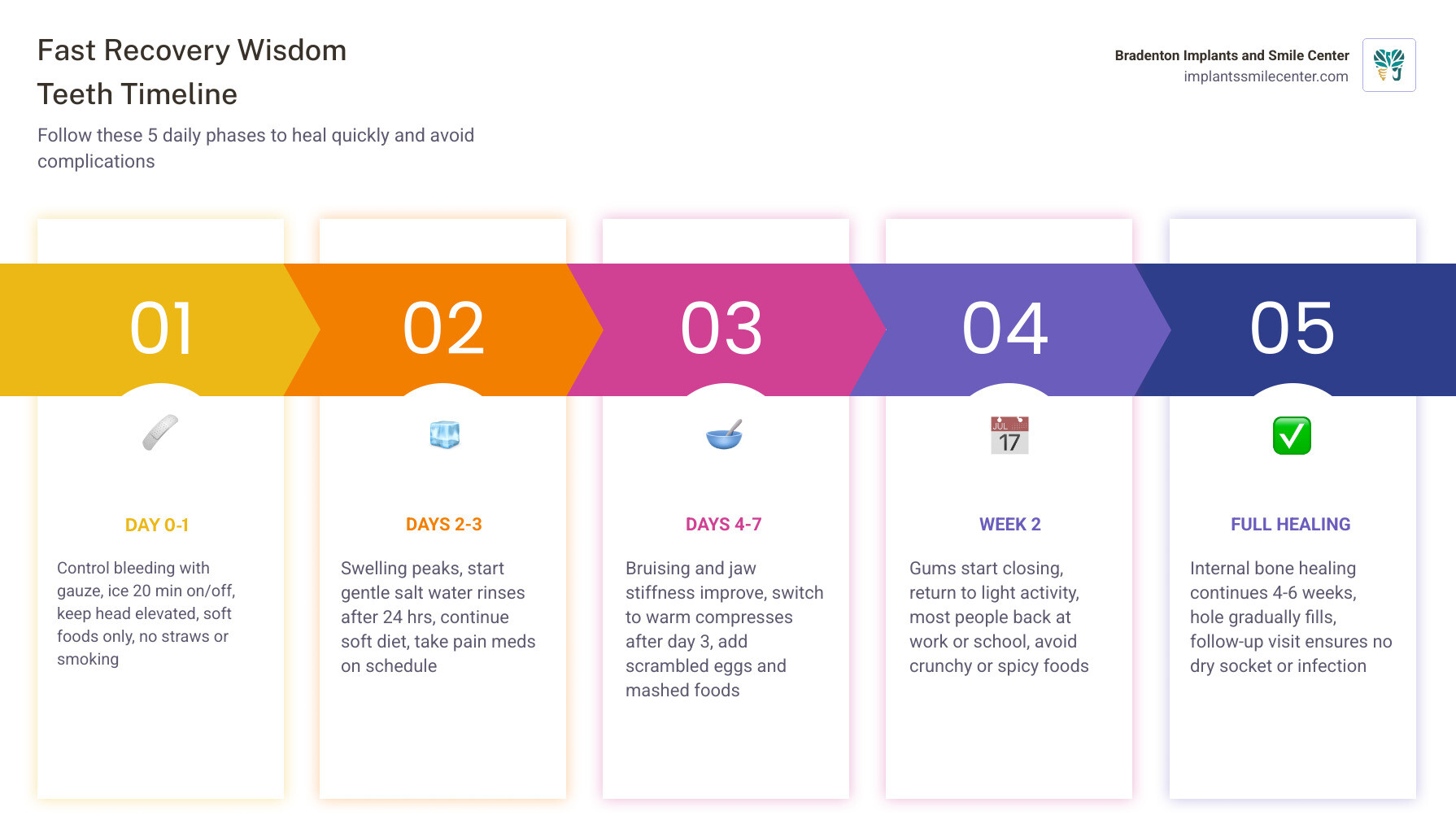
What a fast recovery wisdom teeth timeline usually looks like
A true fast recovery wisdom teeth result does not mean zero swelling or zero soreness. It means healing without avoidable complications.
Typical milestones:
Day 0: bleeding control, numbness, rest
Days 1 to 3: swelling and soreness increase, then peak
Days 4 to 7: pain and swelling should start easing
Week 2: most people feel largely back to normal
Weeks 3 to 4: gum tissue continues closing
Months 3 to 6: jawbone remodeling finishes internally
If you had upper wisdom teeth removed, recovery is often a little easier. Lower wisdom teeth, especially impacted ones, tend to cause more swelling and stiffness because the lower jawbone is denser and those teeth are often harder to remove.
Day-by-day expectations after wisdom tooth removal
Here is the practical version.
Day 0:
Mild bleeding or oozing is common
You will likely be numb for a few hours
Start gauze as directed, rest, and keep your head up
Eat only cool or lukewarm soft foods if you feel ready
Day 1:
Soreness starts to set in
Swelling may begin
You may have limited jaw opening
Take medication before the numbness fully wears off if your surgeon advised it
Days 2 to 3:
Usually the toughest days
Swelling peaks
Bruising may appear
Jaw stiffness is common
Mild bad breath or an odd taste can happen during healing
Days 4 to 7:
Pain should trend down, not up
Stiffness starts improving
You may feel ready for work, school, or light routines
Dissolvable stitches may start loosening
Week 2:
Most swelling is gone
Most people are back to normal meals with some caution
Sockets still look like holes, which is normal
What is normal vs what may be a complication
Normal:
Mild to moderate soreness
Swelling that peaks around day 2 or 3
Slight oozing the first day
Jaw stiffness for up to 7 to 10 days
Mild bad breath during the first week
Dark red or brown blood clot appearance in the socket
Call your dentist or oral surgeon if you have:
Severe throbbing pain that gets worse after day 3
Fever
Pus or a foul taste that keeps getting worse
Swelling that increases after day 3 instead of improving
Bleeding that does not slow down
Trouble swallowing or breathing
Numbness that does not gradually improve
For a medically reviewed overview of what to expect, see this scientific recovery guide from Cleveland Clinic.
2) The 10 best ways to get a fast recovery wisdom teeth result
If we had to boil recovery down to one idea, it would be this: protect the blood clot and reduce inflammation early.
Top recovery rules:
Bite on gauze exactly as directed
Avoid suction and smoking
Use ice for the first 48 hours
Sleep with your head elevated
Take pain medicine on schedule
Eat enough calories and protein
Stay hydrated
Start gentle saltwater rinses after 24 hours
Keep the rest of your mouth clean
Do not skip your follow-up
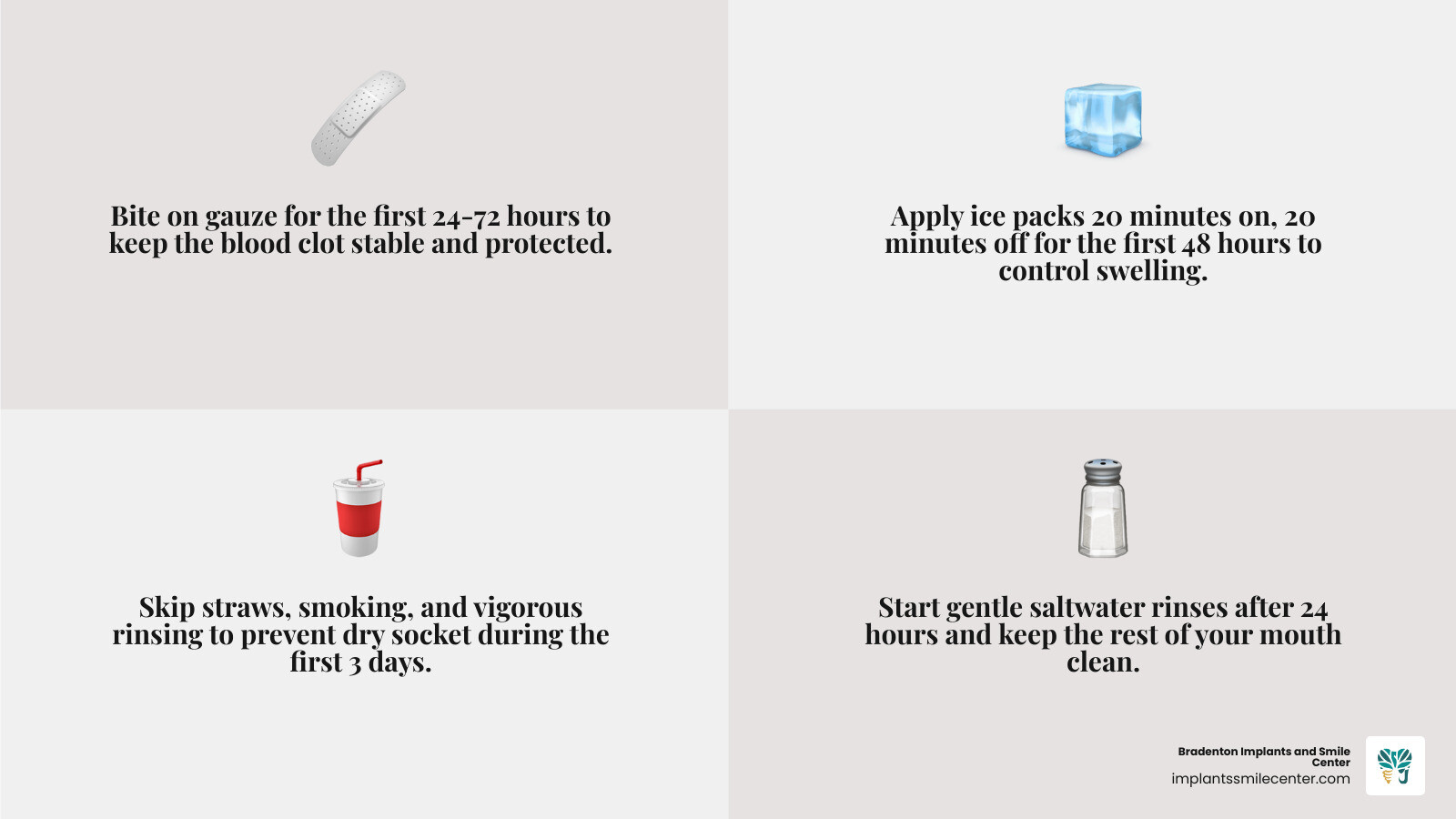
Protect the blood clot for the first 24-72 hours
This is the big one. The clot is not just "part of healing." It is the foundation of healing. It protects bone and nerve endings, helps stop bleeding, and creates the starting point for new tissue.
For the first 24 to 72 hours:
No straws
No smoking or vaping
No forceful spitting
No vigorous rinsing
No carbonated drinks
No poking the socket with your tongue or fingers
Dry socket happens when that clot breaks down or gets dislodged too early. Across extraction cases, dry socket is often reported around 1% to 3%, but the risk can be much higher with impacted lower wisdom teeth. Smokers also have a much higher risk, with some data showing 3 to 5 times the rate seen in nonsmokers.
Control swelling and pain the smart way
Swelling control is one of the fastest ways to feel human again.
What helps:
Ice packs 20 minutes on, 20 minutes off for the first 48 hours
Keep your head elevated, even at night, for the first 3 nights
Rest more than you think you need
Switch to warm compresses after day 2 or 3 if stiffness is your bigger issue
Pain usually peaks within 48 to 72 hours. That is why waiting until the pain is intense is a bad strategy. Staying ahead of inflammation works better than chasing it after it ramps up.
Use medications correctly for faster comfort
Pain medication does not "speed" tissue healing, but it absolutely improves comfort and can help you eat, drink, rest, and clean your mouth better, which supports recovery.
Many oral surgeons now favor non-opioid pain control first. Research highlighted in the JOMS coverage on steroid use during wisdom tooth surgery found that a single IV dose of dexamethasone during surgery was linked with lower pain scores in the first 24 hours. The lowest pain scores were seen when that steroid approach was paired with non-opioid medicines like ibuprofen and acetaminophen.
In plain English:
NSAIDs such as ibuprofen help reduce inflammation
Acetaminophen helps with pain
A steroid given during surgery may reduce early swelling and discomfort
Opioids are not always necessary
Always follow your surgeon's exact instructions, especially if you have stomach issues, kidney disease, liver disease, bleeding concerns, or other medical conditions.
Keep the area clean without disturbing healing
Clean does not mean aggressive.
A good plan:
Wait 24 hours before rinsing
Then use warm salt water 3 to 4 times a day
Brush the rest of your teeth gently
Avoid scrubbing the extraction sites
Use a soft toothbrush
Follow any prescribed mouth rinse instructions carefully
Food particles can slow healing, so gentle rinsing matters. If you need more information about treatment and aftercare, visit our wisdom teeth extraction page.
3) What helps or slows down recovery after wisdom teeth removal
Not everyone heals at the same speed. That is normal.
Big factors include:
Your age
Whether the teeth were impacted
Whether the extraction was upper or lower
How many teeth were removed
Smoking status
Your overall health and oral hygiene
How closely you follow aftercare directions
Surgical difficulty and time
Why younger patients often recover faster
Teens and patients in their early twenties often bounce back faster because:
Roots may be less fully developed
Bone is often more forgiving
Extractions may be less traumatic
Healing response tends to be quicker
That does not mean adults cannot heal well. It just means younger patients often have an easier road.
Upper vs lower wisdom teeth: which usually heal faster?
In many cases, upper wisdom teeth heal faster than lower ones.
Why:
Upper teeth are often easier to access
They are less likely to be deeply impacted
The upper jawbone is generally less dense
Lower wisdom teeth tend to:
Cause more swelling
Lead to more jaw stiffness
Have a higher dry socket risk if impacted
Factors that commonly delay healing
If you want a slower recovery, the recipe is unfortunately simple: do too much too soon.
The most common healing delays come from:
Smoking or vaping
Using straws
Heavy exercise too early
Hard, crunchy, spicy, or sticky foods
Poor hydration
Poor oral hygiene
Ignoring medication instructions
Skipping follow-up visits
Drinking alcohol during early healing
That is why the biggest recovery mistake we see is trying to "test" the mouth before it is ready.
Does sedation or surgical difficulty change recovery?
Yes, both can affect how you feel after surgery.
If you had IV sedation or deeper anesthesia:
You may feel groggy or tired for a day
You may need more help getting home and resting safely
The sedation itself does not necessarily slow healing, but it can affect your first-day energy level
If the procedure was more complex:
There may be more swelling
The jaw may be stiffer longer
Recovery may take closer to 1 to 2 weeks
If you are exploring comfort-focused treatment planning, our advanced sedation options page explains more.
4) Best foods and drinks for a faster recovery
Food matters more than most people expect. You need enough protein, calories, and fluids to heal well, but you also need foods that do not disturb the sockets.

What to eat in the first 24 hours
Best choices:
Yogurt
Pudding
Applesauce
Smoothies eaten with a spoon, not a straw
Broth
Plain ice cream without crunchy add-ins
Water
Stick to cool or lukewarm foods. Very hot foods and drinks can irritate the area and may interfere with clot stability early on.
What to eat on days 2-7
Once you are comfortable, move into soft but more filling foods:
Scrambled eggs
Mashed potatoes
Oatmeal if it is not too hot and not seedy
Cottage cheese
Mashed avocado
Soft pasta
Soft fish
Well-cooked vegetables
Macaroni and cheese
Ripe bananas
Protein-rich soft foods can be especially helpful because tissue repair depends on good nutrition.
Foods and drinks to avoid if you want a fast recovery wisdom teeth outcome
Avoid:
Chips
Popcorn
Nuts
Seeds
Granola
Spicy foods
Sticky candy
Tough meat
Hot coffee right away
Alcohol
Soda and other carbonated drinks
Anything through a straw
Crumbs are a bigger problem than people think. Tiny bits can get trapped in the sockets and irritate the area.
How to stay nourished when chewing is hard
Practical tips:
Plan meals before surgery
Keep high-protein soft foods ready
Sip water often
Eat smaller meals more frequently
Do not skip food because you are sore
Good options include Greek yogurt, smoothies taken from a cup or spoon, eggs, mashed beans, and soft fish. If you are under-eating, fatigue and slower healing often follow.
5) When to return to work, school, exercise, and normal eating
This part depends on the type of work you do and how difficult the extraction was.
When most people can go back to work or school
Most patients can return in about 3 to 5 days.
General guide:
Desk job or light school schedule: often 2 to 4 days
More complicated or impacted removal: closer to 5 to 7 days
Heavy physical work: often about a week
Even if you technically can go back earlier, that does not always mean you will want to. Swelling, talking, and concentration can still be annoying for a few days.
When exercise is safe again
A safe progression usually looks like:
Day 1: rest
Day 2: light walking is often okay
Days 5 to 7: more strenuous exercise may be okay if bleeding and swelling are controlled
Contact sports or heavy lifting: wait until your surgeon clears you
Exercise too early can increase bleeding, make throbbing worse, and stir up swelling again.
When pain should improve and what actually helps
Pain is often worst on day 2 or 3. After that, it should improve gradually.
What helps most:
Taking prescribed or recommended non-opioid medication on schedule
Ice during the first 48 hours
Warm compresses later for stiffness
Hydration
Rest
Not advancing foods too quickly
Mild soreness can linger for a week, especially with lower or impacted teeth. But severe pain that worsens after initial improvement is not typical.
When you can eat normally again
Most people follow this progression:
Days 0 to 2: liquids and very soft foods
Days 3 to 5: soft foods with a little more texture
Days 5 to 7: semi-solids if comfortable
After week 1: slowly reintroduce more normal foods
By week 2: many people are close to normal eating
Chew on the opposite side at first if only one side was treated, and be cautious with crunchy foods until tenderness is mostly gone.
For more on healing expectations and home-care timing, this healing tips article from Medical News Today gives a helpful overview.
6) When to call the dentist and how to avoid setbacks
The good news is that most recoveries are smooth. The not-as-fun news is that the people who get into trouble are often the ones who assume everything is fine while symptoms are clearly waving a red flag.
Signs you should contact your dentist or oral surgeon right away
Call promptly if you have:
Fever over 101 degrees F
Bleeding that does not stop with gauze and pressure
Severe pain that gets worse after day 3
Pus or drainage
Persistent foul taste with worsening symptoms
Swelling that keeps increasing after day 3
Trouble swallowing
Trouble breathing
Persistent numbness that is not improving
If you are dealing with urgent symptoms, our dental emergencies page explains when to seek fast care.
How to prevent dry socket and infection
The basics work:
Do not smoke
Do not use straws
Do not spit forcefully
Start saltwater rinses after 24 hours
Brush gently
Take medications exactly as directed
Stay hydrated
Keep food choices soft and clean
Rest instead of pushing through workouts
Dry socket risk is highest in the first few days, especially around days 2 to 5, and drops significantly after about 7 to 10 days when healing is more established.
Fast recovery wisdom teeth FAQ
How do we know if healing is going correctly?
Pain and swelling should gradually improve, not worsen. The sockets may look dark red, brown, or hollow. That is normal.
Is bad breath normal after wisdom teeth removal?
Yes, some bad breath during the first week can happen. If it comes with fever, pus, or worsening pain, call us.
Can we brush teeth after extraction?
Usually yes, but gently. Avoid the surgical sites for the first 24 hours, then clean carefully around them.
What if pain lasts a week?
Mild soreness can last that long, especially with impacted teeth. Significant pain after a week deserves a check.
How long until the holes close?
The gum begins closing over the first few weeks, but the socket may remain visible for much longer. Full internal healing can take months.
When is dry socket no longer a major risk?
Risk is highest in the first 7 to 10 days, especially the first 2 to 5.
Final takeaway: the fastest recovery comes from doing the basics consistently
A fast recovery wisdom teeth plan is rarely about one magic trick. It is about doing the simple things well, every day:
Rest
Protect the clot
Control swelling early
Stay hydrated
Eat enough soft, nourishing food
Keep the mouth clean gently
Watch for red flags
Follow up when instructed
At Bradenton Implants & Smile Center, we believe recovery should feel clear, supported, and manageable. If you are planning treatment or have questions during healing, we are here to help with personalized, compassionate care at our Bradenton office.
Learn more about our care at Bradenton Implants & Smile Center or explore our tooth extraction services.