
Flexible Dentures Are the Smile Upgrade You Actually Want to Wear
Why Flexible Dentures Are Worth Knowing About Before You Choose a Tooth Replacement
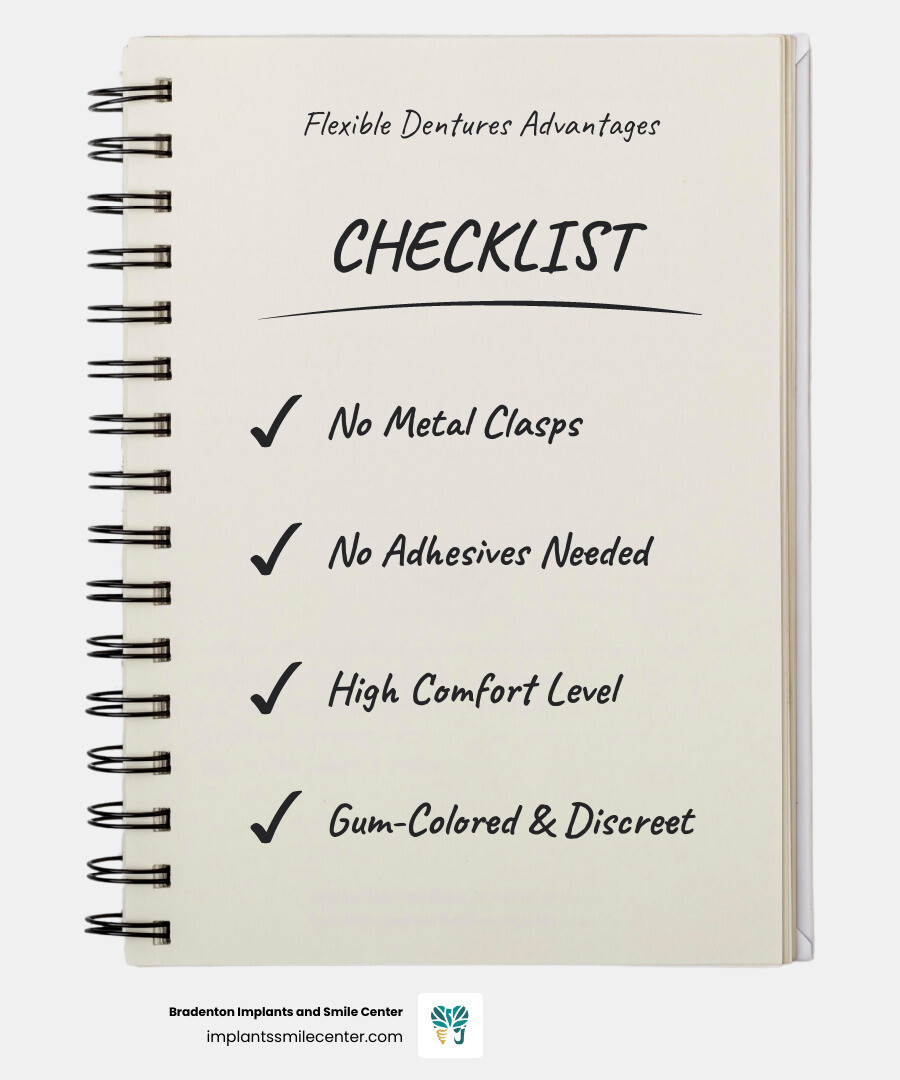
Flexible dentures are removable partial dentures made from soft, pliable thermoplastic nylon — not hard acrylic or metal. They bend slightly to fit the natural contours of your mouth, stay in place without adhesives or metal clasps, and are designed to blend in with your gum tissue for a more natural look.
Here's a quick summary of what makes them different:
Feature Flexible Dentures Traditional Acrylic Partials Material Thermoplastic nylon resin Rigid acrylic or metal Metal clasps No Often yes Adhesives needed No Sometimes Comfort High — adapts to mouth shape Lower — can cause pressure sores Appearance Gum-colored, discreet More visible hardware Repairability Limited Easier to repair Typical lifespan 5–7 years 5–7+ years
If you're missing one or more teeth and want something comfortable, discreet, and metal-free, flexible dentures are one of the most practical options available today.
They're not right for everyone — but for the right patient, they can make a real difference in daily comfort and confidence.
I'm Dr. John Hegazin, owner of Bradenton Implants and Smile Center, and with over 8 years of experience in restorative dentistry — including dentures and tooth replacement solutions — I've helped many patients find the right fit with flexible dentures tailored to their specific oral health needs. In this guide, I'll walk you through everything you need to know to make a confident, informed decision.
Understanding Flexible Dentures and How They Work
When most people think of dentures, they imagine the heavy, rigid plates their grandparents kept in a glass of water overnight. While those traditional options still have their place, modern dentistry has introduced a game-changer: the flexible denture.

At its core, a flexible partial is a removable prosthetic designed to replace one or several missing teeth. Unlike the stiff pink plastic (acrylic) used in standard dentures, these are crafted from a specialized thermoplastic nylon resin. This material is preferred because it allows the denture to be incredibly thin—often reaching a uniform thickness of just 1.5mm.
This thinness doesn't mean they are fragile. In fact, brands like Valplast have over 60 years of research backing their durability. Because they are metal-free, they rely on the natural flexibility of the nylon to "hook" gently into the undercuts of your remaining teeth. This creates a secure fit without the need for the shiny metal hooks that often give away the fact that someone is wearing a prosthetic. For a deeper dive into how these modern marvels are constructed, you can explore A Comprehensive Look at Flexible Partial Dentures.
Key Differences from Traditional Acrylic Partials
The biggest complaint we hear about traditional acrylic partials is the "bulk." Because acrylic is brittle, it has to be thick to stay strong. This thickness can feel like a mouthful of plastic, often interfering with speech or the taste of food. Furthermore, traditional partials usually require metal clasps to stay in place. These clasps can put undue stress on your natural "abutment" teeth and, let’s be honest, they don't look particularly natural when you laugh or smile.
Flexible dentures, on the other hand, are significantly lighter. Because the material is inherently strong, we can keep the design streamlined. They don't irritate the gums with rigid edges, which means fewer "sore spots" and a much shorter adjustment period. You can learn more about our range of denture services to see how these compare to other restorative options.
The Science of Thermoplastic Materials
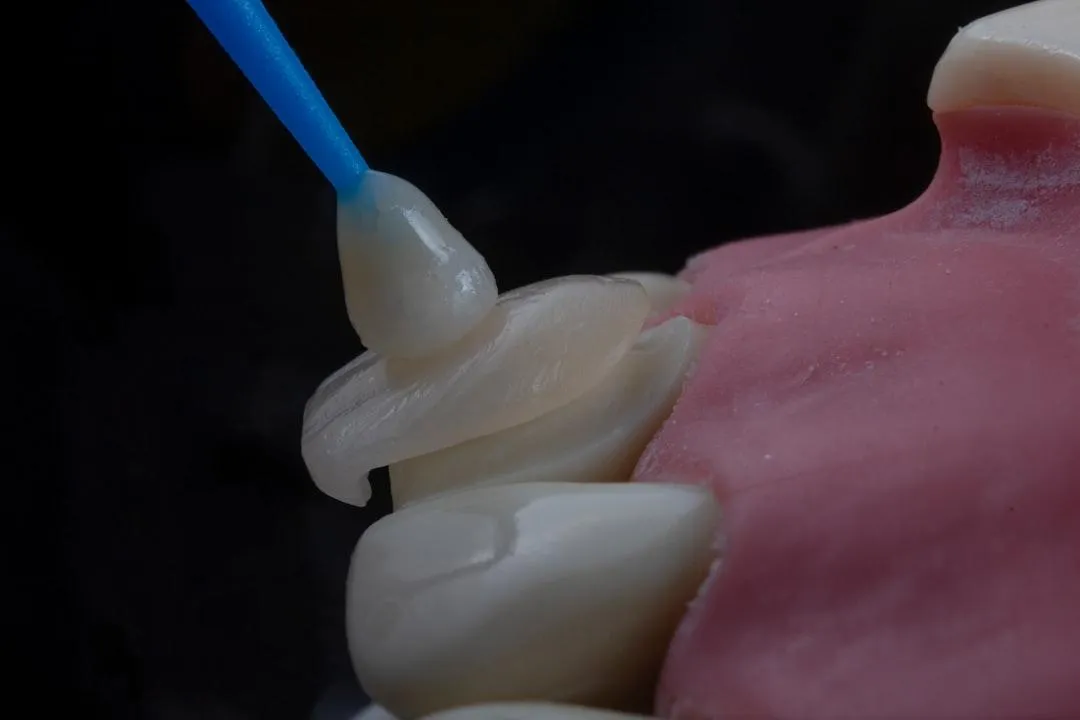
The magic of these dentures lies in the injection molding process. The thermoplastic resin is heated and injected into a precise mold of your mouth. Because the material is translucent, it allows the natural color of your gum tissue to peek through. This creates an optical illusion that makes the denture base nearly invisible once it's in place.
According to scientific research on patient satisfaction, the vast majority of participants in clinical studies who switched from traditional dentures to flexible versions reported a strong preference for the latter. They cited improved quality of life, better aesthetics, and a significant jump in comfort. It’s not just about looking good; it’s about the biocompatibility of the material, which is hypoallergenic and ideal for patients who have sensitivities to the monomers found in traditional acrylics.
The Primary Benefits of Flexible Dentures
Why are so many of our patients in Bradenton asking for flexible dentures? It usually comes down to their exceptional durability and resistance to fracturing.
Because the resin is pliable, it can absorb the shock of daily use—and even the occasional drop in the sink—without shattering. This makes them highly durable for active seniors or anyone worried about the fragility of traditional dental work. Additionally, they are BPA-free and contain no metal, meaning you’ll never deal with that unpleasant metallic taste in your mouth. You can find more details on our restorative services to see how we prioritize these high-quality materials.
Superior Comfort of Flexible Dentures
Traditional dentures are like a pair of wooden clogs—they don't give. Flexible dentures are more like a high-end pair of running shoes; they adapt to the unique, irregular shapes of your mouth. This is particularly beneficial for patients who have bony ridges or irregular mouth contours that make rigid dentures painful.
A study in the IOSR Journal of Dental and Medical Sciences highlighted that flexible partials are ideal for patients with tilted teeth or those who find it difficult to open their mouths wide. Because the material can flex during insertion, it slides into place with far less struggle than a metal-framed partial.
Natural Aesthetics and Discreet Retention
The "invisible" factor is a major win. Instead of metal clasps, flexible dentures use gum-colored clasps that are part of the denture base itself. These wrap around your natural teeth so discreetly that even close friends may not notice you’re wearing a partial. This supports your facial structure, preventing that "sunken-in" look that can happen when teeth are missing, and gives you a massive confidence boost in social settings.
Who is a Candidate for Flexible Partials?
If you are missing a few teeth but still have healthy natural teeth remaining, you are likely a great candidate for a flexible partial. They are particularly popular for patients who want a non-invasive solution—meaning no surgery is required.
Below is a quick comparison of how flexible dentures stack up against other common replacements:
Option Surgery Required? Best For Aesthetic Level Flexible Dentures No Partial tooth loss, comfort seekers High (Metal-free) Dental Implants Yes Long-term permanent replacement Excellent Fixed Bridges No (but requires crowning teeth) Single or double tooth gaps High
Ideal Clinical Situations
We often recommend flexible dentures at Bradenton Implants and Smile Center for patients who:
Have allergies to acrylic or metal.
Have limited mouth opening (microstomia).
Need a temporary, aesthetic "flipper" while waiting for a dental implant to heal.
Have compromised bone density that makes them unsuitable for implants.
When to Consider Alternatives
While we love the flexibility of these dentures (pun intended), they aren't for everyone. If you have lost all your teeth in an arch (full edentulism), a flexible denture won't work because it needs natural teeth to anchor onto. Similarly, if you have severe periodontal disease and your remaining teeth are loose, they won't provide the stability needed for a partial. In those cases, we might discuss snap-on dentures or full-arch restorations.
The Step-by-Step Fitting for Flexible Dentures
Getting fitted for your new smile is a streamlined, comfortable process at our Bradenton office.
Consultation: We start with a full oral health assessment to ensure your remaining teeth and gums are healthy.
Impressions: We use advanced technology—often digital intra-oral scanners—to create a perfect 3D map of your mouth. No more messy putty!
Fabrication: Your digital "map" is sent to a specialized lab where the thermoplastic resin is precision-injected.
Fitting: Once the denture returns, we check the fit. One unique trick for flexible partials is that they can be "custom-contoured" by placing them in very warm water for a minute before inserting them, allowing the material to perfectly mold to your gums.
Adjusting to Your New Smile
There is always a learning curve with any new dental appliance. You might notice a slight change in your speech for the first few days—reading aloud is a great way to practice! You may also have some initial sensitivity as your gums get used to the new support. We always schedule follow-up appointments to ensure everything is settling perfectly.
Long-Term Maintenance and Care
To keep your flexible dentures looking their best, you need to treat them right.
Avoid Abrasives: Never use regular toothpaste on your dentures; it can create microscopic scratches that harbor bacteria. Use a soft-bristled brush and mild soap or a specific denture cleanser.
Soak Daily: Use a professional-grade soaking solution to keep the material hydrated and clean.
Nightly Breaks: Give your gums a rest! Remove your dentures at night to prevent fungal infections and allow your tissues to breathe.
Replacement: The ADA recommends evaluating partial dentures every 5–7 years. Over time, your mouth changes shape, and even the best-fitting denture will eventually need to be replaced to maintain optimal health.
Frequently Asked Questions about Flexible Partials
Can flexible dentures be repaired or relined?
This is one of the few drawbacks. Because the thermoplastic material is so unique, it cannot be "relined" (adding a new layer of pink material) as easily as acrylic. If you lose an additional tooth, it is often difficult to add a new tooth to an existing flexible partial; usually, a new one must be made. However, their high impact resistance means they rarely break in the first place.
Do flexible dentures require dental adhesives?
In most cases, no! The snap-fit design and the way the material adapts to your natural contours usually provide enough suction and mechanical grip to stay in place. If you feel you need adhesive, it’s usually a sign that the fit needs to be adjusted by a professional.
How long do flexible dentures typically last?
With proper care, you can expect your flexible dentures to last between 5 and 7 years, in line with standard clinical recommendations for partial dentures. They are highly resistant to stains and odors compared to older materials, and their impact strength means they won't chip if you accidentally drop them.
Conclusion
Flexible dentures represent a massive leap forward in dental comfort and aesthetics. They offer a metal-free, lightweight, and incredibly natural-looking way to restore your smile without the need for invasive surgery. Whether you're looking for a long-term solution for missing teeth or a comfortable temporary option, these "smile upgrades" are designed with your quality of life in mind.
At Bradenton Implants and Smile Center, we pride ourselves on using modern technology and compassionate care to help our community smile again. If you're ready to see if flexible dentures are the right choice for you, we invite you to schedule a consultation for dentures at our Bradenton office today. Let's work together to find the perfect fit for your lifestyle and your budget!