
Everything You Need to Know About Florida Senior Sealant Dentistry
Why Florida Seniors Should Know About Dental Sealants
Florida senior sealant dentistry is one of the most effective — and most overlooked — ways for older adults to protect their remaining natural teeth from decay.
Here's a quick summary of what you need to know:
What they are: Thin, BPA-free plastic coatings applied to the chewing surfaces of back teeth to block bacteria and food debris
Who they're for: Seniors with natural molars, deep grooves, dry mouth, or a high cavity risk
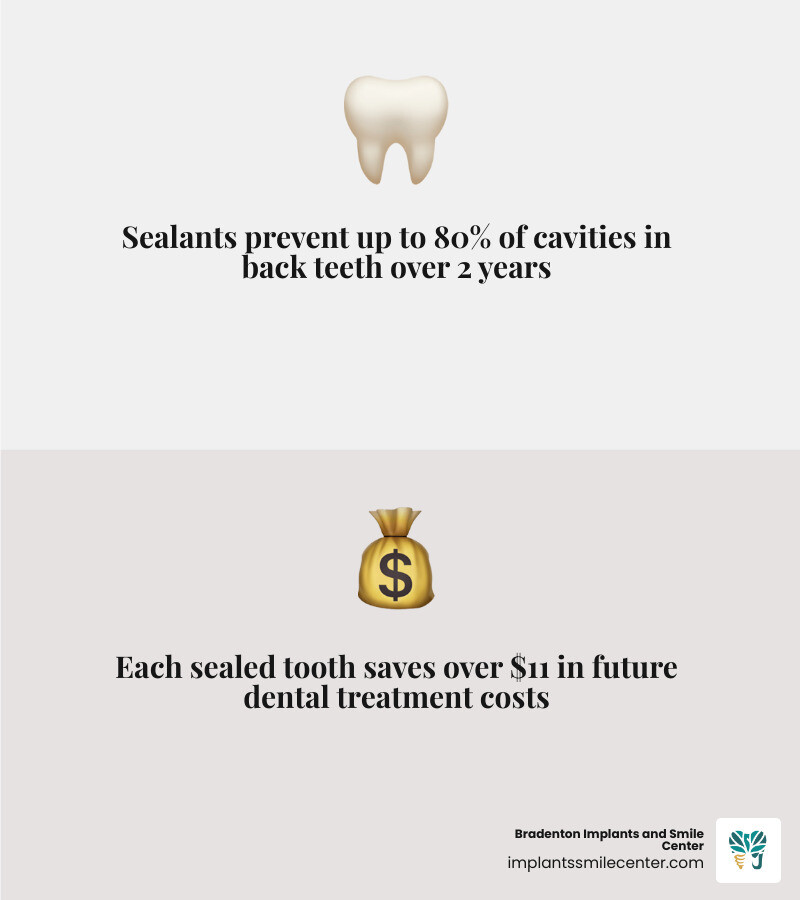
How effective: Sealants prevent up to 80% of cavities in back teeth over 2 years — where 9 in 10 cavities occur
How long they last: Typically 5–10 years with proper care
Cost benefit: Each sealed tooth saves more than $11 in future dental treatment
Where to get them in Florida: Private dental offices, county health centers, and Florida Department of Health programs
Aging changes your teeth in ways that make decay more likely — not less. Nearly 11% of Florida seniors have already lost all of their natural teeth, and close to 60% of adults aged 45–64 in the state have had at least one tooth extracted. Sealants are a simple, painless step that can help prevent you from becoming part of those statistics.
I'm Dr. John Hegazin, owner of Bradenton Implants and Smile Center, with over 8 years of experience in preventive and restorative dental care — including Florida senior sealant dentistry. In this guide, I'll walk you through everything you need to make an informed decision about sealants as part of your long-term oral health plan.
What is Florida Senior Sealant Dentistry and How Does it Work?
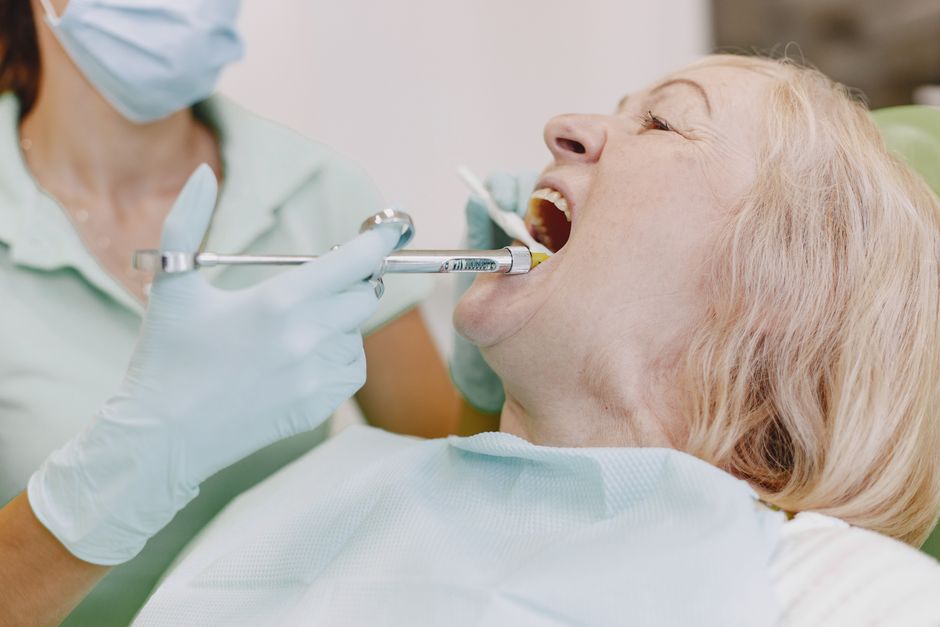
When we talk about Florida senior sealant dentistry, we are referring to a proactive, preventive treatment designed to act as a physical raincoat for your teeth. Most people associate sealants with school-aged children, but the science behind them is just as applicable to the "Golden Years."
A dental sealant is a thin, BPA-free plastic coating that we paint onto the chewing surfaces of your back teeth—specifically the molars and premolars. These teeth are naturally full of deep pits and fissures (grooves). While these grooves help us grind food, they are also the perfect hiding spots for microscopic bacteria. In many cases, these fissures are narrower than a single bristle on your toothbrush, meaning no matter how hard you brush, you can’t reach the debris trapped at the bottom.
By applying this liquid resin, we fill those nooks and crannies, creating a smooth, protective barrier. Once hardened, the sealant blocks out the "bad guys"—plaque, food particles, and acid—that cause tooth decay. To Learn More About Dental Sealants at Bradenton Implants and Smile Center, it is important to understand that this is a non-invasive way to fortify your smile without the need for needles or drills.
The Science of Sealants for Older Adults
The primary goal of sealants is bacteria prevention. As we age, our tooth enamel has endured decades of chewing, grinding, and exposure to acidic foods. This wear and tear can make the enamel more susceptible to acid protection failures. When bacteria consume sugar in your mouth, they produce acid that eats away at your enamel.
By sealing the tooth, we provide an extra layer of enamel preservation. Even the School-Based Sealant Programs run by the Florida Department of Health recognize that sealants are a "protective factor" that works alongside fluoride to keep teeth healthy. For seniors, this extra layer is vital because a cavity in later life can quickly escalate into a root canal or an extraction.
Suitability for Aging Teeth
Are you a good candidate for Florida senior sealant dentistry? If you still have your natural molars and they are free of large existing fillings or decay, the answer is likely yes.
We specifically look for:
Deep grooves: Teeth that have naturally deep pits where food frequently gets stuck.
Healthy molars: Teeth that haven't yet been compromised by significant decay.
Preventive strategy: Seniors who want to avoid the "drill and fill" cycle.
This is a non-invasive treatment, meaning it is perfect for patients who might be nervous about dental work or those who have medical conditions that make more complex surgeries risky.
Why Florida Seniors Need Dental Sealants in 2026
As we move through April 2026, the landscape of senior health in Florida is shifting. We are living longer, and we are keeping our natural teeth longer than previous generations. However, "keeping your teeth" means you have more surface area to protect.
Several age-related factors make seniors particularly vulnerable to decay:
Dry Mouth (Xerostomia): This is a major issue for Florida seniors. Over 400 common medications—for blood pressure, cholesterol, and anxiety—list dry mouth as a side effect. Saliva is your mouth's natural cleaner; without it, acid stays on your teeth longer, causing rapid decay.
Receding Gums: As gums recede with age, the soft root surface of the tooth becomes exposed. While sealants are primarily for chewing surfaces, maintaining the integrity of the crown helps overall oral stability.
Manual Dexterity: Conditions like arthritis can make it harder to brush the very back of the mouth effectively.
At Bradenton Implants and Smile Center, we focus on these unique challenges. You can read more About Us and our commitment to compassionate senior care.
Benefits of Florida Senior Sealant Dentistry for Cavity Prevention
The statistics for our state are eye-opening. Almost 11% of Florida seniors have no natural teeth left, and among those aged 45 to 64, nearly 60% have lost at least one permanent tooth.
The benefits of sealants include:
80% Cavity Reduction: In the first two years after application, sealants provide a massive shield against decay.
Cost Savings: It is much cheaper to seal a tooth than to pay for a multi-surface filling, a crown, or a dental implant.
Avoiding Extractions: By preventing the initial cavity, we stop the domino effect that leads to tooth loss.
Local resources, such as the Dental Sealant Program - Florida Department of Health in Sarasota County, emphasize that prevention is the most economical way to manage dental health.
Addressing Unique Senior Dental Needs
Beyond just "fixing holes," Florida senior sealant dentistry supports your overall quality of life. Tooth decay and gum disease are linked to systemic issues like heart disease and diabetes. Furthermore, maintaining your natural teeth supports proper nutrition (allowing you to eat a varied diet) and prevents the social isolation that often comes with the embarrassment of missing teeth or bad breath caused by decay.
The Application Process and Longevity for Seniors

One of the best things about getting sealants at our Bradenton office is how easy the process is. There is absolutely no drilling, no numbing, and no pain.
The Step-by-Step Process:
Cleaning: We thoroughly clean the tooth to remove any plaque or food debris.
Drying: The tooth is dried, and an absorbent material is placed around it to keep it dry.
Etching: A mild "etching" gel is applied to the chewing surface. This slightly roughens the enamel on a microscopic level so the sealant can bond strongly.
Rinsing and Drying: The gel is rinsed off, and the tooth is dried again.
Application: The liquid sealant is painted directly onto the enamel.
Curing: We use a special blue curing light to harden the plastic in about 60 seconds.
The entire procedure takes only a few minutes per tooth. You can even eat and drink immediately afterward! If you're ready to protect your smile, Contact Bradenton Implants and Smile Center for an Appointment.
Factors Affecting Sealant Durability
While sealants are durable, they aren't permanent. They typically last between 5 to 10 years. However, several factors can affect this:
Chewing Pressure: If you eat a lot of very hard or sticky foods, the sealant can chip.
Grinding Habits (Bruxism): Seniors who grind their teeth at night may wear down the sealant faster.
Material Quality: We use high-quality, modern resins designed for longevity.
Feature Resin-Based Sealants Glass Ionomer Sealants Longevity Generally longer (5-10 years) Shorter (3-5 years) Moisture Tolerance Low (requires very dry tooth) High (better for difficult areas) Fluoride Release Minimal High (continually releases fluoride) Best For Maximum durability High-risk decay areas
Maintaining Your Florida Senior Sealant Dentistry Investment
To get the most out of your sealants, you must maintain good oral hygiene. Sealants protect the chewing surface, but they do not protect the areas between the teeth. You still need to brush twice a day with fluoride toothpaste and floss daily.
Regular check-ups are essential. During your routine exams at Bradenton Implants and Smile Center, we check the sealants for any signs of wear, cracking, or "leaking." If a sealant is chipped, we can usually just "top it off" with a little more material to maintain the seal.
Cost, Insurance, and Access in Florida
When considering Florida senior sealant dentistry, the financial aspect is often a primary concern. The good news is that sealants are one of the most cost-effective treatments in all of medicine. Research shows that each sealed tooth saves more than $11 in future dental treatment costs. Over a full mouth of molars, that adds up quickly.
Insurance and Medicare
Insurance coverage for adult sealants can be a bit of a mixed bag.
Private Insurance: Many PPO plans cover sealants at 80% to 100%, but some have age limits (often cutting off at age 18 or 19). However, more insurers in 2026 are beginning to recognize the preventive value for seniors and are extending coverage.
Medicare: Traditional Medicare generally does not cover routine dental care, including sealants. However, many Medicare Advantage (Part C) plans in the Bradenton and Sarasota area do include preventive dental benefits.
Out-of-Pocket: Even without insurance, sealants are very affordable—usually costing a fraction of what a filling would cost.
If you have questions about your specific plan, Contact Us – Bradenton Implants and Smile Center. We are experts at navigating insurance to help you get the most out of your benefits.
Finding a Provider in the Sunshine State
While many general dentists offer sealants, it’s important to find a practice that understands the specific physiological needs of seniors. In the Bradenton area, we pride ourselves on providing personalized, compassionate care using modern technology.
For those who may be struggling with costs, Florida does have public resources. Many County Health Departments offer dental programs, though these are often prioritized for children or those in emergency situations. For most seniors, a private practice like ours offers the most consistent and high-quality preventive care.
Frequently Asked Questions about Senior Sealants
Are dental sealants safe for seniors with existing restorations?
Yes! However, we typically don't apply sealants over existing large silver (amalgam) or composite fillings. If a tooth already has a restoration, that surface is already "sealed" by the filling. We focus Florida senior sealant dentistry on the healthy, natural teeth that are still at risk. The materials we use are BPA-free and completely safe for use alongside other dental work.
How do I know if my sealants need to be replaced?
You usually won't be able to tell on your own unless a large piece chips off and you feel a "rough" spot with your tongue. This is why regular professional examinations are so important. We use specialized tools and magnification to look for:
Visible chips or cracks: Where bacteria could leak underneath.
Discoloration: Which might indicate the bond is weakening.
Sensitivity: If a tooth becomes sensitive to sweets, the sealant may have worn thin.
Does Florida insurance typically cover adult sealants?
As mentioned, it varies by plan. In 2026, we are seeing a positive trend where Florida-based insurance providers are removing age restrictions on sealants because the data proves that preventing a cavity in a 70-year-old is much cheaper than replacing a tooth with an implant later. We recommend calling your provider or letting our office run a benefits check for you.
Conclusion
Your smile is an essential part of your health, your ability to eat, and your self-confidence. Florida senior sealant dentistry is a simple, effective, and affordable tool to ensure that your natural teeth stay with you for a lifetime.
At Bradenton Implants and Smile Center, we combine modern technology with a warm, personal touch. Whether you are looking for preventive care like sealants, or more complex restorative work, we are here to help the seniors of Bradenton, FL, smile brighter.
Ready to protect your teeth? Visit us at 7270 55th Ave E, Bradenton, FL 34203, or explore our services online at https://implantssmilecenter.com. We look forward to seeing you!