
A Guide to Government Dental Grants and Loans
Why Finding Government Loans for Dental Work Is Harder Than It Should Be
Government loans for dental work don't exist as a single, simple program — but there is real financial help available if you know where to look.
Here's a quick overview of the main types of government dental assistance in the U.S.:
Program Type Who It Helps Example Federal loan repayment Dentists serving underserved areas IHS LRP, NHSC LRP Federal reimbursement grants Accredited dental schools treating HIV patients Ryan White Dental Reimbursement State loan repayment Dentists in shortage areas North Dakota Dental LRP ($100K over 5 years) State clinic grants Specialty dental clinics expanding access California Specialty Dental Clinic Grant ($50M) Private dental grants Individual patients seeking cosmetic or basic care Cosmetic Dentistry Grants Program
Most government dental programs are designed to bring more dentists into underserved communities — not to pay directly for your treatment. But understanding how these programs work can help you access better, more affordable care.
Dental costs are a real barrier for millions of Americans. For adults between 45 and 70, the need for restorative work — implants, dentures, extractions — often comes at the worst possible time financially. Insurance rarely covers enough. And "dental grants" you see advertised online are often private programs, not government-funded ones.
This guide cuts through the confusion. It explains which programs are real, who qualifies, and how to take advantage of them today.
I'm Dr. John Hegazin, owner of Bradenton Implants and Smile Center, and over my 8+ years in restorative and implant dentistry I've helped many patients navigate the financial side of dental care, including understanding government loans for dental work and related assistance programs. In the sections ahead, I'll walk you through exactly what's available and how to make the most of it.
Understanding Government Loans for Dental Work and Repayment Programs

When people search for government loans for dental work, they are often looking for a low-interest personal loan from the Treasury to pay for a new set of implants. While the government doesn't typically hand out checks to individuals for crowns or bridges, it does invest heavily in the dental workforce.
The primary way the federal government funds dental care is through "Loan Repayment Programs" (LRPs). These programs target Health Professional Shortage Areas (HPSAs)—geographic regions where there simply aren't enough dentists to go around. By paying off a dentist's massive student loans, the government ensures that high-quality care is available in rural or low-income areas.
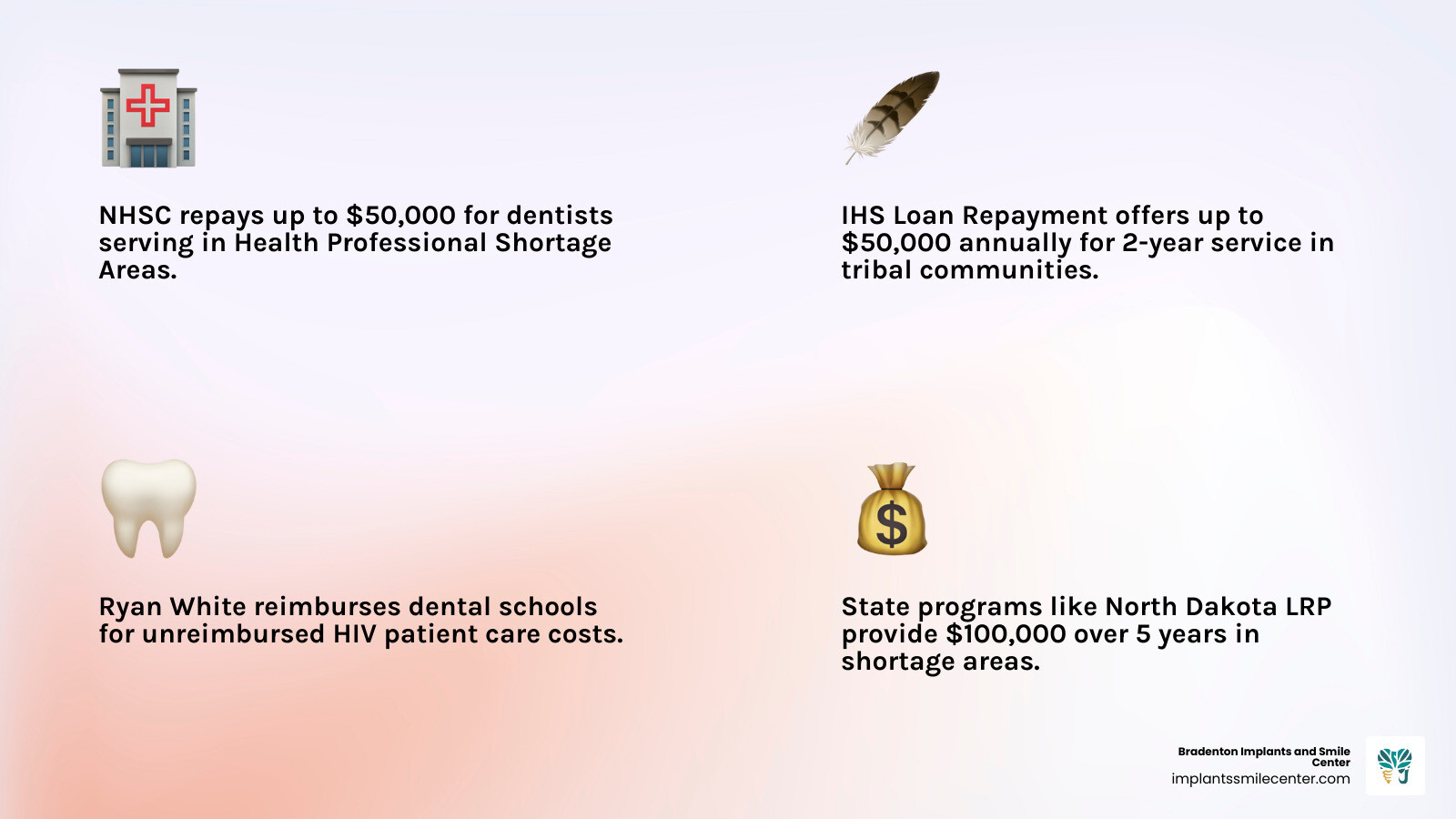
Two of the heavy hitters in this space are the Indian Health Service (IHS) and the National Health Service Corps (NHSC). These programs are vital because they allow clinics to keep their doors open and their prices lower for the community.
Indian Health Service (IHS) and NHSC Repayment Terms
The IHS Loan Repayment Program is a cornerstone of dental health for American Indian and Alaska Native communities. If a dentist commits to a two-year stint at an approved facility, the government can provide up to $20,000 per year toward their qualified education loans.
The NHSC program is slightly different. It offers dentists an initial award that can range from $30,000 to $50,000. The exact amount depends on the "HPSA score" of the site where they work—basically, the higher the need in that community, the higher the financial reward for the provider.
Feature IHS Loan Repayment Program NHSC Loan Repayment Program Service Commitment 2 Years Minimum 2 Years Minimum Annual Award Up to $20,000/year $30,000 - $50,000 (Initial) Target Population American Indian/Alaska Native General Underserved (HPSAs) Full/Half Time Full-time Full and Half-time options
Eligibility for Federal Government Loans for Dental Work
To qualify for these federal programs, the criteria are strict. For the Dental Faculty Loan Repayment Program, the goal is to keep teachers in dental schools. Eligible entities include accredited public or private nonprofit dental schools.
For individual providers, eligibility hinges on:
Accreditation: You must be a fully licensed dentist or dental hygienist.
Income Thresholds: Many programs prioritize facilities that treat patients at or below the federal poverty level.
Loan Status: Only "qualified" education loans—those taken out for tuition and reasonable living expenses—are eligible for repayment.
Service Commitments and Geographic Restrictions
You can’t just practice anywhere and expect the government to pay your bills. Most programs require a minimum two-year service commitment. In North Dakota, for example, the commitment can extend up to five years.
Geographic restrictions are the name of the game. Most of these programs require providers to work in rural health clinics or nonprofit centers. In our local area, organizations like the Medical & Dental Clinic - Bradenton - Turning Points serve as vital resources for underserved populations, providing a bridge for those who cannot afford traditional private practice fees.
Key Government Dental Grant Programs for Patients and Providers
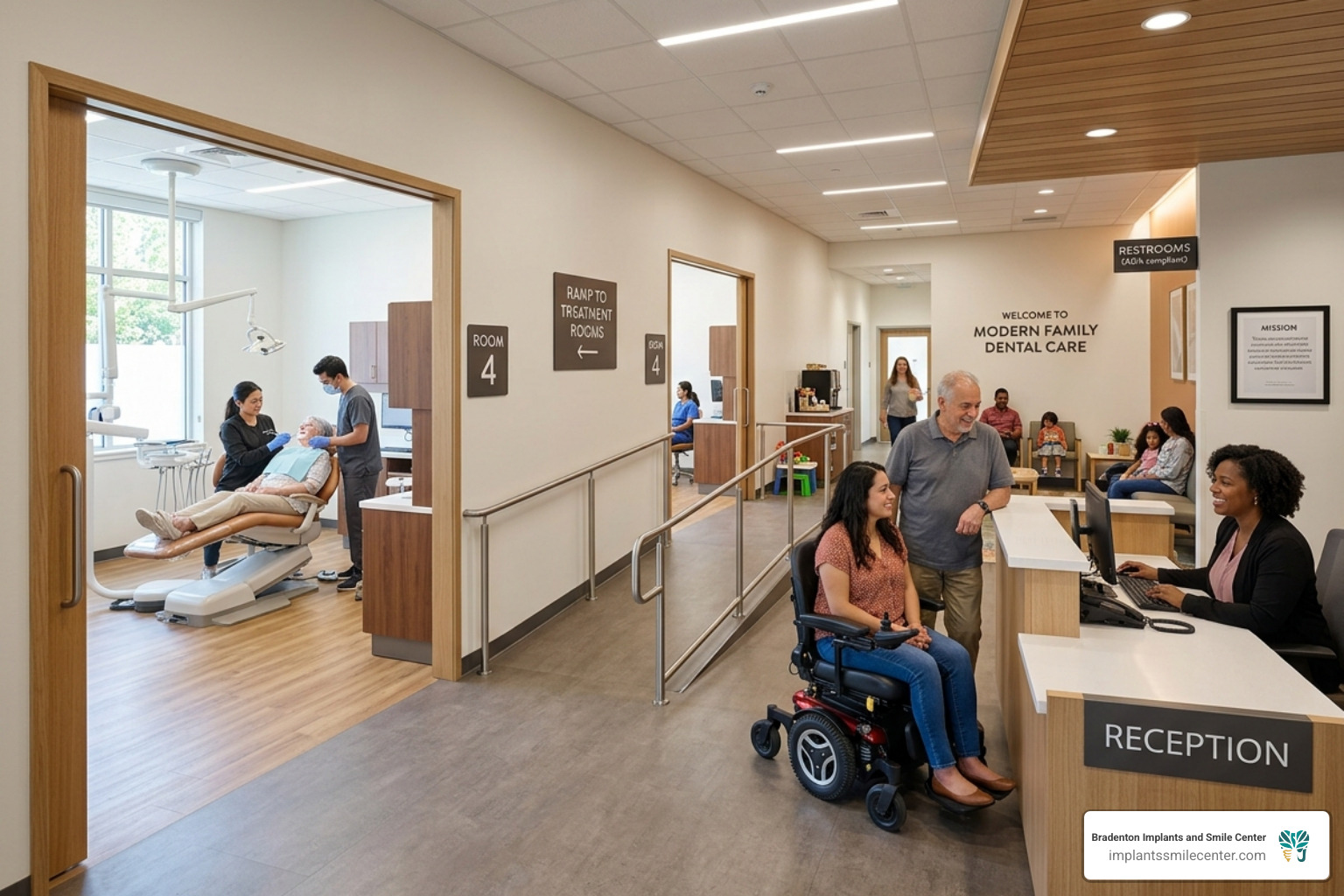
While loans focus on the providers, "grants" are where the government puts money into infrastructure and specific patient groups. These aren't usually "government loans for dental work" that you pay back; they are funds allocated to clinics to make care cheaper—or even free—for the patient.
Ryan White HIV/AIDS Program
One of the most significant federal grants is the Ryan White HIV/AIDS Program Part F Dental Reimbursement Program. This program is a lifesaver for low-income people living with HIV. It doesn't give money to the patient directly; instead, it reimburses accredited dental education programs for the unreimbursed costs of providing care. This allows these schools to treat patients who otherwise couldn't afford a simple cleaning, let alone complex oral surgery.
Specialty Dental Clinic Grant Program
California recently made headlines with its Specialty Dental Clinic Grant Program, which saw a total of $50 million in available funding. This program aims to increase access for "special health care needs" populations. Individual grantees could receive up to $5 million to expand their clinics. While this is a California-specific initiative, it sets a blueprint for how other states might handle oral health equity.
At Bradenton Implants and Smile Center, we closely monitor these national trends to ensure we are using the most efficient clinical models to keep our care compassionate and accessible.
State-Specific Government Loans for Dental Work and Incentives
Different states have different "war chests" for dental health.
North Dakota: Their Dental Loan Repayment Information shows they offer up to $100,000 over five years.
Florida: Locally, the Florida Dental Association Foundation runs several programs aimed at helping the underserved. They focus on "Mission of Mercy" events and grants that support clinics in critical shortage areas.
Covered Procedures and Documentation Requirements
If you are lucky enough to find a clinic funded by these grants, what will they actually fix? Generally, government-funded programs focus on "Essential" dentistry:
Preventive care: Cleanings, X-rays, and exams.
Restorative services: Fillings and basic extractions.
Oral surgery: Necessary for health, not just looks.
Before you can move on to "advanced" work like implants, most programs require you to have a "healthy mouth." This means you must finish all basic dentistry (cleanings and fillings) first. If you want to see what a completed transformation looks like, you can see our before and after results to understand the standard of care we aim for once the foundation is set.
Comparing Government Funding vs. Private Dental Grants
It is easy to get confused between a "government grant" and a "private dental grant."
Government Funding: Usually goes to the clinic or the doctor. It aims to lower the cost for everyone or provide free care to the very poor.
Private Grants: Programs like the "Cosmetic Dentistry Grants" (CDG) are different. These are often funded by participating dentists who agree to a 25% to 30% cost reduction on elective procedures.
Private grants are great for people who have a healthy mouth but want to improve their smile with veneers or implants. However, unlike government programs, these often require you to pay for the "basic" work out of pocket before the grant kicks in for the "pretty" work.
Another key difference is the tax treatment. Under IRS Publication 970, many government-funded loan repayments are tax-free if they are part of a state program in a shortage area. Private grants, however, are essentially just discounts, so they don't carry the same tax-exempt status. For more on navigating these Florida-specific options, resources like FL Voices for Health can provide guidance on navigating the local landscape.
Frequently Asked Questions about Government Dental Assistance
Are payments from government dental loan repayment programs taxable?
Generally, no. For programs like the North Dakota Health Service Corps or the NHSC, the payments are typically exempt from federal income tax and FICA. This is a huge incentive for dentists, as it means the full $20,000 or $50,000 goes directly toward their debt.
What procedures are typically covered by government dental grants?
Government money is usually "needs-based." This means it covers:
Emergency extractions to stop pain.
Periodontal therapy to treat gum disease.
Dentures for those who cannot eat properly.
Specialty care for patients with developmental disabilities.
How do I apply for the Ryan White Dental Reimbursement Program?
If you are a patient, you don't apply directly to HRSA. You seek out an accredited dental school or hospital that participates in the program. If you are a provider, you must document all unreimbursed costs and submit them through the HRSA Electronic Handbooks during the open application cycle (which usually has a strict deadline).
Conclusion
Navigating government loans for dental work can feel like pulling teeth, but the resources are there if you know where to look. Whether it's federal programs like the NHSC or state-specific incentives, the goal is always the same: making sure every American has a path to a healthy smile.
At Bradenton Implants & Smile Center, we believe that financial hurdles shouldn't stand in the way of your health. We provide personalized, compassionate care using the latest dental technology. While we aren't a government agency, we are experts at helping you coordinate your care and find the best path forward for your budget.
If you're ready to take the next step toward the smile you deserve, explore our special offers for dental work and let's get started on your treatment plan today.