


Will Your Insurance Cover Invisalign? Let's Talk Money
How Much Does Invisalign Cost with Insurance? Here's What to Expect
How much does invisalign cost with insurance is one of the most common questions we hear from patients considering clear aligner treatment. The short answer: most people pay between $2,000 and $5,500 out of pocket after insurance kicks in.
Here's a quick breakdown:
Scenario Estimated Out-of-Pocket Cost Insurance covers $500 (basic plan) $3,500 - $7,500 Insurance covers $1,500 (common lifetime max) $2,500 - $6,500 Insurance covers $2,000 (mid-tier plan) $2,000 - $6,000 Insurance covers $3,000+ (premium plan) $1,000 - $5,000
Based on a total treatment cost range of $3,000 - $8,000 before insurance.
Key facts at a glance:
Most dental insurance plans cover Invisalign the same way they cover traditional braces
Average insurance benefit: around $1,772, according to 2021 OrthoFi data (112,000+ patients)
92% of insured patients qualified for up to $3,000 in orthodontic coverage
Common lifetime maximum: $1,500 (some plans go up to $3,000 or more)
Coverage typically ranges from 25% to 50% of total treatment cost
The actual number you pay depends on your specific plan, your case complexity, and whether you use in-network providers. We'll walk through all of it below.
I'm Dr. John Hegazin, owner of Bradenton Implants and Smile Center, with over 8 years of experience helping patients navigate both the clinical and financial sides of treatments like Invisalign — including understanding exactly how much does invisalign cost with insurance across different plan types. Let's break down what your insurance likely covers and how to make the most of your benefits.
Understanding the Average Cost of Invisalign Without Insurance
Before we dive into the "insurance math," we need to look at the total sticker price. If you were paying entirely out of pocket, what would the bill look like? Nationally, the price for Invisalign treatment in the U.S. typically ranges from $3,000 to $8,000, with a national average hovering around $4,978.
At our practice, we use a digital 3D smile scan to determine exactly how many aligners you need. This technology replaces those messy old-school putty impressions and allows us to categorize your case into one of three main tiers:
Invisalign Express (Mild Cases): This is for very minor crowding or spacing. It usually involves 5 to 10 aligners and costs between $3,000 and $4,500.
Invisalign Lite (Moderate Cases): For patients who need a bit more movement but don't have complex bite issues. This typically ranges from $4,500 to $6,000.
Comprehensive Treatment (Severe Cases): This is for complex bite corrections, significant crowding, or rotated teeth. These cases often take 18 to 24 months and can cost $6,000 to $8,000+.
The total cost isn't just for the plastic trays; it covers the doctor's expertise, lab fees, X-rays, and the Clinical Orthodontics research-backed software used to map your tooth movement. While the range seems wide, most of our patients fall into the moderate category.
How Much Does Invisalign Cost with Insurance?
The good news is that dental insurance has caught up with technology. In fact, 72% of dental plans now provide identical benefits for both Invisalign and metal braces. If your plan has an "orthodontic benefit," it almost certainly applies to clear aligners.
Insurance typically pays in one of two ways: a straight percentage (like 50% coverage) or a fixed dollar amount. However, these are almost always subject to a "lifetime maximum." Unlike your regular cleaning benefits that reset every January, orthodontic benefits are usually a "one-and-done" pool of money.
Average Insurance Coverage for Invisalign
How much can you actually expect the insurance company to chip in?
The Range: Most plans cover between $500 and $2,000.
The Statistics: Data from OrthoFi (analyzing over 112,000 patients) showed that the average coverage amount was $1,772.
The High End: In some premium employer-sponsored plans, we have seen patients receive up to $3,500 toward their treatment.
It is important to note that insurance companies usually pay their portion over the course of the treatment. If your treatment lasts two years, they may send half the money the first year and the remaining half the second year.
Calculating Your Final Invisalign Cost with Insurance
To find your true out-of-pocket cost, we have to look at the fine print. You’ll want to check for:
Deductibles: Some plans require you to pay the first $50 or $150 before orthodontic benefits start.
Coinsurance: If your plan has a 50% coinsurance rate but a $1,500 lifetime max, they will pay half the bill until they hit that $1,500 limit.
In-Network vs. Out-of-Network: Using an in-network provider can save you significantly. Out-of-network claims often reimburse 18% to 20% less than in-network claims.
We recommend a formal pre-authorization. This is a process where we send your treatment plan to the insurance company before you start. They send back a "predetermination of benefits," which tells us exactly what they will pay. This takes about 5 to 15 business days but prevents any "money surprises" later. You can also check More info about special offers to see if we have any current promotions that can be stacked with your insurance.
Estimated Out-of-Pocket Cost Table
Case Complexity Avg. Total Cost With $1,500 Insurance With $2,500 Insurance Mild $3,800 $2,300 $1,300 Moderate $5,200 $3,700 $2,700 Severe $7,000 $5,500 $4,500
Navigating Plan Types: PPO vs. HMO and Lifetime Maximums
The type of plan you have—PPO or HMO—drastically changes how much does invisalign cost with insurance.
PPO Plans (Preferred Provider Organization): These are the most popular for Invisalign. They offer the most flexibility, allowing you to see almost any dentist. PPO plans typically cover 30% to 50% of the cost with lifetime maximums averaging $2,000 to $3,500. They also allow for "informal appeals" if a claim is initially denied.
HMO Plans (Health Maintenance Organization): HMOs are more restrictive. You must see a provider within a specific geographic service area. While they sometimes have lower premiums, their orthodontic benefits often cap reimbursements below 30%, with lifetime maximums usually hovering between $1,000 and $1,500. About 85% of HMO plans have very rigorous pre-authorization requirements.
Adult Coverage and Medical Necessity Requirements
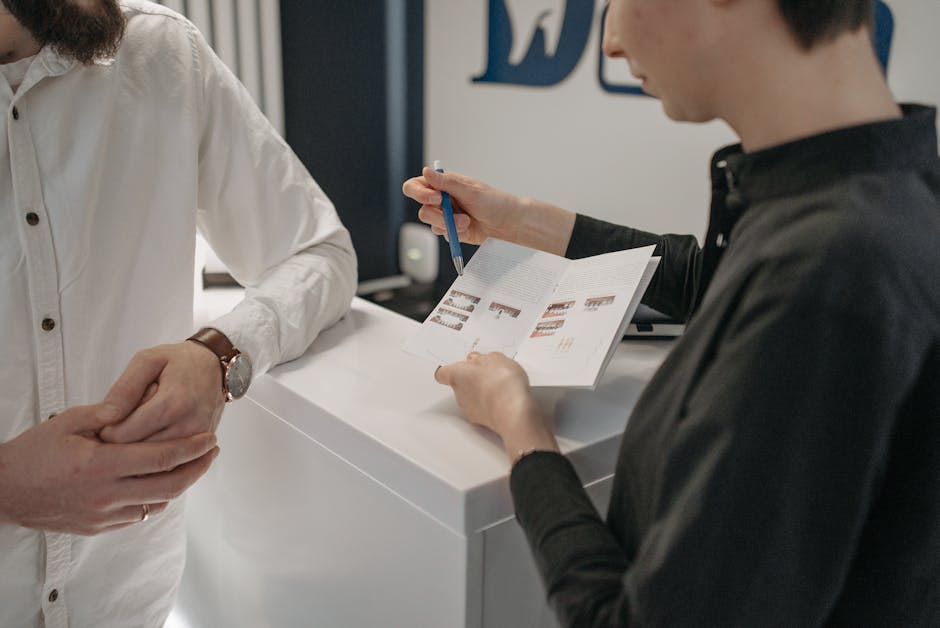
One of the biggest hurdles for adults is the "age limit" clause. Approximately 60% of dental plans limit full orthodontic benefits to patients under the age of 18 or 19. If you are an adult seeking treatment, we must verify if your plan includes "adult ortho."
If your plan doesn't automatically cover adults, we may be able to secure coverage by proving medical necessity. Insurance is more likely to pay if the treatment isn't just for a "prettier smile" but to fix a functional issue. This includes:
Class II or III Malocclusions: Severe overbites or underbites.
Functional Alignment: Teeth that are wearing down prematurely because they don't meet correctly.
Gum Health: Crowded teeth that are impossible to clean, leading to periodontal issues.
When we submit clinical evidence—like diagnostic images and X-rays—approval rates for these cases typically increase significantly as the insurance provider can clearly see the functional need for treatment.
Using FSA, HSA, and Financing to Lower Costs
If your insurance leaves you with a balance of $3,000, don't panic. You have several "secret weapons" to drive that cost down further.
1. FSA (Flexible Spending Account): For 2025, the FSA contribution limit is $3,300. These are pre-tax dollars taken directly from your paycheck. Since this money isn't taxed, using an FSA can effectively give you a 20% to 35% discount on your Invisalign, depending on your tax bracket. Just remember: FSA funds usually expire at the end of the year, so timing your treatment start is key!
2. HSA (Health Savings Account): HSAs are even better because the money rolls over year after year. For 2025, the limits are $4,300 for individuals and $8,550 for families. Invisalign is a 100% eligible medical expense under IRS guidelines for HSA funds.
3. Flexible Financing: Most of our patients choose to split their remaining balance into monthly payments. We work with providers like Lending Club and CareCredit to offer 0% interest financing. This can bring your monthly payment down to as little as $120 to $150 per month. By stacking your insurance, your HSA funds, and a monthly payment plan, the "big" cost of Invisalign becomes a very manageable monthly line item. You can find more details on our Homepage.
Frequently Asked Questions about Invisalign Costs
How much do retainers cost after Invisalign?
Once you finish your last tray, you need retainers to keep those teeth in place. The cost typically ranges from $100 to $500 per set. Many patients choose Vivera retainers (made by the makers of Invisalign), which are more durable and usually come in a pack of four sets for around $400–$1,000. While most insurance plans don't cover "maintenance" retainers, some premium plans might cover the first set as part of the total treatment fee.
Does insurance cover Invisalign the same as traditional braces?
Yes, in the vast majority of cases (about 72% of plans), the coverage is identical. If your plan pays $2,000 for metal braces, they will pay $2,000 for Invisalign. The insurance company generally views them both under the same "orthodontic benefit" classification.
What factors influence the out-of-pocket cost of Invisalign with insurance?
Several factors can shift your final bill:
Provider Experience: "Elite" or "Diamond" level providers may have different fee structures but often have more experience with complex cases.
Refinement Trays: Sometimes, at the end of treatment, you need a few extra "tweak" trays. These can cost $500–$1,500 if they weren't included in your original quote.
Geographic Location: Costs in Florida are generally mid-range compared to high-cost areas like New York City.
IPR and Attachments: Small tooth adjustments (Interproximal Reduction) or "buttons" placed on the teeth are usually included in our comprehensive quotes, but some offices charge extra for them.
Conclusion
Navigating dental insurance can feel like trying to solve a puzzle, but you don't have to do it alone. At Bradenton Implants & Smile Center, we believe that a healthy, confident smile should be accessible to everyone in our community.
Whether you are dealing with mild crowding or a complex bite issue, we use modern technology and advanced techniques to ensure your treatment is efficient and effective. Our team is expert at maximizing your insurance benefits and finding a financing plan that fits your life.
Ready to see what Invisalign can do for you? Visit our Homepage to learn more about our personalized, compassionate care, or give us a call to schedule your consultation. We’ll help you decode your insurance and get you started on the path to a smile you’ll love to show off.