


Can You Fix a Tongue Tie Without Surgery
What You Need to Know About How to Fix Tongue-Tie Naturally
Learning how to fix tongue-tie naturally by improving function and range of motion is possible in many mild to moderate cases — but the right approach depends on age, severity, and professional guidance.
Here are the most effective natural methods:
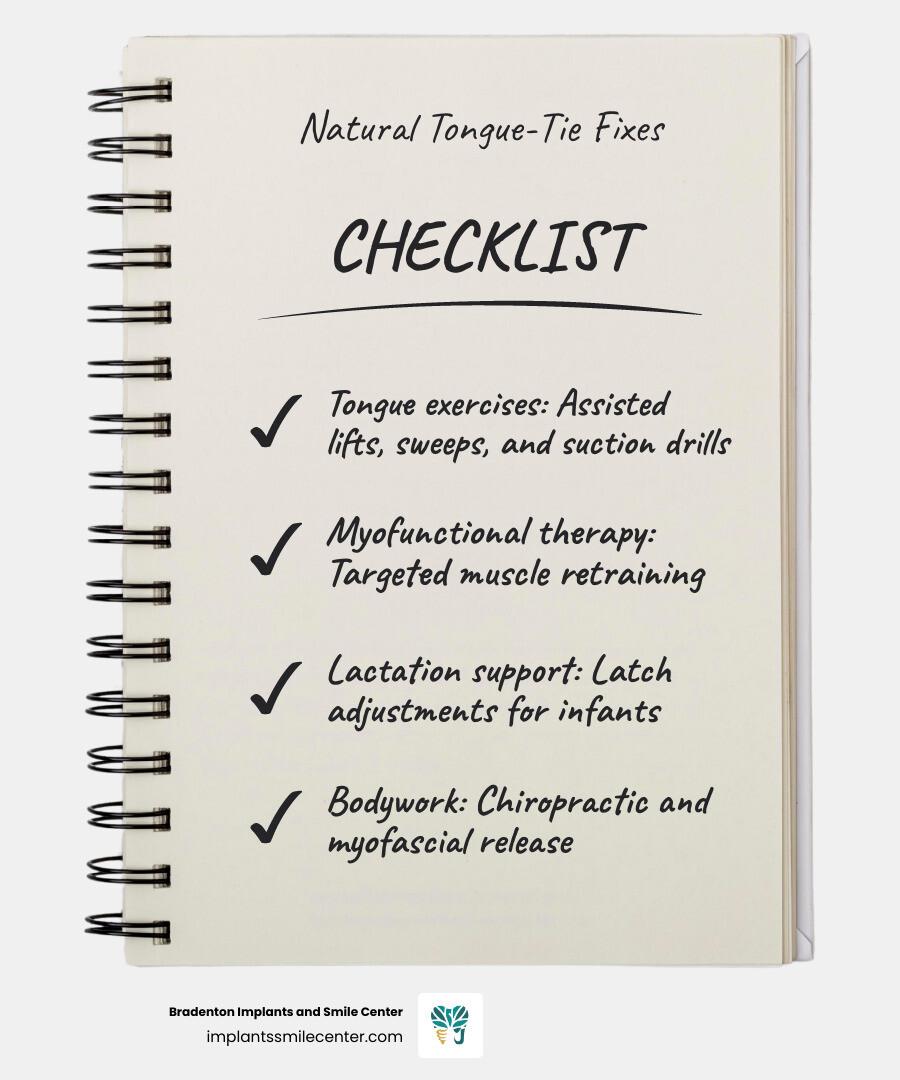
Tongue exercises – Assisted lifts, sweeps, and suction drills to improve range of motion
Myofunctional therapy – Targeted muscle retraining guided by a speech-language pathologist or myofunctional therapist
Lactation consultant support – Latch adjustments and feeding positions for breastfeeding infants
Chiropractic or myofascial release – Bodywork to address associated fascial tension
Oral motor therapy – Sucking exercises and mouth stimulation, especially for infants
Craniosacral therapy – Gentle hands-on care to relieve structural tension linked to tongue restriction
Important: Natural methods work best for mild cases. Severe tongue-tie usually requires surgical release (frenotomy or frenuloplasty) for full correction.
Tongue-tie — medically called ankyloglossia — affects anywhere from 1% to 11% of newborns, according to the American Academy of Pediatrics. It happens when the lingual frenulum (the thin band of tissue under the tongue) is too short or tight, limiting how far the tongue can move. That restriction can affect breastfeeding, speech, eating, and even airway health.
The condition doesn't always cause serious problems. But when it does, many parents and adults want to know if surgery is truly necessary — or whether gentler approaches can help first.
I'm Dr. John Hegazin, and with over 8 years of experience in dentistry — including specialized tongue and lip tie removal procedures — I've helped many patients explore the full range of options for how to fix tongue-tie naturally before considering surgical intervention. In the sections below, I'll walk you through what actually works, what the evidence says, and when it's time to take a different approach.
Understanding Ankyloglossia and How to Fix Tongue-Tie Naturally
To understand if we can avoid surgery, we first have to look at what we are dealing with. Ankyloglossia is a congenital condition, meaning it’s present from birth. It occurs when the lingual frenulum—that little string of tissue connecting the bottom of the tongue to the floor of the mouth—doesn't recede properly during fetal development.
While the exact cause is often linked to genetic factors, the result is a tongue that is "tied" down. Research from the Mayo Clinic notes that while some doctors advocate for immediate surgery, others suggest a "wait-and-see" approach because the frenulum may loosen over time as the child grows.
The Four Types of Tongue-Tie
Not all ties are created equal. We generally classify them into four types based on where the tissue attaches to the tongue:
Type 1: The attachment is at the very tip of the tongue. This often creates a "heart-shaped" appearance when the tongue is lifted.
Type 2: The attachment is 2-4mm behind the tip.
Type 3: The attachment is toward the middle of the tongue (mid-tongue).
Type 4: Also known as a "posterior" tongue-tie. The restriction is at the base of the tongue and is often felt rather than seen.

Comparing Management Approaches
When deciding how to fix tongue-tie naturally, it helps to see how non-surgical paths compare to the traditional "clip."
Feature Natural Management Surgical Intervention Primary Goal Improve function and compensation Remove physical restriction Methods Exercises, bodywork, therapy Frenotomy or Frenuloplasty Pain Level None to mild discomfort Minimal (with laser or local numbing) Timeframe Weeks to months of consistency Immediate release + 6 weeks recovery Best For Mild to moderate cases Severe (Type 1) or non-responsive cases
Identifying Symptoms in Infants and Adults
The signs of a tongue-tie change as we age. In infants, the most common red flag is a poor latch during breastfeeding. You might hear "clicking" sounds while they eat, or notice they are dribbling milk. For moms, this often translates to significant nipple pain or even mastitis because the breast isn't being emptied effectively.
As children grow into adults, untreated ankyloglossia can lead to:
Speech Articulation Issues: Difficulty with sounds like "t, d, z, s, n, l," and "r."
Dental Problems: Misalignment of teeth or a gap between the lower front teeth.
TMJ and Tension: Chronic neck pain or jaw clicking due to the tongue pulling on the floor of the mouth.
Sleep Issues: Restricted airways that may contribute to snoring or sleep apnea.
According to the Cleveland Clinic, professional diagnosis is essential because these symptoms can sometimes overlap with other developmental or medical issues.
Can You Fix a Tongue-Tie Naturally Without Surgery?
The short answer is: you can often fix the function, even if you don't remove the tissue. In mild cases, the tissue has enough elasticity that targeted exercises can "stretch" the range of motion. In other cases, the body learns functional compensation—essentially training other muscles to pick up the slack.
Experts often use the Hazelbaker tool (HATLFF) to assess whether a tie is purely an appearance issue or a functional one. If the tongue can reach the roof of the mouth and move side-to-side sufficiently for speech and swallowing, natural methods are often the preferred first step.
Non-Surgical Methods and Holistic Therapies
If we decide to skip the laser or scissors, we turn to a multidisciplinary approach. This isn't just about the tongue; it's about the entire "deep front line" of fascia that runs from your tongue down to your toes.
Myofunctional Therapy and Tongue Exercises
Think of myofunctional therapy as "physical therapy for your mouth." It is one of the most effective ways to address tongue-tie without surgery. A therapist works with you to retrain the muscles used for breathing, swallowing, and speaking.
Common exercises include:
Tongue Push-Ups: Pressing the entire tongue against the roof of the mouth and holding for several seconds.
Suction Spots: Training the tongue to rest in the "n" position (the spot just behind the upper front teeth).
Lateralization: Moving the tongue from one corner of the mouth to the other without moving the jaw.
Healthline emphasizes that these exercises are vital for correcting habits that have formed over years of restricted movement.
Chiropractic Care and Myofascial Release
It might sound strange to visit a chiropractor for a tongue issue, but the tongue is connected to the neck and spine via a complex web of fascia.
By using gentle craniosacral therapy or myofascial release, practitioners can reduce compensatory tension in the jaw and neck. This bodywork addresses the structural strain often found alongside ankyloglossia, helping to improve the tongue's functional range of motion. Cedars-Sinai notes that while surgery is common, a team-based approach involving various specialists often yields the best long-term results.

Age-Specific Strategies for Natural Improvement
The approach for a two-week-old is vastly different from the approach for a forty-year-old.
Natural Care for Infants
For newborns, the goal is successful feeding. We recommend:
Tummy Time: This strengthens the neck and back, which supports the oral muscles.
Sucking Reflex Stimulation: Gently rubbing the baby's gums or palate to encourage a stronger, more rhythmic suck.
Positioning: Using the "football hold" or side-lying positions can help a baby with a slight tie get a deeper, more comfortable latch.
Strategies for How to Fix Tongue-Tie Naturally in Children and Adults
For older children, we often turn exercises into games. "Licking the lollipop" or "tongue tag" can help improve range of motion. For adults, the focus shifts toward airway health and supporting the management of sleep apnea.
Adults often benefit from "tongue sweeps"—running the tongue along the outside of the teeth—and focusing on maintaining a proper resting tongue posture (tongue on the roof of the mouth, lips sealed, breathing through the nose). As Cedars-Sinai points out, even if an adult chooses surgery later, doing these natural exercises beforehand (pre-habilitation) makes the recovery much faster.
When Natural Methods Aren't Enough: Surgical Intervention
Sometimes, the tissue is simply too thick or too tight for exercises to overcome. In these cases, a surgical release is the kindest option to prevent a lifetime of speech and dental struggles.
Modern dentistry has made this incredibly simple. A laser frenectomy is a minimally invasive procedure that uses a dental laser to "vaporize" the restricted tissue. Unlike traditional scissors or cautery, the laser:
Causes almost no bleeding.
Requires no sutures (usually).
Results in faster healing and less post-operative pain.
Post-Surgical Active Wound Care
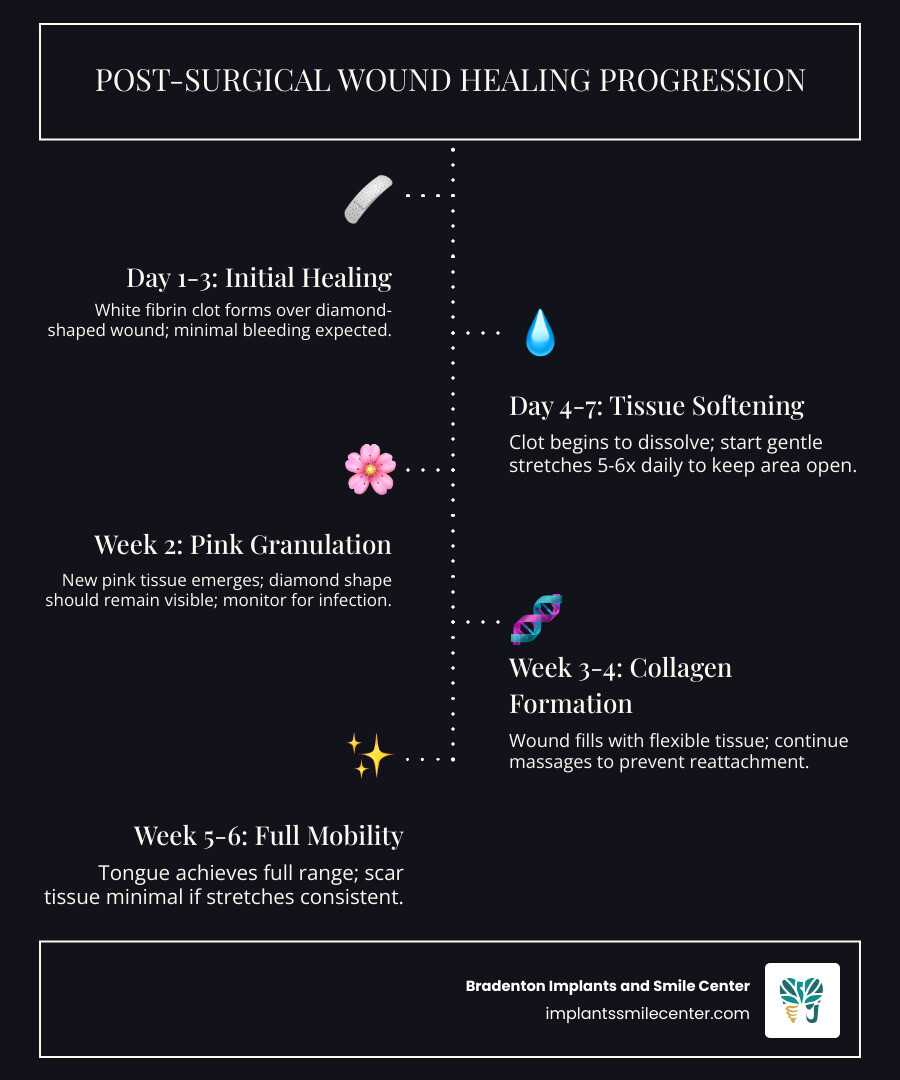
If you do opt for surgery, the "natural" part doesn't end. In fact, post-surgical exercises are the most critical part of the process. Without them, the tissue can reattach, sometimes tighter than before.
We typically recommend a 6-week protocol of daily stretches. You'll be looking for a "diamond-shaped" wound under the tongue. By gently lifting the tongue and massaging the area 5–6 times a day, you ensure the tissue heals in an open, flexible position rather than contracting back into a tie.
Frequently Asked Questions about Natural Tongue-Tie Relief
Does a tongue-tie go away on its own?
There is a common myth that the frenulum "stretches" or "snaps" as a child grows. In reality, the frenulum is made of high-collagen cells that do not stretch like a rubber band. However, as the mouth grows, the relative restriction may become less significant, and the child may learn to compensate so well that the tie is no longer a functional problem.
Are tongue exercises effective for severe cases?
For a Type 1 tie where the tongue is tethered to the very tip, exercises alone are rarely enough to provide full relief. In these severe cases, natural methods are best used as "pre-op" and "post-op" support to ensure the surgical release is successful.
Who should I consult for a non-surgical evaluation?
We recommend a multidisciplinary team. Start with a lactation consultant if you are breastfeeding. A pediatric dentist or an ENT (Ear, Nose, and Throat specialist) can provide a formal diagnosis. Myofunctional therapists and holistic practitioners like chiropractors can then help you implement a non-surgical plan.
Conclusion
At Bradenton Implants & Smile Center, we believe in a balanced, compassionate approach to oral health. Whether you are an adult struggling with TMJ and speech issues or a parent looking for the best start for your child, we are here to help. Our team uses modern dental technology and advanced techniques to ensure that every patient receives personalized care tailored to their specific needs.
If you're in the Bradenton area and have questions about tongue-tie or other restorative dental needs, we invite you to reach out. We focus on the big picture of your health, ensuring your smile—and your tongue—function exactly as they should.