
Wake up with a brand new smile
Dental Anxiety Is Keeping Millions from the Smile They Deserve
IV sedation dental implants offer a way to get a full smile restoration — without fear, pain, or even much memory of the procedure.
Here's a quick overview of what that means for you:
Question Quick Answer What is IV sedation? Sedative medication delivered through a vein, creating a deeply relaxed "twilight sleep" state Will I be unconscious? No — you stay semi-conscious and can respond to instructions Will I feel pain? No — local anesthetic is also used for a completely pain-free experience Will I remember it? Little to nothing — IV sedation has a strong amnesia effect How fast does it work? Within 2-3 minutes of administration Who is it good for? Anxious patients, complex procedures, strong gag reflex, multiple implants
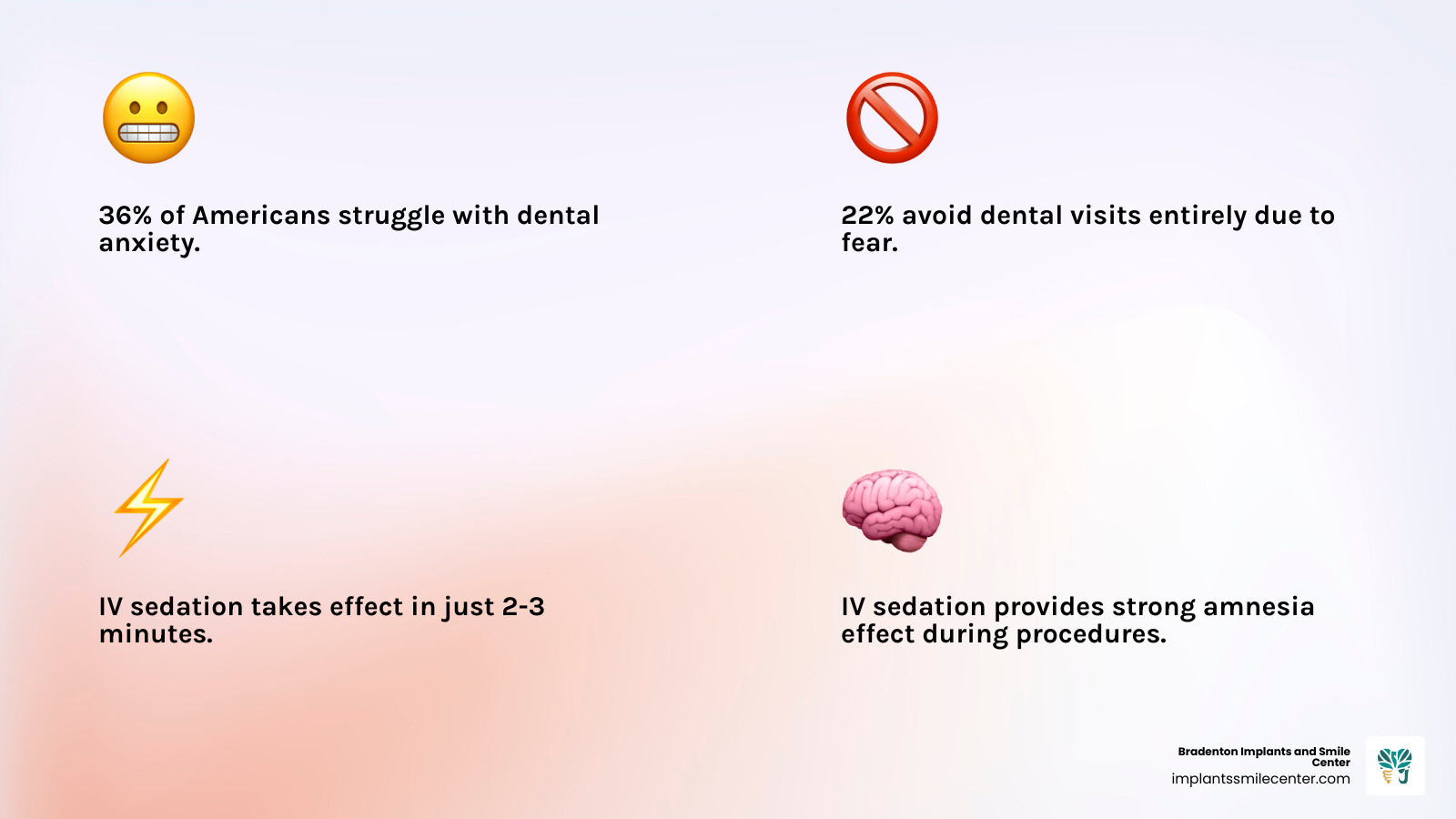
You are not alone if the idea of dental surgery makes your stomach drop. According to the National Library of Medicine, 36% of Americans struggle with dental anxiety — and the American Dental Association estimates that 22% avoid the dentist entirely because of fear. For people who need implants, that fear can mean years of putting off treatment that could change their lives.
The good news? IV sedation has made it possible for even the most anxious patients to wake up with a brand new smile — often with no memory of the procedure at all. It's sometimes called twilight sleep, and it's one of the most effective tools in modern restorative dentistry.
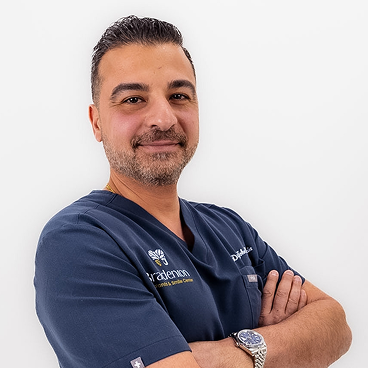
I'm Dr. John Hegazin, dentist and owner of Bradenton Implants and Smile Center. With over 8 years of experience in implant dentistry and advanced sedation, I've helped many patients finally get the dental care they needed through IV sedation dental implants — comfortably and safely. In this guide, I'll walk you through everything you need to know to feel confident about your options.
Why IV Sedation Dental Implants are the Gold Standard for Comfort
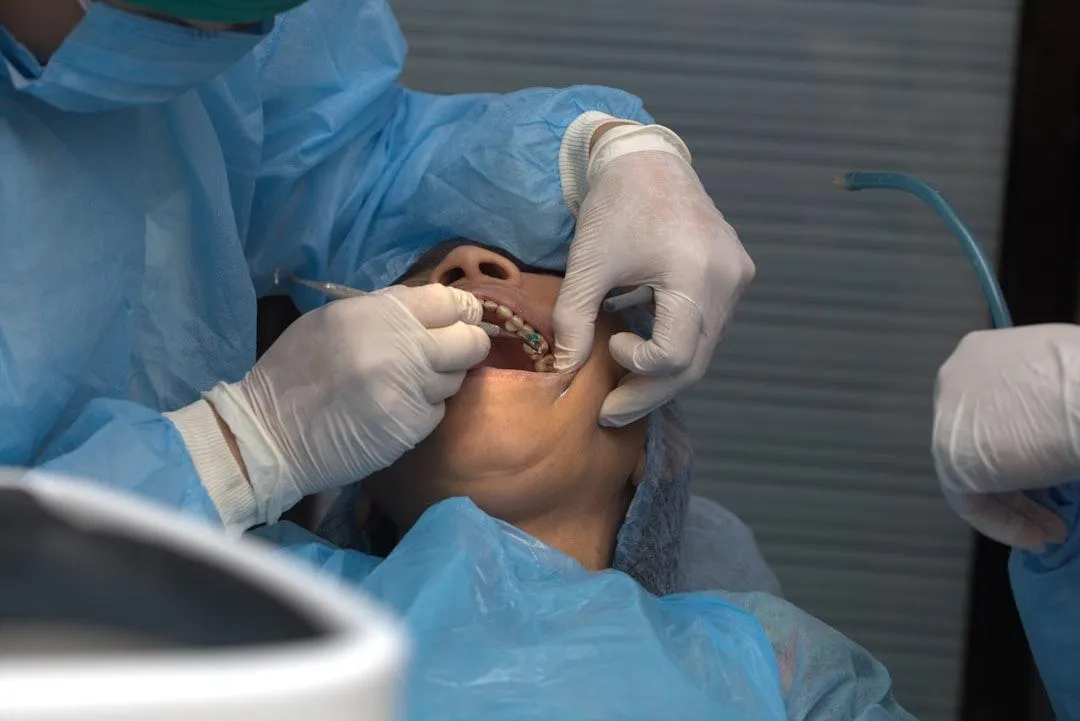
When we talk about iv sedation dental implants, we are referring to a method where sedative medication is administered directly into your bloodstream through an intravenous line. This is widely considered the "gold standard" for patient comfort during oral surgery for several reasons.
First, the onset is incredibly rapid. Unlike oral sedative pills that you might have to take an hour before your appointment and wait for them to digest, IV Sedation typically begins working within just 2 to 3 minutes. This allows us to start your procedure quickly and ensures you aren't sitting in the chair feeling anxious while waiting for medicine to "kick in."

Secondly, IV sedation provides what we call "conscious sedation" or "twilight sleep." You aren't "under" in the sense of general anesthesia used in a hospital—you can still breathe on your own and even respond to simple verbal cues from our team. However, you are in a state of such deep relaxation that you simply do not care about the sights, sounds, or sensations of the surgery.
One of the most significant benefits for our patients is the amnesia effect. Most people who choose this option for their Dental Implants remember almost nothing from the time the IV starts to the time they are resting in the recovery room. This "memory wipe" is a blessing for those who have had traumatic dental experiences in the past, as it prevents the formation of new negative memories.
From a clinical perspective, IV sedation also allows us to work with much greater efficiency. When a patient is perfectly still and relaxed, we can often complete complex tasks—like placing multiple implants or performing a sinus lift—in a single session. This reduces the number of appointments you need and can lead to a more predictable surgical outcome.
Who is a Candidate for IV Sedation Dental Implants?
We find that a wide variety of patients benefit from sedation. While it is a lifesaver for those with severe dental phobia, it isn't just for the "fearful." You might be an excellent candidate if you deal with any of the following:
High Gag Reflex: If even a routine cleaning makes you gag, the deep relaxation of IV sedation can suppress that reflex, making it much easier for us to work in the back of your mouth.
Low Pain Threshold: Some people are naturally more sensitive to pain or have difficulty getting "numb" with local anesthetic alone.
Complex Procedures: If you are undergoing Full Mouth Dental Implants or a Full Mouth Reconstruction, you may be in the chair for several hours. Sedation makes that time feel like it passed in minutes.
Physical Limitations: Patients with back or neck issues who find it painful to sit still for long periods often find sedation helps them remain comfortable.
Medical Stability: Generally, patients in ASA (American Society of Anesthesiologists) groups I and II—meaning those who are healthy or have very mild, well-controlled systemic diseases—are the primary candidates for in-office IV sedation.
Preparing for Your IV Sedation Dental Implants Procedure
Preparation is key to a safe and smooth experience. During your initial consultation at our Bradenton office, we will perform a thorough review of your medical history. We need to know about every medication and supplement you take, as some can interact with sedative drugs.
On the day of your surgery, you will need to follow strict fasting requirements—usually no food or drink (including water) for at least eight hours prior to the procedure. This is a vital safety measure to prevent complications during sedation. We also recommend wearing loose, comfortable clothing with sleeves that can be easily rolled up so we can place the IV and monitor your blood pressure.
Because the sedative effects linger, you must have a responsible adult drive you to the office and take you home afterward. You cannot drive, operate machinery, or make major legal decisions for 24 hours after being sedated.
We understand that the cost of advanced care can be a concern. That’s why we work with CareCredit® healthcare financing to help make these life-changing procedures more accessible. Our team is also happy to discuss other Advanced Sedation Options if you have specific health needs or preferences.
Comparing Your Sedation Options for Oral Surgery
Not all sedation is created equal. When you visit us for Services, we want you to understand exactly how IV sedation compares to other common methods.
Feature Nitrous Oxide (Laughing Gas) Oral Conscious Sedation IV Sedation (Twilight Sleep) General Anesthesia Level of Sedation Light / Minimal Moderate Moderate to Deep Unconscious Method Inhalation (Mask) Pill / Liquid Intravenous (IV) IV or Gas Onset Speed Immediate 30 - 60 Minutes 2 - 3 Minutes Immediate Amnesia Effect None Mild / Variable Strong Complete Recovery Time Minutes Several Hours 12 - 24 Hours 24+ Hours Breathe on Own? Yes Yes Yes Often requires a ventilator
The primary advantage of iv sedation dental implants over oral sedation is "titration." With a pill, once you swallow it, we cannot easily adjust the dose. With an IV, we can precisely control the amount of medication entering your system, increasing or decreasing it instantly to ensure you stay at the perfect level of relaxation throughout the entire surgery.
Safety, Risks, and Hemodynamic Stability
Safety is our absolute priority. Many patients ask if IV sedation is safe, and the answer is yes—especially when administered by trained professionals in a controlled environment.
One fascinating aspect of IV sedation is its effect on your "hemodynamics"—basically, how your blood flows and your heart beats. Scientific research has shown that IV sedation can actually make surgery safer for your heart. In studies of over 400 patients, IV sedation was found to reduce the average heart rate by about 12 beats per minute (bpm) compared to using local anesthesia alone. This is because the sedation removes the "fight or flight" stress response that usually causes a patient's heart rate and blood pressure to spike during surgery.
We use various medications, such as Midazolam (for relaxation and amnesia) or sometimes Dexmedetomidine, depending on the patient's specific needs. Throughout the procedure, we use continuous monitoring equipment to track your:
Heart rate and rhythm (EKG)
Blood pressure
Oxygen saturation (Pulse oximetry)
Respiration
This constant oversight ensures that we can catch and address any minor changes in your vitals immediately. While rare, risks can include localized swelling at the IV site or brief periods of grogginess, but these are typically very manageable.
The Recovery Process and Post-Operative Care
Once your iv sedation dental implants are placed, we will move you to a quiet recovery area. You will likely feel very sleepy, much like you just woke up from a long, refreshing nap.
The first 24 hours are for rest. You may feel a bit "loopy" or uncoordinated, which is why your designated driver needs to stay with you. Here are some tips for a smooth recovery:
Diet: Stick to soft foods like yogurt, smoothies, or lukewarm soup. Avoid using straws, as the suction can interfere with the healing sites.
Hydration: Drink plenty of water, but take small sips.
Pain Management: We will provide specific instructions for pain relief. Interestingly, patients who undergo IV sedation often report less post-operative pain. This is likely because their bodies didn't go through the extreme physical stress and muscle tension that happens when an anxious patient is awake during surgery.
Healing: Your implants are made of biocompatible titanium. Over the next 3 to 6 months, a process called osseointegration will occur, where your jawbone actually fuses to the implant. This creates a foundation as strong as a natural tooth root.
We will schedule follow-up appointments to monitor your healing and eventually place your custom-made permanent teeth.
Frequently Asked Questions about Sedation Dentistry
Will I feel any pain during the procedure?
Absolutely not. While the IV sedation puts you in a state of deep relaxation and "twilight sleep," we also use local anesthesia to completely numb the area where the implants are being placed. Because you are already sedated when we administer the numbing shots, most patients don't even remember getting them! You might feel some minor pressure, but pain is eliminated.
How much does IV sedation for dental implants typically cost?
The cost of IV sedation can vary based on the length of the procedure and the complexity of the case. Generally, in the Bradenton area, you might expect sedation to range from $500 to $1,500 per session. While some insurance plans do not cover sedation unless it is deemed "medically necessary," we provide various financing options to ensure you don't have to choose between your comfort and your budget.
How long does it take for the sedation to wear off?
The "heavy" feeling usually begins to fade within an hour or two after the procedure ends. However, the medication stays in your system for a while. You will likely feel drowsy for the remainder of the day. Most patients feel 100% back to normal after a full night's sleep (24 hours post-procedure).
Conclusion
At Bradenton Implants & Smile Center, we believe that fear should never be the reason you lose your smile. By utilizing iv sedation dental implants, we combine modern technology with a compassionate, personalized approach to give you the dental care you deserve in a completely stress-free environment.
Whether you need a single tooth replaced or a Full Mouth Reconstruction, our team is here to guide you every step of the way. We invite you to experience the difference that expert care and advanced comfort can make.
Ready to take the first step toward a healthier, more confident smile? Contact Us today or Schedule an Appointment at our Bradenton office. Let us help you Transform your smile with advanced sedation options and wake up to a brand new you!