

One Day Teeth Whitening: Fast Home Remedies and What to Expect
Can You Really Whiten Your Teeth in One Day?
One day teeth whitening is possible — but the results depend on which method you use and what type of stains you have.
Here's a quick breakdown of what you can realistically expect:
Method Same-Day Result Best For Professional Zoom whitening Several shades brighter in 1-2 hours Deep and surface stains Whitening strips (e.g., Crest 1-Hour Express) 1-2 shades lighter after first use Surface stains Whitening pen (e.g., Colgate Optic White Express) Mild improvement in 1 day Light surface stains Peroxide-free strips (e.g., Xwhite) About 1 shade after 1 day Sensitive teeth DIY methods (baking soda, charcoal, lemon juice) Minimal to none Not recommended
The short answer: peroxide-based products and professional treatments are your best bet for visible results within 24 hours. DIY home remedies rarely deliver meaningful change and can actually damage your enamel.
What you can achieve in one day is a noticeable reduction in surface stains and a slight shade improvement. What you cannot do is reverse deep, intrinsic discoloration overnight — that takes multiple treatments or professional care.
This matters especially if you're over 45, when years of coffee, tea, wine, and natural aging have built up layers of staining that go beyond what a single strip session can fix.
I'm Dr. John Hegazin, owner of Bradenton Implants and Smile Center, with over 8 years of experience in cosmetic dental care including one day teeth whitening treatments. In this guide, I'll walk you through the safest and fastest methods — so you can make a confident, informed choice.
What is One Day Teeth Whitening and Does It Work?
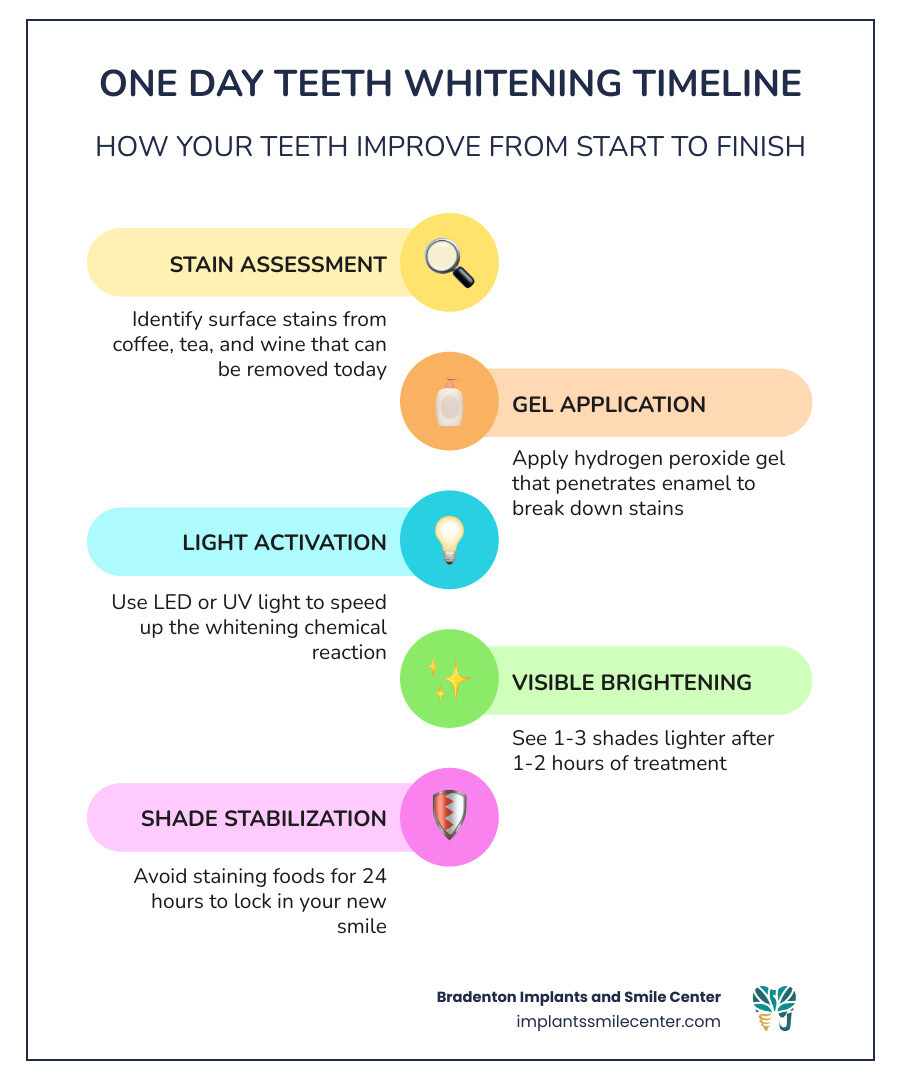
When we talk about one day teeth whitening, we are looking at treatments engineered to produce visible results within a 24-hour window. This is the go-to solution for people in Bradenton, FL, preparing for major life events—like a wedding, a high-stakes job interview, or a weekend photoshoot along the Gulf Coast.
But to understand how to get brighter teeth in a single day, we first have to look at the science of how teeth stain and how whitening agents actually work.
The Science of Stains: Chemical vs. Mechanical Whitening
To brighten your smile, dental treatments rely on two main mechanisms:
Mechanical Whitening (Physical Stain Removal): This process uses mild abrasives to physically scrub away superficial stains on the outermost layer of your teeth. Whitening toothpastes and polishing tools used during standard dental cleanings fall into this category. While great for maintenance, mechanical whitening cannot alter the natural shade of your teeth or lift deep stains in a single day.
Chemical Whitening (Bleaching): This is where the real magic happens for rapid results. Chemical whitening relies on active bleaching agents—primarily hydrogen peroxide or carbamide peroxide—to penetrate the porous structure of your enamel. These peroxide molecules break down the complex organic compounds responsible for deep discoloration.
If you want to read more about how these bleaching agents interact with your unique dental structure, you can find more info about teeth whitening on our specialized service page.
Realistic Expectations for 24-Hour Results
While it is entirely possible to step out with a brighter smile in just one day, managing your expectations is key to avoiding disappointment (and protecting your teeth from damage).
Extrinsic vs. Intrinsic Stains
The speed of your results depends heavily on where your stains are located:
Extrinsic Stains: These are surface-level discolorations caused by external factors like dark coffee, red wine, tobacco, and dark sauces. Because these pigments sit on the outer enamel, they are highly responsive to quick-acting chemical treatments. You can easily lift these by several shades in a single day.
Intrinsic Stains: These stains originate deep within the inner structure of the tooth (the dentin). They are often caused by aging, childhood exposure to certain antibiotics (like tetracycline), dental trauma, or excessive fluoride. Because intrinsic discoloration is locked deep inside the tooth, it will not respond significantly to a single day of over-the-counter whitening.
Enamel Permeability and the "Dehydration" Effect
When you apply a strong peroxide gel to your teeth, it temporarily increases the permeability of your enamel. This allows the oxygen molecules to reach the stain pigments. During this process, your teeth lose water.
This temporary dehydration actually makes your teeth look exceptionally bright and white immediately after treatment. However, as your teeth rehydrate over the next 24 to 48 hours, the shade may "rebound" slightly. This is completely normal, but it is why proper post-whitening care is so critical.
Professional vs. At-Home One Day Teeth Whitening
If you are on a tight timeline and need maximum brightness by tomorrow, you have two primary paths: professional in-office treatment or high-quality over-the-counter (OTC) systems.
Here is how they stack up against each other:
In-Office Professional Whitening (e.g., Zoom Whitening)
For the ultimate same-day transformation, nothing beats an in-office professional session.
The Concentration: Dentists have access to medical-grade whitening gels containing up to 35% hydrogen peroxide. By comparison, drugstore options typically max out around 7% to 10%.
The Technology: We apply a protective barrier to your gums to prevent chemical burns, paint the high-concentration gel directly onto your teeth, and activate it using a specialized Zoom curing light. This light accelerates the chemical reaction, allowing the peroxide to break down deep stains in a fraction of the time.
The Timeline: The entire procedure takes about 90 minutes. In that single visit, patients typically see their teeth lift several shades brighter.
At-Home Same-Day Systems
At-home options are highly convenient and budget-friendly, but they require a bit more patience.
The Concentration: Because these products are designed for unsupervised use at home, they feature much lower concentrations of peroxide to protect your gums and enamel from accidental damage.
The Timeline: While some advanced at-home products can deliver a mild but noticeable improvement of one to two shades after a single session, achieving more significant results generally requires daily application over 10 to 14 days.
Feature Professional Zoom Whitening Over-the-Counter At-Home Kits Peroxide Concentration High (Up to 35% Hydrogen Peroxide) Low to Moderate (Typically 7% - 10%) Treatment Time 60 to 90 minutes 15 to 60 minutes daily for 10+ days Average Shade Improvement Multiple shades in one session 1 to 2 shades after day one Gum Protection Custom barrier applied by a professional None (requires careful self-application) Best For Immediate, dramatic same-day results Gradual brightening and maintenance
Safe and Fast At-Home Whitening Methods
If you choose to whiten your teeth at home, safety should always be your top priority. Using the wrong products or over-applying bleaching gels can lead to severe tooth sensitivity, chemical burns on your gums, and permanent enamel wear.
To keep your oral health in tip-top shape while pursuing a brighter smile, read our blog for more dental tips written by our clinical team here in Bradenton.
At-Home One Day Teeth Whitening: Top Safe Methods
If you need same-day results from the comfort of your home, skip the sketchy online hacks and stick to trusted, dentist-approved brands. Here are the fastest, safest over-the-counter methods available today:
1. High-Quality Whitening Strips
Whitening strips are flexible plastic pieces coated with a thin layer of peroxide gel. They conform to the shape of your teeth, keeping the bleaching agent in direct contact with your enamel while keeping saliva out.
The Top Performer: The Crest 3DWhitestrips 1 Hour Express is widely regarded as one of the most reliable rapid-action home kits. A single 1-hour session provides a fast, visible boost by clearing away stubborn surface stains right before a big event.
The Fast-Dissolving Option: If you dislike the gooey residue left behind by traditional strips, quip Rapid Dissolvable Whitening Strips are an excellent alternative. Formulated with 8% hydrogen peroxide, these strips dissolve completely in your mouth in about 15 minutes, offering a convenient choice for same-day brightening by targeting surface discoloration.
2. Precision Whitening Pens
Whitening pens are ideal for targeted, on-the-go touch-ups. They feature a small brush applicator that allows you to paint a thin layer of whitening serum directly onto specific teeth, bypassing your gums entirely.
The Top Performer: The Colgate Optic White Express Teeth Whitening Pen is designed to provide visible results in just one day when used as directed (which involves three quick applications on the first day). It is an enamel-safe formula that dries in seconds, forming a film over your teeth that works its magic without causing the intense sensitivity associated with stronger kits.
Aftercare and Preventing Immediate Restaining
Because whitening treatments temporarily increase your enamel's permeability, your teeth act like a dry sponge immediately after a session. They will absorb pigments from your diet much faster than usual. To protect your investment and prevent immediate restaining, follow these essential aftercare steps for the first 24 to 48 hours:

Follow the "White Diet": Avoid highly pigmented foods and beverages. If it can stain a white cotton T-shirt, it will stain your newly whiten teeth. Steer clear of coffee, black tea, red wine, soy sauce, marinara sauce, berries, and dark chocolate. Instead, opt for light-colored foods like chicken, fish, white rice, pasta with white sauce, potatoes, and cauliflower.
Use a Straw for Dark Liquids: We get it—giving up your morning iced coffee or tea can feel impossible. If you must indulge, drink through a straw positioned toward the back of your mouth to bypass your front teeth entirely.
Rinse with Water Immediately: If you do consume something acidic or dark, rinse your mouth thoroughly with plain water for 30 seconds immediately afterward to help neutralize acids and wash away staining chromogens.
Do Not Brush Immediately Before or After Whitening: Brushing right before whitening can irritate your gums, while brushing immediately after can damage your temporarily softened enamel. Wait at least 30 minutes between brushing your teeth and applying any bleaching treatment.
The Risks of DIY Quick Whitening Remedies
In the age of viral social media trends, it is easy to find DIY "hacks" promising a blindingly white smile overnight using cheap pantry ingredients. However, as dental professionals, we strongly advise against these home remedies. They often do far more harm than good.
Here is the truth behind the most common DIY whitening trends:
1. Baking Soda and Hydrogen Peroxide Paste
The Claim: Mixing household baking soda with over-the-counter hydrogen peroxide creates a cheap, fast-acting whitening paste.
The Reality: While hydrogen peroxide is a legitimate bleaching agent, household bottles are not stabilized for dental use. Furthermore, baking soda is highly abrasive. Scrubbing your teeth with this gritty mixture can wear down your protective enamel over time. Once your enamel is gone, it cannot grow back—leaving the yellow dentin underneath permanently exposed.
2. Activated Charcoal
The Claim: Charcoal binds to toxins and lifts dark stains from your teeth instantly.
The Reality: There is no scientific evidence showing that activated charcoal changes the intrinsic color of teeth or safely removes deep stains. In fact, charcoal is highly abrasive. It acts like sandpaper on your teeth, scratching the enamel and leaving micro-grooves that actually make it easier for future coffee and wine stains to attach and settle.
3. Lemon Juice, Apple Cider Vinegar, or Strawberries
The Claim: The natural acids in fruits break down dark stains for an organic, bright smile.
The Reality: This is perhaps the most dangerous DIY trend of all. Lemon juice and apple cider vinegar are highly acidic. Applying these directly to your teeth chemically erodes your enamel almost instantly. While your teeth might look temporarily whiter as the outer layer of enamel is stripped away, you are actively softening your teeth, paving the way for severe decay, painful sensitivity, and eventual tooth loss.
Frequently Asked Questions about Same-Day Whitening
Who should avoid rapid teeth whitening treatments?
While fast whitening is safe for many adults, it is not suitable for everyone. You should hold off on rapid whitening treatments or consult us first if you have:
Severe Tooth Sensitivity: Fast-acting, highly concentrated peroxide formulas can cause temporary but sharp nerve pain ("zingers") in individuals who already have sensitive teeth.
Existing Dental Restorations: Bleaching agents only work on natural tooth enamel. They will not change the color of dental crowns, porcelain veneers, bridges, or tooth-colored composite fillings. If you whiten your teeth, your natural enamel will get brighter, but your restorations will remain the same color, leading to an uneven, mismatched smile.
Untreated Cavities or Gum Disease: If you have active decay or exposed tooth roots, the whitening gel can penetrate deep into the inner chambers of your teeth, causing excruciating pain and potential nerve damage. Always resolve underlying oral health issues before pursuing cosmetic treatments.
Can you whiten your teeth in one day without hydrogen peroxide?
Yes, but the results will be much more subtle. If you have highly sensitive teeth and want to avoid peroxide entirely, look for products containing hydroxyapatite (HA).
Hydroxyapatite is a naturally occurring mineral that makes up the majority of your tooth enamel. Modern peroxide-free whitening strips use synthetic hydroxyapatite to coat the teeth, filling in microscopic surface defects and reflecting light more evenly.
While hydroxyapatite formulas can help brighten the appearance of teeth by remineralizing and smoothing the enamel surface, they do not chemically break down deep, intrinsic stains the way peroxide-based agents do.
How often can I safely use fast whitening products?
Because rapid whitening products contain stronger active ingredients, they should be used sparingly.
At-Home Rapid Strips: We recommend limiting high-impact treatments (like a full 20-strip pack of rapid dissolvable strips) to once every 3 to 6 months. Overusing these products can lead to chronic tooth sensitivity, gum recession, and a translucent, grayish appearance at the edges of your teeth.
Professional Treatments: Professional in-office whitening is highly controlled and typically only needs to be performed once every 12 to 24 months, supplemented by gentle at-home maintenance.
If you are unsure which whitening schedule is safe for your unique smile, we invite you to explore our full range of dental services or schedule a quick exam at our Bradenton office.
Conclusion
Achieving a brighter, more confident smile in a single day is entirely possible when you use the right methods. Whether you opt for a fast-acting at-home treatment like Crest 1-Hour Express, a convenient whitening pen, or a professional in-office session, prioritizing enamel safety and proper aftercare will ensure your results last.
At Bradenton Implants & Smile Center, we love helping our community look and feel their best. Located at 7270 55th Ave E, Bradenton, FL 34203, our modern practice combines advanced dental technology with compassionate, personalized care to help you achieve your cosmetic goals safely.
Ready to skip the guesswork of drugstore kits and get professional, dazzling results in a single visit? Schedule a professional teeth whitening consultation with us today, and let us help you smile with absolute confidence!