
Everything You Need to Know About Pain-Free Implant Procedures
Understanding the Flapless Technique vs. Traditional Surgery
The fundamental difference between traditional implant surgery and the flapless approach comes down to how we access the underlying jawbone. In conventional implant surgery, a dentist or oral surgeon makes an incision along the gumline with a scalpel and reflects back a mucoperiosteal flap—essentially peeling back the gum tissue and the periosteum (the membrane covering the bone) to expose the crestal ridge directly. While effective, elevating this tissue damages the delicate microvasculature that feeds the cortical bone.
In contrast, flapless implant surgery bypasses wide incisions entirely. Instead of opening a wide surgical field, we use a specialized, circular soft tissue punch to create a precise 3- to 4-millimeter opening directly over the planned placement site. This allows us to perform the osteotomy and place the titanium implant fixture without ever peeling back the surrounding gum.
The biological rationale behind this method is profound. Cortical bone naturally possesses limited internal blood flow, relying primarily on the supraperiosteal blood supply delivered by the overlying attached soft tissue. When we preserve that connection, the surgical trauma drops drastically.
Feature Flapless Technique Conventional Flap Surgery Gum Access 3–4 mm circular soft tissue punch Linear scalpel incision with tissue reflection Vascular Impact Preserves supraperiosteal blood supply Strips periosteum; temporarily cuts off local blood flow Sutures None required 2 to 4+ sutures per site Average Placement Time 20–30 minutes total (1–3 min fixture insertion) 45–60+ minutes Day 1 Visual Analog Pain (VAS) Mean 2.8 ± 0.83 Mean 5.2 ± 0.44 Day 4 Visual Analog Pain (VAS) Mean 0.0 ± 0.00 (Zero pain) Mean 2.2 ± 0.44 Day 1 Analgesic Tablets Mean 1.8 tablets Mean 3.0 tablets 3-Month Marginal Bone Loss Mean 0.03 ± 0.004 mm Mean 0.34 ± 0.05 mm Soft Tissue Healing Time 2–3 days 10–14 days
Multiple clinical evaluations, including scientific research on flapless implant outcomes, validate that keeping the periosteum intact dramatically reduces surgical stress while safeguarding the patient's long-term bone architecture.
Pain and Healing Differences
Postoperative comfort is where the flapless method truly shines. In clinical studies measuring patient-reported discomfort on a standardized 10-point Visual Analog Scale (VAS), patients treated with conventional flap surgery reported an average Day 1 pain score of 5.2 ± 0.44. Patients treated with the flapless method recorded a much lower score of 2.8 ± 0.83 (p = 0.000).

This dramatic difference in initial discomfort translates directly into reduced medication reliance. Flapless patients took an average of only 1.8 pain tablets on Day 1 compared to 3.0 tablets in the flap group. By Day 4, the flapless cohort reported a mean pain score of 0.0—meaning zero pain—and required no further pain relievers whatsoever. Meanwhile, traditional surgery patients continued to average a 2.2 pain score and relied on pain medication through Day 5 and beyond.
Furthermore, keeping the blood supply undisturbed prevents early crestal bone resorption. Flapless patients exhibited a negligible 0.03 mm of marginal bone loss at three months, whereas conventional open-flap patients lost an average of 0.34 mm. Because no scalpel incisions are made, no sutures are required, eliminating the uncomfortable pulling sensation of healing stitches and avoiding the need for a suture removal visit.
How Modern Technology Enables a Pain Free Implant Procedure
Achieving a truly comfortable dental experience is no accident; it is the direct outcome of high-resolution digital engineering. Historically, surgeons raised large gum flaps because they needed direct visual line of sight to gauge bone width, density, and angulation. Today, cutting-edge digital diagnostics give us far greater visual clarity without ever picking up a scalpel.
To dive deeper into the full procedural roadmap from start to finish, check out our dental implants procedure complete guide. Through advanced digital modeling, we capture the entire anatomical landscape in seconds, allowing a single-tooth placement appointment to take just 20 to 30 minutes, with the actual fixture insertion taking only 1 to 3 minutes.
Digital 3D Planning for a Pain Free Implant Procedure
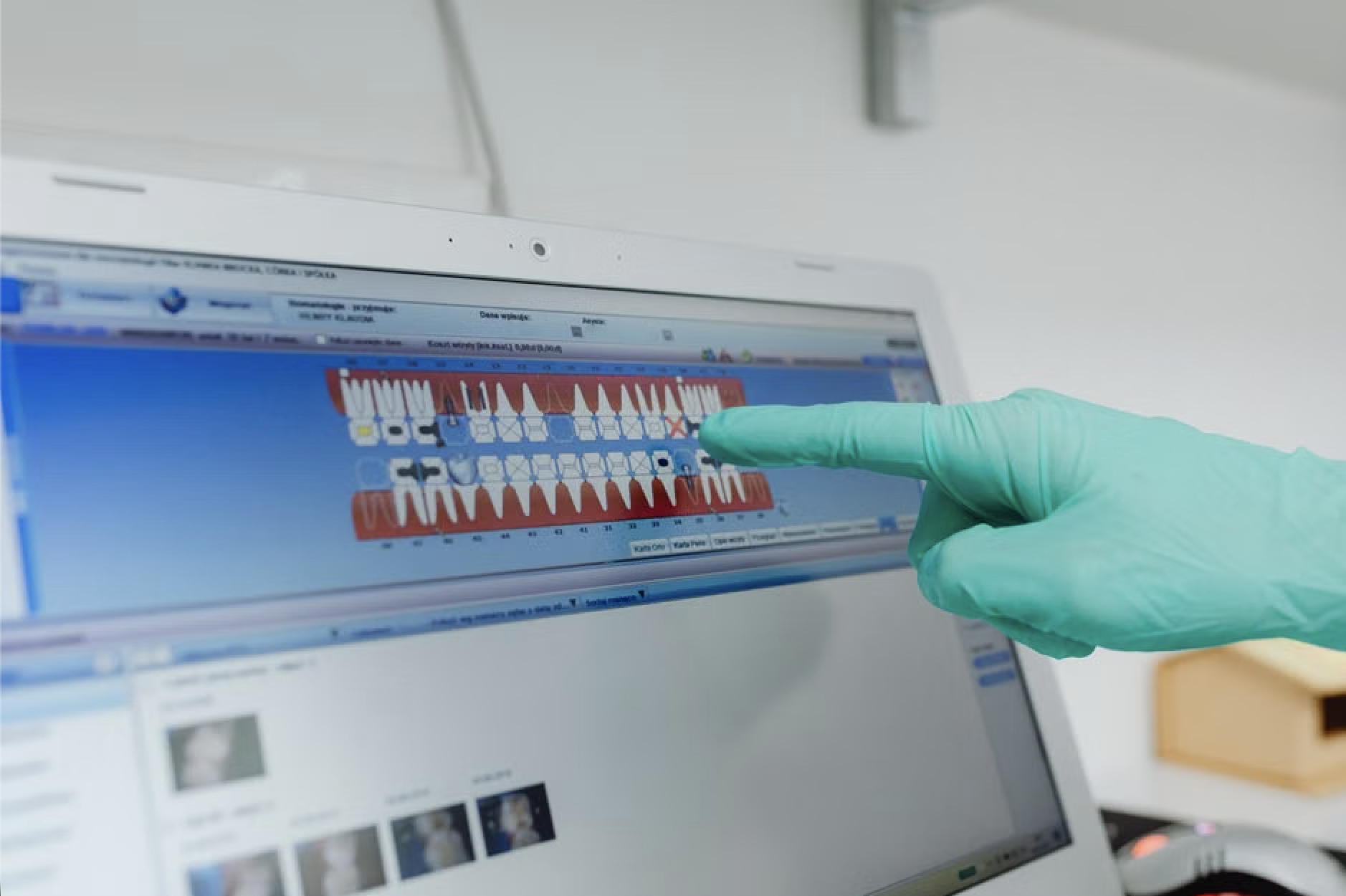
The cornerstone of modern computer-guided surgery is the Cone Beam Computed Tomography (CBCT) scan. Unlike standard 2D dental X-rays, a CBCT scan creates an accurate, three-dimensional digital model of your jawbone, nerve pathways, sinus cavities, and surrounding roots.
Using this volumetric dataset, we virtually position the dental implant down to 0.1 millimeters of precision before we ever touch a dental instrument. Once the virtual plan is finalized, a custom CAD/CAM 3D surgical guide is fabricated. During your procedure, this custom guide seats firmly over your dental arch, locking in the exact trajectory, depth, and angle for the osteotomy. This eliminates guesswork, completely protects vital structures like the inferior alveolar nerve and maxillary sinuses, and ensures optimal mechanical stability.
Candidacy for a Pain Free Implant Procedure
While minimally invasive methods offer incredible perks, candidacy depends on your underlying anatomy. Because the clinician does not directly view the exposed bone during placement, the site must meet specific baseline criteria:
Adequate Bone Dimensions: A minimum bone width of 5 mm and bone height of 8 mm at the target site are generally required to ensure stable anchorage.
Healthy Keratinized Tissue: A healthy band of attached gum tissue around the implant site is necessary to maintain a strong seal.
Controlled Systemic Health: Modern research shows that patients with well-managed autoimmune conditions can achieve implant success rates comparable to healthy individuals. However, conditions like unmanaged diabetes or severe active periodontal disease must be stabilized first.
Non-Smoking Status: Smoking and vaping restrict peripheral microcirculation, which can interfere with natural bone fusion.
For patients who qualify for immediate restorations, these guided workflows can also serve as the foundation for life-changing same day teeth protocols.
Advanced Anesthesia and Dental Sedation Options
Advanced surgical techniques minimize tissue trauma, but modern sedation dentistry ensures that your time in the chair remains completely calm and stress-free. Dental anxiety is common, and our philosophy is that no patient should ever have to grit their teeth through a procedure.
We tailor anesthesia and sedation protocols to each individual's comfort level, using everything from modern local numbing agents that eliminate sharp sensations to mild inhalational methods like nitrous oxide (laughing gas) and oral conscious sedatives. If dental appointments make you nervous, exploring our comprehensive dental anxiety solutions is often the best first step toward regaining your smile.
Deep Relaxation with IV Sedation
For patients undergoing multi-tooth replacements, full-arch reconstruction, or those dealing with severe dental phobias, intravenous (IV) sedation provides the ultimate in peace of mind. Often referred to as "twilight sleep," IV sedation places you into a deeply relaxed, dream-like state.
While under IV sedation, you breathe entirely on your own and can still respond to simple verbal cues, yet you will feel completely detached from the sights, sounds, and sensations of the dental operatory. It also suppresses an overactive gag reflex and provides an amnesia effect, meaning you will likely remember virtually nothing about the appointment once it is complete.
To learn more about how moderate conscious sedation works during surgical care, read our guide on IV sedation dental implants. We continually monitor your blood pressure, pulse, and oxygen saturation throughout the entire visit, ensuring maximum clinical safety. You can also review all of our available clinic offerings by visiting our advanced sedation options page.
Recovery Timeline and Postoperative Care
Because the tissue punch technique causes minimal trauma and leaves the periosteum intact, recovery after a guided flapless procedure is remarkably fast—often 2 to 3 times quicker than conventional surgery. Most patients return to their normal daily routines the very same day.

The microscopic healing of the small circular mucosal opening takes just 2 to 3 days. From there, your jawbone initiates osseointegration—the biological process first thoroughly described in implant literature where bone cells bond directly to the biocompatible titanium surface. This fusion takes approximately 2 to 4 months, after which your permanent custom zirconia crown is securely placed.
For a complete breakdown of full-arch conversion timelines and recovery benchmarks, explore our teeth in a day implants complete guide.
Managing Postoperative Discomfort
Even though postoperative symptoms are minimal with a flapless approach, sticking to simple home-care guidelines will ensure a seamless recovery:
Medication: Mild over-the-counter anti-inflammatory relievers like Ibuprofen (400–600 mg) or Acetaminophen are typically all that is needed for the first 24 to 48 hours.
Dietary Adjustments: Stick to soft, nutrient-dense foods (smoothies, yogurt, scrambled eggs, warm soups) on the day of surgery. You can usually transition back to regular foods by the following day, taking care to avoid chewing directly on the implant site.
Swelling Prevention: While facial swelling is rare with flapless methods, applying an ice pack intermittently to the cheek (15 minutes on, 15 minutes off) for the first few hours keeps inflammation low.
Oral Hygiene: Avoid vigorous spitting or direct brushing over the punch site for the first 48 hours. Beginning on Day 2, gently rinse with warm salt water (1/2 teaspoon of salt in 8 ounces of warm water) after meals to keep the area clean and reduce bacterial load.
Frequently Asked Questions About Painless Dental Implants
Are sutures required for flapless dental implants?
No, sutures are not needed with a flapless implant procedure. Because the circular tissue punch creates a tiny 3- to 4-millimeter entry that matches the diameter of the implant healing abutment, the gum tissue seals naturally around the post. This eliminates the irritation caused by suture knots and removes the need for a follow-up appointment to take out stitches.
Can flapless implants be used for full-arch tooth replacement?
Yes. Computer-guided flapless techniques are frequently utilized for multi-unit bridges and full-arch restorative protocols, including All-on-4 and All-on-6 setups. By taking comprehensive 3D CBCT scans, we can map out four to six strategic entry points across the arch, placing each implant through custom guide sleeves to anchor a complete, fixed prosthetic arch with minimal tissue disturbance.
How long until I can return to work after surgery?
The vast majority of patients who undergo a single-tooth flapless implant procedure return to work and resume light daily activities the very same day. Because there are no large scalpel incisions or extensive swelling, physical downtime is virtually zero. If you elect to have IV sedation, you will need a responsible adult to drive you home, and you should plan to rest for the remainder of the day before returning to work the next morning.
Conclusion
Losing a tooth no longer means you have to endure an intimidating, painful surgical process. Thanks to breakthroughs in 3D digital imaging, custom CAD/CAM surgical guides, minimally invasive tissue punch methods, and personalized sedation options, getting a dental implant can be a comfortable, streamlined, and remarkably gentle experience.
At Bradenton Implants and Smile Center, we are committed to providing personalized, compassionate care utilizing modern technology and advanced techniques right here in Bradenton, FL. Whether you need to replace a single missing tooth or are considering comprehensive full mouth dental implants to restore your smile for life, our team is here to guide you every step of the way with treatments designed around your absolute comfort.