

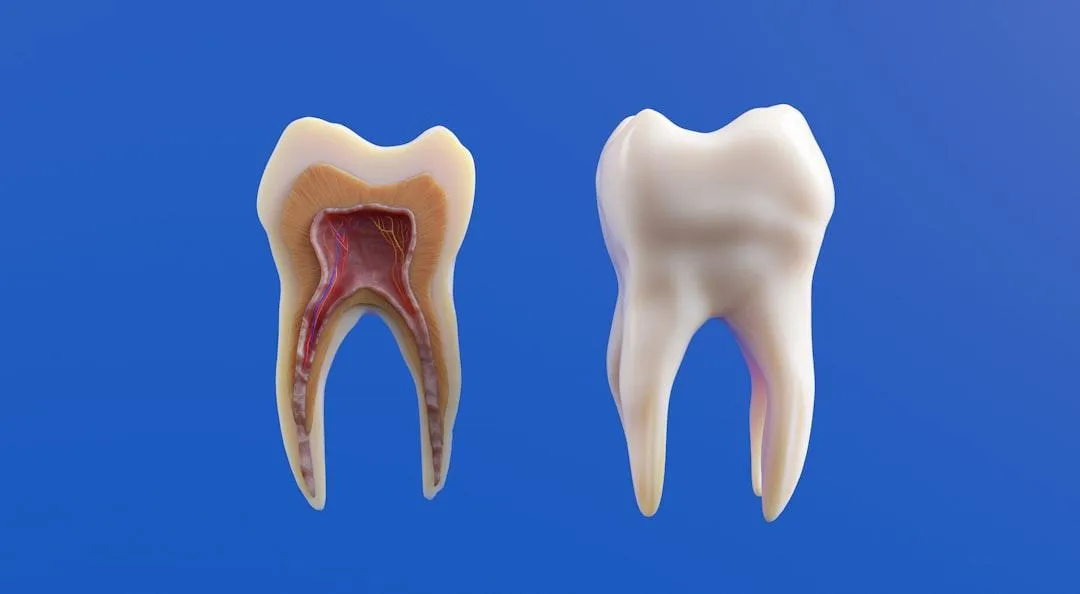
The usual suspects behind your gum disease risk factors
Why Knowing Your Periodontal Disease Risk Factors Could Save Your Teeth
Periodontal disease risk factors include a mix of habits, health conditions, and biology that make some people far more vulnerable to gum disease than others. Here's a quick overview:
The main periodontal disease risk factors are:
Smoking and tobacco use - one of the strongest known risk factors
Diabetes - especially when blood sugar is poorly controlled
Poor oral hygiene - allows plaque and tartar to build up
Genetics - some people are predisposed regardless of how well they brush
Age - over 70% of Americans 65 and older have some form of gum disease
Stress - weakens your immune response to bacterial infection
Hormonal changes - pregnancy, menopause, and certain medications raise risk
Obesity and poor nutrition - linked to increased inflammation
Certain medications - especially those that cause dry mouth or gum overgrowth
Teeth grinding (bruxism) - puts excess force on gum tissue and bone
Almost half of all U.S. adults have some form of gum disease — and many don't know it until real damage has already been done. Gum disease doesn't always hurt. It often progresses silently, starting with mild gum inflammation (gingivitis) and advancing to periodontitis, where the bone supporting your teeth begins to break down.
Understanding why you might be at risk is the first step toward stopping that process before it leads to tooth loss.
I'm Dr. John Hegazin, and with over 8 years of experience in comprehensive dental care — including gum therapy and tooth replacement — I've seen how unaddressed periodontal disease risk factors can quietly escalate into complex, costly problems. In the sections below, I'll walk you through each major risk factor so you know exactly what to watch for.
Introduction
To understand how these "usual suspects" work, we first have to look at how gum disease progresses. It all starts with plaque—a sticky, colorless film of bacteria that constantly forms on your teeth. If we don't brush and floss it away, this plaque hardens into tartar (calculus), which acts like a "bacterial hotel" that you cannot remove with a toothbrush alone.
As bacteria thrive, they trigger an immune response. Your gums become red and swollen—this is gingivitis. If left untreated, the inflammation causes the gums to pull away from the teeth, forming deep "periodontal pockets." Eventually, the infection reaches the bone. This leads to bone loss and tooth mobility, where teeth begin to wiggle or shift. According to the CDC, nearly half of U.S. adults aged 30 and older have some form of periodontitis.
Primary Modifiable Periodontal Disease Risk Factors
The good news is that many periodontal disease risk factors are "modifiable," meaning we have the power to change them. While plaque is the primary cause, these factors act like gasoline on a fire, making the infection much more aggressive.
Lifestyle choices like alcohol consumption and poor nutrition play a significant role. For instance, a lack of Vitamin C can impair the body’s ability to repair connective tissue. Furthermore, obesity has been identified as an independent risk factor; excess body fat can produce inflammatory cytokines that affect the tissues in your mouth.
Lifestyle Habit Impact on Gum Health Risk Level Smoking Reduces blood flow and impairs healing Very High Poor Nutrition Weakens immune system and tissue repair Moderate Chronic Stress Increases cortisol and inflammation Moderate High Alcohol Use Dehydrates mouth and alters microbiome Low/Moderate
Smoking and Tobacco Use
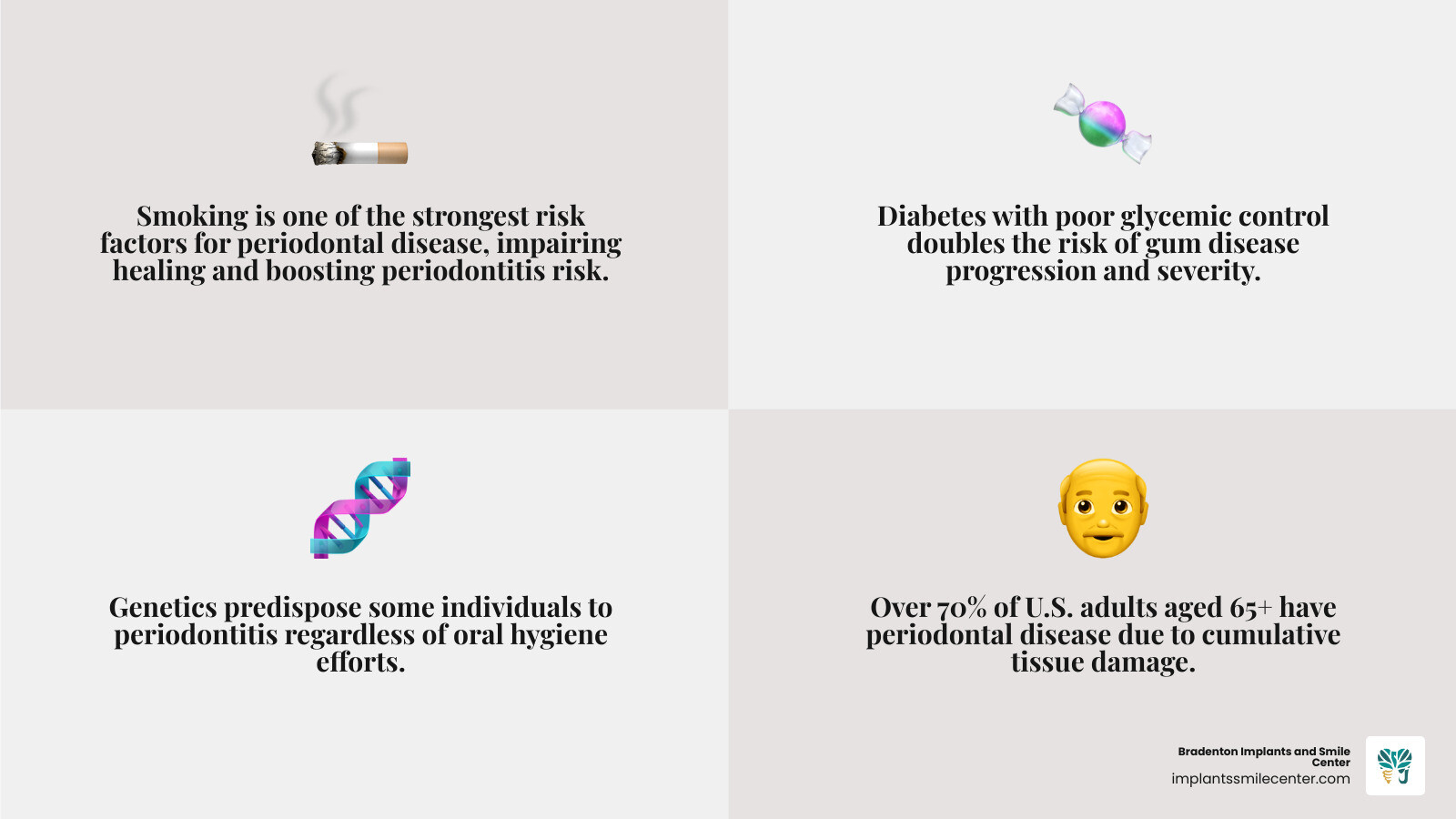
Tobacco use is arguably the most significant of all periodontal disease risk factors. Research suggests that smoking may be responsible for more than 50% of periodontitis cases. Nicotine is a vasoconstrictor, meaning it shrinks the blood vessels in your gums. This is why smokers often don't see bleeding gums—a major warning sign—even when their disease is advanced.
Because of this reduced blood flow, the gums of a smoker do not heal well after treatment. Research on smoking-attributable periodontitis shows that current smokers are nearly four times as likely to have periodontitis compared to people who have never smoked.
Stress and Immune Response
Can you "worry" your teeth out of your head? Not exactly, but chronic stress is a major suspect. When we are stressed, our bodies produce high levels of cortisol, a hormone that can suppress the immune system. This makes it harder for your gums to fight off the bacteria in plaque.
One fascinating study on stress and periodontal destruction concluded that there is a strong positive relationship between psychological stress and periodontal disease. Stress also leads to "defensive coping" habits, like neglecting oral hygiene or eating more sugary "comfort foods," which further fuels the infection.
Non-Modifiable Suspects: Genetics, Age, and Biology
Sometimes, you can do everything right and still face gum issues. These are the non-modifiable factors—things like your DNA and the passage of time.
Genetics as a Periodontal Disease Risk Factor
Have you ever met someone who rarely brushes but never gets a cavity, while you floss religiously and still have issues? Genetics is often the reason. Research into genetic polymorphisms in periodontitis has identified specific gene variations, such as the IL-1 genotype, that cause an over-the-top inflammatory response.
If you have this genetic marker, your body’s immune system may actually destroy its own bone and tissue while trying to kill the bacteria. Twin studies suggest that up to 50% of the variance in gum disease can be attributed to heredity.
Age and Cumulative Tissue Loss
While getting older doesn't automatically mean you'll lose your teeth, the risk certainly increases. CDC data on periodontal disease in older adults reveals that over 70% of Americans aged 65 and older have periodontitis.
This is often due to "cumulative damage"—the result of decades of exposure to plaque and minor infections. Additionally, seniors may face dexterity issues like arthritis, making it harder to brush effectively, or they may take medications that cause dry mouth, which we'll discuss shortly.
The Systemic Connection: How Other Diseases Impact Your Gums
The mouth is not an island; it is the gateway to the rest of your body. Systemic diseases like cardiovascular disease, stroke, and metabolic syndrome are closely linked to gum health. The common thread is inflammation. Chronic gum infection can cause inflammatory markers like C-reactive protein (CRP) to rise in the bloodstream, potentially affecting heart health.
Managing Systemic Periodontal Disease Risk Factors
Diabetes and gum disease have a "two-way street" relationship. People with diabetes are more susceptible to serious gum disease because they are generally more prone to infections. Conversely, severe gum disease can make it harder to control blood sugar levels.
Scientific evidence on the links between periodontal diseases and diabetes suggests that treating gum disease can actually help improve glycemic control in diabetic patients. If you're interested in the deep dive on this topic, the CDC podcast on diabetes complications and oral health offers great insights into how these two conditions feed off each other.
Pregnancy and Hormonal Changes
Hormones act as a volume knob for your gum's inflammatory response. During pregnancy, increased levels of progesterone can make your gums react more aggressively to even small amounts of plaque. This is often called "pregnancy gingivitis."
It is more than just a nuisance; research on periodontal therapy and pregnancy outcomes has explored the link between gum disease and preterm, low-birth-weight babies. While results are mixed, keeping your mouth healthy is a vital part of prenatal care.
Medications and Local Risk Factors
Sometimes the "usual suspects" are found in your medicine cabinet. Hundreds of common medications—including antidepressants, heart medicines, and even oral contraceptives—can affect your oral health.
One of the most common side effects is xerostomia, or dry mouth. Saliva is your mouth's natural cleaning agent; it neutralizes acids and washes away food particles. Without it, bacteria flourish. Other drugs, such as calcium channel blockers used for blood pressure, can cause "gingival overgrowth," where the gum tissue grows too thick and becomes difficult to clean.
Medications that may increase gum disease risk:
Anticonvulsants (e.g., phenytoin)
Immunosuppressants (e.g., cyclosporine)
Calcium Channel Blockers (e.g., nifedipine)
Antihistamines and Decongestants (cause dry mouth)
Impact of Dental Anatomy and Habits
Local factors in your mouth can also make you a target. Bruxism (teeth grinding or clenching) doesn't cause gum disease, but it puts excess force on the supporting bone, which can accelerate bone loss if an infection is already present. Similarly, crowded or crooked teeth create "nooks and crannies" where plaque can hide from your toothbrush. If you feel like you can't get your teeth clean enough, you might benefit from more info about deep cleaning services to reach those tricky spots.
Effective Prevention and Management Strategies
The best way to handle these suspects is to never let them get the upper hand. Prevention is a three-legged stool: home care, professional care, and lifestyle changes.
Home Care: Brush for two minutes twice a day and floss daily. Using an antibacterial mouthwash can also help reduce the bacterial load.
Professional Care: Regular exams allow us to measure your "pocket depths." If we find pockets deeper than 3mm, we might recommend more info about deep cleaning services, also known as scaling and root planing, to remove bacteria from under the gumline.
Lifestyle Changes: Quitting smoking is the single best thing you can do for your gums. Managing your blood sugar and reducing stress will also give your immune system the boost it needs.
Frequently Asked Questions about Periodontal Disease Risk Factors
Is periodontal disease contagious?
Technically, yes. The bacteria that cause gum disease can be passed through saliva. This means long-term contact, such as kissing or sharing utensils and toothbrushes, can spread the bacteria to family members or partners. If one person in a household has severe periodontitis, it's a good idea for the whole family to be screened.
Can gum disease be cured if I have high-risk factors?
Gingivitis (the early stage) is completely reversible. However, periodontitis (the advanced stage) involves bone loss, which is generally permanent. While we can't always "cure" it in the sense of making the bone grow back, we can arrest the disease. With proper maintenance, we can stop the infection and keep you from losing your teeth.
How often should I see a dentist if I smoke or have diabetes?
If you have high-risk factors, the standard six-month cleaning might not be enough. Many of our patients with diabetes or a history of smoking benefit from "periodontal maintenance" visits every three months. This frequent monitoring allows us to catch any "flares" of infection before they cause irreversible damage.
Conclusion
At Bradenton Implants & Smile Center, we believe that your oral health is a vital part of your overall well-being. Understanding periodontal disease risk factors isn't about pointing fingers at your habits or your DNA—it's about giving you the tools to take control.
Whether you are dealing with a genetic predisposition or trying to manage the effects of smoking, we are here to provide personalized, compassionate care. We use modern dental technology to detect issues early and offer advanced treatments to save your smile. If you’re concerned about your gums or haven't had a checkup in a while, don't wait for the pain to start. Explore more info about deep cleaning services and let us help you keep your natural teeth for a lifetime.