
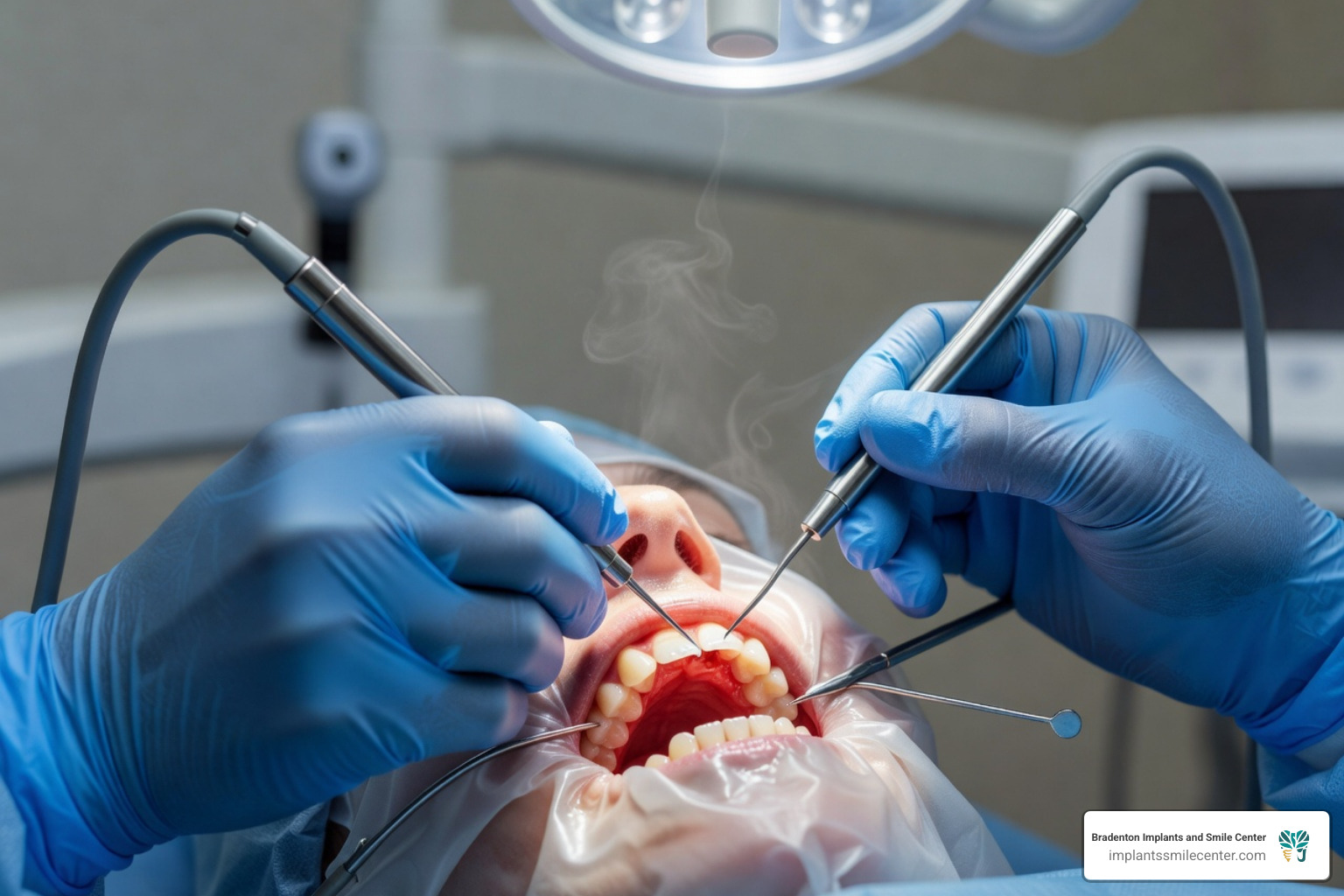
Everything you need to know about periodontal pocket reduction surgery
What Is Periodontal Pocket Reduction Surgery — and Do You Need It?
Periodontal pocket reduction surgery is a procedure that removes harmful bacteria trapped deep beneath your gumline, reduces the depth of infected gum pockets, and helps stop gum disease from destroying the bone that holds your teeth in place.
Here's a quick overview of what you need to know:
Question Quick Answer What is it? Surgery to clean infected gum pockets and reduce their depth Who needs it? Adults with gum pockets 5mm or deeper that didn't respond to deep cleaning How long does it take? About 30–60 minutes per area treated Recovery time 2 to 4 weeks on average Cost $1,000–$3,000 per quadrant Does it hurt? Local anesthesia is used; post-op soreness is manageable with OTC pain relievers
Nearly half of all adults over 30 in the United States have periodontitis — the advanced stage of gum disease that often requires this surgery. Left untreated, it's the leading cause of adult tooth loss.
This guide walks you through everything: how pockets form, whether you're a candidate, what happens during the procedure, and how to recover well.
At Bradenton Implants and Smile Center, our clinical team has extensive experience in gum therapy and restorative dental care, including guiding patients through periodontal pocket reduction surgery. In the sections ahead, we'll break down the entire process in plain language so you can make a confident, informed decision.
Understanding Periodontal Pockets and Gum Disease Progression
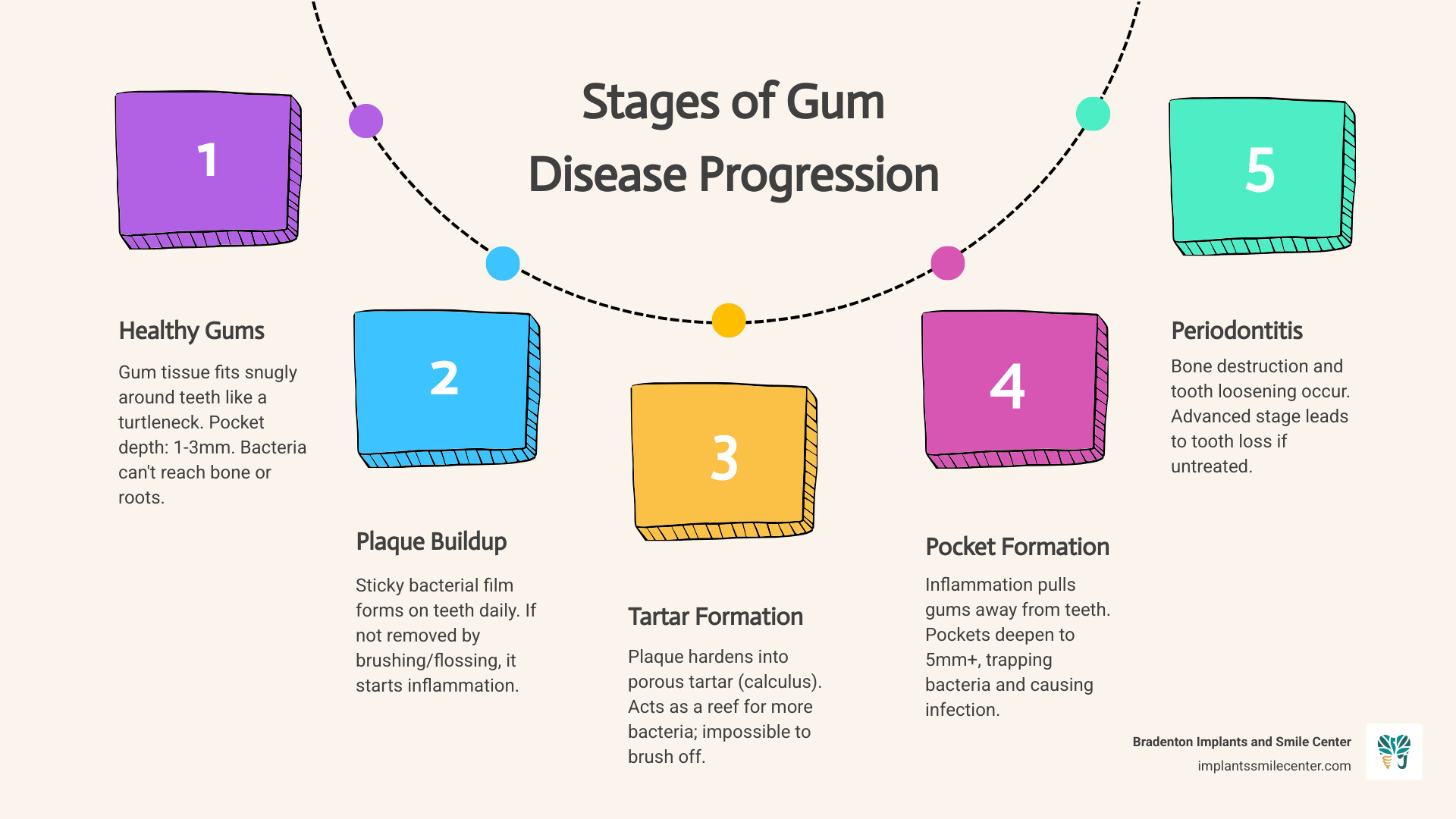
To understand why we perform periodontal pocket reduction surgery, we first have to look at what's happening beneath the surface of your smile. In a healthy mouth, your gum tissue fits snugly around each tooth like a turtleneck sweater. This tight seal prevents bacteria from reaching the delicate bone and roots.
However, gum disease is a progressive "silent" condition. It begins with plaque—that sticky film of bacteria that forms on your teeth every day. If plaque isn't brushed or flossed away, it hardens into tartar (calculus). Tartar is like a coral reef for bacteria; it's hard, porous, and impossible to remove with a toothbrush.
As these bacterial colonies grow, they release toxins that cause inflammation. Your body’s immune system tries to fight back, but the resulting chronic inflammation actually causes the gum tissue to pull away from the tooth. This creates a "pocket."
The Role of the Periodontal Probe
During your checkup at Bradenton Implants & Smile Center, we use a tiny instrument called a periodontal probe to measure these spaces.
1-3mm: This is considered healthy. You can easily clean these areas at home.
4mm: This indicates early gum disease (gingivitis or early periodontitis).
5mm or greater: This is the "danger zone." These pockets are too deep for a toothbrush or floss to reach. They become self-sustaining reservoirs for infection.
When pockets reach this depth, the bacteria begin to destroy the supporting bone. This is why Scientific research on periodontal disease and pocket formation is so critical; it highlights how these infections are linked to systemic health issues. When you have deep periodontal pockets, bacteria can enter your bloodstream, increasing the risk of heart disease, stroke, and complications with diabetes.
Who is a Candidate for Periodontal Pocket Reduction Surgery?
Not everyone with gum disease needs surgery. At our Bradenton office, we always prefer the most conservative approach possible. Usually, our first line of defense is a "deep cleaning," also known as scaling and root planing.
However, if your pockets are 5mm or deeper and do not shrink after a deep cleaning, you may be a candidate for periodontal pocket reduction surgery (also known as osseous surgery).
Common Signs You Might Need Surgery:
Persistent Infection: Your gums remain red, swollen, or continue to bleed despite improved home care.
Bone Loss on X-rays: We see "craters" or "pits" in the bone around your teeth.
Loose Teeth: As the bone disappears, teeth lose their "anchor" and may begin to shift.
Failed Non-Surgical Therapy: You’ve had multiple deep cleanings, but the pocket depths haven't improved.
Comparing Your Options
It helps to see the difference between a standard deep cleaning and the surgical approach:
Feature Scaling & Root Planing (Deep Cleaning) Pocket Reduction Surgery Invasiveness Non-surgical Minimally invasive surgery Access Blind (under the gumline) Direct vision (gum is moved back) Bone Treatment None Reshaping of damaged bone Success for 5mm+ Moderate High
If you are just starting your journey toward healthier gums, you can find More info about deep cleaning services on our website to see if that's the right first step for you.
The Step-by-Step Process of Periodontal Pocket Reduction Surgery
The thought of "gum surgery" can be intimidating, but we want to reassure you that the process is routine, highly successful, and focused entirely on your comfort. At Bradenton Implants & Smile Center, we use modern technology to make the procedure as efficient as possible—usually lasting only 30 to 60 minutes.

1. Numbing and Sedation
First, we ensure you don't feel a thing. We use local anesthesia to completely numb the area. For patients who feel extra anxious, we offer sedation options to help you stay relaxed throughout the visit.
2. Creating the "Flap"
We make a small incision in the gum tissue and gently lift it back (this is why it's sometimes called "flap surgery"). This gives us a clear, direct view of the tooth roots and the underlying bone.
3. Root Debridement
With the gums moved aside, we can see the hidden tartar and bacterial colonies. We use specialized ultrasonic instruments and hand scalers to meticulously clean the roots, removing every trace of infection.
4. Bone Recontouring (Osseous Surgery)
Periodontal disease often leaves the bone around your teeth looking like a jagged mountain range. These irregular surfaces create perfect hiding spots for bacteria. We gently reshape and smooth the bone so that the gum tissue can reattach more predictably.
5. Regenerative Enhancements
In cases of significant bone loss, we may use regenerative substances. This could include bone grafts or Platelet-Rich Fibrin (PRF) to encourage your body to grow back some of the lost support.
6. Precise Closure and Dressing
Finally, we reposition the gum tissue. Because the pocket was deep, we often place the gum slightly lower on the tooth to eliminate the "pocket" entirely. We use fine sutures to secure the tissue and may apply a protective, clay-like dressing to keep the area safe while it heals.
Recovery, Side Effects, and Long-Term Maintenance
Recovery from periodontal pocket reduction surgery is generally straightforward. Most of our Bradenton patients find they can return to their normal routine within a day or two, though full tissue healing takes about 2 to 4 weeks.
The First 48 Hours
Manage Swelling: Use a cold compress on the outside of your cheek for 15 minutes on, 15 minutes off.
Diet: Stick to soft foods like yogurt, pudding, mashed potatoes, and lukewarm soups. Avoid anything crunchy, spicy, or acidic.
No Straws: The suction from a straw can dislodge the blood clot and interfere with healing.
Oral Hygiene During Recovery
You must keep your mouth clean, but you have to be gentle. We will likely prescribe an antimicrobial mouthwash to keep bacteria at bay without the need for vigorous brushing near the surgical site. After a few days, you can use a very soft-bristled brush on the area. For more detailed tips, you can refer to this Guidance on osseous surgery recovery and effects.
Side Effects to Expect
Gum Recession: Because we are reducing the pocket, your gumline will sit lower. This is a sign of health, but it may make your teeth look "longer."
Tooth Sensitivity: With the gumline lower, more of the tooth root is exposed. This can cause sensitivity to hot or cold, which we can treat with fluoride or specialized toothpastes.
When to Call Us
While complications are rare, please contact us immediately if you experience:
Uncontrolled bleeding.
Severe pain that doesn't respond to medication.
A fever over 101°F (38.3°C), which could indicate an infection.
Frequently Asked Questions about Periodontal Pocket Reduction Surgery
Do gums grow back after periodontal pocket reduction surgery?
The short answer is no. The goal of this surgery is to reduce the pocket, which often involves repositioning the gum tissue lower on the tooth. While the gums don't "crawl" back up the tooth on their own, the treatment creates a healthy attachment to the bone. If the aesthetics of a lower gumline are a concern later on, we can discuss gum graft surgery once the infection is fully resolved.
How much does periodontal pocket reduction surgery cost?
In the Bradenton area, the cost typically ranges from $1,000 to $3,000 per quadrant. The final price depends on the severity of the disease and whether you need additional treatments like bone grafting.
Many dental insurance plans cover a portion of this procedure because it is considered "medically necessary" to prevent tooth loss. We also offer financing options like CareCredit to make the investment in your health more manageable. The cost of saving a natural tooth is almost always lower than the cost of replacing one with an implant or bridge later!
What is the difference between traditional and laser periodontal pocket reduction surgery?
Traditional osseous surgery uses a scalpel and sutures. It remains the "gold standard" for many cases because it allows for precise bone reshaping.
However, we also utilize advanced options like LANAP (Laser-Assisted New Attachment Procedure). LANAP is a minimally invasive laser treatment that targets bacteria without the need for traditional cutting. It often results in less discomfort and a faster recovery. During your consultation, we’ll determine which method is best for your specific needs.
Conclusion
Periodontal pocket reduction surgery is more than just a dental procedure; it’s a vital step in protecting your overall health. By eliminating the deep pockets where bacteria hide, we can halt the progression of gum disease, save your natural teeth, and reduce the risk of systemic health issues.
At Bradenton Implants & Smile Center, we are dedicated to providing personalized, compassionate care using the latest dental technology. You don't have to live with the discomfort or risks of advanced gum disease.
Ready to reclaim your oral health? Schedule a consultation for periodontal care and deep cleaning with us today. Our team at 7270 55th Ave E, Bradenton, FL, is here to help you smile with confidence again!