
Picking Your Pieces: The Many Types of Bone Graft in Dentistry
Why Understanding the Types of Bone Graft in Dentistry Matters Before Your Implant
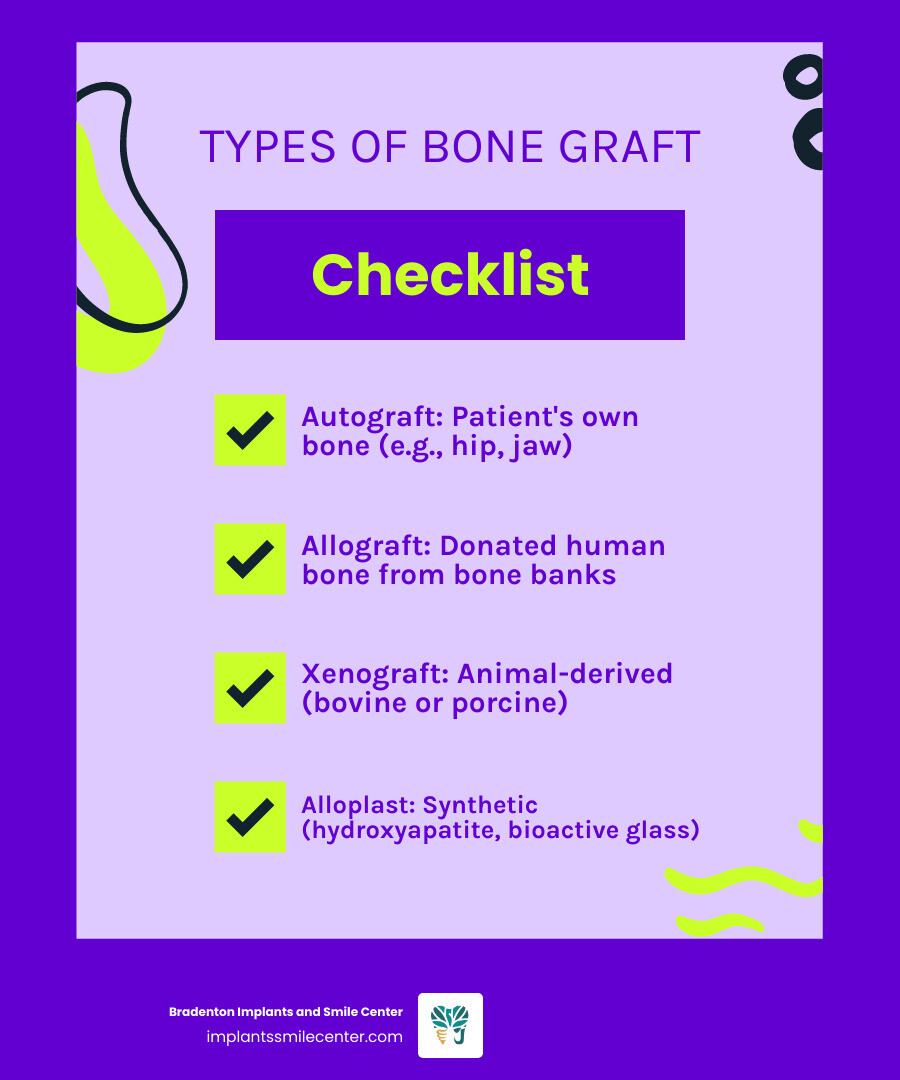
The types of bone graft in dentistry fall into four main material categories and several procedure types. Here's a quick overview:
By material source:
Type Source Autograft Patient's own bone Allograft Donated human bone from a bone bank Xenograft Animal-derived bone (usually bovine or porcine) Alloplast Synthetic materials (e.g., hydroxyapatite, bioactive glass)
By procedure:
Socket preservation — done right after a tooth is pulled
Ridge augmentation — rebuilds bone lost over time
Sinus lift — adds bone height in the upper jaw
Block grafting — repairs severe bone loss using solid bone sections
When a tooth goes missing, the jawbone beneath it starts to shrink. Bone loss can occur significantly in the first months and years after tooth loss, and without enough bone, a dental implant may not have adequate support.
Bone grafting helps rebuild the foundation your jaw needs so that implants, dentures, or other restorations can be placed successfully when indicated. But not every graft is the same. The material used, the procedure chosen, and the timing all affect how well it works — and how quickly you heal.
This guide breaks it all down in plain language, so you can walk into your consultation feeling informed and confident.
I'm Dr. John Hegazin, owner of Bradenton Implants and Smile Center, with experience performing bone grafting and implant procedures across the full spectrum of types of bone graft in dentistry. Whether you need a simple socket preservation or a more complex ridge reconstruction, I'll help you understand exactly what's involved.
Understanding the Different Types of Bone Graft in Dentistry

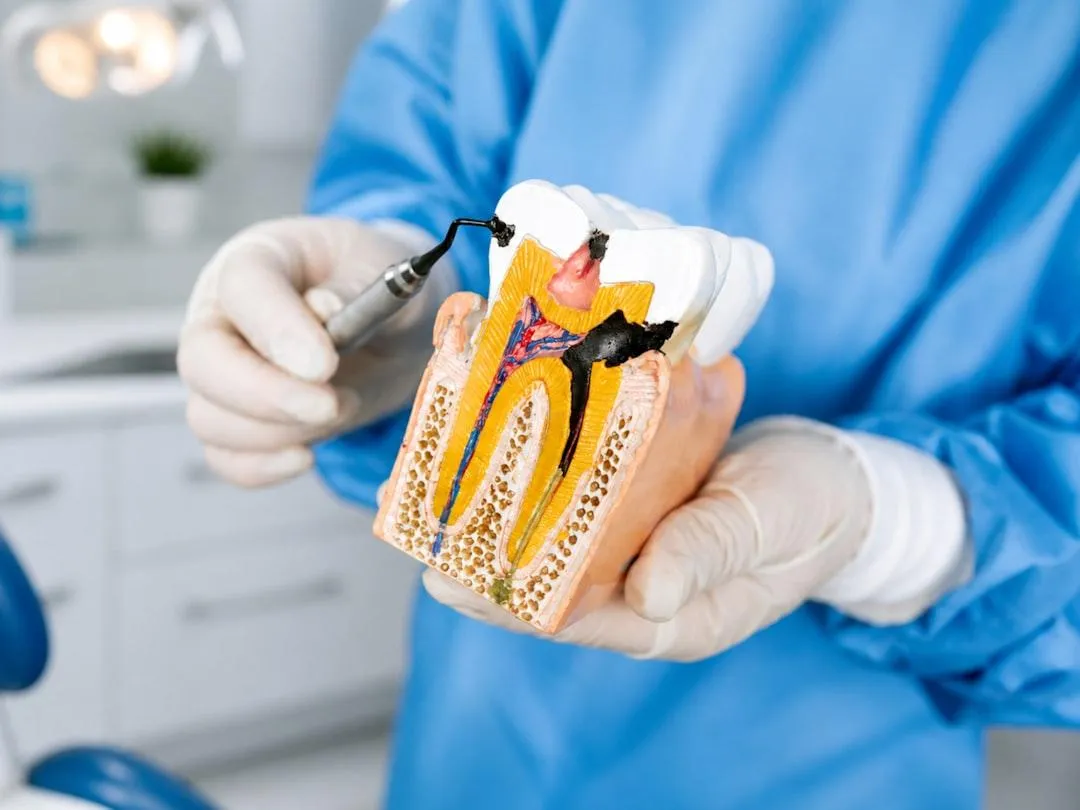
To understand why we perform these procedures, we first have to look at the biology of your mouth. Your jawbone is "use it or lose it" tissue. It stays healthy through the stimulation of chewing. When a tooth is lost, that stimulation vanishes, and the body begins to resorb the bone.
Research indicates that bone quality, volume, height, and width play a pivotal role in dental implant stability. Without a sturdy "envelope" of bone, an implant can't integrate (fuse) properly.
Successful bone grafting relies on three biological processes:
Osteogenesis: The formation of new bone by living cells within the graft.
Osteoinduction: Chemical signals that "recruit" your body's cells to start building bone.
Osteoconduction: The graft acting as a physical scaffold for new bone to grow into.
By using various types of bone graft in dentistry, we can trigger these processes to restore your smile's foundation.
Common Procedures: Socket Preservation and Ridge Augmentation
The most common way we help patients in Bradenton is through socket preservation. Think of this as "preventative maintenance." Immediately after we extract a tooth, we fill the empty socket with particulate bone material. This prevents the walls of the socket from collapsing and preserves the alveolar ridge height.
If a tooth has been missing for years, you likely need ridge augmentation. This is a slightly more involved procedure where we "fatten up" the jawbone. We pack synthetic or donor bone into the area where the ridge has thinned out, restoring the width and height necessary for an implant to look and feel natural. For more details, you can explore our bone grafting services.
Advanced Techniques: Sinus Lifts and Block Grafting
Sometimes, the anatomy of your face presents a challenge. In the upper jaw, the maxillary sinuses sit right above your back teeth. If there isn't enough bone between the mouth and the sinus, we perform a sinus lift, gently moving the sinus membrane upward and tucking bone graft material underneath it.
For cases of severe bone loss—often caused by trauma or advanced periodontal disease—we may use block grafting. Instead of using tiny "grains" of bone, we use a solid block of bone harvested from the mandibular ramus (back of the jaw) or even the hip or tibia. This provides a massive structural boost. According to recent updates in maxillofacial materials, these autogenous scaffolds remain a powerful tool for complex reconstructions.
Comparing Bone Graft Materials: From Autografts to Alloplasts
Choosing the right material is a collaborative effort between you and our team. Each material has a specific role based on its resorption rate (how fast it dissolves) and its biological properties.
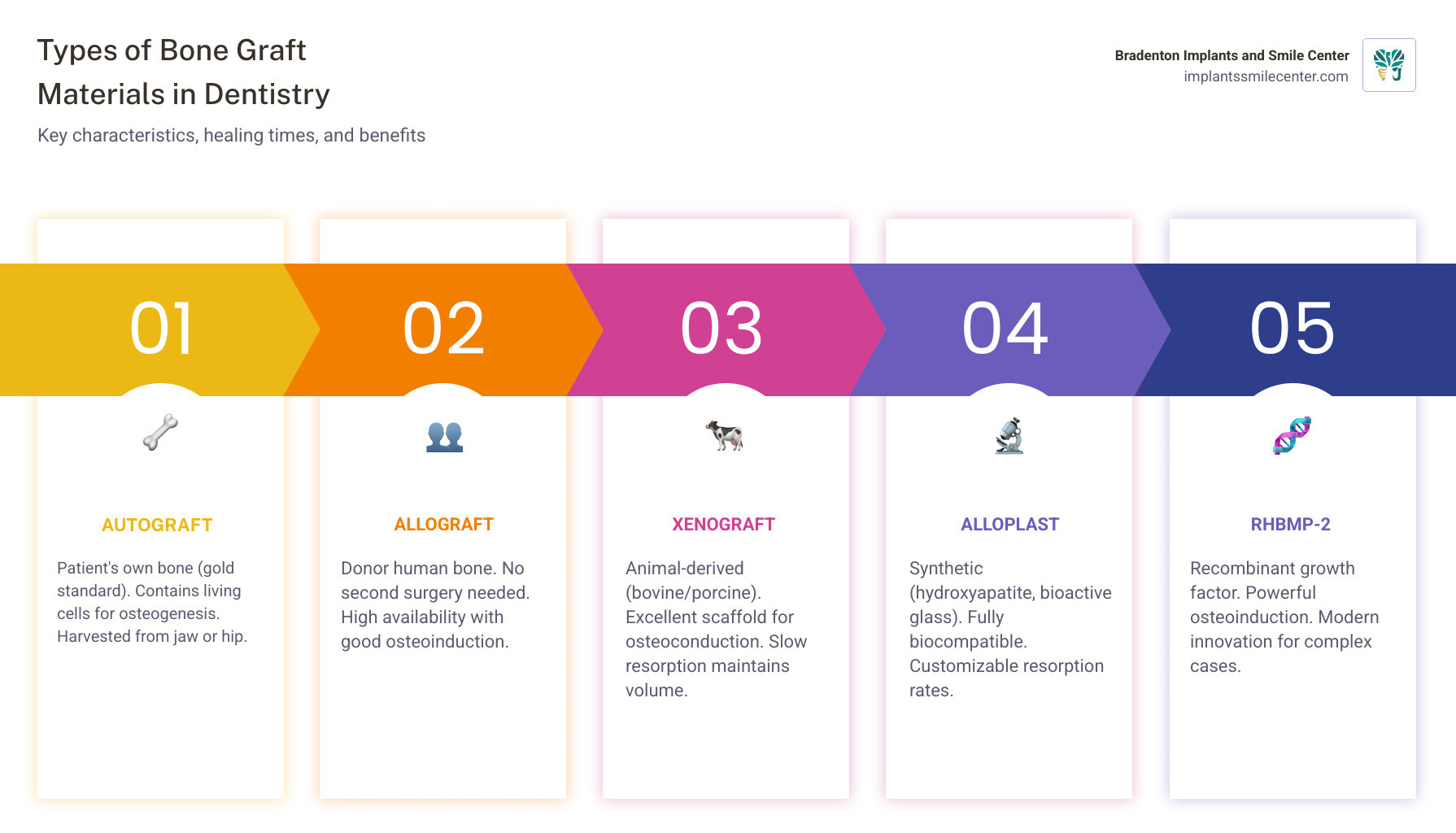
Material Typical Healing Window Main Benefit Autograft Often 3-6 Months Contains the patient's own living cells and growth factors; no risk of immune incompatibility. Allograft Often 4-6+ Months No second surgical harvest site; widely used and readily available. Xenograft Often 6+ Months Excellent long-term scaffold; helps maintain space and volume. Alloplast Variable Completely synthetic; no human or animal donor tissue required.
A comprehensive review of synthetic substitutes highlights that while natural bone is often preferred, modern engineering is making synthetic options more effective every year.
Natural Sources: Autografts, Allografts, and Xenografts
The "gold standard" remains the autograft because it can provide osteogenic cells, osteoinductive signals, and an osteoconductive scaffold. Because it's your own bone, there is no risk of disease transmission from donor tissue. However, it does require a second surgical site to harvest the bone.
Allografts (human donor bone) are highly popular because they are processed to reduce antigenicity while providing a scaffold for new bone formation. Depending on processing, they may offer primarily osteoconductive properties, with some forms providing osteoinductive potential. Xenografts (usually bovine) are known for resorbing slowly, which makes them useful when we want to preserve contour and volume over time. You can find a deeper dive into these in this overview of dental bone grafts.
Modern Innovations: Synthetic Types of Bone Graft in Dentistry
For patients who prefer not to use human or animal tissue, alloplasts are the answer. These are made from biocompatible materials like hydroxyapatite, beta-tricalcium phosphate, or bioactive glass.
Another important innovation is the use of growth factors. Products like Infuse™ Bone Graft use recombinant human bone morphogenetic protein-2 (rhBMP-2) on a collagen sponge to stimulate bone formation in selected cases. Because indications, benefits, and risks vary, these materials should be used only when clinically appropriate and after careful evaluation. This represents an important area of trends and developments in dentistry.
The Role of Barrier Membranes and Surgical Tools
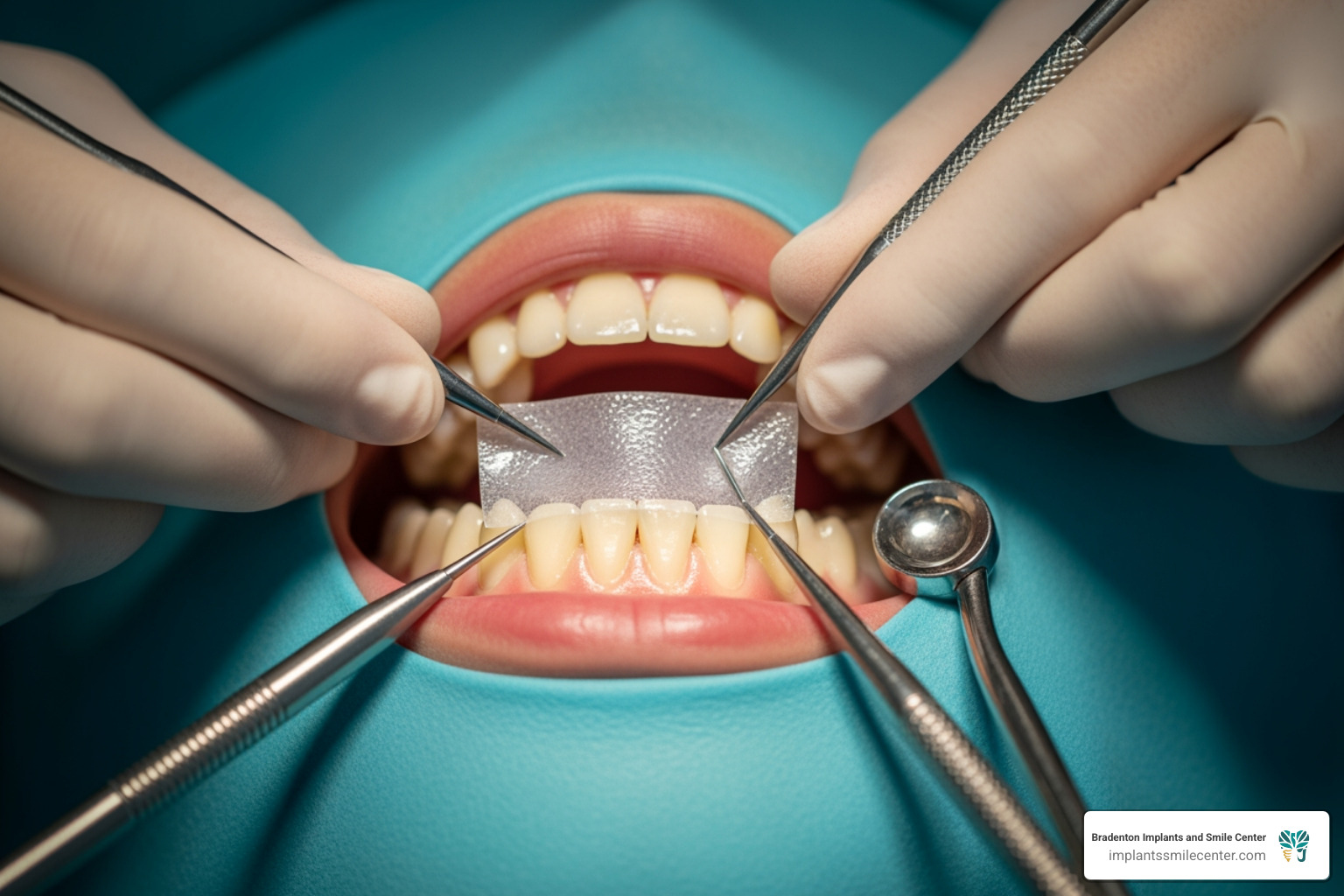
A bone graft isn't just "plopped" into the mouth. It requires a protective environment. This is where barrier membranes come in.
Soft tissue (your gums) grows much faster than bone. If we didn't use a barrier, the gum tissue would invade the graft site and prevent the bone from forming. We typically use resorbable collagen membranes that naturally dissolve after 3 to 6 months, meaning you don't need a second surgery to remove them.
In addition to membranes, we use:
Sutures: To hold everything in place and ensure "fixation"—any movement (micromotion) can cause a graft to fail.
Collagen Plugs: Often used in simple extractions to keep the graft material contained.
Fixation Screws: Tiny tacks used in block grafting to keep the new bone block perfectly still while it fuses.
As noted in dentoalveolar reconstruction reviews, the proper use of these tools is just as important as the graft material itself.
What to Expect: The Procedure, Recovery, and Success Rates
At Bradenton Implants & Smile Center, we prioritize your comfort. Most bone grafting procedures are performed under local anesthesia, though we offer sedation for those who are a bit nervous.
The Recovery Timeline:
Days 1-3: Expect some swelling and mild discomfort. We provide detailed post-operative instructions to manage this.
Weeks 1-2: The gum tissue begins healing over the site.
Months 4-6: In many cases, this is the window when grafted material is being replaced by new, vital bone. Larger or more complex grafts may require more time.
Success Rates: Bone grafting is generally highly successful, but outcomes vary by defect size, graft material, surgical technique, and patient factors such as smoking or systemic health. One of the key requirements for success is stability. Micromotion—caused by putting pressure on the area too soon—can interfere with healing. This is why we ask you to be gentle with the site during the initial healing phase.
Ideal Candidates and Contraindications for Types of Bone Graft in Dentistry
Most people are good candidates for bone grafting. However, certain factors can make treatment more challenging:
Smoking: Tobacco use significantly slows blood flow to the gums, which is essential for graft healing. We strongly encourage quitting before the procedure.
Uncontrolled Diabetes: This can impair the body's ability to heal and fight infection.
Prior Radiation Therapy: If you've had radiation to the jaw area, the bone's blood supply may be altered, requiring specialized techniques.
How Bone Grafting Supports Dental Implants and Restorations
The ultimate goal of all types of bone graft in dentistry is to support a beautiful, functional restoration. A dental implant needs adequate bone volume and density to achieve primary stability and long-term integration.
By rebuilding the structural integrity of your jaw, we help ensure that your dental implants have the support they need for long-term function. This foundation also supports better aesthetics, as the gums can drape more naturally over the rebuilt bone, helping avoid the "sunken" appearance that often follows tooth loss.
Frequently Asked Questions about Types of Bone Graft in Dentistry
How long does it take for a dental bone graft to heal?
For most patients in our Bradenton office, the healing period is about 4 to 6 months. While you might feel "normal" after a week, the biological process of converting the grafted area into usable bone takes time. Ridge and block grafts often require the full healing window before an implant can be placed, and some cases may take longer.
Is dental bone grafting painful?
We use modern local anesthetics and, if requested, conscious sedation to help ensure you remain comfortable during the surgery. Most patients describe the post-operative feeling as similar to a tooth extraction—some pressure and soreness that can usually be managed with over-the-counter or prescribed pain relief.
Can my body reject a bone graft?
"Rejection" in the way we think of organ transplants is very rare in dental grafting. However, a graft can fail if an infection develops, the graft is exposed, or there is too much movement at the site. Some grafting materials are processed specifically to minimize immune reaction, and your dentist will choose the most appropriate option based on your clinical needs.
Conclusion
Rebuilding your smile starts from the ground up. Whether we use your own bone, a donor source, or modern synthetic materials, the goal is always the same: a healthy, strong foundation for a lifetime of smiles.
At Bradenton Implants & Smile Center, we combine personalized, compassionate care with the latest technology to make your bone grafting experience as smooth as possible. We serve the Bradenton, FL community from our office at 7270 55th Ave E, providing advanced techniques tailored to your specific needs.
Ready to see which types of bone graft in dentistry are right for you? Schedule a bone grafting consultation with us today and let's start rebuilding your confidence.