
Detailed Guide to Advanced Sedation Dentistry
Why Advanced Sedation Dentistry Changes Everything for Anxious Patients
Advanced sedation dentistry uses carefully controlled medications to help patients relax deeply — or sleep entirely — during dental procedures, making it possible to get complex treatment done comfortably and safely.
Quick overview:
Type Sedation Level Best For Nitrous Oxide Minimal Mild anxiety, short visits Oral Sedation Mild to Moderate Nervous patients, routine care IV Sedation Moderate to Deep Complex procedures, high anxiety General Anesthesia Deep/Unconscious Extensive surgery, special needs
Research indicates that a significant portion of the population—with some estimates as high as 60%—experiences dental anxiety or fear. This fear has real consequences. Many adults go years without care, letting small problems become major ones. Tooth loss, gum disease, and the need for full-mouth restoration often trace back to avoided appointments.
The good news? Advanced sedation makes it possible to get the care you need, without the fear getting in the way.
It's not just about comfort. Sedation allows dentists to complete more work in a single visit, reduces the gag reflex, and often leaves patients with little to no memory of the procedure at all.
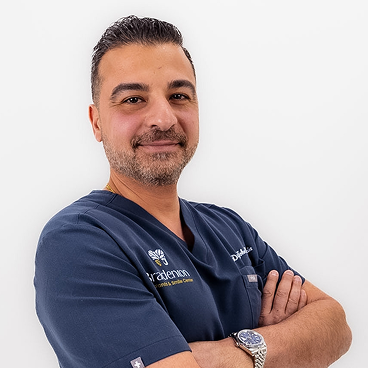
I'm Dr. John Hegazin, owner of Bradenton Implants and Smile Center, with over 8 years of experience providing advanced sedation dentistry alongside complex restorative treatments like dental implants and full-mouth reconstruction. My goal is to make sure every patient — especially those who've avoided the dentist out of fear — gets the safe, comfortable care they deserve.
Core Types of Advanced Sedation Options
When we talk about advanced sedation dentistry, we aren't just talking about a "one-size-fits-all" approach. We believe in tailoring the experience to your specific level of anxiety and the complexity of your procedure. Modern dentistry has evolved far beyond the simple local numbing shot. Today, we utilize a spectrum of pharmacological tools to ensure you are as relaxed as you want to be.
Feature Nitrous Oxide Oral Sedation IV Sedation General Anesthesia Administration Inhaled gas Pill/Liquid Intravenous IV/Inhaled Onset Speed Very Fast (2-3 mins) Slow (30-60 mins) Instant (seconds) Instant Depth Control Moderate Low Very High Maximum Memory Loss Minimal Partial Significant Total Recovery Immediate Several hours 24 hours 24+ hours Drive Home? Yes No No No
Nitrous Oxide (Laughing Gas)
Nitrous oxide is the most common form of minimal sedation. Administered through a small mask over the nose, it induces a state of euphoria or light-headedness. It is incredibly safe and, most importantly, the effects wear off within five minutes of breathing pure oxygen, meaning you can drive yourself home after the appointment.
Oral Conscious Sedation
For those who need a bit more than gas, oral sedation involves taking a prescribed pill (usually from the benzodiazepine family) about an hour before the procedure. This puts you in a "twilight sleep" where you are technically awake and able to respond to questions, but you are deeply relaxed and may even doze off.
Intravenous (IV) Sedation
This is where we move into truly advanced sedation dentistry. IV sedation delivers medication directly into the bloodstream. This allows us to adjust your level of sedation in real-time. If you aren't relaxed enough, we can increase the dose instantly. It provides a profound level of relaxation and a strong amnesic effect.
General Anesthesia
Reserved for the most complex oral surgeries or patients with extreme special needs, general anesthesia renders the patient completely unconscious. This is typically performed by a dentist anesthesiologist or in a surgical suite to ensure hospital-grade safety.
IV Sedation vs. Traditional Methods
The primary advantage of IV sedation over oral or inhaled methods is its predictability and speed. With oral sedation, the absorption rate can vary based on your metabolism or what you ate for breakfast. With IV sedation, the onset is nearly instantaneous.
Furthermore, IV sedation allows for "moderate to deep" relaxation. While you maintain your own airway and breathe independently (unlike general anesthesia), you are essentially in a dream-like state. For complex treatments, IV sedation is often considered the gold standard because it maintains hemodynamic stability while ensuring the patient remains perfectly still and comfortable.
The Role of General Anesthesia in Dentistry
While most dental work can be handled with IV sedation, general anesthesia is a vital tool for specific cases. This includes pediatric dentistry for uncooperative children, patients with severe physical or cognitive disabilities, or extremely invasive full-mouth reconstructions. In these cases, the patient is fully asleep, monitored by a dedicated anesthesiologist, and has no awareness of the surgical environment.
Benefits and Safety of Advanced Sedation Dentistry
Safety is the foundation of everything we do at Bradenton Implants & Smile Center. Some patients worry that being "put under" is riskier than the dental work itself, but when performed by trained professionals following American Society of Anesthesiologists (ASA) protocols, advanced sedation dentistry is remarkably safe.

Key Benefits Beyond Relaxation:
Amnesic Effect: Most patients remember nothing from the moment the sedation starts until they wake up at home. This "erases" the trauma of the dental visit.
Gag Reflex Reduction: For patients with a sensitive gag reflex, sedation calms the throat muscles and the brain's "reject" signal, making treatment possible.
Efficiency: Because the patient is still and comfortable, we can often perform several hours of work in a single session. This means fewer trips to the office.
Pain Blockage: While sedation relaxes the mind, we still use local anesthetics to numb the site. You won't feel the needle or the procedure.
Who is a Candidate for Advanced Sedation Dentistry?
You might be a candidate if you experience:
Moderate to severe dental phobia: The mere smell of a dental office makes you panic.
Low pain threshold: You feel discomfort even with standard numbing.
Special needs: Physical or cognitive conditions that make sitting in a dental chair difficult.
Extensive treatment plans: You need multiple implants, extractions, or a full-mouth reconstruction.
Difficulty getting numb: Some patients' bodies metabolize local anesthetic too quickly; sedation helps bypass this issue.
The Role of Technology in Advanced Sedation Dentistry
Modern technology has revolutionized how we monitor patients. We use capnography to monitor CO2 levels in every breath, ensuring your ventilation is perfect. Infusion pumps deliver medication with micro-precision, while pulse oximetry tracks oxygen saturation in real-time.
We also integrate sedation with advanced clinical protocols and CEREC same-day technology. This combination allows us to design, mill, and place a crown while you are comfortably sedated, effectively condensing weeks of dental work into a single morning.
The Patient Journey: Preparation and Recovery
Knowing what to expect can significantly lower your anxiety. The process begins long before you sit in the chair.
Pre-Procedure Protocols
Before we schedule your sedation, we conduct a thorough medical history review. We need to know about every medication you take—from heart medicine to herbal supplements.
Fasting: For IV or oral sedation, you must fast for 6 to 8 hours prior to the appointment. This is a critical safety rule to prevent nausea.
Alcohol Avoidance: Do not consume alcohol for at least 72 hours before your procedure, as it can interfere with sedation medications.
The Escort: You must have a responsible adult drive you to the office and take you home. You cannot take an Uber or bus alone after IV sedation.
Clothing: Wear loose, comfortable clothing with sleeves that can be easily rolled up for the IV line or blood pressure cuff.
Post-Sedation Care and Safety
After the procedure is finished, you will spend time in our recovery area. We continue to monitor your vital signs until you meet specific discharge criteria.
Residual Grogginess: You will feel sleepy for several hours. It is normal to nap once you get home.
Activity Restrictions: No driving, operating machinery, or making major life decisions for 24 hours. Your brain needs time to fully "reboot."
Hydration: Start with small sips of water or clear liquids before moving to soft foods.
Next-Day Check-in: We believe in concierge-level care, which is why our team will call you the following day to ensure you are healing well and feeling great.
Advanced Sedation for Complex Dental Restorations
At Bradenton Implants & Smile Center, we specialize in helping patients who have lost many or all of their teeth. For these patients, advanced sedation dentistry isn't just a luxury—it's a necessity.
Efficiency in Full-Mouth Reconstruction
Procedures like full-arch dental implants (often called "All-on-4") or zygomatic implants involve significant surgical work. Without sedation, these procedures would be physically and mentally exhausting for the patient.
With IV sedation, we can perform:
Extractions of failing teeth.
Bone grafting or sinus lifts to create a solid foundation.
Placement of dental implants.
Fitting of a temporary bridge.
All of this happens while you are in a state of "twilight sleep." This increases case acceptance because patients realize they don't have to "tough it out" to achieve a healthy, functional smile.
Frequently Asked Questions about Sedation
Is advanced sedation dentistry safe for seniors?
Yes, when performed by a trained professional. In fact, it is often safer for seniors with heart conditions because it prevents the "stress response" (spikes in blood pressure and heart rate) triggered by dental anxiety. We provide personalized dosing and continuous cardiovascular monitoring to manage any comorbidities.
Will I remember anything after IV sedation?
Most likely, no. One of the greatest benefits of the medications we use (like Midazolam) is anterograde amnesia. This means that from the moment the drug enters your system, your brain stops "recording" memories until the drug wears off. You’ll feel like you closed your eyes for a second and woke up with a brand-new smile.
Does insurance cover the cost of dental sedation?
This varies by plan. Some PPO dental plans may cover nitrous oxide, though coverage often depends on the specific terms of your policy. Some may provide partial benefits for IV sedation if it is deemed medically necessary for a surgical procedure like extractions or implants. We offer transparent pricing and work with various financing options to ensure your comfort is affordable.
Conclusion
At Bradenton Implants & Smile Center, we believe that no one should have to choose between their dental health and their peace of mind. Fear is a powerful thing, but modern medicine is more powerful.
By combining compassionate, personalized care with the latest in advanced sedation dentistry, we help our neighbors in Bradenton, FL, reclaim their smiles without the stress. Whether you need a simple cleaning or a full-mouth reconstruction, we are here to make the experience as "un-dentist-like" as possible.
Don't let another year go by in fear. Our team is ready to answer your questions and design a sedation plan that fits your needs perfectly.