


A Practical Guide to the Dental Filling Procedure
What You Need to Know About a Dental Filling (Quick Answer)
A dental filling is a common restorative procedure used to repair a tooth damaged by decay, a crack, or minor trauma. Here is what most people want to know right away:
Question Quick Answer What is it? A treatment that removes decay and fills the tooth with a durable material Does it hurt? No — local anesthesia keeps the procedure pain-free How long does it take? Typically 30 to 60 minutes How long does it last? 7 to 20 years, depending on the material Can you eat after? Yes, but wait until the numbness wears off Who needs one? Anyone with a cavity, minor crack, or tooth damage
Let's face it — no one loves finding out they need dental work. But catching a cavity early and getting it filled is one of the simplest, most effective things you can do to protect your teeth for the long term. Left untreated, tooth decay spreads deeper into the tooth, and what starts as a quick filling can turn into a root canal — or worse, tooth loss.
The good news? The procedure is straightforward, typically painless, and over before you know it.
I'm Dr. John Hegazin, owner of Bradenton Implants and Smile Center, with over 8 years of experience providing dental filling treatments and full restorative care to patients in the Bradenton area. In this guide, I'll walk you through everything you need to know — from materials and procedure steps to aftercare and when a filling is no longer enough.
What is a Dental Filling and Why is it Needed?
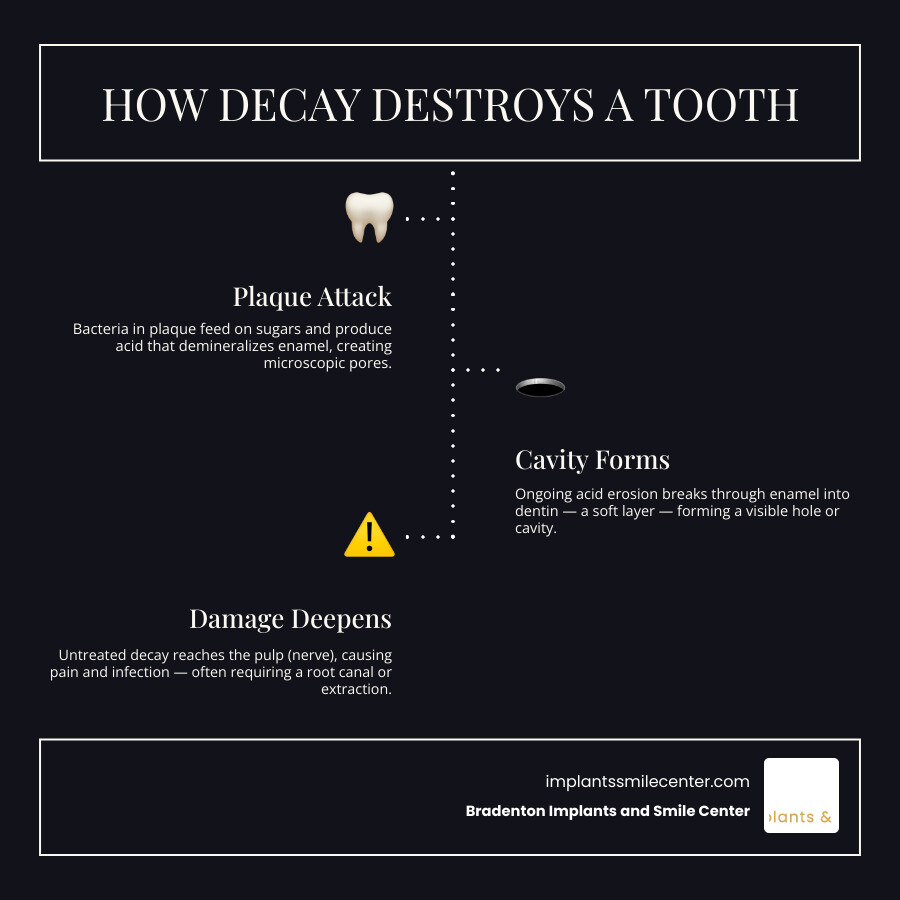
To understand why we need a dental filling, we first have to look at how teeth get damaged. The outer layer of your tooth is made of tooth enamel, which is the hardest substance in the human body. Despite its strength, enamel is highly vulnerable to acid attacks.
Every time you eat sugars or starches, the bacteria living in your mouth consume those carbohydrates and produce acid as a byproduct. This acid strips essential minerals away from your enamel in a biological process called demineralization.
In its earliest stages, tooth decay is actually reversible. If you catch mineral loss early enough—when it only appears as a faint white spot on the tooth—your saliva, combined with minerals from fluoride toothpaste, can stop or even reverse the damage.
However, if demineralization continues unchecked, the enamel eventually collapses, creating a permanent hole known as a cavity. Once a physical cavity forms, the decay begins eating its way through the softer, inner dentin layer toward the tooth's nerve.
This is when you start experiencing tooth sensitivity to hot, cold, or sweet foods. A dental filling is required to halt this progression. During the treatment, we remove the decayed, bacteria-ridden tissue and seal the space with a biocompatible material, restoring the tooth's structure and preventing further infection.
To keep your teeth healthy and catch these issues before they require extensive work, it is vital to stay on top of your preventive care. You can Learn more about general dentistry services to understand how routine exams help identify decay in its earliest, most treatable stages. For a deeper look at the history and clinical classification of cavities, you can also read this Scientific overview of dental restorations.
Direct vs. Indirect Dental Fillings
When restoring a damaged tooth, dentists categorize treatments into two main types: direct restorations and indirect restorations.
Direct restorations are what most people think of as standard fillings. During a single appointment, we clean out the decay, place the soft restorative material directly into the prepared cavity, shape it, and cure it right there in your mouth. Direct fillings are highly convenient, cost-effective, and completed in a single visit.
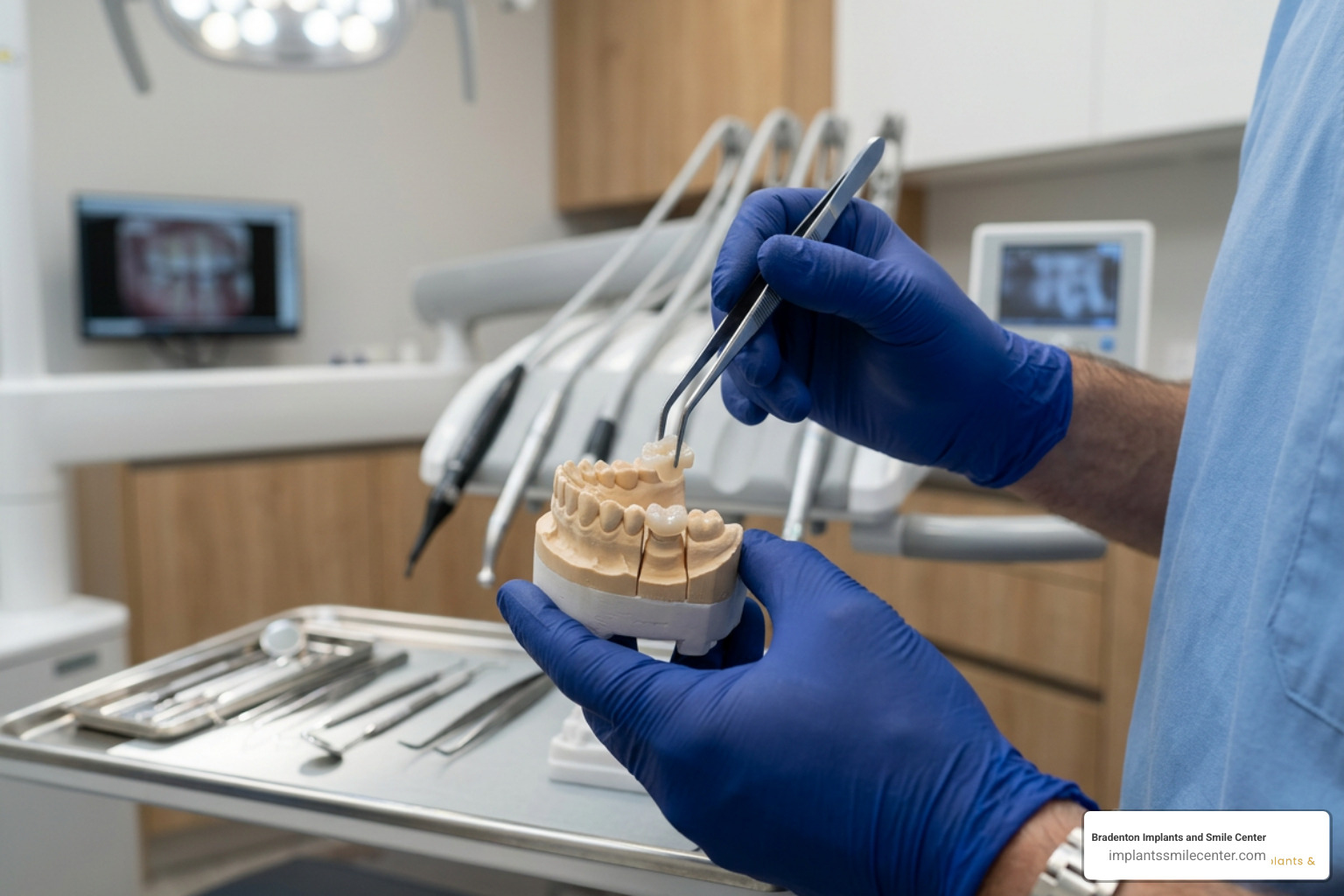
Indirect restorations, on the other hand, are custom-fabricated outside of the mouth. They are typically recommended when a tooth has suffered moderate to severe damage—too much for a standard filling to support, but not enough to require a full dental crown.
Common types of indirect fillings include:
Inlays: Custom-fit restorations that sit entirely within the grooves of a tooth's chewing surface.
Onlays: Often called "partial crowns," these cover one or more of the tooth's cusps (the raised points on the chewing surface) to provide extra structural support.
Traditionally, indirect restorations require at least two separate appointments. At the first visit, we prepare the tooth, take physical impressions, and place a temporary restoration. The impressions are sent to a dental laboratory, and you return a couple of weeks later to have the permanent restoration cemented in place.
However, modern dental practices increasingly utilize advanced CAD/CAM (Computer-Aided Design and Computer-Aided Manufacturing) technology. This allows us to take a digital optical impression of your prepared tooth and mill a custom ceramic inlay or onlay right in the office, completing the entire process in a single visit.
Materials Used in a Modern Dental Filling
There is no single "best" material for a dental filling. The right option for you depends on the location of the cavity, the chewing forces the tooth must withstand, aesthetic preferences, and your budget.
Here is a breakdown of the most common materials used in modern restorative dentistry:
Composite Resin
Often referred to as tooth-colored or plastic fillings, composite resin is a mixture of plastic and fine glass particles. Because we can shade-match the resin to your natural teeth, they are highly aesthetic and virtually invisible. Composite restorations bond chemically to the tooth structure, which means we do not have to remove as much healthy tooth during preparation.
Some patients worry about trace amounts of BPA in composite materials, but extensive scientific studies show that any microscopic BPA released during placement is completely harmless and poses no health risks.
Glass Ionomer
Introduced in the 1990s, glass ionomer cement chemically bonds directly to both enamel and dentin. Its most unique feature is that it actively releases fluoride into the surrounding tooth structure over time, helping to prevent recurrent decay along the margins of the restoration.
While less durable than composite resin, glass ionomers are ideal for temporary restorations, baby teeth, and fillings placed along the sensitive, non-chewing surfaces of the gumline.
Gold Restorations
Gold is incredibly strong, highly biocompatible, and does not corrode. Gold fillings can withstand heavy chewing forces and easily last 15 to 20 years or more. However, they lack natural aesthetics, require at least two dental visits to fabricate and place, and represent the most expensive option.
Porcelain/Ceramics
Porcelain restorations are indirect fillings (inlays or onlays) crafted in a laboratory or milled via CAD/CAM. They offer outstanding aesthetics, match the natural translucency of teeth, and are highly resistant to staining. They are more durable than composite resin but can be brittle under heavy biting pressure.
Amalgam (Silver Fillings)
A mixture of liquid mercury and a powdered alloy of silver, tin, copper, and zinc. Amalgam has been used for over 150 years because it is highly durable, affordable, and packs tightly into wet environments where moisture control is difficult. However, it is highly visible and requires the removal of some healthy tooth structure to remain mechanically locked in place.
To help you compare your choices, review this summary table:
Material Aesthetic Appeal Longevity Average Visits Best Suited For Composite Resin Excellent (Tooth-colored) 7 - 10 Years 1 Visit Front teeth; visible areas Glass Ionomer Good (Semi-translucent) 5 Years 1 Visit Children; gumline; temporary Porcelain/Ceramic Outstanding (Natural look) 10 - 15 Years 1 to 2 Visits Large cavities; molars Gold Poor (Metallic gold) 15 - 20+ Years 2 Visits Back molars; heavy chewers Amalgam Poor (Metallic silver) 10 - 15 Years 1 Visit Large cavities in back teeth
For a more comprehensive look at these materials and how they are approved for clinical use, check out this Detailed guide on dental filling materials.
The Dental Filling Procedure: Step-by-Step
Knowing exactly what happens during your appointment can significantly reduce any dental anxiety. Here is what you can expect when you visit us for a standard direct composite filling:

1. Numbing and Comfort
First, we apply a topical numbing gel to your gums. Once the surface tissue is numb, we administer a local anesthetic injection to completely block pain signals from the tooth's nerve. If you experience severe dental anxiety or have a strong gag reflex, we can discuss additional options beforehand. You can More about sedation dentistry options to see how we keep our patients relaxed and comfortable.
2. Decay Removal and Tooth Preparation
Once the tooth is completely numb, we use a specialized high-speed dental drill or a dental laser to remove all decayed, damaged, and bacteria-ridden tissue. While lasers are sometimes used, they have specific limitations, such as an inability to shape large cavities or treat teeth that already have existing restorations. You can Learn about laser filling disadvantages to see why traditional, highly precise instruments are still the gold standard for many procedures.
3. Cleaning and Etching
We thoroughly clean and disinfect the prepared cavity to remove any remaining debris or bacteria. Next, we apply an acidic etching gel to create microscopic rough spots on the tooth's surface, which helps the adhesive material bond securely.
4. Placing and Curing the Material
We apply a liquid bonding agent (adhesive) to the etched tooth. For a composite restoration, we place the resin material in thin layers, carefully shaping each layer to match the anatomy of your tooth. We then use a specialized blue curing light (operating at a critical wavelength of 460 to 480 nm) to instantly harden and polymerize each layer of resin.
5. Shaping, Polishing, and Bite Adjustment
Once the filling is fully hardened, we shape and polish it so it feels smooth to your tongue. We then ask you to bite down on a thin strip of colored carbon paper. This paper leaves marks on any "high spots" where the filling is interfering with your natural bite. We carefully file down these high spots until your bite feels completely normal and comfortable.
Benefits and Potential Complications of Dental Fillings
Like any medical procedure, dental fillings come with distinct advantages and potential risks.
The Benefits
The primary benefit of a dental filling is that it stops tooth decay in its tracks. By removing infected tissue and sealing the tooth, we preserve your natural tooth structure and prevent the decay from reaching the pulp, which would require a root canal or extraction.
Fillings also restore the structural integrity of your tooth, allowing you to chew comfortably and maintain a aligned bite. Furthermore, tooth-colored composite fillings restore the natural beauty of your smile, giving you a confidence boost.
Potential Complications
While complications are rare, they can happen:
Nerve Irritation (Pulpitis): Deep cavities that sit close to the tooth's nerve can cause temporary inflammation, resulting in sensitivity to hot, cold, or biting pressure. This minor pain is normal and typically resolves on its own within a week.
Weakening of Tooth Structure: If a cavity is very large, replacing a significant portion of natural tooth with a filling can make the remaining tooth structure more brittle and prone to fracturing.
Recurrent Decay: If oral hygiene is neglected, new bacteria can slip beneath the microscopic margins of the filling, causing a new cavity to form underneath the restoration.
For more information on the clinical studies surrounding restorative safety and materials, you can read the NIDCR research on dental fillings.
Are Amalgam Fillings Safe?
For decades, the safety of silver amalgam fillings has been a topic of public debate due to their mercury content. Amalgam contains approximately 42% to 50% liquid elemental mercury by weight, mixed with silver, tin, copper, and zinc.
It is true that amalgam fillings release tiny amounts of mercury vapor—roughly 0.2 to 0.4 µg per day for each filled tooth surface. However, extensive scientific research confirms that this level of exposure is incredibly low. It sits far below the safety limits established by the U.S. Environmental Protection Agency (EPA), which allows a tolerable intake of 0.1 µg per kg of body weight daily (approximately 5.8 µg per day for a 130-pound person).
Furthermore, allergic reactions to amalgam are exceptionally rare, occurring in less than 1% of the treated population. Major global health organizations, including the World Health Organization (WHO) and the FDA, agree that dental amalgam is a safe, durable, and effective restorative material for the general population.
However, out of an abundance of caution, the FDA updated its recommendations in 2020. They advise that specific high-risk groups avoid receiving new amalgam fillings if alternative materials are available. These groups include:
Pregnant or nursing women
Women planning to become pregnant
Children under the age of six
People with pre-existing neurological conditions or impaired kidney function
Individuals with known allergies to mercury or other metals in the alloy
If you currently have functional, intact amalgam fillings, do not seek to have them removed. The process of drilling out old silver fillings actually releases a brief spike of mercury vapor, meaning unnecessary removal causes more mercury exposure than leaving them in place.
To read official position statements, check out the ADA statement on dental amalgam safety and the MouthHealthy guide on dental amalgam.
Longevity and Aftercare: How to Care for Your Dental Filling
No dental restoration lasts forever. Every day, your fillings endure incredible pressure from chewing, changes in temperature, and attacks from acids and bacteria. Understanding how long they last and how to care for them is key to maximizing their lifespan.
How Long Does a Dental Filling Last?
The lifespan of your restoration depends heavily on the material used and your daily oral hygiene. A landmark clinical study analyzing Kaplan-Meier survival times revealed the following median lifespans for various dental restorations:
Amalgam fillings: 12.8 years (due to their high physical strength and resistance to moisture during placement)
Resin composite fillings: 7.8 years (while highly aesthetic, composite is more prone to wear and microscopic shrinkage over time)
Dental crowns: More than 14.6 years (crowns offer superior protection because they encase the entire visible portion of the tooth)
With exceptional home care and regular dental checkups, it is not uncommon for some high-quality fillings to last up to 20 years.
Daily Care and Eating After a Dental Filling
Caring for a new filling is simple and relies on maintaining excellent oral hygiene habits.
To protect your restoration and prevent decay from forming around its edges, follow these best practices:
Brush twice daily: Use a soft-bristled toothbrush and a fluoride toothpaste. Fluoride binds to your enamel, helping to remineralize and strengthen the tooth structure around the filling.
Floss daily: Gently clean between your teeth to remove plaque and food particles that your toothbrush cannot reach.
Incorporate fluoride mouthwash: Rinsing daily helps keep harmful bacteria at bay and protects the margins of your restorations.
Make dietary adjustments: Avoid chewing on extremely hard items like ice, hard candies, or unpoped popcorn kernels, which can crack both your filling and your natural tooth. Limit sticky, sugary foods that can pull at restorations or trap bacteria.
Wear a nightguard: If you clench or grind your teeth at night (bruxism), ask your dentist for a custom nightguard. Unconscious grinding forces can rapidly wear down, crack, or dislodge dental fillings.
Dental Filling vs. Crown: What is the Difference?
Patients often ask why they need a crown instead of a simple filling. The decision comes down to the amount of healthy, supportive tooth structure remaining.
When a filling is best: Fillings are conservative restorations. We only use them when the decay or damage is minor to moderate, leaving plenty of healthy enamel and dentin to support the tooth's structure.
When a crown is best: If a cavity is very large, treating it with a filling can leave the remaining walls of the tooth too thin and weak to withstand chewing forces. In these cases, a dental crown is required. A crown acts as a protective "cap" that completely encases the visible portion of the tooth, distributing biting forces evenly and preventing the tooth from fracturing.
If decay has penetrated deep into the inner pulp of the tooth, causing an infection, a crown is typically placed after root canal therapy to restore the tooth's strength.
To help visualize the differences, consider this comparison:
Tooth Structure Preserved: Fillings require minimal tooth removal; crowns require reshaping the entire outer layer of the tooth.
Coverage: A filling sits inside the tooth; a crown completely covers the tooth down to the gumline.
Visits Required: Direct fillings are completed in one visit; crowns typically require two visits (or one with in-office CAD/CAM).
Durability: Crowns generally offer higher long-term survival rates for teeth under heavy chewing pressure.
To explore your options for restoring heavily damaged teeth, read More about dental crowns. If you are experiencing severe tooth pain, you can also learn about Root canal therapy options.
Frequently Asked Questions About Dental Fillings
Can you eat or brush your teeth immediately after the procedure?
Yes, but with a few important caveats. If you received a composite resin filling, the material is fully cured and hardened by the blue light before you leave our office. However, because of the local anesthesia, your mouth will remain numb for a few hours.
We highly recommend waiting to eat until the numbness completely wears off to avoid accidentally biting your tongue, lips, or cheeks. Once the numbness is gone, stick to soft foods (like smoothies, yogurt, or soup) for the first day or two, and try to chew on the opposite side of your mouth. You can brush and floss your teeth normally the same night, but be gentle around the newly restored tooth.
Does getting a cavity treated hurt?
No. Thanks to modern dental techniques and highly effective local anesthetics, the actual procedure is completely pain-free. You might feel a slight pinch during the initial numbing injection, but after that, you should only feel mild pressure as we work.
If you experience dental anxiety, we offer compassionate care and sedation options to ensure your visit is entirely comfortable. It is normal to experience minor tooth sensitivity to hot and cold temperatures for a few days after the procedure, which can be easily managed with over-the-counter pain relievers like ibuprofen.
When should you call a dentist after a treatment?
While minor sensitivity is normal, you should contact your dentist immediately if you experience any of the following symptoms:
Severe, throbbing pain that does not respond to over-the-counter medication
Visible facial swelling, fever, or signs of infection
A feeling that your bite is uneven or "high" when you chew (this requires a quick, painless adjustment in our office to prevent chronic pain)
A cracked, loose, or completely dislodged filling
If you are experiencing severe discomfort or a broken restoration, do not wait. You can access Emergency dental care services to get prompt relief.
Conclusion
A dental filling is a simple, highly effective way to halt tooth decay, relieve sensitivity, and preserve your natural smile for years to come. Thanks to modern dental materials and state-of-the-art technology, treating a cavity is a quick, comfortable, and stress-free experience.
At Bradenton Implants & Smile Center, we are dedicated to providing personalized, compassionate care for adults and seniors. Located at 7270 55th Ave E, Bradenton, FL 34203, our team utilizes advanced techniques and offers flexible financing options to ensure your dental health remains on track.
Don't let a small cavity turn into a major headache. If you suspect you have tooth decay or are due for a routine exam, contact us today to Schedule a dental filling consultation and keep your smile healthy and bright!