

Everything You Need to Know About Veneers
What You Should Know Before Getting Veneers
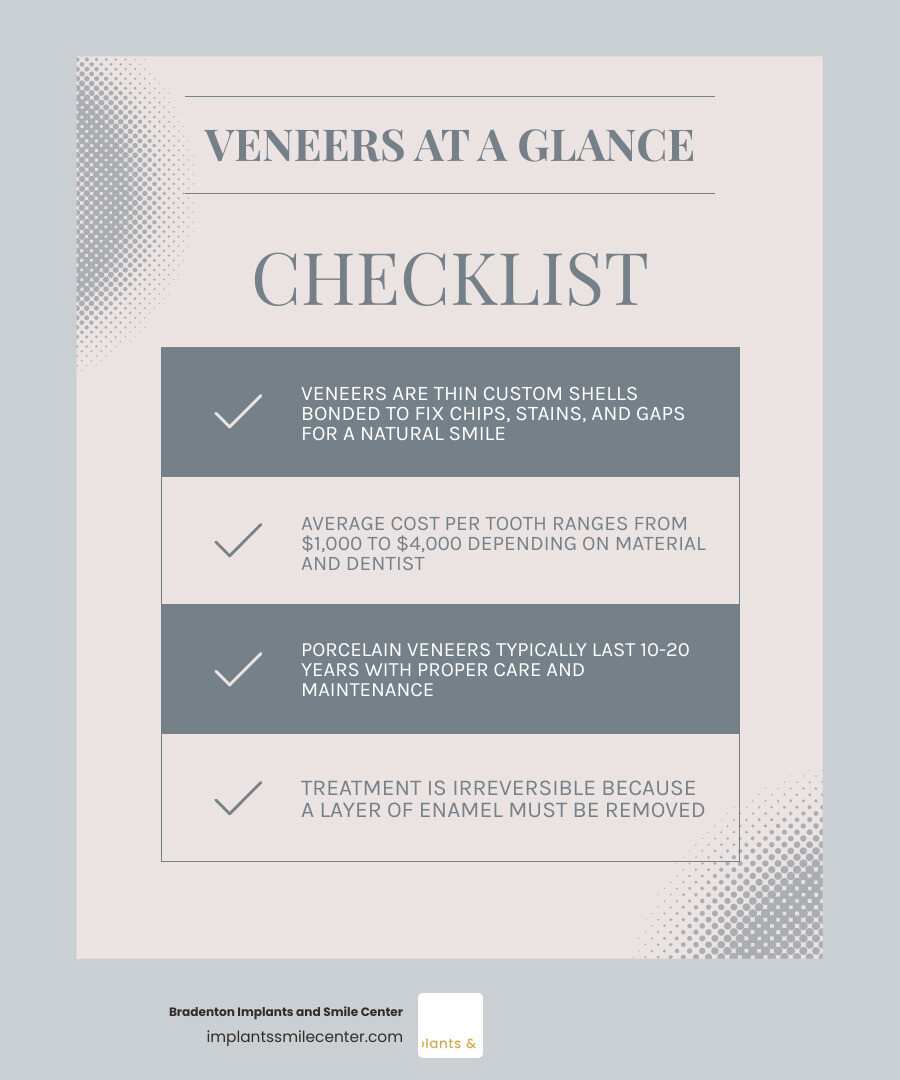
Veneers are thin, custom-made shells bonded to the front surface of your teeth to improve how they look. They can fix chips, stains, gaps, and misshapen teeth — giving you a natural-looking, confident smile.
Quick answer: What are veneers?
What they are: Thin porcelain or composite shells bonded to the front of teeth
What they fix: Stains, chips, cracks, gaps, and misshapen teeth
Types available: Porcelain, composite, no-prep, and removable
How long they last: 10–20 years depending on material and care
Cost: Roughly $1,000–$4,000 per tooth
Are they permanent? Yes — enamel removal makes the process irreversible
Covered by insurance? Usually not, since they are considered cosmetic
Around 8% of Americans — roughly 26 million people — already have veneers. For adults dealing with worn, stained, or damaged teeth, they can be a life-changing option. But they are also a big commitment, and it is important to understand exactly what you are signing up for before moving forward.
This guide covers everything: types, procedures, costs, risks, candidacy, and alternatives — so you can make a confident, informed decision.
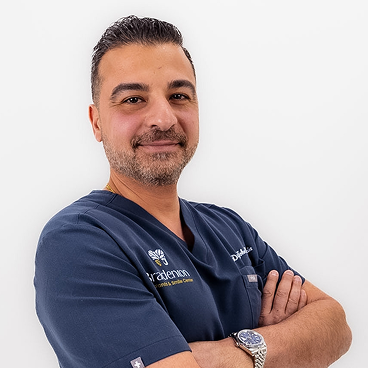
I'm Dr. John Hegazin, owner of Bradenton Implants and Smile Center, with over 8 years of experience placing veneers and restoring smiles using advanced cosmetic techniques. I'll walk you through everything you need to know so you can decide whether veneers are the right fit for your goals and your oral health.
What Are Dental Veneers and How Do They Work?
At their core, dental veneers are ultra-thin, custom-made shells designed to cover the front surface of your teeth. Think of them like high-tech, medical-grade fingernails, but for your teeth. They are meticulously crafted to match the natural color, shape, and translucency of your existing teeth, or to give you the bright, symmetrical smile you have always wanted.
The primary goal of veneers is cosmetic enhancement. When bonded to your teeth, they instantly camouflage a wide array of dental imperfections. Because they only cover the visible front surface of the tooth, they represent a highly conservative approach to cosmetic dentistry, preserving the vast majority of your natural tooth structure underneath.
Whether you are looking to fix a single chipped tooth from an old sports injury or wanting a complete smile makeover to correct years of wear, veneers offer a versatile and durable solution. To explore how we customize these restorations for our patients, you can Learn more about veneers at our Bradenton office.
Types of Veneers Available
When planning your smile transformation, you will choose from several different types of materials and preparation styles. Each option has its own set of advantages, lifespans, and price points.
Porcelain Veneers
Porcelain is widely considered the gold standard for dental restorations. These custom-made shells are fabricated in a professional dental laboratory using advanced ceramics like E.max lithium disilicate or hand-layered feldspathic porcelain.
Pros: Incredibly durable, highly stain-resistant, and possess a natural, light-reflecting quality that perfectly mimics real tooth enamel.
Cons: Require more preparation (enamel removal) than other options and come with a higher initial cost.
Lifespan: Often last 10 to 20 years, and sometimes up to 30 years with exceptional care.
Composite Resin Veneers
Composite veneers are made from a tooth-colored filling material that is applied directly to the teeth and sculpted by the dentist in a single visit.
Pros: Less expensive than porcelain, require minimal enamel removal, and can be easily repaired if they chip.
Cons: Less durable than porcelain, more prone to staining over time, and lack the deep translucency of ceramic.
Lifespan: Typically last 5 to 7 years before needing replacement.
No-Prep Veneers
No-prep options (such as Lumineers) are ultra-thin porcelain shells (roughly 0.3 mm, about the thickness of a contact lens).
Pros: Require little to no enamel removal, meaning the process can sometimes be reversible.
Cons: Because they sit on top of the unprepared tooth, they can sometimes look slightly bulky if not placed by an expert, and they cannot mask severe discoloration as effectively.
Removable (Pop-On) Veneers
These are temporary, snap-on arches that fit over your existing teeth.
Pros: Highly affordable, non-invasive, and require no dental visits.
Cons: They do not fix underlying issues, can feel bulky, and often negatively impact speech and eating. They are not a professional or permanent dental solution.
To understand how professional dental restorations compare to temporary or alternative cosmetic shells, take a look at our guide on More info about false teeth veneers. You can also review general safety and material guidelines in the ADA guide on veneers.
Veneers vs. Dental Crowns: Understanding the Difference
While both treatments can dramatically improve the appearance of your teeth, they serve very different clinical purposes. The main difference lies in how much of the tooth is covered and how much natural tooth structure must be removed during preparation.
Dental Veneers: These are strictly cosmetic. They cover only the front surface of the tooth, requiring a very conservative enamel reduction of about 0.3 mm to 0.7 mm. They do not strengthen or structurally restore a heavily decayed or broken tooth.
Dental Crowns: Crowns are structural restorations. They cover the entire tooth like a cap (360-degree coverage). Getting a crown requires removing roughly 50% or more of the natural tooth structure. Crowns are used when a tooth is cracked, severely decayed, or has undergone a root canal.
Here is a quick comparison table to help you understand the differences:
Feature Dental Veneers Dental Crowns Coverage Front surface only Entire tooth (360 degrees) Primary Purpose Cosmetic enhancement Structural restoration & protection Enamel Reduction Minimal (0.3 mm – 0.7 mm) Significant (1.0 mm – 2.0 mm+) Best For Stains, minor chips, small gaps, shape issues Cracked teeth, large decay, root canals Lifespan 10 to 20 years 10 to 15+ years
If you have a tooth that is structurally compromised rather than just cosmetically imperfect, a crown may be the safer option. For more details on full-coverage restorations, check out More info about dental crowns.
The Procedure: What to Expect During Treatment
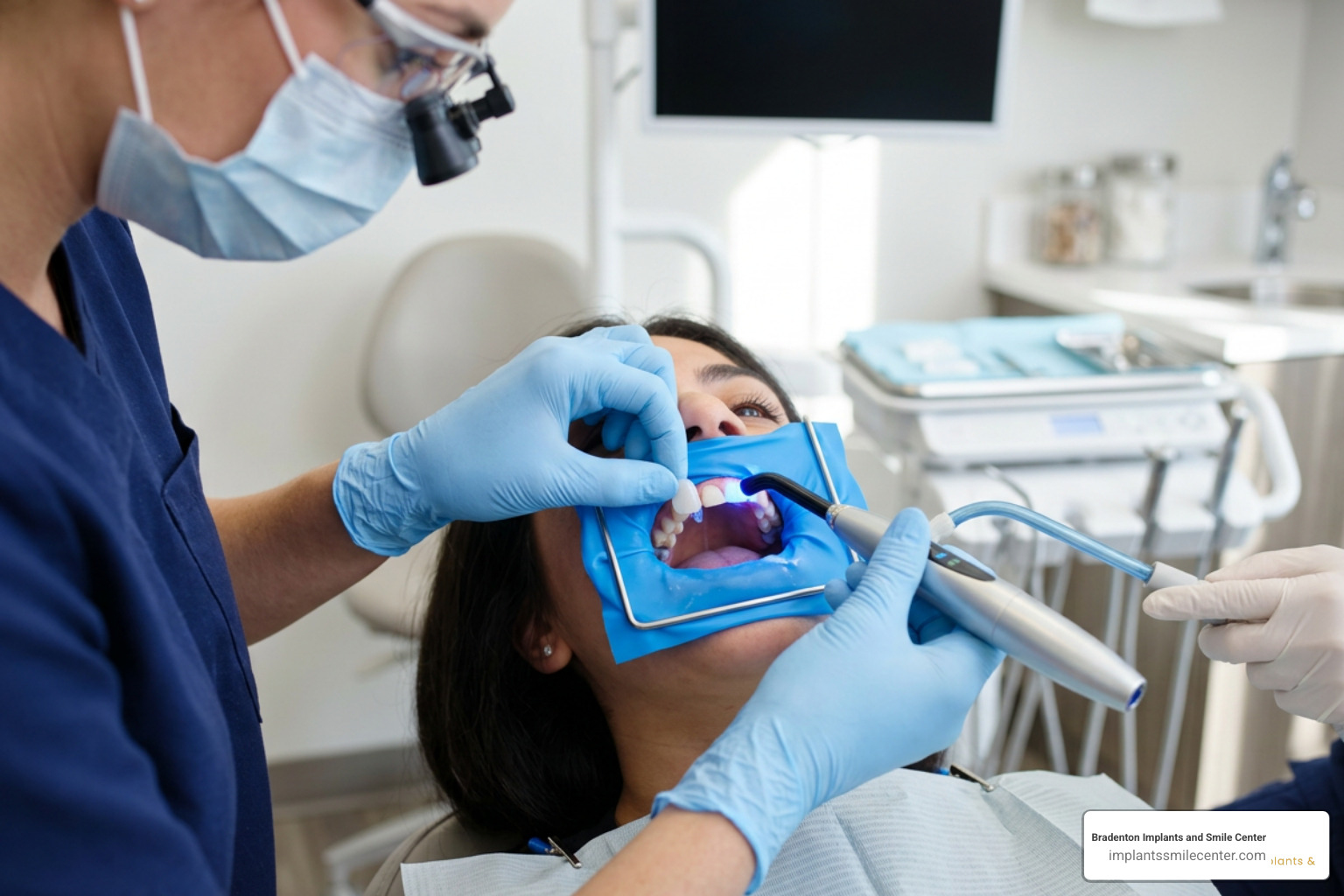
Getting custom porcelain veneers is a collaborative and exciting process that typically takes place over two to three appointments. Here is what you can expect when you partner with us for your smile transformation:
1. The Consultation and Smile Planning
Your journey begins with an in-depth consultation. We discuss your aesthetic goals, take digital photographs, and evaluate your oral health. We often use digital smile design software or a diagnostic wax-up to give you a preview of your future smile before we even touch a tooth.
2. Tooth Preparation
To ensure your new veneers sit flush with your surrounding teeth and do not look bulky, we carefully remove a microscopic layer of enamel (usually less than a millimeter). This step is performed under local anesthesia to ensure you remain completely comfortable and pain-free.
3. Impressions and Temporary Veneers
Once the teeth are prepared, we take highly accurate digital scans or physical impressions of your teeth. These are sent to our trusted dental laboratory, where master ceramists hand-craft your custom restorations. In the meantime, we place temporary veneers to protect your prepared teeth and give you a "trial run" of your new smile shape.
4. Final Bonding
Once your custom porcelain restorations arrive, you will return to our office. We remove the temporaries, clean your teeth with an antibacterial solution, and place the new veneers to check their fit, shape, and color. Once you approve of the look, we etch the surface of your teeth, apply a medical-grade bonding adhesive, place the porcelain, and cure it with a special UV light to lock it permanently in place.
Candidacy: Who is a Good Candidate?
While veneers can work wonders, they are not a one-size-fits-all solution. A successful outcome depends heavily on the health of your natural teeth and gums.
An ideal candidate has:
Good overall oral health (free of active decay and periodontal disease)
Sufficient healthy enamel to support the bonding process
Minor cosmetic issues like permanent staining, small chips, gaps, or slightly misshapen teeth
Realistic expectations and a commitment to maintaining excellent oral hygiene
Who should avoid or delay veneers?
Severe Teeth Grinders (Bruxism): Clenching and grinding place immense pressure on porcelain, which can cause the restorations to crack or de-bond. If you grind your teeth, you must commit to wearing a custom night guard to protect your investment.
Active Gum Disease or Decay: Placing cosmetic restorations over unhealthy teeth is like building a house on a weak foundation. Any active decay or gum inflammation must be fully treated first.
Inadequate Enamel: Because the bonding agent adheres best to enamel, patients with worn-down teeth or severe erosion may not have enough enamel left for a secure bond.
To read more about candidate selection and clinical considerations, you can reference the WebMD dental veneers guide.
Pros, Cons, and Longevity of Cosmetic Restorations
Before making a permanent change to your teeth, it is wise to weigh the benefits against the drawbacks.
The Advantages (Pros)
Stunning, Natural Aesthetics: Porcelain perfectly mimics the light-reflecting properties of natural enamel.
Incredible Stain Resistance: Unlike natural teeth, high-quality porcelain does not discolor from coffee, tea, red wine, or tobacco.
Conservative Treatment: They preserve far more natural tooth structure than dental crowns.
Immediate Transformation: You can completely redesign the color, alignment, and symmetry of your smile in just a couple of weeks.
The Disadvantages (Cons)
Irreversible Process: Once natural enamel is removed, your teeth will always require a restoration to protect them.
Temporary Sensitivity: You may experience mild sensitivity to hot and cold foods for a few weeks after placement.
Initial Cost: High-quality cosmetic dentistry is a significant financial investment.
Susceptibility to Damage: While strong, porcelain can still chip or crack if subjected to extreme forces (like biting ice or using your teeth as tools).
Lifespan and Maintenance
How long do veneers last? With proper care, porcelain restorations typically last between 10 to 15 years, and can easily reach 20 years or more. However, they do not last forever. Studies show that after 10 years, approximately 50% of veneers may eventually require some form of re-treatment, replacement, or maintenance to keep them looking and functioning beautifully.
To maximize the lifespan of your smile, follow these best practices:
Brush and Floss Daily: Brush at least twice a day with a non-abrasive fluoride toothpaste and a soft-bristled toothbrush. Floss daily to protect the margins where the veneer meets your natural tooth from decay.
Avoid Whitening Toothpastes: Many whitening toothpastes contain abrasive particles that can scratch the polished surface of your porcelain.
Do Not Use Teeth as Tools: Never use your teeth to open packaging, bite your fingernails, or chew on hard objects like ice, pens, or popcorn kernels.
Wear a Night Guard: If you have a habit of clenching or grinding your teeth at night, wearing a custom-fitted night guard is essential to prevent fracture.
Keep Regular Dental Visits: Visit us every six months for professional cleanings and routine exams to monitor the integrity of your restorations.
For more detailed care instructions and clinical guidelines, check out the Healthdirect veneers overview.
Cost, Risks, and Alternative Treatments
The Cost of Veneers
The cost of a single porcelain veneer typically ranges from $1,000 to $4,000. The total investment depends on the complexity of your case, the material chosen, and the number of teeth being treated. Because veneers are classified as a cosmetic procedure, they are generally not covered by dental insurance. However, if a veneer is required to restore a tooth damaged in an accident, some insurance providers may cover a portion of the fee. At Bradenton Implants & Smile Center, we offer flexible financing options to help make your dream smile accessible and budget-friendly.
The Risks of Unlicensed Providers
With the rise of social media trends, some individuals have turned to unlicensed "veneer technicians" or overseas "dental tourism" packages to save money. We cannot stress enough how dangerous this is. Unlicensed providers often bypass proper sterilization, place restorations over active decay, and trim down healthy teeth excessively. This can lead to severe infections, permanent nerve damage, chronic pain, and ultimately, the loss of your natural teeth. Always trust your smile to a licensed, board-certified dentist.
Alternative Cosmetic Treatments
If you are not ready for the permanent commitment or cost of veneers, several highly effective alternatives can help you achieve your goals:
Cosmetic Bonding: A non-invasive resin repair that can fix minor chips and gaps in a single visit without permanent enamel removal.
Professional Teeth Whitening: If color is your primary concern, deep bleaching can lift stubborn stains without altering your tooth structure. More info about teeth whitening.
Invisalign: If your main goal is to straighten crooked teeth or close gaps, clear aligners can move your teeth into perfect alignment naturally. More info about Invisalign.
Dental Implants: If you have missing teeth or teeth that are too damaged to support a veneer, implants provide a permanent, structural replacement. More info about dental implants.
Frequently Asked Questions about Cosmetic Dentistry
Is the treatment permanent and does it damage natural teeth?
Yes, traditional veneers are a permanent, irreversible commitment. Because we must remove a thin layer of enamel to ensure a proper fit and strong bond, those teeth will always need to be covered by restorations. However, when performed by a licensed professional, the process does not damage your natural teeth. In fact, the strong ceramic material actually acts as a protective shield for the front of your teeth.
Can you whiten porcelain restorations once they are placed?
No, dental porcelain is completely resistant to bleaching agents. If you plan to whiten your natural teeth, it is highly recommended to complete your professional whitening treatments before your veneers are fabricated. This allows us to perfectly match the shade of your custom porcelain to your newly brightened natural smile.
What happens if a restoration chips or comes off?
While rare, a veneer can occasionally chip or de-bond if subjected to trauma or extreme force. If this happens, try to save the veneer if it came off in one piece. Do not attempt to glue it back on yourself using household adhesives. Call our office immediately. We will schedule an emergency appointment to safely clean your tooth and either re-bond the restoration or fabricate a replacement.
Conclusion
A beautiful, symmetrical smile can completely transform your self-esteem and how you present yourself to the world. Whether you want to correct a single chipped tooth or undergo a full mouth transformation, dental veneers offer a highly durable, natural-looking, and artistic solution.
At Bradenton Implants & Smile Center, we are committed to providing personalized, compassionate care using state-of-the-art technology and advanced cosmetic techniques. Located conveniently at 7270 55th Ave E, Bradenton, FL 34203, we offer custom treatment plans tailored to your unique goals, along with flexible financing options to fit your lifestyle.
Ready to take the first step toward your dream smile? Schedule a consultation for veneers with us today, and let’s discuss what’s possible for you!