
Bend It Like Dentures: What Is a Flexible Partial Denture Anyway?
What You Need to Know About Flexible Partial Dentures (Quick Answer)
What is a flexible partial dentures option? Here's the short version:
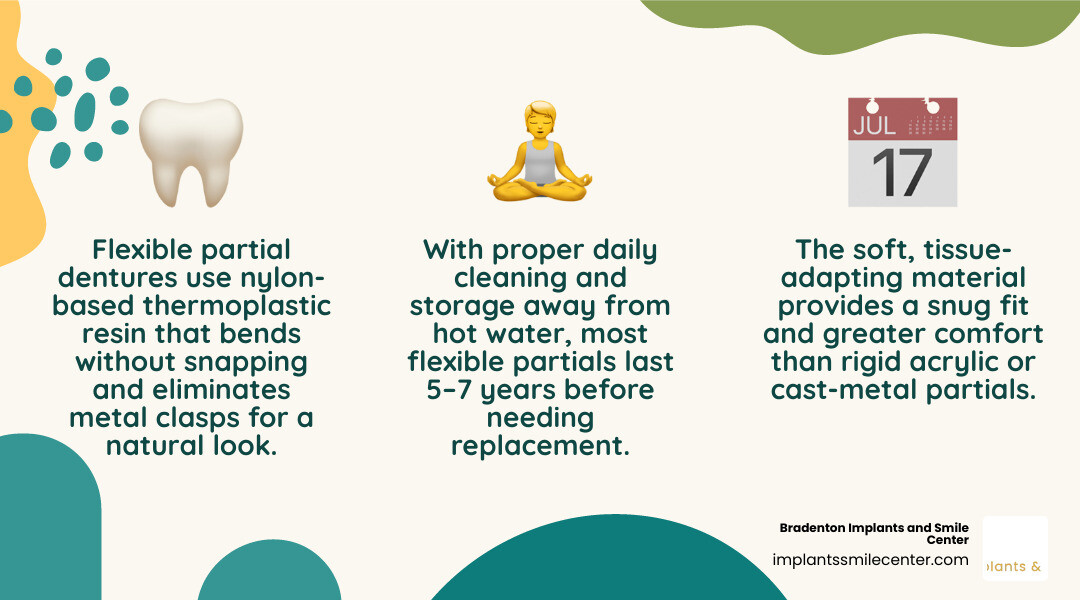
A flexible partial denture is a removable dental appliance that replaces one or more missing teeth using a soft, bendable thermoplastic material — instead of rigid acrylic or metal.
Unlike traditional dentures, flexible partials:
Use no visible metal clasps — gum-colored material holds them in place
Are made from nylon-based or thermoplastic resin (like Valplast or DuraFlex)
Bend without snapping, making them more comfortable and break-resistant
Are designed for partial tooth loss only — not full arch replacement
Typically last 5–7 years with proper care
If you're missing a few teeth and want something comfortable, natural-looking, and metal-free, a flexible partial denture may be worth a close look.
Losing teeth can quietly change a lot — how you chew, how you speak, and even how often you smile. For adults dealing with partial tooth loss, finding the right replacement option isn't always straightforward. There are acrylic partials, metal frameworks, implants, and then there are flexible partial dentures — a category that often surprises patients who had no idea this option existed.
Flexible partial dentures have actually been around for over 50 years, yet many patients are still discovering them for the first time. With an 85–90% patient satisfaction rate reported in the literature, they've earned a real place in modern restorative dentistry — especially for people who want comfort and aesthetics without metal showing when they smile.
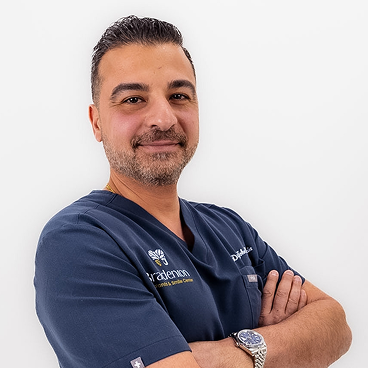
I'm Dr. John Hegazin, owner of Bradenton Implants and Smile Center, and with over 8 years of experience in restorative and implant dentistry — including fitting patients with tooth replacement solutions ranging from implants to dentures — I've helped many patients understand what is a flexible partial dentures option and whether it fits their specific situation. In the sections below, I'll walk you through everything you need to make an informed decision.
What Is a Flexible Partial Dentures Option?
When exploring options for replacing missing teeth, you will find that a flexible dentures treatment stands out because of the unique way it interacts with your mouth. Unlike conventional, rigid dental prosthetics, a flexible partial denture is a removable appliance designed to replace one or several missing teeth by utilizing highly advanced, thin thermoplastic resins.
At its core, this treatment is a branch of removable prosthodontics designed to offer maximum tissue adaptation. Because the base is made of a pliable nylon-based material rather than stiff metal or acrylic, the appliance can physically bend and flex to match the natural, dynamic contours of your gums and palate. This creates a remarkably snug fit without the need for messy dental adhesives or heavy metal frameworks.
As the appliance sits in your mouth, it uses the natural undercuts of your remaining teeth to stay firmly anchored. The material itself is semi-translucent, allowing the natural color of your living gum tissue to show through. This creates an optical illusion where the boundary between the prosthetic and your real tissue virtually disappears, giving you an exceptionally discreet, metal-free smile restoration.
How Flexible Partials Differ from Traditional Acrylic and Metal Dentures
To truly appreciate what is a flexible partial dentures option, it helps to compare it to the traditional alternatives. Historically, if you were missing a few teeth, you had two main choices: acrylic partials or cast metal partials.
Cast Metal Partials
These use a rigid chrome-cobalt or titanium alloy framework. While they are incredibly strong, durable, and excellent at distributing chewing forces, they rely on visible metal clasps that wrap around your remaining teeth. When you smile or speak, these shiny metal hooks can easily give away the fact that you are wearing a prosthetic.
Acrylic PMMA Partials
Traditional acrylic dentures are made of polymethyl methacrylate (PMMA), a rigid plastic. While they are cost-effective and easy to repair, they are prone to snapping in half if dropped. They also feel bulky in the mouth and require metal wire clasps for retention.
Flexible Partials
Flexible partials eliminate the metal entirely. They use clear or pink-colored thermoplastic clasps that are built directly into the base of the denture. These clasps slip gently into the natural undercuts near the gumline of your adjacent teeth, providing retention that is virtually invisible.
Furthermore, the manufacturing process is highly streamlined. According to clinical techniques for flexible partials, advanced digital scanning and thermoplastic injection molding allow labs to create these appliances with incredible precision, often requiring fewer adjustment visits than rigid alternatives.
To help you visualize how these options compare, here is a breakdown of their primary characteristics:
Feature Flexible Partial Dentures Acrylic PMMA Partials Cast Metal Partials Primary Material Thermoplastic Nylon / Resin Rigid PMMA Acrylic Chrome-Cobalt / Titanium Alloy Clasp Design Gum-colored or clear nylon clasps Metal wire clasps Cast metal clasps Flexibility High (bends without breaking) None (rigid and brittle) None (rigid and stiff) Esthetics Excellent (blends with gums) Moderate (visible metal wires) Poor to Moderate (visible metal) Average Lifespan 5–7 years 3–5 years 7–10 years Repairability Difficult (often requires remake) Very Easy Moderate (can be soldered) Allergy Risk Extremely Low (monomer-free) Low to Moderate (residual monomer) Low (unless metal allergy exists)
While patients have access to various traditional options, we find that those looking for the ultimate balance of comfort and aesthetics frequently choose the modern flexible route.
Materials and Mechanical Properties of Flexible Dentures
The secret behind the performance of flexible dentures lies in polymer science. Unlike traditional acrylics, which are mixed from powder and liquid monomers, flexible dentures are made from pre-formed thermoplastic pellets that are heated and injected under high pressure into a mold.
These materials exhibit fascinating mechanical and physical properties:
High Flexural and Impact Strength: They can absorb sudden impacts. If you drop a flexible denture on a hard tile bathroom floor, it will bounce instead of shattering.
Low Water Sorption: High-quality thermoplastic resins are engineered to resist absorbing moisture. This keeps the material from staining easily or retaining unpleasant oral odors over time.
Biocompatibility: Because they do not use methyl methacrylate monomers or heavy metals, they are completely hypoallergenic. This makes them a lifesaver for patients who suffer from severe monomer or metal allergies.
Controlled Surface Roughness: Advanced CAD/CAM milling and laboratory polishing techniques ensure a glassy-smooth finish, reducing the rate at which plaque and bacteria can cling to the surface.
What Is a Flexible Partial Dentures Material?
There are a few key brand-name materials used by premier dental laboratories to fabricate these appliances:
Valplast: The pioneer of nylon-based thermoplastic resins. It is incredibly strong, bio-compatible, and has a long-standing reputation for durability. Valplast cannot be easily chemically bonded or relined once processed, which means it requires highly accurate initial impressions.
DuraFlex: Made from an advanced ethylene-propylene thermoplastic. DuraFlex is highly translucent, making it exceptionally aesthetic. It also boasts incredibly low moisture absorption, meaning it is highly resistant to staining from coffee, tea, or red wine.
TCS Unbreakable: Another highly popular thermoplastic nylon resin. It offers a slightly different balance of rigidity and flexibility, making it ideal for creating thin, lightweight appliances that still provide excellent structural support.
Pros and Cons of Flexible Partial Dentures
Like any dental treatment, flexible partials come with their own unique set of advantages and limitations. Understanding both sides of the coin is essential before moving forward.

Key Advantages of Flexible Partials
Unmatched Aesthetics: No shiny metal clasps are visible when you laugh, smile, or talk. The semi-translucent material lets your natural gum color show through.
Superior Comfort: The lightweight, thin design feels far less bulky than traditional acrylic. Because the material yields slightly to the movement of your mouth, it reduces the occurrence of painful sore spots.
Incredible Durability: The thermoplastic base is virtually shatterproof, making it highly reliable for active individuals or those prone to dropping their appliances.
No Adhesives Required: The custom-engineered, snug fit stays securely in place without relying on denture creams or adhesives.
Hypoallergenic: Completely free of metal and acrylic monomers, making it safe for sensitive patients.
A global clinical case study on flexible partial dentures published in the Nigerian Journal of Dental Research highlighted how transitioning patients from poorly fitting, rigid PMMA dentures to flexible partials resolved chronic mucosal irritation, eliminated frequent prosthetic fractures, and significantly boosted patient confidence and daily function.
Key Disadvantages to Consider
Difficult to Repair or Reline: Because thermoplastic materials cannot be easily bonded to new resin, these dentures are very difficult to reline (tighten) or repair. If you lose an additional tooth in the future, or if your gums shrink significantly, you will likely need a completely new denture rather than a simple modification.
Bacterial Buildup Risk: The flexible material can develop microscopic scratches over time if cleaned with harsh, abrasive toothpastes. These scratches can harbor bacteria, leading to plaque buildup and bad breath if a strict cleaning routine is not followed.
Not for Full Dentures: Because flexible dentures require remaining natural teeth for support and retention, they cannot be used to make full (complete) dentures.
Lower Rigidity for Heavy Chewing: In cases where many back teeth are missing, the slight bend of the material can sometimes apply excess pressure to the underlying gums during heavy chewing, which may feel less stable than a rigid metal frame.
Who Is the Ideal Candidate for Flexible Partials?
Flexible partial dentures are a fantastic solution, but they aren't the perfect fit for everyone. If you are exploring options for tooth replacement, we look at several clinical factors to determine if a flexible design is right for you.
Ideal Candidates:
Partial Tooth Loss: You must have healthy, stable remaining teeth on both sides of the gap to support the appliance.
Metal or Acrylic Allergies: If you experience rashes, inflammation, or burning sensations from traditional metal or acrylic materials, a hypoallergenic thermoplastic is the perfect alternative.
Sensitive Gums: Patients who find rigid acrylic bases too painful or prone to creating chronic sore spots benefit greatly from the soft, yielding nature of flexible resins.
Restricted Mouth Opening: If you have limited jaw mobility (due to TMJ issues or conditions like scleroderma), a flexible denture can be gently bent slightly to ease insertion and removal.
Contraindications (When to Avoid Them):
Full Arch Tooth Loss: If you are missing all of your teeth in an arch, you cannot use a flexible denture. In these cases, we recommend exploring options like traditional full dentures, snap-on dentures, or implant-supported arches.
Severe Bone Loss: If your jawbone has resorbed significantly, a flexible denture may press too hard on the remaining ridge, causing discomfort.
Deep Overbites or Heavy Bruxism: If you grind your teeth severely or have an extremely heavy bite, the flexible material may flex too much under pressure, leading to tissue irritation.
Who Benefits Most from What Is a Flexible Partial Dentures Design?
There are specific clinical scenarios where the unique characteristics of a flexible denture truly shine:
Unilateral Gaps: If you are only missing teeth on one side of your mouth (a "unilateral" gap), a small, flexible "flipper" or partial can fill the space beautifully without requiring a bulky bar running across the roof of your mouth.
Temporary Space Maintainers: If you are undergoing a multi-stage dental implant procedure, a flexible partial makes an outstanding cosmetic temporary denture while your bone heals around your new dental implants.
Oral Tori or Flat Palates: If you have bony protrusions (tori) on the roof of your mouth or inside your lower jaw, rigid dentures will rub against them and cause extreme pain. A flexible base can gently contour around these bony areas without rubbing.
Care, Maintenance, and Longevity of Flexible Dentures
To ensure your flexible partial denture remains clean, beautiful, and functional for its entire lifespan, you must commit to a proper daily maintenance routine. Thermoplastic materials require slightly different care than traditional acrylics.

Daily Cleaning Protocol
Rinse After Eating: After meals, remove your partial and rinse it under warm running water to clear away loose food particles.
Brush with Care: Brush your denture daily using a soft-bristled denture brush. Never use regular toothpaste, as it contains abrasive polishing agents (like silica) that will create micro-scratches on the surface, making it look dull and allowing bacteria to colonize. Instead, use a non-abrasive liquid dish soap or specialized denture paste.
Daily Soaking: Soak your partial in a professional-grade, non-abrasive cleanser (such as TCS Concentrated Denture Cleaner or Valplast Denture Cleanser) for 10 to 15 minutes daily to deep-clean and disinfect the material.
Mind the Water Temperature: Always use cool or lukewarm water. Never use hot or boiling water, as thermoplastic materials will warp, permanently ruining the fit of your custom-molded denture.
Keep It Moist: When you take your denture out at night to let your gums rest, store it in water or a denture soaking solution. If thermoplastic nylon dries out completely, it can lose its dimensional stability and become brittle.
Longevity and Repairs
On average, a well-cared-for flexible partial denture will last 5 to 7 years. Over time, your mouth naturally changes shape, and the bone beneath your missing teeth will slowly resorb. Because flexible materials cannot be easily relined, you will eventually need to have the appliance replaced to maintain a secure, healthy fit.
If your denture does suffer damage, or if you feel it slipping, do not attempt to adjust it yourself. You can seek professional assistance for denture repair in Bradenton to evaluate whether the appliance can be safely adjusted or if a replacement is necessary.
Frequently Asked Questions about Flexible Partials
Can you eat normally with flexible partial dentures?
Yes, you can enjoy a wide variety of foods, but there is an adjustment period. When you first get your flexible partial, we recommend starting with softer foods cut into small, bite-sized pieces. Chew slowly and use both sides of your mouth to distribute the pressure evenly.
As you adapt, you can gradually reintroduce firmer foods. However, you should try to avoid extremely sticky foods (like caramel or chewing gum) and exceptionally hard foods (like ice, hard nuts, or tough meats), which can dislodge the appliance or put excessive localized pressure on your gums.
How long do flexible partial dentures last?
With proper daily cleaning, gentle handling, and regular dental checkups, a high-quality flexible partial denture typically lasts 5 to 7 years. The lifespan of the appliance is largely determined by how well you protect it from scratches, warping, and drying out, as well as how quickly your natural jawbone and gum line change shape over time.
Can flexible dentures be repaired or relined?
Generally, no. Unlike traditional acrylic dentures, which can be easily ground down, built up, or relined with new acrylic in a standard dental lab, thermoplastic resins do not bond chemically with new material.
Minor adjustments to relieve tight spots can be done in-office using specialized polishing stones at low speeds, but major changes—such as adding a new tooth to the denture after an extraction or performing a complete tissue reline—usually require the appliance to be sent back to a specialized laboratory, or more commonly, completely remade.
Conclusion
Understanding what is a flexible partial dentures option is the first step toward reclaiming a complete, comfortable, and confident smile. For many adults, these lightweight, metal-free, and virtually unbreakable appliances offer the perfect middle ground between traditional rigid dentures and permanent surgical options. They blend seamlessly with your natural smile, protect your remaining teeth from shifting, and keep you smiling without the worry of visible metal hooks.
At Bradenton Implants & Smile Center, we believe that every smile is unique. We combine advanced dental technology with a warm, compassionate approach to help you find the restorative solutions that fit your lifestyle, your health goals, and your budget. Whether you are interested in a custom-crafted flexible partial, exploring snap-on dentures, or considering permanent dental implants, our team is here to guide you every step of the way.
Ready to explore your options and find the perfect fit for your smile? Schedule a consultation for custom dentures with us today at our Bradenton office. Let’s work together to bring back your brightest, most comfortable smile!