
State of Savings: The Cheapest State for Dental Implants in the US
Why Dental Implant Costs Vary So Much — And What It Means for You
If you're looking for the cheapest state for dental implants, here's the quick answer:
Rank State Average Single Implant Cost 1 Alabama $3,759 2 Mississippi ~$3,800 3 Arkansas ~$3,800 4 Kentucky Lower than national average 5 West Virginia Lower than national average
National average: $4,200 | Most expensive state (California): $5,733
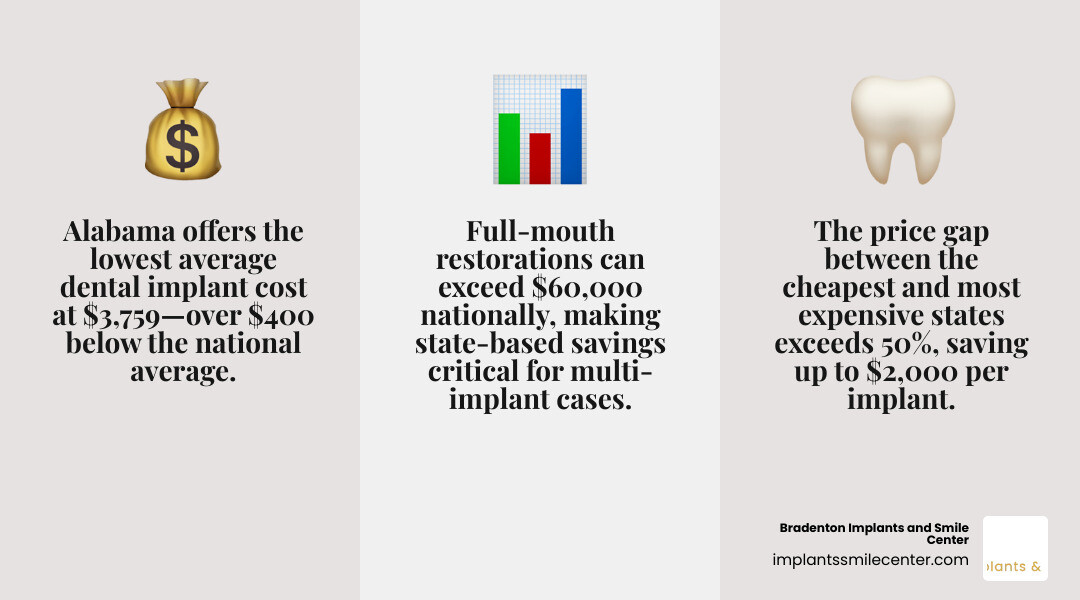
The gap between the cheapest and most expensive states is over 50% — meaning the same implant can cost nearly $2,000 more depending on where you live.
That's not a small difference. For patients needing multiple implants or full-arch restoration, those savings can run into the tens of thousands of dollars.
Dental implants are already one of the bigger investments in restorative dentistry. A single implant averages $4,200 nationally, and a full mouth of replacement teeth can exceed $60,000. For adults on fixed incomes or dealing with limited insurance, that price tag can feel impossible — even when the need is urgent.
But here's what most people don't realize: where you get your implants can matter just as much as which clinic you choose.
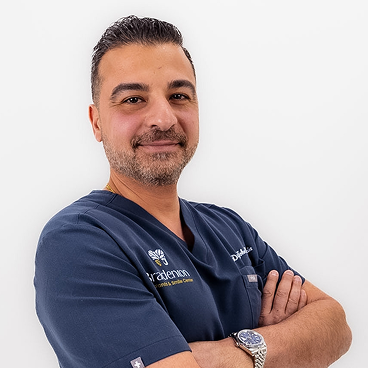
I'm Dr. John Hegazin, owner of Bradenton Implants and Smile Center, with over 8 years of experience in implant dentistry — including helping patients navigate the real costs of treatment and find solutions that fit their budgets. Understanding which is the cheapest state for dental implants is one of the first things I help patients think through when cost is a barrier to care.
The Cheapest State for Dental Implants: 2026 Cost Rankings
When we look at the national landscape of dental care in 2026, the geographic price differences are staggering. According to comprehensive pricing data aggregated from over 22,876 clinics across all 50 states, the national average cost for a single dental implant (including the post, abutment, and crown) sits right around $4,200.
However, if you know where to look, you can find regional pricing that is significantly lower. The deep South and parts of the Midwest consistently offer the lowest out-of-pocket costs for dental procedures. If you are searching for the absolute Cheapest Places for Dental Implants in USA | 2025 Cost Ranking, states like Alabama, Mississippi, and Arkansas lead the pack.
State Average Cost (Single Tooth Implant) Cost Index Rating (National Baseline: 100) Alabama $3,759 76 Arkansas $3,200 - $3,800 78 Mississippi $3,800 79 West Virginia $3,850 81 Kentucky $3,900 82 Florida $4,250 101 California $5,733 116
As the data shows, the gap between the cheapest and most expensive states for out-of-pocket dental implants exceeds 140%. While a patient in California might pay close to $6,000 for a single turnkey implant, a patient in Alabama or Arkansas can easily find the same procedure performed for under $3,800.
Why Alabama is the Cheapest State for Dental Implants
Alabama regularly ranks as the single most affordable state for dental care. The average cost for a single dental implant in Alabama is $3,759, which is roughly 10% below the national average. In fact, for the raw titanium implant body alone, prices in Alabama can start as low as $1,790 before adding the abutment and crown.
This affordability is driven primarily by a lower cost of living and significantly lower practice overhead. Dentists in Alabama pay less for commercial real estate, professional liability insurance, and staff wages compared to their coastal counterparts. Because these operational costs are lower, local practices can pass those savings directly to their patients. To learn more about how these regional factors influence what you pay, check out our Affordable Dental Implants Guide 2026.
The Most Expensive States for Dental Implants
On the other end of the spectrum, states like California, Hawaii, and New York represent the absolute priciest markets for dental care. California claims the title of the most expensive state, with an average single dental implant cost of $5,733—about 37% above the national average. Hawaii is not far behind, with average single tooth implant costs reaching up to $3,565 for the implant body alone, and total turnkey costs often reaching up to $5,500.
In these high-cost states, dental practices face a perfect storm of expensive commercial rents, high state taxes, steep malpractice insurance premiums, and competitive labor markets. If you want to see a full breakdown of how your home state compares to these extremes, you can explore the Dental Implant Cost By State 2026 — Verified Prices, Procedures & Financing index.
Key Factors Driving Dental Implant Price Disparities

It is easy to look at these numbers and wonder: Is a dentist in California really twice as good as a dentist in Alabama? The short answer is no. Clinical talent exists in every corner of the country. The massive price swings have very little to do with clinical quality and almost everything to do with regional economics.
According to the US Dental Cost Index by State 2026: Cheapest & Priciest, cost of living explains roughly 70% of the price variation across different states. Let's look closer at the primary drivers behind these cost disparities.
Practice Overhead and Local Competition
Operating a dental practice is much like running any other brick-and-mortar business. A clinic in downtown Los Angeles or Honolulu faces astronomical rent, higher utility rates, and must pay competitive salaries to retain registered dental hygienists and assistants.
Furthermore, dentist density plays a major role. In states with a lower supply of dentists per capita, such as Arkansas (which has roughly 54 dentists per 100,000 residents compared to Massachusetts' 93), you might expect prices to rise due to lack of competition. However, because these states also have lower average household incomes, local clinics must keep their fees realistic and aligned with what the local population can afford.
Implant Materials and Technology
The specific materials and diagnostic tools used during your procedure also dictate the final price. A standard dental implant consists of three parts:
The Post: A titanium or zirconia screw that acts as the new tooth root.
The Abutment: A connector piece placed on top of the post.
The Crown: The custom-made artificial tooth that matches your natural teeth.
Using premium implant brands (like Straumann or Nobel Biocare) can increase the baseline cost of materials by up to 30% compared to high-quality value brands. Additionally, clinics that utilize state-of-the-art technology—such as 3D Cone Beam Computed Tomography (CBCT) scans for precise surgical placement—may charge higher diagnostic fees upfront, though this technology significantly reduces the risk of implant failure. For a deeper look at how material choices impact your bottom line, read our guide on the Cost of Dental Implants 2026.
Domestic Travel vs. Staying Local: Is It Worth the Trip?
With a price gap of nearly $2,000 per tooth between the cheapest and most expensive states, traveling across state lines for dental work sounds like a financial no-brainer. But before you book a flight to Alabama or Mississippi, it is critical to look at the logistics of "dental tourism" within the United States.
According to the Best (and Worst) States for $3k Dental Implants in 2025, traveling for a single implant rarely saves you money once you calculate the indirect costs. However, for major multi-implant cases or full-mouth restorations, domestic travel can yield massive net savings.
Calculating the Real Cost of Out-of-State Dental Care
A dental implant is not a single-day procedure; it is a multi-step journey that typically takes between 3 and 9 months to allow the implant to fuse with your jawbone (a process called osseointegration).
If you travel out of state, you must factor in the following expenses:
Multiple Round-Trip Flights or Gas: You will need at least 2 to 3 visits (consultation/placement, follow-up/uncovering, and final crown fitting).
Lodging and Meals: Hotel stays for several nights post-surgery.
Time Off Work: Lost wages from taking travel days.
Warranty and Complications: If an issue arises or the implant feels uncomfortable, returning to an out-of-state provider quickly becomes expensive and stressful.
If you are only replacing one tooth, the $1,500 you save on the procedure can easily be swallowed by travel expenses. However, if you live in a high-cost area and need extensive work, bundling multiple implants into a single travel itinerary can be highly cost-effective.
Finding the Cheapest State for Dental Implants for Full-Mouth Procedures
For patients who require full-mouth restorations—such as All-on-4 or All-on-6 dental implants—the savings of traveling to a lower-cost state become undeniable.
While a full-arch restoration can cost upwards of $30,000 per jaw in high-cost states, the same procedure in more affordable regions can cost significantly less. If you are facing extensive tooth loss, we highly recommend reading our Ultimate Affordable Full Mouth Dental Implants Guide to compare your options and understand the structural differences between full-arch solutions.
Alternative Ways to Save on Dental Implants
If traveling to the cheapest state for dental implants is not feasible for you, there are several highly effective ways to secure affordable care without leaving your region.
Dental Schools and Teaching Clinics
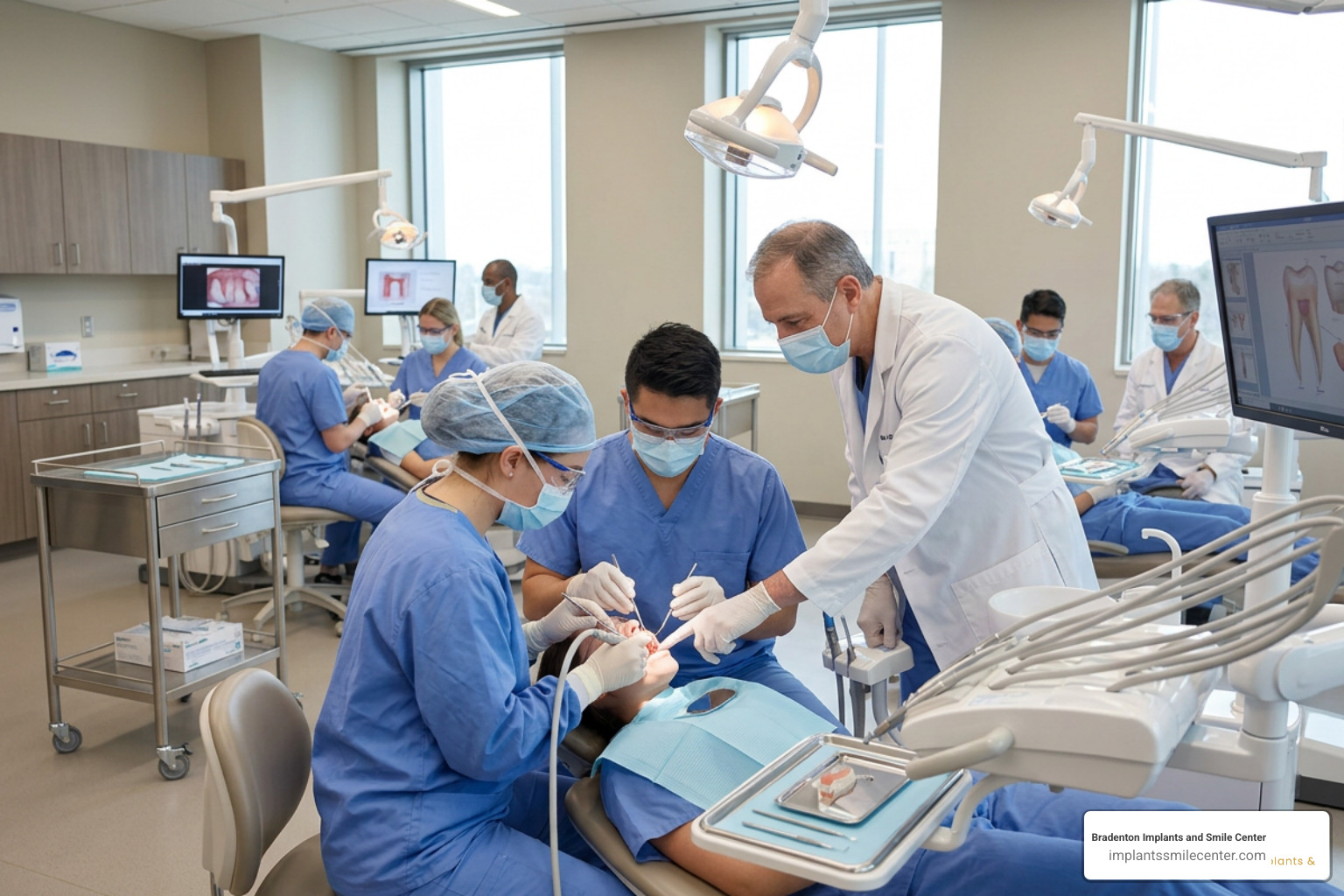
One of the best-kept secrets in affordable dentistry is university dental schools. Because these clinics are educational institutions, they operate on a non-profit basis, charging patients primarily for materials rather than labor.
At a dental school, your procedure is performed by dental students or specialty residents under the direct, step-by-step supervision of licensed, highly experienced prosthodontists or oral surgeons. This option can easily save you 40% to 60% off private practice rates. The only trade-off is time: appointments at dental schools take longer and require more visits due to the rigorous oversight process. If you are a senior citizen looking for structured savings like this, explore our resources on Senior Affordable Dental Implants.
Financing, Grants, and Payment Plans
Most patients do not pay for dental implants entirely out-of-pocket all at once. Modern dental offices offer a variety of flexible payment options to break the total cost down into manageable monthly installments:
Healthcare Credit Cards: Options like CareCredit often provide 6- to 24-month promotional periods with 0% interest.
Personal Dental Loans: For those concerned about credit history, you can look into Dental Loans with No Credit Check to secure immediate funding.
Government and Non-Profit Assistance: While traditional Medicare does not cover implants, some state-level programs or specialized grants may assist. You can read more about these options in our guide on Government Loans for Dental Work.
Frequently Asked Questions About Dental Implant Costs
Is it cheaper to pay cash for dental implants?
Yes, in many cases. Because processing credit cards and filing dental insurance claims require administrative time and fees, many dental practices offer a 10% to 20% discount if you pay in full with cash or check upfront. However, if you have dental insurance, it is always wise to maximize your benefits first. Many modern plans will cover at least 50% of the crown portion, even if they classify the titanium post as elective. To see how cash discounts compare to insurance coverage, check out our detailed analysis of Dental Implants Cost.
Does dental insurance cover out-of-state dental implants?
Generally, yes—provided your insurance plan includes out-of-network benefits or the out-of-state clinic is a participating provider in your insurance network. Before traveling, always ask the clinic to submit a "pre-treatment estimate" to your insurer. This ensures you know exactly what your out-of-pocket responsibility will be before any surgery begins. Keep in mind that most dental insurance plans have an annual maximum cap of $1,500 to $2,500, which will only cover a portion of a single implant.
How do I evaluate a low-cost provider to ensure quality?
When shopping for affordable dental implants, never let price be your only guide. To ensure you receive safe, long-lasting care, evaluate providers using this checklist:
Specialized Training: Ensure the dentist has specific postgraduate training in implantology (such as credentials from the AAID or ICOI).
Advanced Technology: Confirm they use 3D CBCT imaging for surgical planning.
Transparent Global Fees: Ask for an itemized, written quote that includes the implant, abutment, crown, and all follow-up visits so you don't get hit with surprise fees later.
Patient Reviews: Look for consistent, positive feedback regarding the clinic's cleanliness, communication, and long-term outcomes.
Conclusion
While finding the cheapest state for dental implants like Alabama or Mississippi can offer impressive savings on paper, the true cost of travel, lodging, and time away from home often erases those benefits for single-tooth procedures. The best approach is to find a high-quality, local provider who combines advanced technology with competitive local pricing and flexible financing.
At Bradenton Implants & Smile Center, located at 7270 55th Ave E, Bradenton, FL 34203, we provide personalized, compassionate restorative care utilizing state-of-the-art techniques. We understand that dental implants are a significant investment in your health and self-confidence, which is why we offer comprehensive financing options to fit your budget right here at home.
Ready to restore your smile with confidence? Schedule a consultation for dental implants with our experienced team today!