
Demystifying Dental Implant Charges: A Complete Pricing Guide
What Are Dental Implant Charges — And What Should You Expect to Pay?
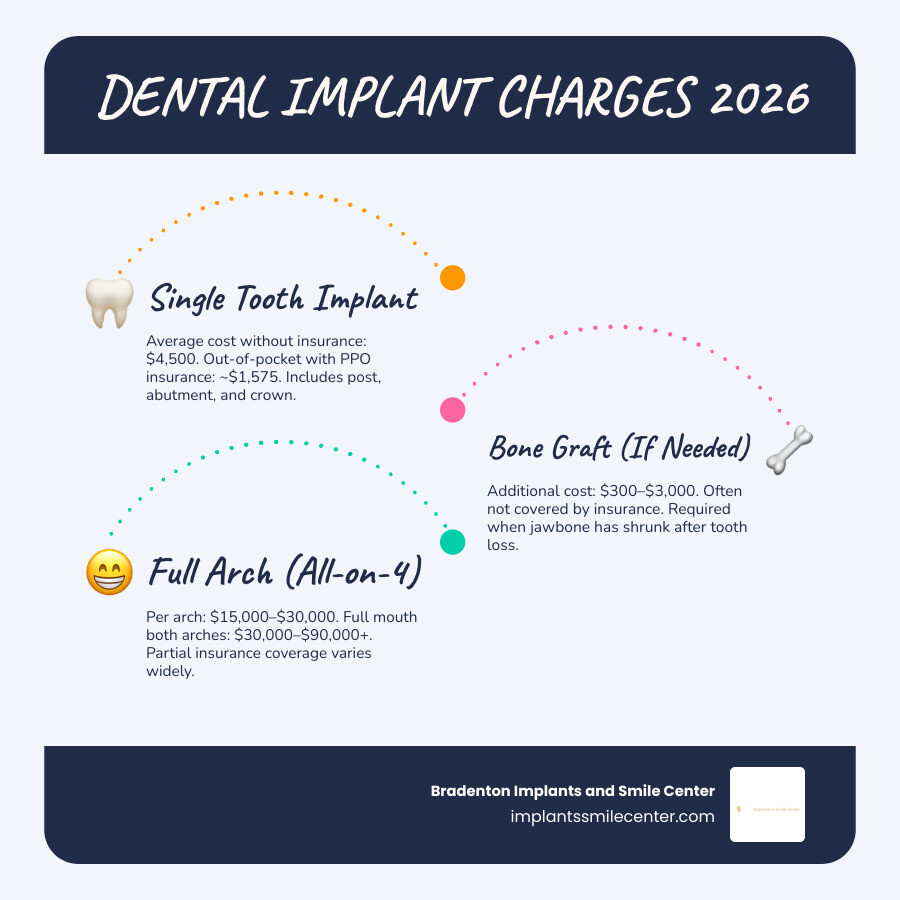
Dental implant charges in the United States typically fall within these ranges:
Treatment Type Average Cost (Without Insurance) Average Cost (With Insurance) Single tooth implant $2,800 – $6,500 (avg. $4,500) ~$1,575 out-of-pocket All-on-4 (per arch) $15,000 – $30,000 Partial coverage varies Full mouth (both arches) $30,000 – $90,000+ Partial coverage varies Bone graft (if needed) $300 – $3,000 extra Often not covered
These numbers assume a complete restoration — implant post, abutment, and crown. Many quotes you see advertised only cover part of that picture, which is where the confusion starts.
A missing tooth is not just a cosmetic problem. The bone underneath begins to shrink within months of tooth loss. Adjacent teeth start to shift. Your bite changes. The longer you wait, the more complex — and expensive — treatment becomes.
And yet, for many patients between 45 and 70, the sticker price feels overwhelming. You're weighing real money against real pain, and you deserve a clear, honest breakdown before making any decisions.
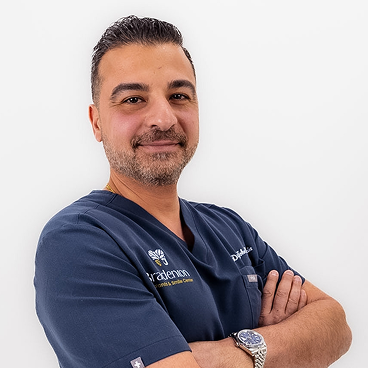
I'm Dr. John Hegazin, owner of Bradenton Implants and Smile Center, and over my 8+ years of experience in implant dentistry — including Teeth in a Day, full mouth restorations, and bone grafting — I've helped hundreds of patients understand exactly what drives dental implant charges so they can plan with confidence. In this guide, I'll walk you through every cost factor, from the surgical components to insurance coverage and financing options, so nothing catches you off guard.
What Determines Your Total Dental Implant Charges?
When you begin researching how to restore your smile, you will quickly notice that quotes can vary wildly from one practice to another. It can feel like trying to buy a car where every dealership lists a different price, but some dealerships are only quoting you for the engine while others include the wheels and seats.
At Bradenton Implants & Smile Center, we believe in complete financial transparency. The total fee you pay is not a random number; it is determined by several highly specific clinical and material factors.

First, the quality of the materials plays a massive role. The physical implant that integrates with your bone is typically made of medical-grade titanium or zirconia. Titanium has been the clinical gold standard for decades due to its exceptional strength and biocompatibility, boasting a long-term success rate of 95% to 98% over ten years. Zirconia, a metal-free ceramic alternative, is another option. However, zirconia implants typically command a price premium over titanium due to more complex manufacturing processes.
Second, your individual oral health dictates the complexity of the procedure. If you have been missing a tooth for several years, the surrounding jawbone has likely deteriorated. Placing an implant into healthy, dense bone is a straightforward process, but placing one into thin, compromised bone requires advanced preparatory work to ensure the implant does not fail.
Understanding these variables is the first step toward budgeting for your care. If you want to dive deeper into the general economics of this treatment, you can read more details on dental implants cost to see how individual health profiles shift the pricing scale.
Surgical Placement and Component Breakdown
To accurately compare dental quotes, you must understand that a complete single-tooth restoration is made of three distinct parts. If a clinic advertises an incredibly low price, they are almost certainly quoting you for only one of these components:
The Implant Post (Fixture): This is the titanium screw surgically placed into your jawbone. It acts as the new root for your tooth. Over a period of three to six months, your bone fuses with this post in a natural process called osseointegration.
The Abutment: This is the connector piece that screws into the top of the implant post. It sits right at the gum line and serves as the anchor for your new tooth.
The Prosthetic Crown: This is the custom-made, visible tooth that matches your natural teeth. It is cemented or screwed onto the abutment.
When you receive a quote, always ask if it is "all-in." A standard surgical fee for just the implant post (ADA code D6010) averages over $3,000 nationally, but that does not include the abutment or the crown. When you add those vital pieces, the national average for a complete single-tooth restoration rises to approximately $4,500. To see how these component fees are structured across different regions, you can review the national average implant costs registry.
Preparatory Procedures and Hidden Dental Implant Charges
The surgical placement of the implant is only part of the journey. Many patients require preparatory treatments before the implant can be safely anchored. These are often the "hidden" dental implant charges that catch patients off guard if they aren't detailed in the initial consultation:
Bone Grafting: A significant portion of implant patients require a bone graft to rebuild lost jawbone density. This procedure adds anywhere from $300 to $3,000 to your total, depending on whether it is a simple localized graft or a major reconstruction.
Sinus Lifts: If you need an implant in your upper back jaw, the sinus cavity may be too close to the bone. A sinus lift gently pushes the sinus membrane upward and inserts bone graft material, costing between $1,500 and $3,000.
Tooth Extractions: If the failing tooth is still in your mouth, it must be carefully extracted. Simple extractions cost $150 to $400, while surgical extractions can run higher.
3D CBCT Scans: Traditional 2D X-rays do not show bone volume or nerve pathways. A 3D Cone Beam Computed Tomography (CBCT) scan is essential for safe, guided surgery, typically costing $150 to $500. Skipping this scan is a massive clinical risk that can lead to nerve damage or implant failure.
To avoid surprises, always request an itemized treatment plan that explicitly states whether these preparatory steps are included. For a step-by-step look at how these preparatory phases fit into the surgical timeline, check out our guide to the dental implants procedure.
Single Tooth vs. Full-Mouth Dental Implant Costs
The scope of your tooth loss is the primary driver of your overall treatment plan. Replacing a single tooth is a localized, straightforward procedure, whereas replacing an entire arch of teeth requires a complex biomechanical design to support the forces of chewing.
To help you visualize the financial difference between these options, we have compiled a comparison of the most common restoration paths:
Restoration Type Typical Number of Implants Prosthetic Type Longevity Estimated Cost Range (Per Arch / Tooth) Single Tooth 1 Custom Ceramic Crown 20+ Years (Crown 10-15 years) $3,000 – $6,500 Implant-Supported Denture 2 to 4 Removable Overdenture (Snaps on) 10–15 Years $10,000 – $20,000 All-on-4 Fixed Bridge 4 Permanent Acrylic Hybrid Bridge 20+ Years $15,000 – $30,000 All-on-6 Fixed Bridge 6 Premium Zirconia Bridge 25+ Years $20,000 – $36,000
As you evaluate these options, remember to weigh the upfront cost against the long-term value. While a removable implant-supported denture is more budget-friendly upfront, a fixed All-on-4 bridge provides superior stability, prevents bone loss more effectively, and lasts significantly longer. For a comprehensive look at how these structures compare nationally, refer to our USA dental implant cost guide.
Single-Tooth Dental Implant Charges with and without Insurance
For a single-tooth replacement, the national average cost without insurance sits at $4,500. However, in the state of Florida, the average cost without insurance is slightly higher, hovering around $4,600.
If you have a quality dental PPO insurance plan, your out-of-pocket expenses can be substantially lower. On average, patients with dental benefits pay an out-of-pocket cost of approximately $1,575 to $1,610 for a single implant. This is because many insurance plans will cover up to 50% of the procedure, subject to their annual maximums and deductibles.
However, you must read the fine print of your policy. Some insurance companies cover the crown and abutment but completely exclude the surgical placement of the titanium post. To compare localized pricing indexes and see how insurance coverage shifts your final bill, you can consult the dental implant cost index.
Full-Mouth Restorations: All-on-4 and Implant-Supported Dentures
If you are missing most or all of your teeth, individual implants are rarely practical or affordable. Replacing 28 teeth with 28 individual implants would cost over $90,000 and require an unsustainable amount of healthy bone.
Instead, modern dentistry utilizes full-arch protocols:
All-on-4: This technique uses just four strategically angled implants to support a full, permanent arch of teeth. It bypasses the need for extensive bone grafting in most patients and costs between $15,000 and $30,000 per arch. Most patients pay around $20,000 to $25,000 for an acrylic hybrid bridge.
All-on-6: By using six implants instead of four, this option provides additional stability and is often paired with a premium zirconia bridge. It typically ranges from $20,000 to $36,000 per arch.
Implant-Supported Overdentures: This is the most affordable full-mouth option. It uses two to four implants to secure a removable denture. It snaps firmly into place so it won't slip when you eat or speak, but you can remove it at night for cleaning. This option costs $10,000 to $20,000 per arch.
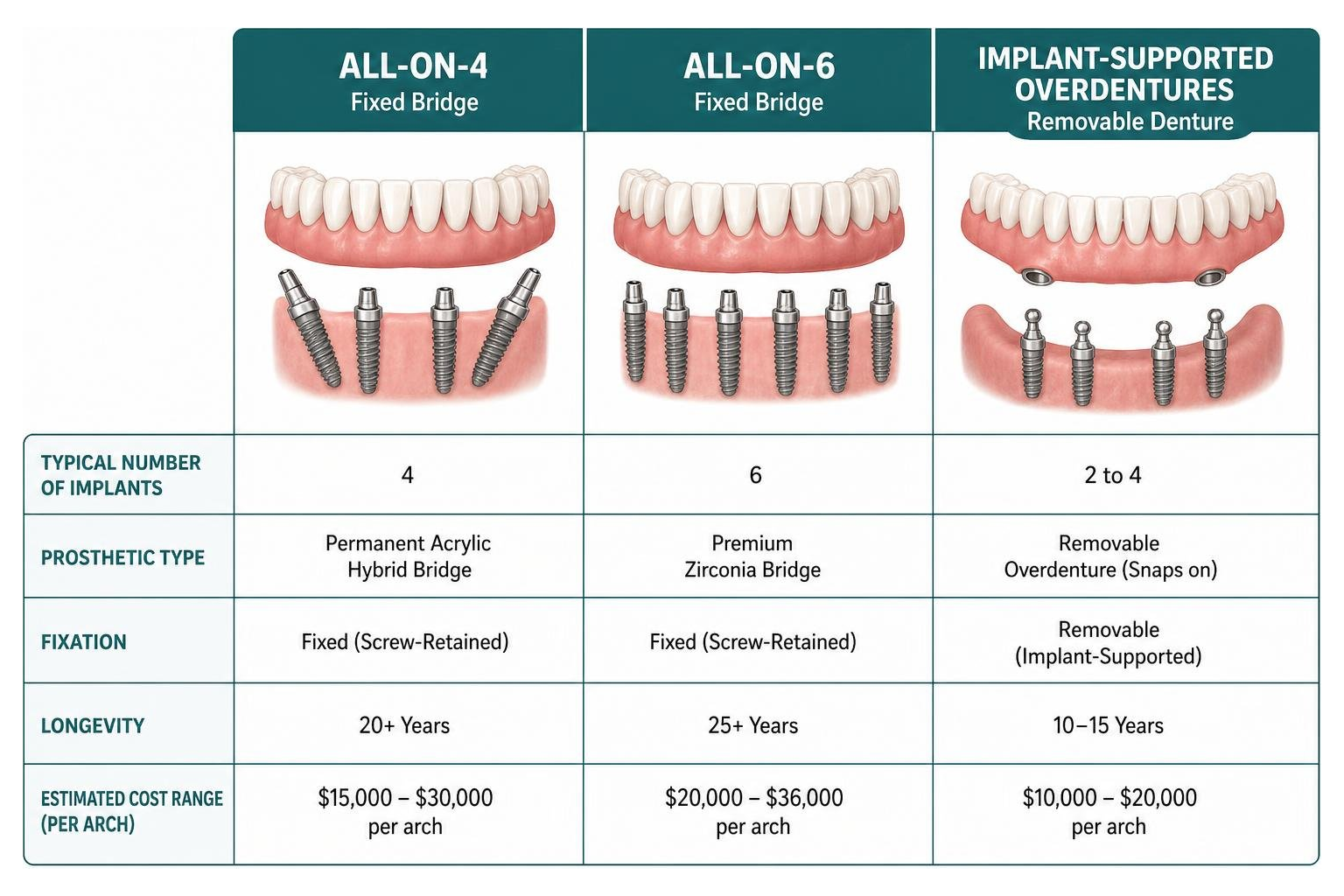
These options allow you to restore your entire smile, chew your favorite foods again, and regain your confidence without paying "Tesla money" for your mouth. For a detailed breakdown of full-arch pricing, check out our full mouth dental implants price guide, and use this interactive full arch cost calculator to estimate your specific treatment fees.
Geographic and Specialist Cost Variations
Where you live and who you choose to perform your surgery have a massive impact on your final bill.
Geographically, dental implant charges reflect the local cost of living and business overhead. For example, a single-tooth implant in high-cost San Francisco averages $6,100, whereas the same procedure in Memphis averages $3,200. Here in Florida, and specifically in the Bradenton and Sarasota area, pricing sits close to the national average, making high-quality care highly accessible.
Furthermore, the credentials of your provider influence the price. Many general dentists place dental implants, and they often charge lower surgical fees than specialists. However, complex cases involving severe bone loss or full-mouth reconstructions are often referred to specialists, such as oral and maxillofacial surgeons or prosthodontists. Because of their extra years of residency training and specialized focus, specialists typically charge more for surgical placement.
At Bradenton Implants & Smile Center, located at 7270 55th Ave E, Bradenton, FL 34203, we bridge this gap by offering advanced, specialist-level techniques—like Teeth in a Day and complex bone grafting—in a warm, personalized general practice setting. This allows our patients to access elite care without paying inflated metropolitan specialist rates. To see how provider types and regional economics influence pricing models across the country, you can read the pricing guide by city and provider type and explore our local cost of full mouth dental implants analysis.
Insurance, Financing, and Money-Saving Strategies
Because dental implants are a significant investment, most patients do not pay for them entirely out of pocket all at once. There are several highly effective, legitimate strategies you can use to make your treatment affordable.
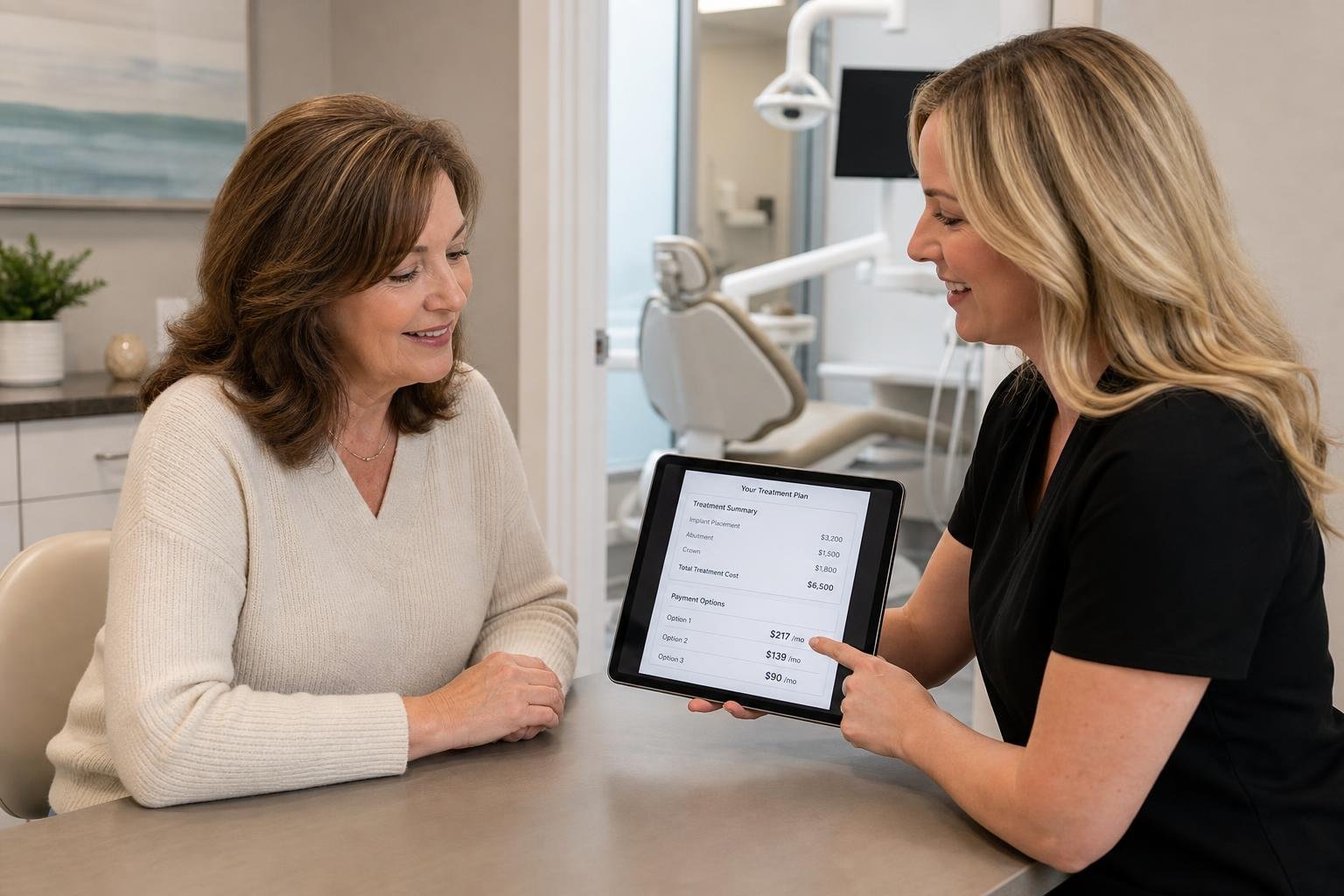
First, let's talk about insurance. Traditional dental insurance plans usually have an annual maximum benefit of $1,500 to $2,500. To maximize this, you can use a strategy called calendar-year splitting. If you schedule your surgical placement in November or December, you can apply your current year's insurance maximum to the surgical post. Then, you can schedule your abutment and crown placement in January of the following year, utilizing a brand-new year of insurance benefits. This simple scheduling trick can double your insurance savings.
Second, beware of the "missing tooth clause" in your policy. Some insurers will refuse to pay for an implant if the tooth was lost before you signed up for their plan. Always ask your office to submit a pre-treatment estimate to your insurance carrier so you know exactly what is covered before surgery begins.
Third, you can leverage tax-advantaged healthcare accounts to save on your out-of-pocket costs:
Health Savings Accounts (HSAs) and Flexible Spending Accounts (FSAs): These accounts allow you to pay for your implant procedure using pre-tax dollars. Because dental implants are classified as a medical necessity, they qualify for tax-free reimbursement.
Fourth, third-party financing is incredibly popular. Many implant patients use credit financing. Companies like CareCredit offer promotional interest-free periods of 6 to 24 months. However, a major word of caution: always pay off your balance before the promotional period ends. If you miss the deadline by even a single day, these companies will retroactively charge you interest rates of 26% to 29% APR on the original balance.
At Bradenton Implants & Smile Center, we work closely with you to navigate these financial pathways, offering flexible in-house payment options and helping you submit insurance claims to maximize your benefits. To explore more cost-reduction techniques, read our affordable dental implants guide and check out our resource on financing full mouth dental implants.
Frequently Asked Questions About Implant Costs
Navigating dental fees can feel overwhelming, but we are here to provide clear, straightforward answers to your most pressing questions.
Why do dental implant charges vary so much between clinics?
The primary reason for price variation is quote transparency. Some clinics artificially lower their advertised prices by quoting only the surgical placement of the implant post, omitting the essential abutment and crown. Once you add those required components, the price doubles. Other variations come from diagnostic scan fees, the brand of implant used, and whether the provider is a general dentist or a specialist. Always ask for an "all-in" written estimate before committing.
Does insurance cover the full cost of dental implants?
No, commercial dental insurance rarely covers the full cost. Most PPO plans treat implants as a major procedure, covering up to 50% of the cost, subject to your annual maximum (which usually caps out between $1,500 and $2,500). Furthermore, traditional Medicare and Medicaid do not cover dental implants, though some private Medicare Advantage plans may offer partial benefits.
How long do dental implants last compared to bridges?
Dental implants are designed to be a permanent, lifetime solution. The titanium post fuses directly with your jawbone and boasts a 95% to 98% success rate over ten years. While the crown on top may need to be replaced after 10 to 15 years due to normal wear, the implant itself can last decades. In contrast, a traditional dental bridge relies on grinding down two healthy neighboring teeth to support the fake tooth. Bridges typically last only 5 to 15 years and must be completely replaced, meaning implants are far more cost-effective over a 20-year period.
Conclusion
Investing in your smile is one of the most important decisions you will ever make. While dental implant charges represent a significant upfront financial commitment, they prevent progressive bone loss, protect your adjacent teeth from damage, and restore your ability to eat, laugh, and speak without worry.
At Bradenton Implants & Smile Center, we are dedicated to providing personalized, compassionate care using the latest modern dental technology. We work hard to ensure that high-quality, life-changing dental care fits comfortably within your family's budget.
If you are ready to stop hiding your smile and want a clear, honest, and personalized pricing plan, we invite you to take the first step. Visit us at 7270 55th Ave E, Bradenton, FL 34203, or schedule a consultation for dental implants with our friendly team today. Let us help you smile with confidence again!