

Brace Your Wallet: The Real Cost of Dental Implants in the USA
What Does a Dental Implant Actually Cost in the USA?
Dental implant cost in the USA is one of the most searched topics in dentistry — and for good reason. Prices vary wildly depending on where you live, what procedure you need, and how many teeth are being replaced.
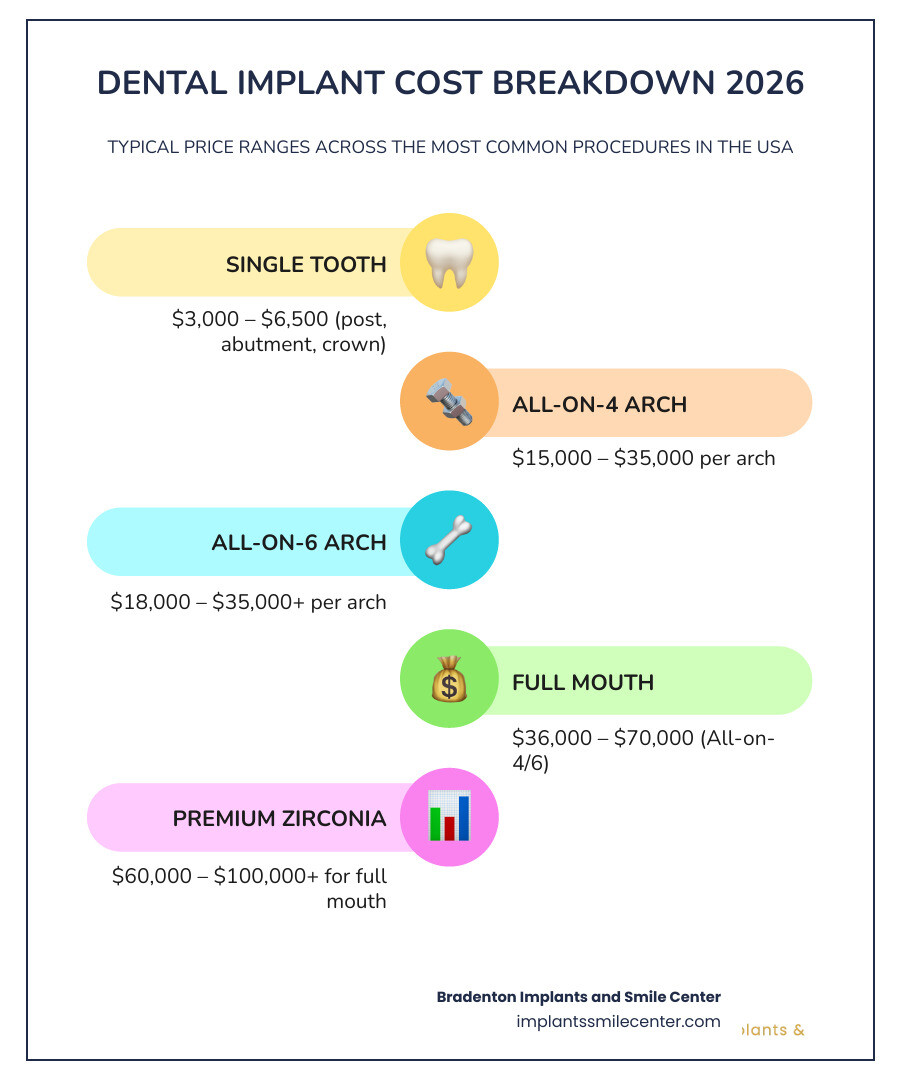
Here's a quick breakdown so you can plan your budget before reading further:
Procedure Typical Cost Range (2026) Single tooth implant (post + abutment + crown) $3,000 – $6,500 All-on-4 per arch $15,000 – $35,000 All-on-6 per arch $18,000 – $35,000+ Full mouth (both arches, All-on-4/6) $36,000 – $70,000+ Full mouth (zirconia, traditional) $60,000 – $100,000+ Implant-supported dentures (full mouth) $6,000 – $30,000
The national median cost for a complete single dental implant in 2025–2026 is around $4,000–$4,500, according to multiple industry sources. But that number doesn't tell the whole story — hidden fees, bone grafting, and your location can push the final bill much higher.
This guide walks you through every cost you should expect, how to use insurance and financing, and how to compare your options honestly.
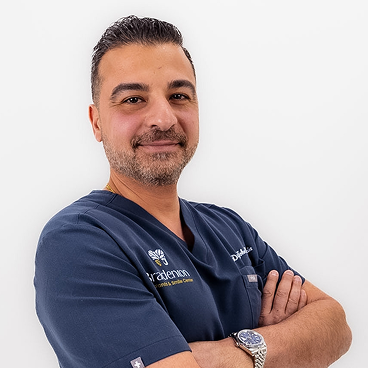
I'm Dr. John Hegazin, owner of Bradenton Implants and Smile Center, with over 8 years of hands-on experience in implant dentistry — including helping patients navigate the real dental implant cost in the USA from consultation to final restoration. I've seen how confusing pricing can be, so let's break it down clearly.
Understanding the Dental Implant Cost USA Patients Face in 2026
When patients ask us, "How much does a dental implant cost?" they are often surprised to learn that there isn't a single, flat fee. Unlike a standard filling or a simple extraction, a dental implant is a multi-stage surgical process that involves highly specialized materials and custom-made prosthetics.
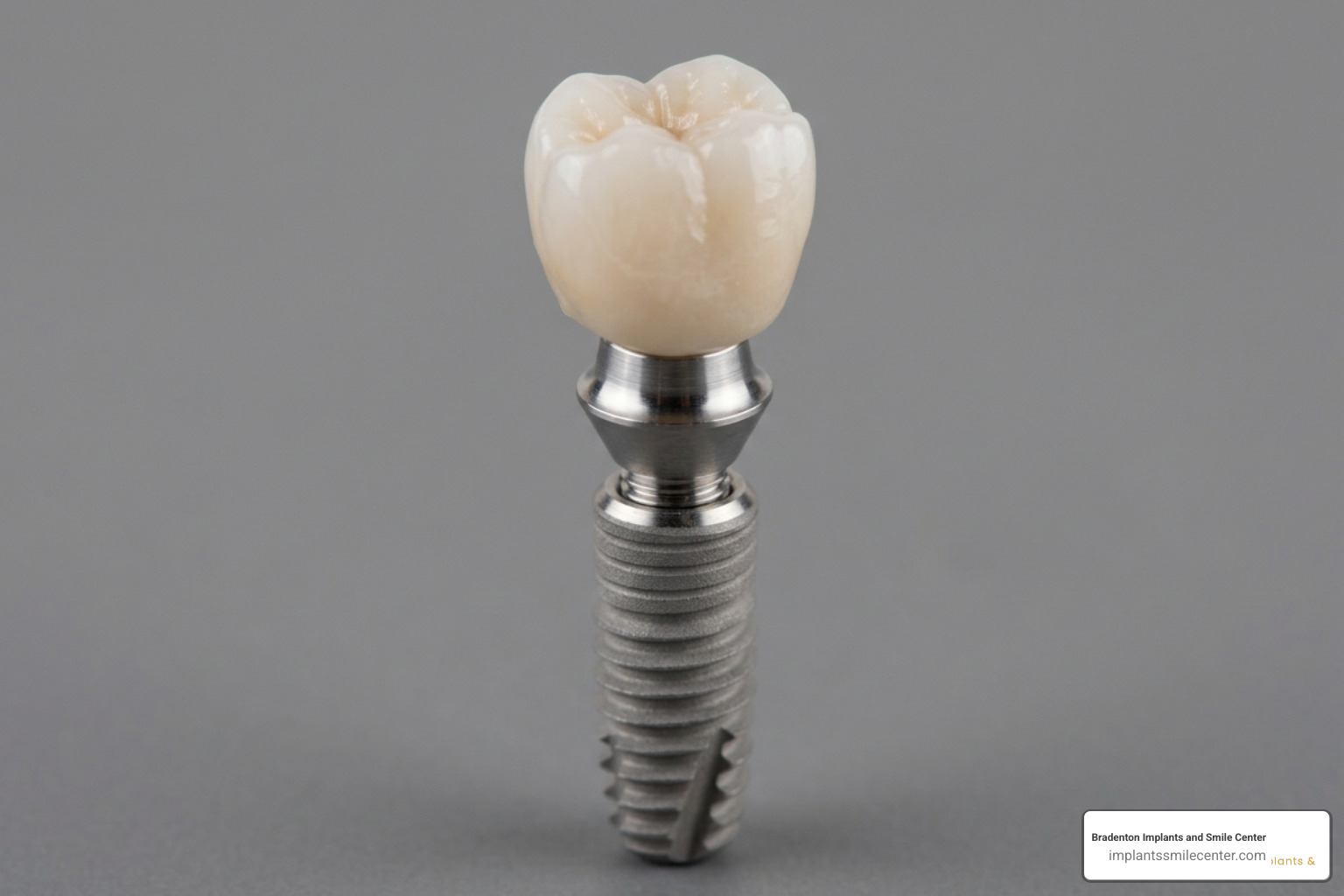
To understand the total dental implant cost in the USA, it helps to break the treatment down into its individual components. A complete single-tooth replacement is made up of three distinct parts, and each carries its own cost:
The Implant Post (The "Root"): This is a biocompatible titanium or zirconia screw surgically placed into your jawbone. It acts as the artificial root. On its own, the post typically costs between $1,500 and $2,500.
The Abutment (The "Connector"): This is a small metal collar or connector piece that screws into the implant post and holds the final crown in place. The abutment generally costs between $300 and $600.
The Dental Crown (The "Tooth"): This is the visible, custom-shaded porcelain or zirconia tooth that sits on top of the abutment. A high-quality implant crown ranges from $1,000 to $3,000.
Many dental practices advertise "low-cost implants" only to reveal later that their price only covers the surgical placement of the post. To get an accurate estimate, you can use tools like the Dental Implant Cost Calculator (2026) | CostFigure to benchmark national averages, or read more in-depth reviews on More info about dental implants cost and More info about cost of dental implants in 2026.
Single-Tooth Dental Implant Cost USA Averages
For a single missing tooth, the national average total cost (including the surgical post, abutment, and crown) ranges from $3,000 to $6,500 per tooth in 2026.
If you are replacing a single tooth, this is typically a straightforward, highly successful procedure with a success rate of up to 98%. Because the implant fuses directly with your jawbone through a process called osseointegration, it actively prevents the bone loss that naturally occurs when a tooth is lost. This long-term health benefit is why many dental professionals consider implants the gold standard of restorative dentistry. For a complete breakdown of the timeline, surgical steps, and what to expect, check out this More info about dental implants complete guide.
Full-Mouth Dental Implant Cost USA Options
If you are missing most or all of your teeth, replacing each individual tooth with its own implant post is neither practical nor affordable. Instead, we use full-mouth or full-arch implant solutions to restore your entire smile using just a few strategically placed posts.
All-on-4 and All-on-6 Implants: This technique uses four or six titanium implants per arch to support a full, fixed bridge of permanent teeth. It typically costs $15,000 to $35,000 per arch. For both the upper and lower arches (a full-mouth restoration), patients generally pay between $36,000 and $70,000+.
Traditional Zirconia Bridges: If you want the absolute highest tier of durability and aesthetics, a custom-milled zirconia bridge supported by implants is the premium choice. These solutions range from $30,000 to $60,000+ per arch, or up to $100,000+ for a full-mouth reconstruction.
Implant-Supported Dentures (Snap-on Dentures): This is a highly cost-effective alternative. Instead of a fixed bridge, your existing or new dentures "snap" onto two to four implant posts. This option costs $3,000 to $15,000 per arch ($6,000 to $30,000 for a full mouth), offering a massive improvement in stability over traditional, loose dentures.
To explore these full-arch options in greater detail, you can read More info about full mouth dental implants complete guide, compare total pricing at More info about dental implants full mouth price, and review the structural differences in More info about full arch implants cost.
Key Factors and Hidden Fees That Drive Up the Price
When comparing dental implant estimates, you will quickly notice that no two mouths—and no two quotes—are exactly alike. Several clinical and geographical factors heavily influence the final number on your treatment plan.

The primary cost drivers include:
Surgeon Experience and Specialty: Procedures performed by highly trained specialists (such as periodontists, oral surgeons, or prosthodontists) may carry a higher surgical fee than those performed by general dentists. However, choosing an experienced specialist significantly reduces the risk of implant failure and the need for costly revision surgeries. Interestingly, a study published in Dental Economics on A comparative analysis of dental implant costs across major US markets | Dental Economics noted that specialist-led procedures can sometimes be more economically structured overall due to clinical efficiency and specialized in-house equipment.
Implant Materials and Brand: Premium implant systems (like Straumann or Nobel Biocare) have decades of clinical research backing their success rates, but they cost more than value-tier brands. Additionally, final crowns or bridges made from solid zirconia are more expensive than acrylic or composite options.
Pre-Surgical Needs: If you have been missing teeth for several years, your jawbone may have deteriorated. In these cases, you will need preparatory procedures to build a stable foundation for the implant.
For a deeper look into the surgical steps and clinical requirements, consult this More info about dental implants procedure complete guide.
Geographic Location and State-by-State Variations
The cost of living, local real estate prices, and dentist density in your area play a massive role in what you pay. For example, high-cost metropolitan areas in California or New York see average single-implant prices climb past $5,700. Conversely, states with a lower cost of living, such as Alabama, Arkansas, and Mississippi, offer some of the lowest average prices, often starting around $3,700.
For patients living in Florida, the average cost of a single implant sits comfortably near the national average. To see how different regions stack up and find the most affordable areas, read More info about cheapest state for dental implants.
Essential Pre-Surgical Procedures and Hidden Fees
When reviewing an implant quote, always ask if it is an "all-inclusive" estimate. Many low-priced advertisements hide necessary pre-surgical costs that are billed separately:
Initial Consultation & 3D Imaging: A comprehensive exam and a 3D CBCT scan are required to map your jawbone and plan the surgery. This typically costs $400 to $900.
Tooth Extractions: If the damaged tooth is still in place, it must be extracted. Simple extractions cost $150 to $500, while surgical extractions can run higher.
Bone Grafting: If your jawbone lacks the density to support an implant, a bone graft is performed. This adds $500 to $3,000 per site.
Sinus Lift: If you need implants in your upper jaw and your sinus cavity is too close to the bone, a sinus lift is required, costing $1,500 to $5,000.
Sedation and Anesthesia: Local anesthesia is usually included, but if you prefer nitrous oxide, oral conscious sedation, or IV sedation, expect to add $500 to $2,500 to your bill.
Insurance, Financing, and Ways to Save on Your Treatment
Because dental implants are highly customized, multi-step surgical procedures, finding ways to manage the out-of-pocket cost is a top priority for most patients.
Fortunately, there are several strategic ways to make treatment highly affordable. To explore your options, read More info about affordable dental implants complete guide and More info about best low cost dental implants.
Navigating Dental Insurance and HSA/FSA Benefits
While many basic dental insurance plans historically labeled implants as "cosmetic" or "elective," many modern plans in 2026 cover a portion of the treatment.
Typically, dental insurance will cover up to 50% of major restorative procedures, including the implant crown or the initial extraction. However, the biggest hurdle is your plan's annual maximum benefit, which usually caps out between $1,000 and $2,500 per year.
The Two-Year Strategy: If you need a single implant, you can maximize your insurance benefits by splitting the treatment across two calendar years. For example, you can have the extraction and bone grafting done at the end of one year (using that year's annual maximum), and have the implant post placed and crowned at the start of the next year (utilizing a fresh annual maximum).
Using Pre-Tax Dollars: You can use your Health Savings Account (HSA) or Flexible Spending Account (FSA) to pay for dental implants. Because these accounts use pre-tax dollars, this strategy can instantly save you 20% to 30% on your total treatment cost, depending on your tax bracket.
Flexible Financing and Affordable Alternatives
If you do not have insurance or still face a high out-of-pocket balance, you don't have to put off your treatment. Delaying an implant can lead to further bone loss, which only increases the complexity and cost of your future procedure.
Third-Party Medical Financing: Services like CareCredit, Proceed Finance, and LightStream offer specialized dental and medical loans. Many of these programs offer 0% promotional interest rates for 6 to 24 months, allowing you to split your payment into manageable monthly installments.
Dental Savings Plans: Also known as dental discount plans, these are membership-based programs that save you 10% to 50% on dental procedures at participating clinics for a low annual fee.
Dental Schools: If you live near a university dental school, you can receive high-quality implant care performed by dental students or residents under the direct supervision of board-certified specialists. This can reduce your overall costs by 30% to 60%.
To learn more about structuring payments and securing financing, read More info about financing full mouth dental implants guide, explore More info about dental loans with no credit check, and find More info about dentists that do payment plans.
Long-Term Value: Implants vs. Bridges and Dentures
When comparing the upfront price of a dental implant to alternatives like a traditional dental bridge or removable dentures, implants can look intimidating. However, when you look at the total cost of ownership over a 10- to 20-year period, dental implants are almost always the most cost-effective and health-conscious choice.
Feature Dental Implants Traditional Dental Bridge Removable Dentures Upfront Cost Moderate to High ($3k–$6k) Moderate ($2k–$5k) Low to Moderate ($1k–$4k) Lifespan 20–30+ years (often lifetime) 5–15 years (requires replacement) 5–8 years (requires replacement) Jawbone Preservation Yes (stimulates bone growth) No (bone deteriorates over time) No (accelerates bone loss) Impact on Adjacent Teeth None (stands independently) High (requires grinding down healthy teeth) Moderate (clasps can wear down teeth) Daily Maintenance Brush and floss like natural teeth Special cleaning under the bridge Must be removed and soaked nightly 20-Year Estimated Cost $3,000 – $6,500 (one-time investment) $6,000 – $15,000 (due to 1-2 replacements) $5,000 – $12,000 (due to relines and replacements)
Traditional bridges require grinding down the enamel of the healthy adjacent teeth to anchor the bridge, which permanently damages those teeth and makes them more susceptible to decay. Dentures do not stimulate the jawbone, leading to facial sagging and a loose fit over time that requires painful adjustments and expensive relining.
To understand why so many patients choose permanent replacements, read More info about permanent teeth implants and More info about affordable permanent teeth.
Frequently Asked Questions About Dental Implant Costs
Understanding dental costs is the first step toward reclaiming your smile. Here are clear answers to the most common questions patients ask.
What is the average cost of a single dental implant in 2026?
The average total cost of a single dental implant in the United States in 2026 ranges between $3,000 and $6,500. This comprehensive price includes the three primary components: the surgical titanium implant post, the custom abutment, and the final porcelain or zirconia crown. If preparatory procedures like extractions, bone grafting, or 3D imaging are required, the total price may increase.
Does dental insurance cover the cost of full-mouth implants?
Most standard dental insurance plans do not cover the entire cost of full-mouth implants because they cap annual benefits at $1,000 to $2,500. However, many plans will provide partial coverage (often up to 50%) for specific restorative aspects of the procedure, such as the initial extractions, the temporary prosthetics, or the final bridge. Some Medicare Advantage plans may also offer limited dental benefits that help offset the cost.
Are there legitimate ways to get dental implants under $10,000?
Yes. If you need a full-mouth restoration but have a strict budget, implant-supported snap-on dentures are a highly reliable option that can often be completed for under $10,000 per arch. Additionally, receiving care at a university-affiliated dental clinic can save you 30% to 60% on treatment. You can find more practical budgeting strategies in More info about dental implants under 10000 and More info about cheap full mouth dental implants.
Conclusion
Investing in your smile is one of the most important decisions you will ever make for your health, confidence, and quality of life. While the dental implant cost in the USA can seem significant at first glance, understanding the components, planning for pre-surgical needs, and utilizing smart financing can make this life-changing treatment completely accessible.
At Bradenton Implants & Smile Center, we specialize in providing personalized, compassionate care using state-of-the-art dental technology. Located at 7270 55th Ave E, Bradenton, FL 34203, our team is dedicated to helping adults and seniors in our community find comfortable, affordable, and permanent tooth replacement solutions. We offer flexible financing options and customized treatment plans tailored to your unique budget and goals.
Don't let missing teeth hold you back any longer. Schedule a consultation for dental implants with us today, and let's work together to restore your smile and your confidence!