
The Definitive Guide to Dental Implants
Why Dental Implants Are the Gold Standard for Missing Teeth
Dental implants are small titanium posts surgically placed into the jawbone to replace missing tooth roots — and they're widely considered the most durable, natural-feeling tooth replacement option available today.
Quick answer: What are dental implants?
Feature Detail What they are Titanium posts that replace tooth roots in the jaw Main parts Implant post, abutment, and crown Best for One or more missing teeth in adults with adequate bone Success rate Up to 98% with proper care How long they last Potentially a lifetime with good oral hygiene Typical process 3–9 months from surgery to final crown
Tooth loss affects far more than your smile. It can make eating difficult, change the shape of your face over time, and take a real toll on your confidence — especially as you get older. For adults dealing with missing or damaged teeth, finding a solution that actually lasts matters.
The good news? Modern restorative dentistry has made it possible to replace missing teeth in a way that looks, feels, and functions almost exactly like the real thing.
I'm Dr. John Heghinian, owner of Bradenton Implants and Smile Center, with over 8 years of experience placing dental implants and restoring smiles using advanced techniques and technology. In this guide, I'll walk you through everything you need to know — from how implants work to what recovery looks like and whether they're right for you.
What Are Dental Implants and How Do They Work?
To understand why dental implants are so highly recommended, it helps to look at the science behind how they interact with your body. Unlike traditional tooth replacement options that sit on top of your gums, an implant is surgically embedded directly into your jawbone.
This brings us to a fascinating biological phenomenon called osseointegration. Discovered serendipitously by Dr. Per-Ingvar Brånemark, osseointegration is the process where your natural bone tissue grows into and fuses directly with the surface of the implant. Because titanium and certain ceramics (like zirconium oxide) are highly biocompatible, your body does not recognize them as foreign objects. Instead, it accepts them, creating a rigid, permanent bond with no intervening tissue.
According to the FDA Dental Implant Guide, these systems are evaluated strictly for safety and biocompatibility, ensuring they provide a stable foundation that can withstand the intense mechanical pressures of daily chewing.
Historically, humans have tried to replace missing teeth for centuries. In fact, archaeological evidence shows that around 600 AD, the ancient Mayan population used pieces of carved shells as early endosteal implants! Thankfully, our modern materials are far more comfortable and scientifically backed.

Understanding the Anatomy of Dental Implants
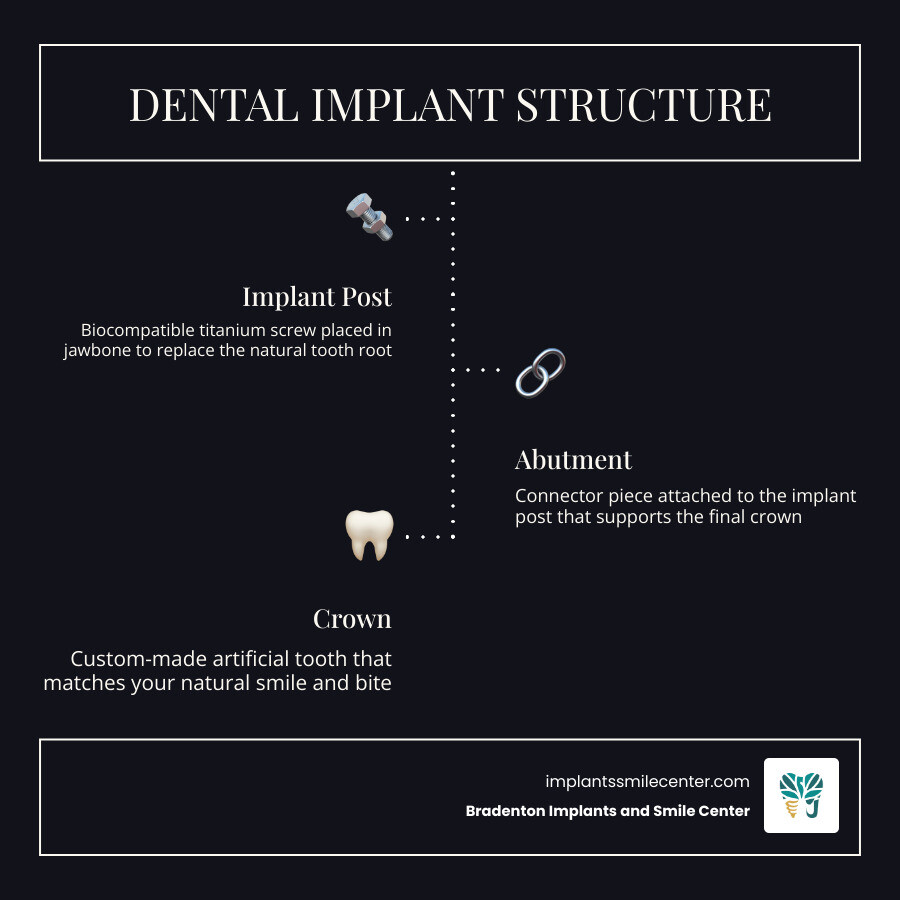
A complete dental implant system is not just a single artificial tooth. It is actually made up of three distinct, highly engineered components:
The Implant Post (or Body): This is the small, threaded screw that we surgically place into your jawbone. It acts as the substitute root for your missing tooth.
The Abutment: This is the connector piece. Once the post has successfully fused with your bone, the abutment is attached to the top of the post. It acts as a customized bridge that ensures proper alignment and bite function.
The Restoration (Crown, Bridge, or Denture): This is the visible, custom-designed tooth portion. It is meticulously crafted to match the color, shape, and size of your surrounding natural teeth, restoring over 99% of your natural biting and chewing power.
At Bradenton Implants & Smile Center, we specialize in customizing each of these parts to fit your unique anatomy, ensuring your Tooth Replacement looks and feels entirely natural.
Conditions Treated and Types of Implants
We use dental implants to treat a wide variety of clinical situations, including:
Single Tooth Loss: Replacing one missing tooth without altering or grinding down the neighboring healthy teeth (which is required for a traditional bridge).
Partial Edentulism: Replacing multiple missing teeth in a row using an implant-supported bridge.
Complete Edentulism: Replacing an entire arch of upper or lower teeth. Instead of loose, slipping dentures, we can anchor a full set of teeth securely using advanced Full Mouth Dental Implants protocols.
Depending on your jawbone health, we typically choose between two primary types of implants:
Endosteal Implants: This is the most common type. These implants are placed directly into the jawbone, piercing only one cortical plate, and are ideal for patients with healthy, dense bone.
Subperiosteal Implants: These implants rest on top of the jawbone but under the gum tissue. They are sometimes used for patients who do not have enough healthy jawbone and cannot undergo a bone grafting procedure.
The Step-by-Step Surgical Process
Getting a dental implant is a multi-stage journey designed to prioritize precision, safety, and long-term success.
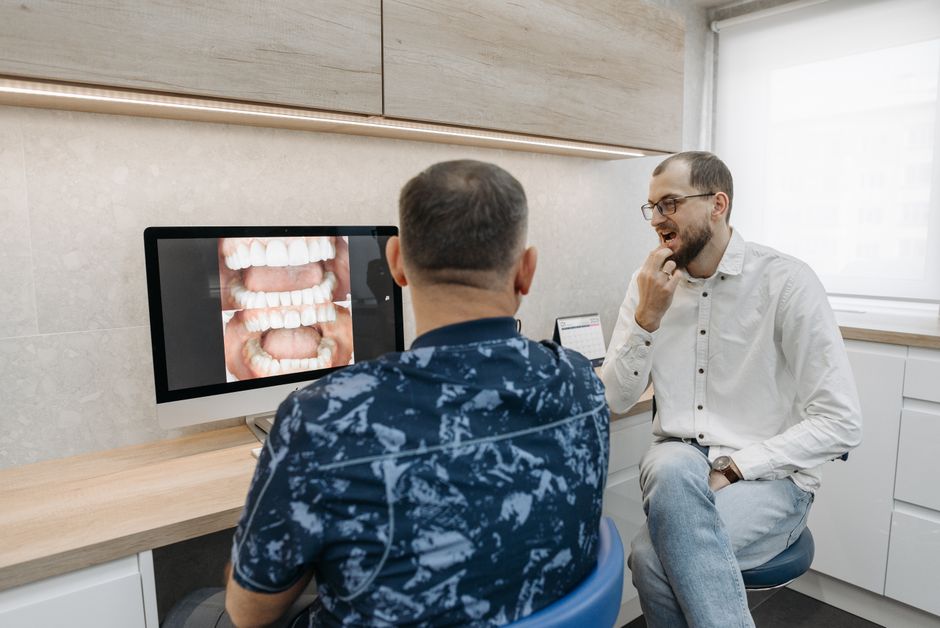
The process begins with a comprehensive consultation and treatment planning phase. We perform a full dental exam and utilize state-of-the-art 3D cone-beam CT (CBCT) scans. This imaging allows us to evaluate your bone volume, map out anatomical landmarks like the mandibular canal (which houses the inferior alveolar nerve) and the maxillary sinuses, and plan the exact angle and depth of your implant before the surgery even begins. For details on how specialized surgical planning protects surrounding anatomy, you can refer to the Mayo Clinic Dental Implant Surgery guide.
The Surgical and Healing Phases
Once the treatment plan is finalized, the surgical journey unfolds in carefully managed stages:
Tooth Extraction & Site Preparation: If the damaged tooth is still present, we gently extract it.
Bone Grafting (If Needed): If your jawbone is too thin or soft to support an implant, we perform Bone Grafting. This process uses natural or synthetic bone materials to build a solid, stable foundation.
Implant Placement (Osteotomy): Using a highly precise, sterile protocol, we create a small channel in the bone. A critical clinical detail during this step is maintaining a bone temperature below 47°C using copious cool saline irrigation; exceeding this temperature can cause bone necrosis and lead to implant failure.
Anesthesia and Comfort: To ensure the procedure is completely painless, we offer local anesthesia as well as customized sedation options. Many of our patients choose IV Sedation Dental Implants to drift comfortably through their appointment with zero anxiety.
Osseointegration (The Waiting Period): After the post is placed, we allow three to nine months for the bone to grow and fuse around it. In select cases, we can offer Teeth in a Day, allowing you to walk out with a temporary functional restoration on the very same day as your surgery.
Abutment and Final Crown Placement: Once osseointegration is complete, we attach the abutment and take detailed impressions to create your final, beautiful porcelain crown.
How to Care for Your Dental Implants
Caring for your new implant is remarkably simple because it behaves just like a natural tooth. While titanium cannot decay or get cavities, the surrounding gum and bone tissue can still fall victim to infection if neglected.
To ensure your Permanent Teeth Implants last a lifetime, we recommend the following daily routine:
Brush your teeth at least twice a day using a soft-bristled toothbrush.
Floss daily, using specialized implant floss or a power water flosser.
Clean hard-to-reach areas around the abutment using a specially designed interdental brush.
Avoid chewing on incredibly hard items like ice, hard candy, or pens, which can chip the porcelain crown.
Schedule regular professional cleanings and check-ups with us twice a year so we can monitor the health of your bone and gums.
Benefits, Risks, and Candidacy
When evaluating tooth replacement options, it is helpful to look at how modern implants compare to older, traditional alternatives.
According to the StatPearls Dental Implants Research, dental implants have an outstanding clinical track record, with success rates exceeding 95% to 98% over a 10-year period when placed by trained specialists.
Here is a direct comparison of your options:
Feature Dental Implants Fixed Dental Bridges Removable Dentures Average Lifespan 25+ years (often a lifetime) 10 to 15 years 5 to 7 years Jawbone Preservation Yes (actively stimulates bone) No (bone resorbs over time) No (accelerates bone loss) Impact on Adjacent Teeth None (completely independent) High (requires grinding down teeth) Moderate (clips can wear down teeth) Biting & Chewing Power Over 99% (feels entirely natural) Around 70% to 80% Only 20% to 30% Maintenance Normal brushing and flossing Special flossing under bridge Must be removed and soaked
Benefits vs. Other Tooth Replacement Options
The primary advantage of choosing Affordable Permanent Teeth is the preservation of your facial structure. When you lose a tooth, the lack of stimulation causes your jawbone to naturally shrink (resorb) over time. This bone loss can lead to a collapsed, aged facial appearance, wrinkles around the mouth, and shifting teeth. Implants are the only dental restoration that mimics natural tooth roots to stimulate bone growth and prevent this shrinkage.
Risks, Complications, and Candidacy Criteria
While the success rate is incredibly high, dental implant placement is still a surgical procedure, meaning there are some risks to keep in mind:
Peri-implantitis: An inflammatory condition caused by bacteria, similar to gum disease, which can lead to bone loss around the implant if oral hygiene is poor.
Nerve Damage: If an implant is placed too close to the mandibular canal, it can cause temporary or permanent numbness in the lip, chin, or tongue. This is why we set our surgical landmarks conservatively (at least 2mm above the canal) using 3D CBCT scans.
Sinus Issues: Implants placed in the upper jaw can sometimes protrude into the sinus cavities if there is insufficient bone height, which we prevent using sinus lifts or shorter implants.
Who is a good candidate? An ideal candidate has good overall health, healthy gum tissues free of active periodontal disease, a fully grown jawbone (typically age 18 or older), and sufficient bone density to support the post.
Who should proceed with caution or avoid implants?
Smokers and Vapers: Nicotine constricts blood vessels and severely delays healing. Smokers have roughly twice the risk of implant failure compared to non-smokers (an 11% failure rate versus just 5%).
Uncontrolled Chronic Illnesses: Conditions like uncontrolled diabetes or severe cardiovascular disease can impair the body's ability to heal and integrate bone.
Severe Dental Anxiety: If fear has kept you away from the dentist, we have gentle Dental Anxiety Solutions to keep you relaxed and comfortable throughout your care.
Frequently Asked Questions
How much do tooth replacement procedures cost in 2026?
The cost of dental implants varies based on your specific needs, including whether you require extractions, bone grafting, or sinus lifts. In the United States, a single-tooth implant typically ranges from $3,000 to $6,000, and bone grafting can add $400 to $3,000 if needed.
Because we believe everyone deserves a healthy, confident smile, we offer flexible financing options and work closely with dental insurance providers to help maximize your benefits. To explore detailed pricing and budget-friendly options, check out our guides on the Cost of Dental Implants 2026 and Dental Implants Cost.
How long do modern dental restorations last?
The titanium implant post itself is designed to last a lifetime because it completely integrates into your living bone tissue. However, the visible custom crown attached to the top is subject to daily wear and tear. While most high-quality crowns last around 15 years before needing replacement, maintaining excellent oral hygiene and wearing a nightguard if you grind your teeth can extend their lifespan significantly. For seniors looking for durable, cost-effective options, explore our resources on Senior Affordable Dental Implants.
When should I contact my dentist after surgery?
While mild discomfort and swelling are completely normal for the first 2 to 3 days after surgery, you should contact our office immediately if you experience any of the following warning signs:
Severe pain that does not respond to prescribed or over-the-counter pain medications.
Persistent bleeding that does not slow down after applying steady pressure with a gauze pad.
A fever or visible pus draining from the surgical site, which are signs of an infection.
A feeling that the implant post or temporary crown is loose or moving.
Conclusion
A missing tooth doesn't just change your smile—it impacts your health, your speech, and your quality of life. Investing in dental implants is an investment in your long-term wellness, facial structure, and self-esteem.
At Bradenton Implants & Smile Center, located at 7270 55th Ave E, Bradenton, FL 34203, we combine personalized, compassionate care with cutting-edge dental technology to make your restorative journey as smooth and comfortable as possible.
Ready to take the first step toward a healthy, complete smile? Read our comprehensive Dental Implants Bradenton Florida Guide to learn more about your local options, or Schedule a consultation for Dental Implants with our expert team today!