


The Complete Guide to Comparing Tooth Whitening Options
Why Tooth Whitening is the Ultimate Smile Upgrade
If you want to feel proud of your smile again, tooth whitening is one of the easiest and most reliable ways to lift years of yellowing and deep stains. Whether you have an upcoming event or just want to feel more confident when you speak, finding the right method is the first step to a bright, healthy look.
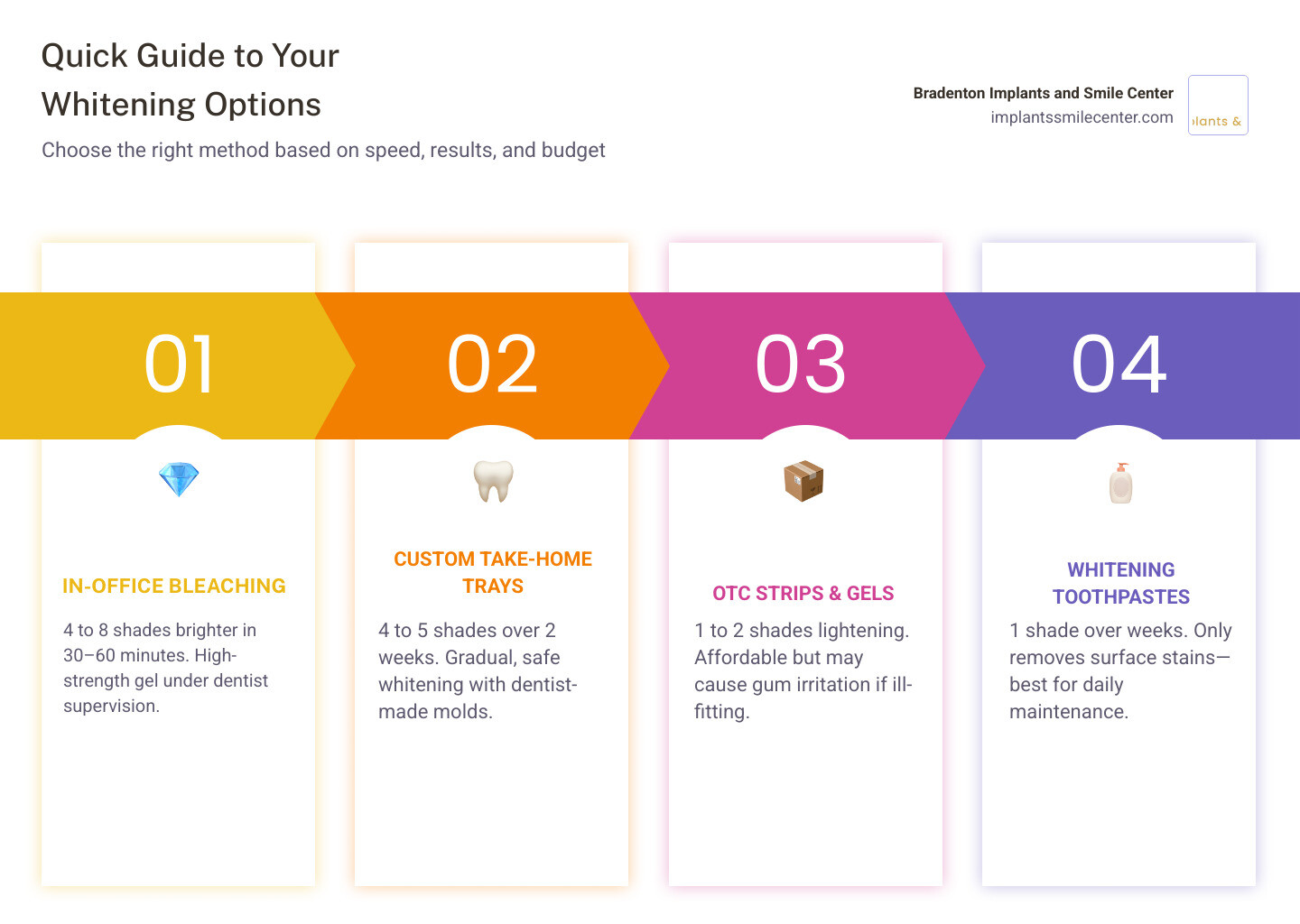
Quick Guide to Your Whitening Options
In-Office Professional Bleaching: Best for fast, dramatic results. A dentist applies high-strength gel to brighten your teeth by 4 to 8 shades in just one 30-to-60-minute visit.
Custom Take-Home Trays: Best for long-term color stability. Your dentist makes custom molds of your teeth for gradual, safe whitening of 4 to 5 shades over two weeks.
Over-the-Counter Strips and Gels: Best for minor, budget-friendly touch-ups. These typically lighten teeth by 1 to 2 shades but can cause gum irritation if they do not fit correctly.
Whitening Toothpastes and Rinses: Best for daily surface stain maintenance. They gently scrub away new stains but only lighten teeth by 1 shade over several weeks or months.
I am Dr. John Hegazin, owner of Bradenton Implants and Smile Center, and over my eight years of clinical practice, I have helped thousands of patients achieve brighter smiles using safe, customized tooth whitening treatments. In this comprehensive guide, I will share the honest science, risks, and benefits behind each method so you can choose the perfect fit for your lifestyle.
Understanding Tooth Discoloration: Why Teeth Lose Their Sparkle
Before diving into how to brighten your smile, it is essential to understand why teeth change color in the first place. Your teeth are not solid, impermeable blocks; they are dynamic, layered structures that react to your diet, lifestyle, and age.
Tooth discoloration is clinically categorized into two main types:
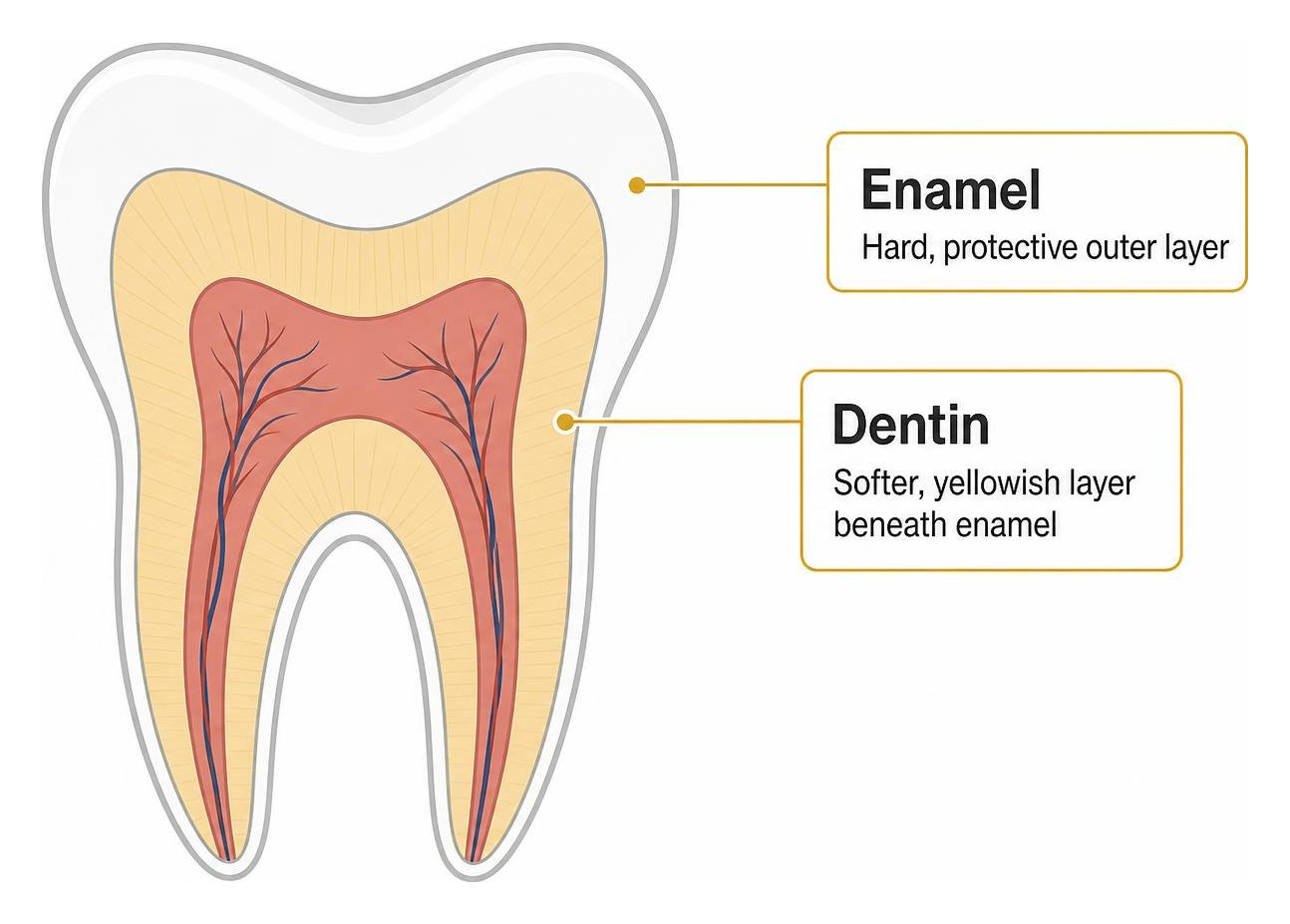
Extrinsic Stains: These occur on the outer surface of the tooth, known as the enamel. Dark pigments (chromogens) from daily habits like drinking coffee, tea, red wine, and using tobacco attach to the enamel. Because these stains sit on the surface, they can often be polished away during a professional dental cleaning or lightened with mild abrasives.
Intrinsic Stains: These stains develop within the inner structure of the tooth, specifically the dentin. Dentin is naturally yellowish and lies directly beneath your translucent enamel. Intrinsic discoloration can occur before a tooth even erupts—due to genetics, excessive fluoride exposure (fluorosis), or the use of antibiotics like tetracycline during childhood. It can also happen later in life due to dental trauma, which causes the tooth to lay down a darker, protective layer of dentin, or after a root canal.
Additionally, as we age, our enamel naturally thins from decades of chewing and brushing. As the white enamel wears down, the darker, yellow dentin underneath becomes more visible.
Because intrinsic stains reside deep inside the tooth structure, surface-level scrubbing will not work. They require chemical bleaching agents that can penetrate the enamel to break down the dark pigments. In cases where intrinsic staining is severe or unresponsive to chemical whitening, alternative cosmetic treatments such as dental bonding or porcelain veneers may be recommended. You can learn more about these options in our Veneers Complete Guide 2026.
The Science of Tooth Whitening: How It Chemically Works
How does a gel actually make your teeth whiter? The secret lies in a chemical process called oxidation.
The primary active ingredients in professional tooth whitening systems are hydrogen peroxide and carbamide peroxide.
Hydrogen Peroxide: A highly reactive, fast-acting bleaching agent. It is so efficient that it can permeate dental hard tissues and reach the pulp chamber within 15 minutes of exposure.
Carbamide Peroxide: A more stable compound that breaks down upon contact with water to release hydrogen peroxide. Typically, carbamide peroxide releases about one-third of its concentration as active hydrogen peroxide (for example, a 15% carbamide peroxide gel yields roughly 5% hydrogen peroxide).
When these peroxide-based whiteners are applied to your teeth, they release volatile oxygen molecules. These oxygen molecules easily slip through the microscopic pores of your enamel and travel deep into the dentin. Once inside, they target the double bonds of the organic chromogens (the large, dark pigment molecules causing the stain).
The oxygen molecules chemically break these double bonds, fracturing the large pigment molecules into smaller, colorless fragments. Because smaller molecules scatter light rather than absorbing it, your teeth appear significantly brighter and whiter.
According to the American Dental Association (ADA) guidelines on whitening, peroxide-based whitening is highly safe and effective when performed under professional dental supervision. However, because these chemicals are active enough to reach the pulp chamber of the tooth, using the correct concentration and application method is vital to protecting your oral health.
Comparing At-Home vs. In-Office Whitening Systems
With so many whitening products on the market, choosing the right system can feel overwhelming. Below is a clinical comparison of the most common professional and over-the-counter methods.
Feature Professional In-Office Whitening Dentist-Supervised At-Home Trays Over-the-Counter Strips & Gels Whitening Toothpastes & Rinses Active Ingredient Hydrogen Peroxide (25% - 40%) Carbamide Peroxide (10% - 16%) Hydrogen Peroxide (6% - 10%) Mild Abrasives / Low Peroxide (<1%) Treatment Time 30 to 60 minutes (Single visit) 30 mins to overnight for 2 weeks 30 mins daily for 10 to 14 days Continuous daily use Shade Improvement 4 to 8 shades 4 to 5 shades 1 to 2 shades 1 to 2 shades (surface stains only) Color Stability Rapid initial results; slight rebound Exceptional long-term stability Moderate; prone to rapid relapse Temporary; requires constant use Gum Protection High (Light-cured resin barrier) High (Custom-fitted plastic trays) Low (Generic strips may touch gums) None Sensitivity Risk Moderate to High (67% - 78% experience temporary "zings") Low to Moderate (Gradual application minimizes discomfort) Mild to Moderate Very Low
A comprehensive systematic review on professional whitening effectiveness revealed that while both in-office and dentist-supervised at-home methods achieve excellent shade improvements, slower at-home custom tray bleaching actually provides superior long-term color stability and a lower rate of shade regression.
Professional In-Office Tooth Whitening
If you are looking for immediate results before a major event, in-office whitening is the gold standard. This treatment utilizes a highly concentrated hydrogen peroxide gel (typically between 25% and 40%). Because the gel is so powerful, your dentist will first paint a protective, light-cured liquid resin barrier over your gums to prevent chemical burns.
The primary advantage of in-office bleaching is speed. You can walk into our office with yellowed teeth and walk out up to eight shades brighter in under an hour. However, because of the high concentration of peroxide, this method carries a higher risk of temporary post-treatment sensitivity.
To ensure your teeth are completely free of plaque and tartar before the gel is applied, we highly recommend scheduling a professional whitening cleaning beforehand. This ensures the whitening gel can penetrate your enamel evenly, preventing splotchy or uneven results.
Dentist-Supervised At-Home Tooth Whitening
For patients who prefer a more gradual approach or have a history of tooth sensitivity, dentist-supervised at-home whitening is highly recommended. This process begins in our office, where we take precise digital impressions of your teeth to fabricate custom-fitted clear plastic trays.
We then provide you with a professional-grade carbamide peroxide gel (usually 10% to 16% strength). Because the trays are custom-molded to your unique bite, they hold the gel perfectly against your teeth while keeping it away from your sensitive gum tissues.
You will wear the trays for 30 minutes to a few hours a day (or overnight) for about two weeks. This gradual oxidation process is incredibly gentle on your teeth and, according to clinical studies, yields some of the longest-lasting whitening results with minimal shade relapse.
Over-the-Counter Whitening Alternatives
Over-the-counter (OTC) options, such as whitening strips, generic trays, paint-on gels, and rinses, are widely available at local pharmacies.
Whitening Strips: These plastic strips are coated with a thin layer of hydrogen peroxide gel. While they can lighten teeth by 1 to 2 shades, their flat design means they cannot reach the deep crevices between your teeth, often leaving yellow borders. Additionally, because they are not custom-fit, the peroxide gel frequently comes into contact with your gums, causing localized irritation.
Whitening Toothpastes: These typically rely on physical abrasives (like silica) to scrub away surface stains. Some contain low concentrations of peroxide, but because you brush for only two minutes, the active ingredients do not stay on your teeth long enough to change their intrinsic color.
Whitening Rinses: Rinses generally take up to three months of twice-daily use to show a modest 1-to-2-shade improvement. Like toothpastes, their contact time with the teeth is too brief to achieve deep bleaching.
If you choose to explore OTC options, always consult the Cleveland Clinic's guide on safe teeth whitening and look for products that carry the American Dental Association (ADA) Seal of Acceptance to ensure they are safe for your enamel.
The Role of Light Activation in Professional Bleaching
You have likely seen advertisements for dental offices or at-home kits utilizing bright blue LED lights, halogens, or lasers to "accelerate" the whitening process. But what does the scientific evidence actually say about light activation?
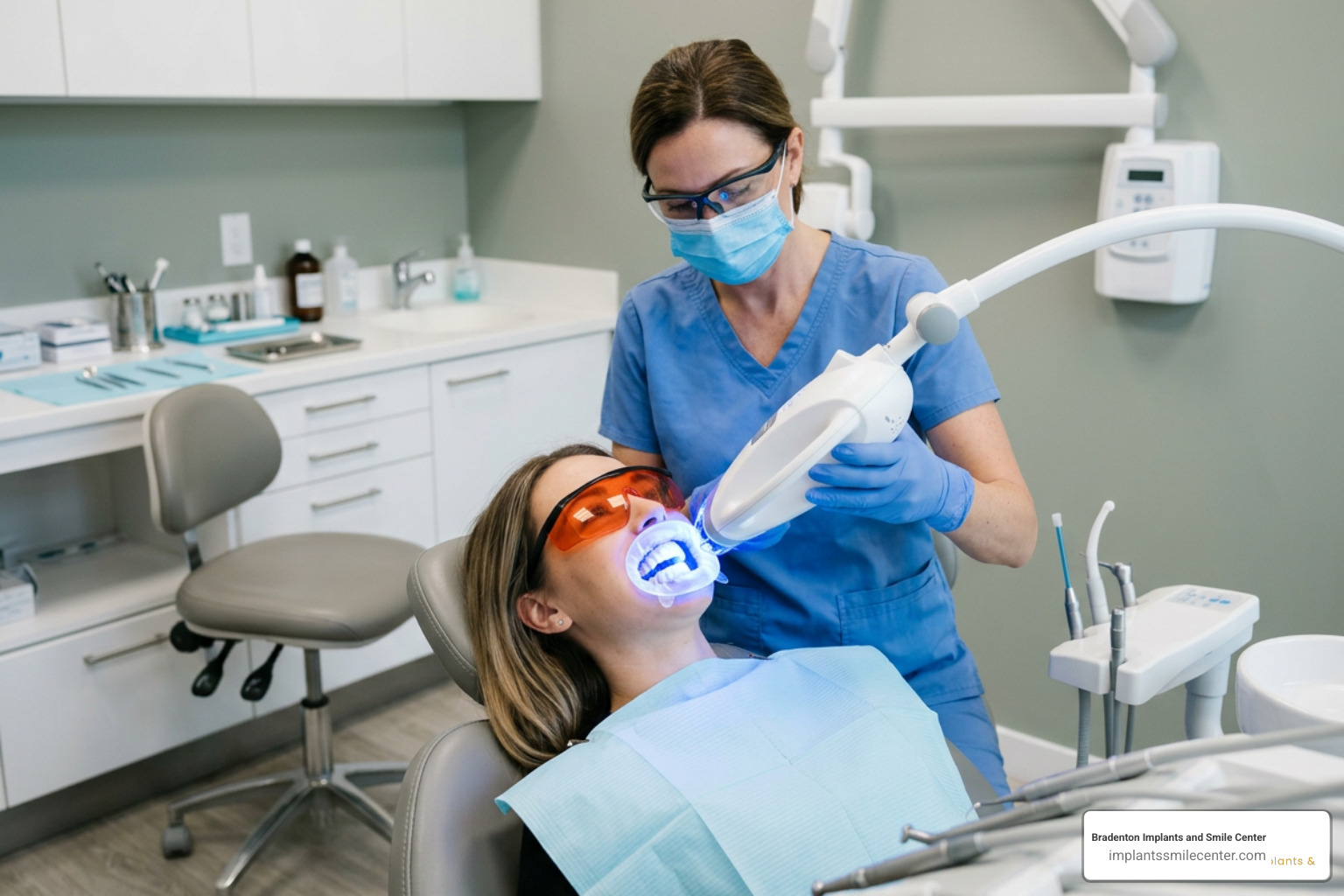
A comprehensive umbrella review on in-office bleaching protocols analyzed decades of clinical trials regarding light-activated systems. The findings were surprising: standard blue LEDs, halogen lamps, and basic lasers do not consistently improve the final shade of your teeth or help the whitening last longer compared to chemical bleaching alone.
While certain high-end lasers can speed up the chemical reaction rate of the peroxide, the heat generated by these light sources can raise the temperature inside the tooth's pulp chamber. If the intrapulpal temperature rises above the critical safety threshold of 5.5 °C, it can cause irreversible nerve damage.
Furthermore, clinical studies show that between 67% and 78% of patients who undergo in-office whitening involving light or heat activation experience moderate to severe tooth sensitivity after the procedure. Because of this, modern evidence-based dentistry favors simplified, chemically activated protocols that prioritize patient comfort over unnecessary light accessories.
Risks, Side Effects, and Safety Considerations
While tooth whitening is highly safe when performed correctly, it is not entirely without risks. Understanding potential side effects can help you manage them effectively.
Transient Tooth Sensitivity: This is the most common side effect of chemical bleaching. Because peroxide penetrates the enamel to reach the pulp chamber, it can cause mild, temporary inflammation of the tooth nerve. Up to two-thirds of users experience this sensitivity during the first few days of treatment. It typically peaks within 2 to 3 days and resolves shortly after treatment ends.
Gingival Irritation: If whitening gel leaks out of generic trays or strips and contacts your gums, it can cause minor chemical burns, leaving your gums looking white and feeling sore. This is easily prevented by using custom-fitted trays.
Enamel and Restoration Degradation: Overusing high-concentration bleaching products can soften the surface of your enamel. Furthermore, aggressive bleaching can cause surface softening and discoloration in existing restorations like composite fillings, glass ionomers, and dental sealants.
If you have older restorations on your front teeth, such as composite fillings or dental crowns Bradenton, they will not change color during a whitening treatment. This can lead to an obvious color mismatch, meaning you may need to replace those restorations after whitening to match your new, brighter shade.
For teeth that have darkened internally after a root canal, standard external bleaching will not work. Instead, your dentist must perform internal bleaching. According to a clinical study on internal tooth whitening, this involves placing a safe bleaching agent directly inside the tooth's pulp chamber and sealing it for several days to brighten the tooth from the inside out.
Who Should Avoid or Delay Whitening?
While cosmetic whitening is highly popular, certain individuals should avoid or delay treatment:
Children under 16: Younger teeth have enlarged pulp chambers and highly permeable enamel, making them much more susceptible to severe nerve irritation and pain.
Pregnant or Lactating Women: There is insufficient clinical data to guarantee the safety of peroxide-based whiteners on developing fetuses or infants.
Patients with Active Dental Issues: If you have untreated cavities, exposed tooth roots, or active gum disease, the whitening gel can seep into the inner structures of your teeth, causing excruciating pain and permanent nerve damage.
Before starting any whitening regimen, it is crucial to undergo a comprehensive dental exam. We recommend reviewing our dental cleaning guide 2026 to ensure your teeth and gums are in optimal health before proceeding with cosmetic treatments.
Maintaining Your Results and Preventing Re-Staining
Once you have achieved your dream shade, the next challenge is keeping it that way.
Immediately after an intensive in-office whitening session, your teeth undergo a "rebound effect." This occurs because a portion of the initial whitening is actually due to tooth dehydration during the procedure. Within seven days, as your teeth rehydrate, they will naturally settle into a slightly darker, more natural shade. In fact, nearly half of the initial color change from rapid in-office treatments can be lost in the first week.
To prevent rapid re-staining and maintain your bright smile, incorporate these simple habits into your daily routine:
Avoid the "Dark Diet" for 48 Hours: Immediately after whitening, the microscopic pores in your enamel remain open and highly susceptible to staining. Avoid coffee, black tea, red wine, dark sodas, soy sauce, and tobacco for at least two days.
Use a Straw: When drinking iced coffee, tea, or dark juices, use a straw to bypass your front teeth entirely.
Rinse with Water: If you do consume staining foods or beverages, rinse your mouth thoroughly with water immediately afterward to wash away pigments.
Upgrade to an Electric Toothbrush: Electric toothbrushes leverage high brush strokes per minute to physically sweep away plaque and new surface stains far more effectively than manual brushing.
Schedule Regular Cleanings: Professional cleanings twice a year physically remove stubborn surface stains and tartar that regular brushing cannot touch.
Frequently Asked Questions about Brightening Your Smile
Is whitening safe for existing dental restorations?
No, chemical whitening agents only act on natural tooth structures. Materials like composite resins, porcelain crowns, veneers, and dental implants will not change color when exposed to bleach. If you whiten your teeth, your natural teeth will brighten while your existing dental work remains the same shade, potentially causing an uneven look. To fix this, you will need to replace your older restorations after the whitening process is complete to match your new shade.
How long do the effects of bleaching treatments last?
The longevity of your whitening results depends largely on your lifestyle and dietary habits. Generally, professional whitening results can last anywhere from one to two and a half years. If you frequently smoke or consume staining beverages like coffee and red wine without rinsing, you may notice slight color regression within six months. Regular touch-ups using custom at-home trays every few months can help maintain your bright shade indefinitely.
Do DIY natural remedies like charcoal actually work?
No. Popular social media trends like brushing with activated charcoal powder, bentonite clay, or acidic mixtures (like lemon juice and baking soda) can actually destroy your smile. Charcoal is highly abrasive; instead of chemically whitening your teeth, it physically wears away your protective outer enamel. As your white enamel thins, the yellow dentin underneath becomes more visible, making your teeth look more yellow over time. Similarly, oil pulling has no scientific backing for whitening and has been clinically linked to adverse health issues like lipoid pneumonia if accidentally inhaled.
Conclusion
Achieving a bright, confident smile should never come at the cost of your dental health. Whether you choose the rapid results of an in-office treatment or the long-term stability of custom at-home trays, professional dental supervision is the key to a safe, beautiful outcome.
At Bradenton Implants & Smile Center, we are dedicated to providing personalized, compassionate cosmetic dentistry utilizing advanced technology and modern techniques. If you are ready to safely lift years of stains and find the perfect whitening option for your unique smile, we invite you to visit us at our office located at 7270 55th Ave E, Bradenton, FL 34203.
Contact us today to schedule your comprehensive oral exam and discover our professional professional teeth whitening options!