
Cheat Sheet to Dental Cleaning Costs
What Does a Dental Cleaning Actually Cost — and What Does It Involve?
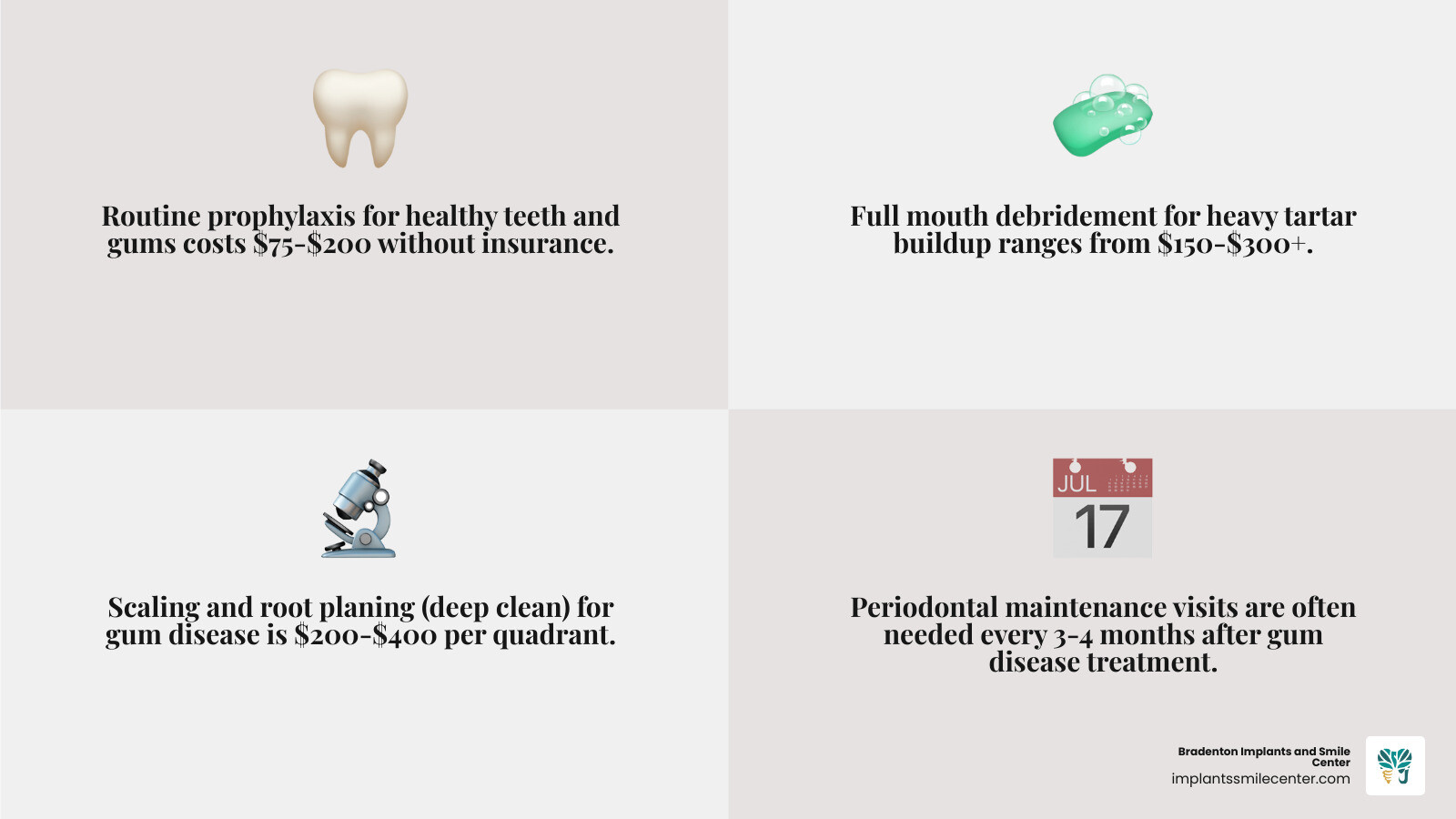
A dental cleaning is one of the most important (and affordable) things you can do to protect your oral health. Here's a quick snapshot before we dive in:
Type of Cleaning Who It's For Typical Cost (No Insurance) Routine prophylaxis Healthy teeth and gums $75 - $200 Full mouth debridement Heavy tartar buildup after long gap in care $150 - $300+ Scaling and root planing (deep clean) Active gum disease $200 - $400 per quadrant Periodontal maintenance History of periodontitis Varies; often every 3-4 months
Most dental insurance plans cover routine cleanings twice a year at little or no cost. Deep cleanings typically have partial coverage depending on your plan.
Despite this, only about 50% of Americans follow the recommended twice-yearly schedule. Meanwhile, over 90% of adults will experience a cavity in their lifetime — and nearly half have some form of gum disease.
Skipping cleanings doesn't just affect your teeth. Research shows that regular professional cleanings can reduce inflammatory markers like TNF-α, IL-6, and CRP — the same markers linked to heart disease, stroke, and other serious systemic conditions.
I'm Dr. John Hegazin, owner of Bradenton Implants and Smile Center, with over 8 years of experience providing preventive care including dental cleaning services for patients across all stages of oral health. In this guide, I'll walk you through exactly what to expect, what it costs, and how to make the most of every visit.
What is a Professional Dental Cleaning?
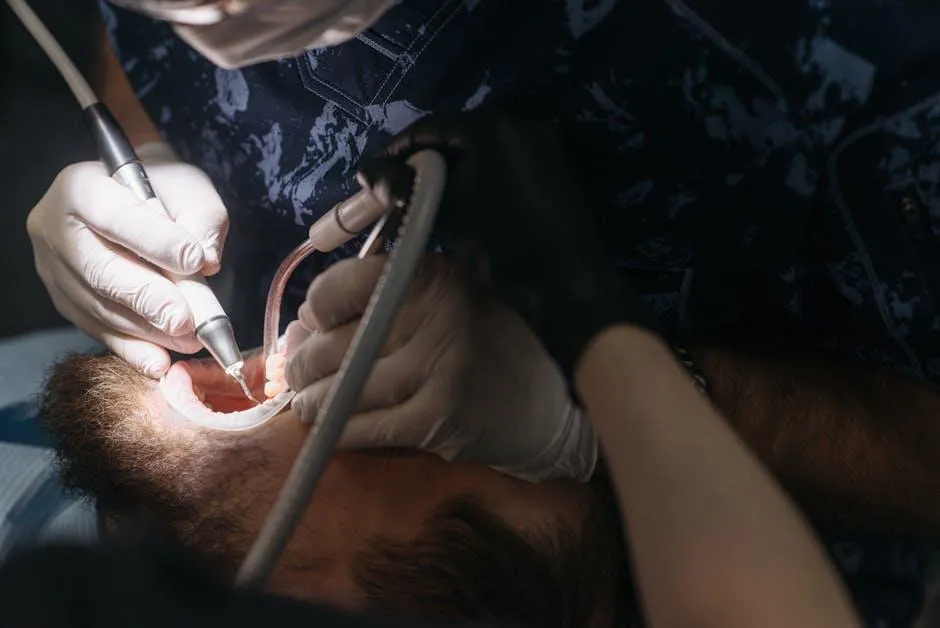
While daily brushing and flossing are the foundation of good oral hygiene, they are only half the battle. Think of brushing at home as spraying your car with a garden hose; it gets the loose dirt off, but it won't remove the baked-on road grime. A professional Teeth cleaning is the equivalent of a detailed hand-scrub and polish.
During a professional Dental Cleaning, our primary goal is to remove dental plaque—a soft, sticky film of bacteria—and tartar (also known as calculus). Tartar is plaque that has absorbed minerals from your saliva and hardened into a cement-like substance. This transformation can happen in as little as 24 to 48 hours. Once tartar forms, it bonds tightly to your enamel and can only be safely removed by a trained dental professional using specialized instruments. Leaving tartar on your teeth provides a fertile breeding ground for more bacteria, eventually leading to cavities, chronic bad breath, and gum disease.
Step-by-Step Guide to the Cleaning Process
If you experience anxiety before visiting the dentist, understanding exactly what happens during your appointment can help demystify the experience. A standard preventive cleaning typically takes 30 to 60 minutes and follows these precise steps:
The Physical Exam: Before any cleaning begins, our dental hygienist performs a thorough visual inspection of your entire mouth. Using a small diagnostic mirror, they check your teeth and gums for signs of gingivitis (inflamed gums), decay, or other potential concerns.
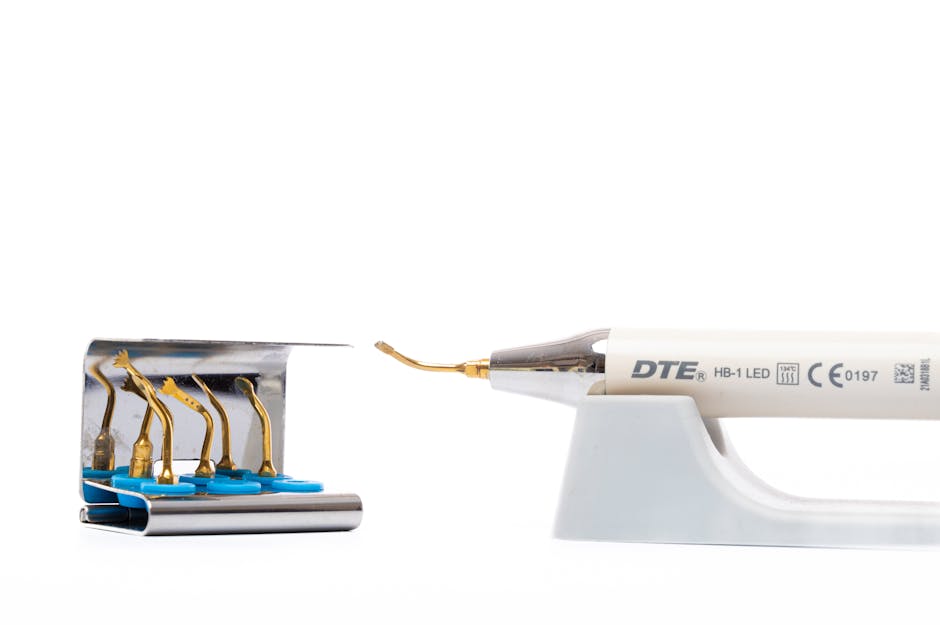
Plaque and Tartar Removal (Scaling): Using a hand instrument called a scaler or an ultrasonic device, the hygienist carefully scrapes away plaque and tartar from around your gum line and between your teeth. You will hear a scraping sound, which is completely normal.
Gritty Toothpaste Cleaning (Polishing): Once your teeth are free of tartar, the hygienist polishes them using a high-powered electric brush and a gritty prophylaxis paste. This step gently scrubs away surface stains and smooths the enamel, making it harder for new plaque to stick to your teeth. Because this paste is highly abrasive, it is only safe for professional use twice a year.
Professional Flossing: Even if you floss diligently at home, nothing beats a professional flossing session. Your hygienist can reach deep between the teeth to remove any leftover plaque or polishing paste.
Rinsing: You will rinse out your mouth with water or a specialized rinse containing liquid fluoride to wash away any remaining debris.
Fluoride Treatment: To wrap up, we often apply a professional fluoride treatment. This may be a gel, foam, or varnish painted directly onto your teeth. Fluoride acts as a shield, remineralizing your enamel and protecting your teeth against decay for several months.
To learn more about what to expect during your diagnostic checkup, you can read about What Happens During a Dental Cleaning? on the Cleveland Clinic site.
Advanced Tools and Technology Used
Modern dentistry has moved far beyond simple hand scrapers. Today, we utilize advanced technology to make your cleaning as comfortable and efficient as possible:
Ultrasonic Scalers: These devices use high-frequency sound waves to vibrate tartar off your teeth while spraying a cool mist of water to wash away the debris. They are highly efficient for heavy buildup.
Intraoral Cameras: These tiny, pen-sized cameras allow us to project high-definition, real-time images of the inside of your mouth onto a screen. This helps us show you exactly where plaque is accumulating so you can adjust your brushing technique at home.
Laser Technology: For patients requiring advanced gum care, Laser Teeth Cleaning offers a minimally invasive way to target and eliminate bacteria beneath the gum line without the need for traditional cutting or sutures.
Routine vs. Deep Cleaning: What is the Difference?
Many patients are surprised to learn that not all dental cleanings are the same. If it has been several years since your last visit, or if you show signs of advanced gum disease, a standard preventive cleaning may not be enough.
Feature Routine Prophylaxis Deep Cleaning (Scaling & Root Planing) Primary Goal Prevention of decay and gum disease Treating active gum disease (periodontitis) Target Area Enamel above the gum line Roots and pockets below the gum line Anesthesia Rarely needed Local anesthetic usually recommended Gum Pocket Depth Healthy pockets (1 to 3 mm) Deep pockets (4 mm or deeper) Number of Visits Single visit (30 - 60 minutes) 2 to 4 visits (60 - 90 minutes each)
A routine cleaning, or prophylaxis, is a maintenance procedure for a healthy mouth. It focuses on the visible portions of the teeth above the gum line. In contrast, deep cleaning—clinically known as scaling and root planing—is a therapeutic treatment designed to stop active gum disease in its tracks. During a deep cleaning, we clean below the gum line and smooth out the rough surfaces of the tooth roots to help the gums reattach. For more details on how these therapies compare, explore our guide on Scaling and Polishing and our dedicated Gum Treatment services.
When You Need More Than a Standard Prophylaxis
How do we determine if you need a deep cleaning? During your initial exam, we use a special probe to measure the depth of the "pockets" (the spaces between your teeth and gums).
1 to 3 mm: Normal, healthy gums.
4 mm: Early stage gum disease (gingivitis). This stage is still fully reversible with improved home care and routine cleanings.
5 mm or deeper: Periodontitis (active gum disease). At this stage, plaque and tartar have migrated deep beneath the gum line, causing the body's immune system to attack the surrounding bone.
If you have deep pockets, bone loss visible on your digital X-rays, chronic gum inflammation, or persistent bleeding, a standard cleaning will not cure the infection. Instead, you will need specialized care. If you are experiencing these symptoms, you should search for professional Periodontics Near Me to address the root cause of the disease before it leads to tooth loss.
The Ultimate Cheat Sheet to Dental Cleaning Costs
When budgeting for oral healthcare, it is helpful to look at dental cleanings as a financial investment rather than an expense. Preventive dentistry is incredibly cost-effective. Investing a small amount in regular cleanings today can save you thousands of dollars in restorative work down the road. For example, while a routine dental cleaning averages $75 to $200, replacing a single missing tooth with a dental implant can easily cost $3,000 to $5,000.
Furthermore, keeping your mouth clean reduces systemic inflammation, which can lower your risk of developing expensive, chronic medical conditions like cardiovascular disease and type 2 diabetes.

Average Cost of a Dental Cleaning Without Insurance
If you do not have dental insurance, here is what you can generally expect to pay out of pocket in the Bradenton, FL area currently:
Routine Prophylaxis: $75 to $200. This typically includes the cleaning itself, though diagnostic X-rays and a comprehensive exam by the dentist may incur additional fees during your first visit.
Full Mouth Debridement: $150 to $300+. This is required when a patient has heavy, dense tartar buildup that prevents the dentist from performing a proper visual exam. It is a preliminary cleaning to clear the way for a more detailed assessment.
Scaling and Root Planing (Deep Cleaning): $200 to $400 per quadrant. Because a deep cleaning is highly detailed, it is billed by "quadrant" (one-fourth of your mouth). A full-mouth deep cleaning can range from $800 to $1,600.
Periodontal Maintenance: $115 to $200 per visit. Once you have undergone a deep cleaning, you will transition to periodontal maintenance cleanings every three to four months to keep the bacteria from returning.
How Insurance Affects Your Dental Cleaning Cost
Most dental insurance plans place a heavy emphasis on prevention. Under the standard "100-80-50" coverage model, routine preventive care—including two cleanings and one set of diagnostic X-rays per year—is covered at 100%, meaning you pay nothing out of pocket.
However, if you require a deep cleaning or periodontal maintenance, these are classified as basic or therapeutic procedures. Insurance typically covers these at 50% to 80%, and you may need to meet your annual deductible first. To understand how to navigate these insurance policies and minimize your out-of-pocket costs, check out our guide on Periodontal Cleaning Cost with Insurance.
Frequently Asked Questions About Teeth Cleanings
How often should you get your teeth cleaned?
For the vast majority of healthy adults and children, the American Dental Association (ADA) recommends getting a professional dental cleaning every six months (twice a year).
However, this is not a one-size-fits-all rule. Some individuals are genetically predisposed to cavities or gum disease, while others may have medical conditions that weaken their immune systems. If you are pregnant, smoke, have diabetes, or have a history of periodontitis, we may recommend coming in every three to four months to keep oral bacteria under control.
How should you prepare for your appointment and what should you expect afterward?
Preparing for your cleaning is simple:
Brush and Floss: While we are going to clean your teeth anyway, brushing beforehand is a polite courtesy to your hygienist and removes loose food particles.
Update Your Medical History: Bring a list of any new medications, vitamins, or chronic health changes. Many systemic medications can cause dry mouth, which increases your risk of decay.
Communicate Anxiety: If you are nervous, let us know! We offer gentle care and sedation options to make your visit stress-free.
What to expect afterward: Your teeth will likely feel incredibly smooth and clean. You may experience mild, temporary tooth sensitivity or gum soreness for a day or two, especially if your gums were already slightly inflamed. If you received a professional fluoride varnish, avoid hot liquids and hard, crunchy foods for at least 30 minutes to allow the treatment to fully bond to your enamel.
When should you call your dentist after a cleaning?
While minor gum tenderness is normal, you should contact us if you experience:
Severe, throbbing pain that doesn't improve with over-the-counter pain relievers.
Persistent bleeding that lasts more than 48 hours.
Signs of infection, such as swelling in your gums or face, or a fever.
Conclusion
Regular professional teeth cleanings are the cornerstone of a healthy, vibrant smile. By removing the stubborn tartar that home brushing leaves behind, preventive cleanings protect your teeth from decay, keep your gums firm and healthy, and safeguard your overall cardiovascular health.
At Bradenton Implants & Smile Center, we are committed to providing personalized, compassionate, and advanced dental care for adults and seniors in our community. Whether you are due for your routine six-month checkup or need specialized care to restore your gum health, our experienced team is here to help you achieve a smile you can be proud of.
Don't wait for a toothache to prioritize your oral health. Schedule your next dental cleaning today at our state-of-the-art office located at 7270 55th Ave E, Bradenton, FL 34203, or call us to discuss our affordable financing options!