
In-Depth Guide to Bone Grafting for Implants
Why Bone Grafting for Implants Is the Foundation of a Lasting Smile
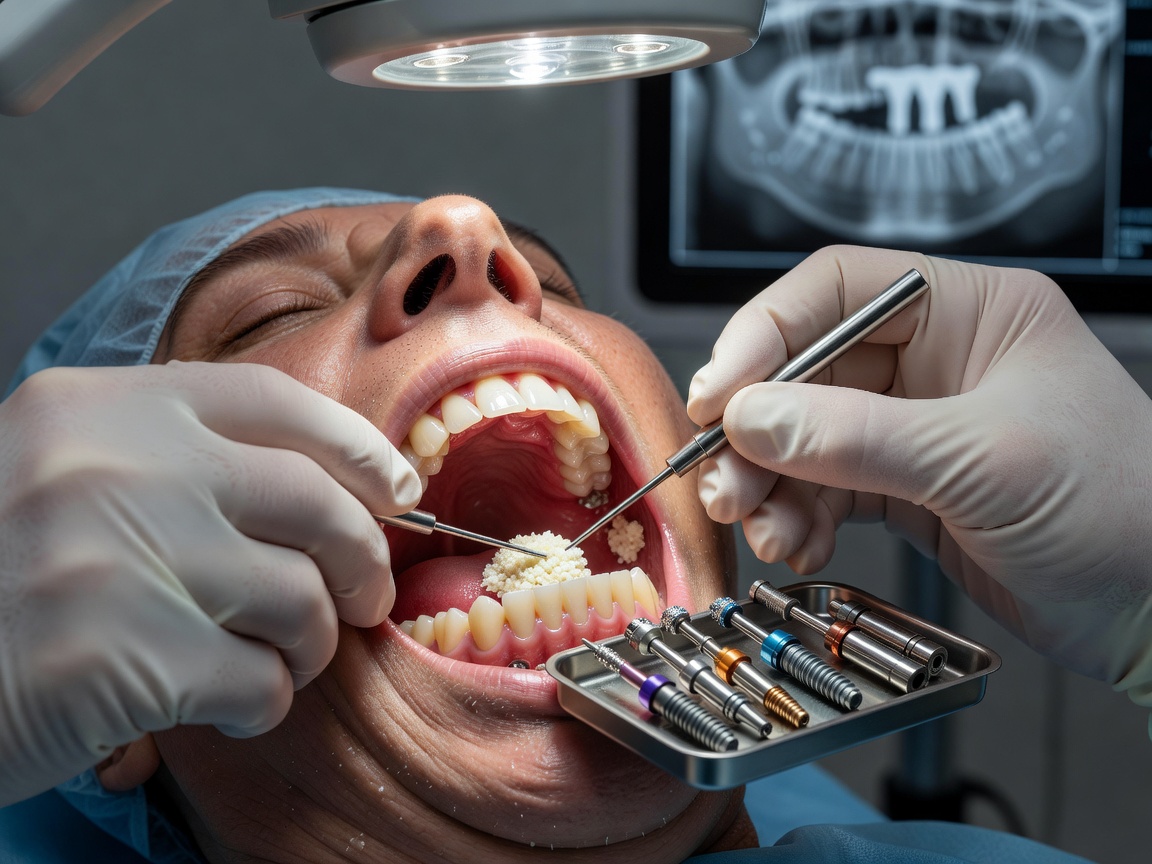
Bone grafting for implants is a surgical procedure that rebuilds lost or thinning jawbone so a dental implant has a stable, long-lasting foundation to anchor into.
Quick answer: What is bone grafting for implants?
Question Answer What is it? A procedure that adds bone or bone-like material to your jaw to support a dental implant Why is it needed? Tooth loss, gum disease, or trauma causes the jawbone to shrink, leaving too little bone for an implant How common is it? About 2.2 million bone grafts are placed globally every year How long does healing take? About 3–6 months for most grafts; up to 9–12 months for larger ones How successful is it? Success rates are highly predictable, typically ranging from 95% to 98% depending on patient health
If you're missing teeth — or have been missing them for a while — there's a good chance your jawbone has already started to shrink. This happens because the bone no longer receives the stimulation it needs from a tooth root. Without enough bone volume, a dental implant simply won't hold.
The good news? Bone grafting solves exactly that problem. It gives your jaw the volume and density it needs so an implant can integrate properly and last for decades.
You're also not alone in needing it. Roughly 40–60% of patients seeking dental implants require some form of bone grafting before placement can happen.
I'm Dr. John Hegazin, owner of Bradenton Implants and Smile Center, with over 8 years of experience performing bone grafting for implants and other advanced restorative procedures. In this guide, I'll walk you through everything you need to know — from graft types and surgical steps to healing timelines and how to get the best possible outcome.
What is Bone Grafting for Implants and Why is it Needed?
To understand why we perform this procedure, it helps to think of your jawbone like the foundation of a house. You wouldn't build a beautiful, custom home on shifting sand or a crumbling foundation. Similarly, we cannot place a state-of-the-art dental implant into a jawbone that is too thin, soft, or shallow.
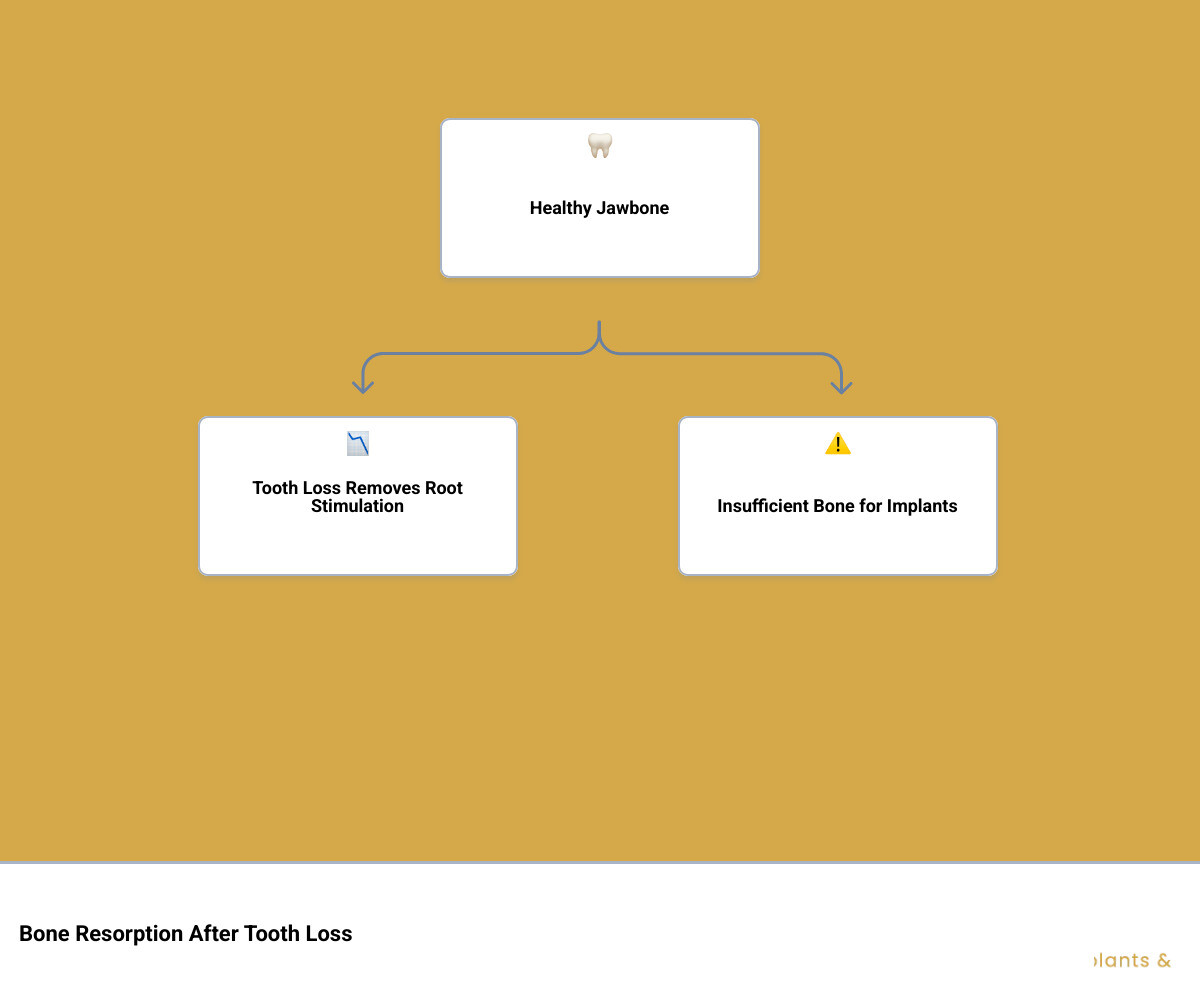
When you lose a tooth, the portion of the jawbone that anchored it—known as the alveolar ridge—begins to undergo a natural process called bone resorption. Without the daily chewing pressure transmitted by the natural tooth root, the body assumes this section of bone is no longer needed. It begins to break down and reabsorb the minerals back into the bloodstream. In fact, within the first year after a tooth extraction, you can lose up to 25% of the surrounding bone width.
For a dental implant to succeed, it must undergo a biological process called osteointegration (or osseointegration). This is where your living jawbone grows directly into and fuses with the titanium surface of the implant, locking it permanently in place. If there is insufficient bone, the implant cannot achieve this critical primary stability, leading to early failure.
To prevent this, we utilize several bone grafting techniques:
Socket Preservation: Placing graft material directly into the empty socket immediately after a tooth extraction to minimize bone loss while the site heals.
Sinus Lift (Sinus Augmentation): Rebuilding bone in the upper back jaw, where the maxillary sinus cavity is often too close to the implant site.
Ridge Augmentation: Restoring the natural width and height of the jawbone ridge when it has already flattened or narrowed over time.
For a broader look at how this fits into your overall tooth replacement journey, you can read our Dental Implants Complete Guide.
The Biological Necessity of Bone Volume
From a biological standpoint, your jawbone is a highly dynamic organ made up of two main layers: the dense, hard outer shell known as cortical bone, and the spongy, vascular inner layer called trabecular (or cancellous) bone.
Every time you bite down, the chewing pressure sends mechanical signals through your teeth and into the trabecular bone. This process stimulates bone-remodeling cells, keeping the bone dense and strong. When a tooth is lost, this mechanical feedback loop is broken. The cortical bone begins to thin, and the trabecular bone loses its supportive scaffolding.
According to a Scientific overview of bone grafting for implant surgery, successful bone regeneration relies on four essential elements:
Osteoinduction: Chemically signaling local cells to transform into active bone-building cells.
Osteogenesis: The direct contribution of living cells within the graft to generate new bone.
Intact Blood Supply: Providing the oxygen and nutrients needed to keep the new tissue alive.
Mechanical Stability: Keeping the graft completely immobile so delicate new blood vessels can form without tearing.
To ensure long-term implant survival, we aim to maintain at least 1.5 mm to 2 mm of healthy bone around the entire circumference of the implant.
When is Bone Grafting for Implants Required?
Several common clinical scenarios require us to recommend bone grafting before we can safely proceed with implant placement:
Prolonged Tooth Loss: If you have been missing a tooth for years or have worn traditional dentures that sit on top of the gums, your jawbone has likely undergone significant resorption.
Severe Periodontal Disease: Advanced gum disease is a bacterial infection that actively eats away at the bone supporting your teeth.
Traumatic Extraction: If a tooth was extracted aggressively, parts of the fragile socket wall may have broken away, requiring reconstruction.
Facial Trauma or Infections: Accidents, physical trauma, or deep dental abscesses can destroy localized areas of the jawbone.
Sinus Pneumatization: In the upper jaw, the maxillary sinus cavities (which sit above your upper back teeth) naturally expand downward when teeth are missing. A sinus lift gently pushes the sinus membrane upward and places bone graft material underneath to create enough depth for an implant.
If you are considering replacing multiple teeth or an entire arch, you can learn more about how we rebuild these foundations in our guide to Full Mouth Dental Implants.
Types of Bone Graft Materials and Their Biological Properties
When it comes to choosing a bone graft material, there is no "one-size-fits-all" option. Different materials possess different biological properties that make them ideal for specific clinical situations.
These biological properties are defined by three main processes:
Osteogenesis: The material contains living cells that actively grow new bone.
Osteoinduction: The material contains proteins and growth factors that recruit and stimulate the patient's own cells to build bone.
Osteoconduction: The material acts as a physical scaffold, allowing the patient's blood vessels and native bone cells to climb across and populate the area.
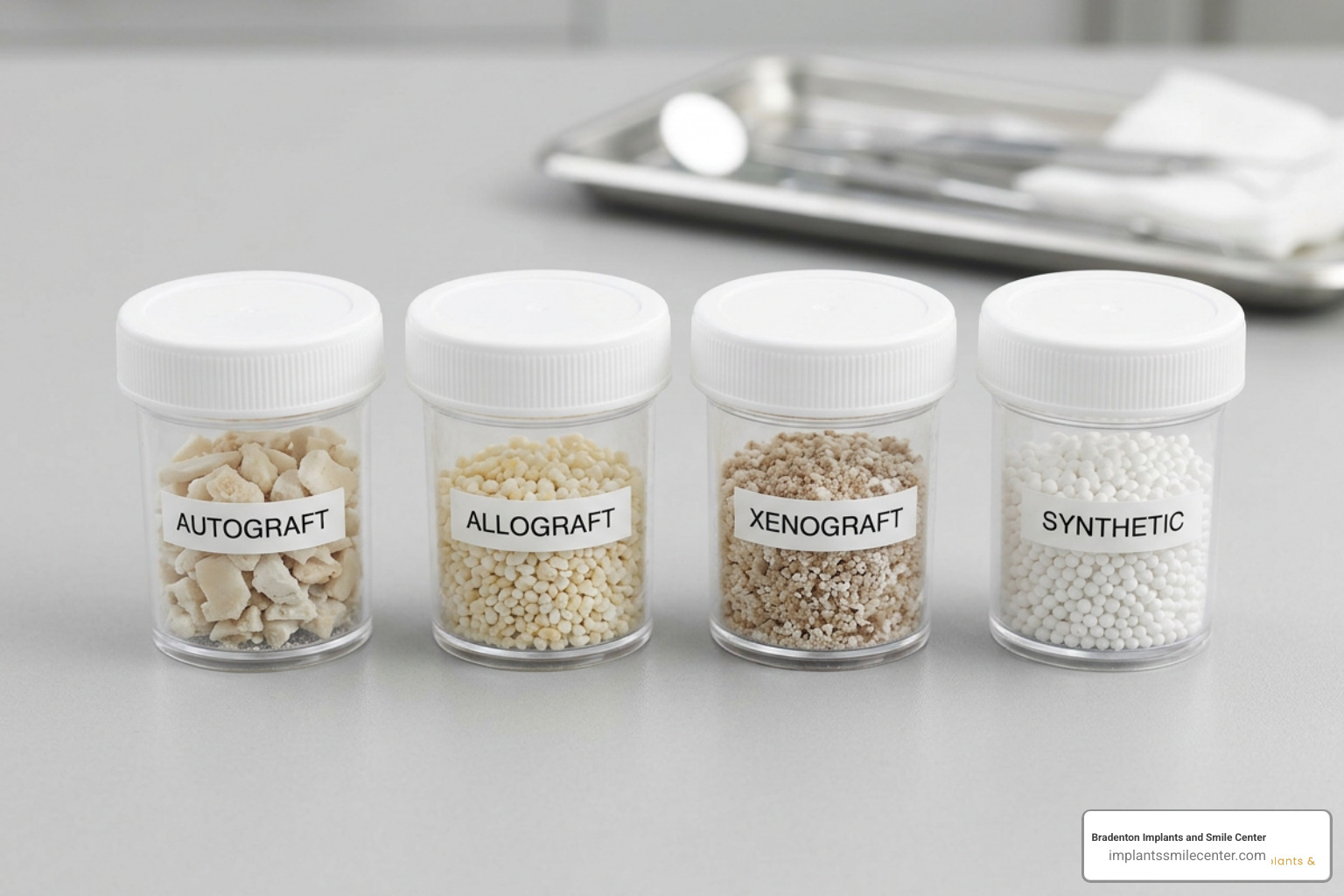
To help you understand your options, we've broken down the four primary types of graft materials below:
Graft Type Source Biological Properties Key Advantage Key Disadvantage Autograft Patient's own body (chin, jaw, hip) Osteogenic, Osteoinductive, Osteoconductive "Gold Standard," 100% biocompatible, fastest healing Requires a second surgical site, donor site pain Allograft Human donor (tissue bank) Osteoinductive, Osteoconductive No second surgery site, excellent clinical track record Small (highly managed) risk of immune response Xenograft Animal source (bovine or porcine) Osteoconductive Highly stable, resorbs slowly, excellent structural support No living cells, slower overall integration Alloplast Synthetic (calcium phosphate, glass) Osteoconductive 100% sterile, unlimited supply, zero disease risk No biological activity, lower overall success rate
For a deeper dive into these options, check out our article on the Types of Bone Graft in Dentistry.
Autografts and Allografts
An autograft (or autogenous bone) is harvested directly from your own body—usually from another area of your jaw, such as the chin or the back portion of the lower jaw (ramus). Because it is your own living tissue, it is the only material that is fully osteogenic, meaning it contains live bone-building cells. This makes it the absolute gold standard for rapid vascularization and bone growth. However, its main disadvantage is donor site morbidity, meaning you have to undergo a second surgical site, which can increase post-operative discomfort and healing time.
An allograft (or allogenous bone) utilizes highly processed human donor bone, typically sourced from accredited national tissue banks. Before it ever reaches our office, the donor bone undergoes rigorous sterilization, chemical washing, and freeze-drying processes to remove all cellular material. This completely eliminates the risk of disease transmission or immune rejection while preserving the structural mineral matrix and natural growth factors. It is an incredibly popular choice because it provides excellent osteoinductive and osteoconductive support without requiring a second surgical site.
Xenografts and Synthetic Alloplasts
A xenograft is bone tissue harvested from another species, most commonly bovine (cow) or porcine (pig) sources. Like allografts, these materials are thoroughly processed at high temperatures to strip away all organic material, leaving behind a pure, sterile calcium-phosphate mineral skeleton.
Interestingly, bovine bone has a chemical structure and a calcium-to-phosphate ratio of 1.67, which is identical to human bone. Because it is highly mineralized, a xenograft resorbs (breaks down) very slowly in the body. This is actually a major benefit for procedures like socket preservation, as it provides long-term structural stability while your body slowly replaces it with natural bone.
A recent Clinical study on bone grafting techniques and materials highlights how combining different materials—such as mixing a fast-healing autograft with a slow-resorbing xenograft—often yields the most predictable, robust bone volume for dental implants.
Alloplasts are entirely synthetic, lab-made materials. They are typically composed of calcium phosphate ceramics, bioactive glass, or calcium sulfate. While they are completely sterile and have an unlimited supply, they are purely osteoconductive. Because they lack any natural growth factors or living cells, they are often used to fill small, routine defects or are combined with biological additives to boost their performance.
The Bone Grafting Procedure and Healing Timeline
At Bradenton Implants & Smile Center, we believe that demystifying the surgical process helps our patients feel relaxed and confident. Modern dental technology has made bone grafting a highly routine, comfortable, and predictable outpatient procedure.
Before we ever pick up a dental instrument, we perform a comprehensive diagnostic evaluation using state-of-the-art Cone Beam Computed Tomography (CBCT) imaging. This 3D X-ray allows us to view your jawbone's exact height, width, and density in microscopic detail. We can map out the precise location of your nerves, blood vessels, and sinus cavities, allowing us to plan the entire surgery digitally before we begin.
To make the procedure completely pain-free, we administer local anesthesia to thoroughly numb the surgical area. For patients who experience dental anxiety, we also offer customized sedation options to ensure you remain completely relaxed and comfortable throughout your visit.
To accelerate the healing process, we frequently utilize advanced biologics like Platelet-Rich Plasma (PRP) or Concentrated Growth Factors (CGF). We draw a small sample of your blood, spin it in a centrifuge to isolate your body's natural healing proteins, and mix them directly with the bone graft material. This supercharges the early stages of cellular regeneration.
For patients who require a stable bone foundation before receiving Permanent Teeth Implants, this meticulous planning is what ensures a lifetime of stability.
Step-by-Step Surgical Process
While every patient's mouth is unique, a standard bone grafting procedure follows these precise steps:
Accessing the Site: We make a small, gentle incision in the gum tissue to expose the underlying jawbone defect.
Preparing the Bone: The native bone surface is cleaned and lightly prepared to encourage healthy bleeding, which brings essential healing cells to the area.
Placing the Graft: We carefully pack the sterile particulate bone graft material into the area of bone loss, shaping it to restore the natural contour of your jawline.
Applying the Barrier Membrane: We place a protective membrane (usually made of resorbable collagen) over the graft. This membrane acts as a shield, preventing fast-growing gum tissue from invading the space before the slow-growing bone cells have a chance to rebuild.
Suturing and Closure: We gently pull the gum tissue back over the site and secure it with sutures. Achieving a "tension-free" closure is critical; if the gums are pulled too tight, they can pull apart during healing, exposing the graft to oral bacteria.
According to a Guide to immediate implant placement and grafting, placing a graft at the exact same time an implant is inserted is highly successful, provided the implant can achieve strong initial stability in the remaining native bone.
Healing Stages and Timeline for Bone Grafting for Implants
Healing is a gradual biological journey. While you will feel back to normal within a week, the microscopic bone remodeling beneath your gums takes several months:
Days 1–3 (The Inflammatory Phase): Your body sends a rush of blood and immune cells to the site. Some minor swelling and mild discomfort are normal and expected during this time.
Days 4–7 (Early Healing): New, fragile blood vessels begin to grow into the graft material. Swelling peaks and begins to subside.
Weeks 2–4 (Initial Integration): The gum tissue fully closes over the site, and the graft material begins to form a soft, collagen-rich matrix.
Months 2–3 (Active Bone Remodeling): Your body's osteoclasts and osteoblasts begin the hard work of dissolving the graft material and replacing it with solid, mineralized human bone.
Months 4–6 (Graft Maturation): The new bone density peaks. The site is now strong enough to support the high chewing forces of a dental implant.
For minor socket preservation grafts, we can often place the implant in as little as 3 to 4 months. However, for extensive block grafts or complex sinus lifts, we may recommend waiting 6 to 9 months (and occasionally up to 12 months for massive reconstructions) to ensure absolute stability.
If you are hoping to minimize your overall treatment timeline, you can read about our advanced Teeth in a Day protocols to see if you are a candidate for immediate loading.
Clinical Advancements and Success Factors
Dental science has advanced rapidly over the past decade. Today, bone grafting boasts high success rates, typically ranging from 95% to 98% in routine cases, depending heavily on the material used and the patient's systemic health. However, achieving these stellar outcomes is a team effort between your dental provider and your daily habits at home.
Several patient-specific risk factors can significantly impact how quickly and successfully your bone graft integrates:
Smoking and Vaping: Nicotine is a potent vasoconstrictor, meaning it shrinks your blood vessels and deprives the healing graft of oxygen and nutrients. Smoking is one of the leading causes of early graft and implant failure. We strongly advise patients to quit smoking at least two weeks before surgery and for at least eight weeks afterward.
Uncontrolled Diabetes: High blood sugar levels impair the body's natural immune response and delay cellular healing, increasing the risk of infection.
Poor Oral Hygiene: If plaque and bacteria are allowed to accumulate around the surgical site, they can cause a localized infection that destroys the graft.
A recent Randomized controlled trial on porcine dentin-derived graft demonstrated that utilizing processed porcine dentin as a graft material yielded excellent bone regeneration and high implant stability. This research highlights how innovative biomaterials can achieve outstanding clinical outcomes, comparable to traditional bone-derived materials which historically maintain success rates well over 90% to 95%.
Synthetic Bone Substitutes vs. Xenografts
In the clinical community, there is an ongoing friendly debate comparing synthetic bone substitutes to animal-derived xenografts. Both have made massive strides thanks to modern nanotechnology.
By engineering synthetic calcium phosphates at the nanoscale, scientists can now mimic the exact microscopic surface roughness of natural bone. This trick of technology coaxes your body's cells into adhering to the synthetic scaffold much faster than they would to older, smooth synthetic materials.
However, xenografts (like bovine or porcine bone) still hold a slight clinical edge in terms of site stability. Because they retain the natural, complex architecture of animal bone, they resist resorption much longer. This slow-and-steady breakdown ensures that the shape and volume of your jawline do not collapse while your body slowly replaces the graft with its own tissue.
Optimizing Patient Recovery and Outcomes
To ensure your bone graft heals as quickly and comfortably as possible, we recommend following these practical, actionable steps:
Stick to Soft Foods: For the first week, enjoy a diet of soft, nutritious foods like smoothies, scrambled eggs, yogurt, and mashed potatoes. Avoid sharp, crunchy, or hot foods that could poke or irritate the surgical site.
Manage Swelling with Ice: Apply an ice pack to your cheek (20 minutes on, 20 minutes off) for the first 24 to 48 hours to keep swelling to a minimum.
Elevate Your Head: Use an extra pillow to keep your head elevated while resting or sleeping during the first few days to reduce throbbing and swelling.
Practice Gentle Oral Hygiene: Do not brush directly over the surgical site for the first week. Instead, use the prescribed antimicrobial mouthwash or a gentle warm salt water rinse to keep the area clean.
Avoid Straws and Spitting: The suction created by using a straw or spitting vigorously can dislodge the delicate blood clot forming over your graft, leading to bleeding or healing delays.
Frequently Asked Questions about Bone Grafting
How painful is a dental bone graft procedure?
We are happy to report that the bone grafting procedure itself is entirely painless! Thanks to advanced local anesthetics, you will only feel some light, dull pressure during the surgery.
Once the numbness wears off, most patients describe the post-operative discomfort as a mild, dull ache similar to a minor toothache. This is highly manageable with over-the-counter pain medications like ibuprofen or acetaminophen. Any mild soreness or swelling typically peaks around day 3 and completely resolves within a week.
What are the signs of bone graft failure or complications?
While complications are rare, you should contact our Bradenton, FL office immediately if you experience any of the following warning signs:
A persistent fever that does not go away.
Severe, throbbing pain that worsens over time and is not relieved by medication.
Excessive, dark red bleeding that does not slow down with gentle pressure.
Pus or a foul-tasting drainage coming from the surgical site.
A feeling that the entire graft has become completely loose or has shifted.
Note: It is completely normal for a few tiny, sand-like grains of bone graft material to occasionally escape from the gums during the first week of healing. Do not panic if you feel a couple of small grains in your mouth!
How long after a bone graft must I get my dental implant?
Once your bone graft has fully healed and integrated, there is an ideal clinical window for placing your dental implant. It is highly recommended to get your dental implant within 6 to 12 months after your graft has fully healed.
If you wait too long beyond this window, the newly regenerated bone will begin to shrink and lose its density due to the lack of chewing stimulation. If you are planning an implant journey and want to understand the pricing and timing of full-arch options, you can review our guide to All-on-Four Dental Implants.
Conclusion
At Bradenton Implants & Smile Center, we are dedicated to providing personalized, compassionate dental care using the most advanced technology and gentle surgical techniques available in 2026. We know that the thought of oral surgery can feel overwhelming, but we are here to support you through every single step of your smile transformation.
Whether you need a simple socket preservation after an extraction or a complex sinus lift to restore your smile, our expert team in Bradenton, FL, is ready to craft a customized treatment plan tailored to your unique goals and budget.
If you are ready to take the first step toward a healthy, stable, and beautiful smile, we invite you to Schedule a consultation for bone grafting with us today!