
In Depth Guide to Comparing Cost & Quality of Dental Implants Abroad
How to Compare Cost and Quality for Dental Implants Abroad
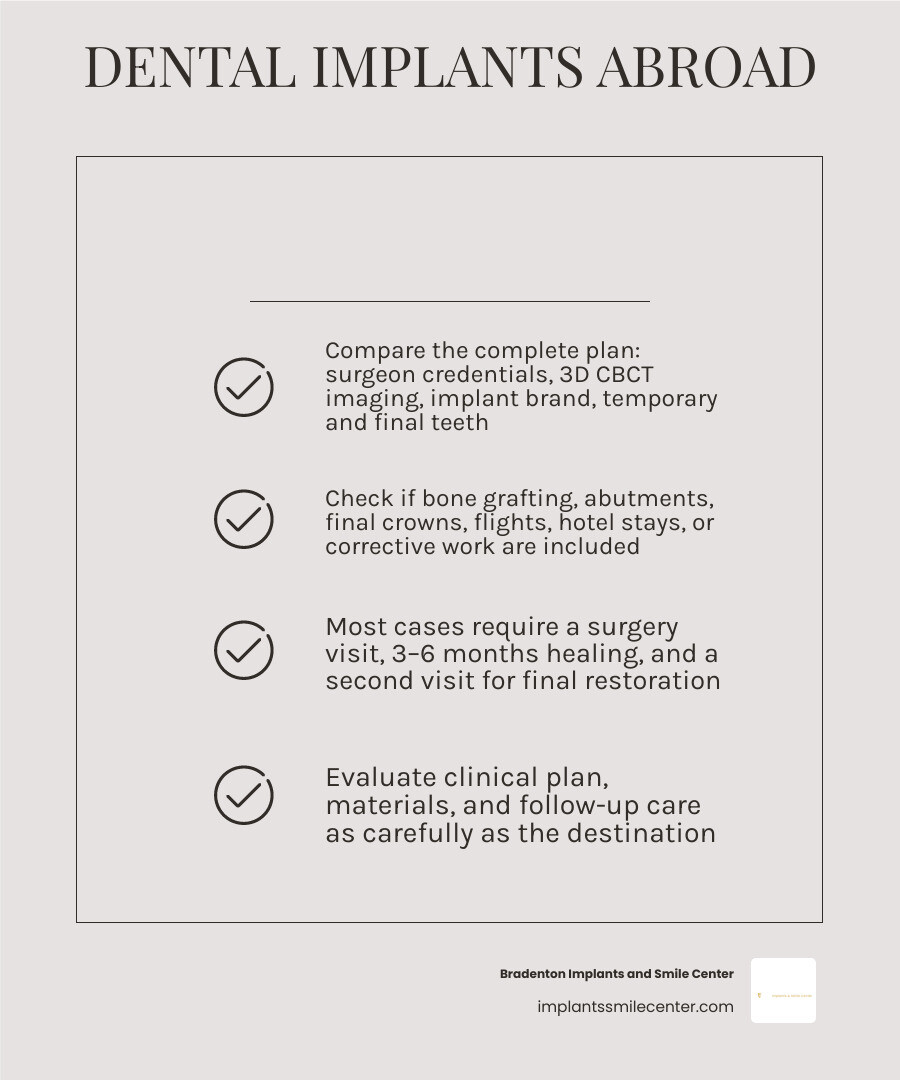
Dental implants abroad can lower the upfront price, especially for full-arch treatment, but the best choice is not automatically the lowest quote. Before booking, compare the complete plan: surgeon credentials, 3D CBCT imaging, implant brand, temporary and final teeth, travel for one or two visits, aftercare at home, and the written warranty.
A single implant may cost far less in countries such as Turkey, Hungary, Mexico, or Ecuador than in the U.S. or UK. Yet a lower price can disappear if the quote excludes bone grafting, abutments, final crowns, flights, hotel stays, or corrective work. Most traditional implant cases require a surgery visit, a 3- to 6-month healing period, and a second visit for the final restoration.
The goal is not to avoid overseas care at all costs. It is to make a clear, evidence-based comparison between savings today and the support, repair options, and long-term costs you may need later.
I am Dr. John Hegazin, a dentist with more than eight years of experience in restorative and implant dentistry, including implant placement, bone grafting, full-mouth treatment, and Teeth in a Day solutions. When patients ask about dental implants abroad, I encourage them to look beyond the advertised price and evaluate the clinical plan, materials, and follow-up care just as carefully as the destination.
Evaluating the True Cost of Dental Implants Abroad vs. Domestic Care
When evaluating the financial side of restorative dentistry, look at the entire procedure from diagnostic mapping to permanent restoration. Sticker prices advertised online often highlight the titanium screw alone, leaving out essential steps required for lasting stability.
Country / Region Single Dental Implant (Complete) Full-Arch / All-on-4 (Per Arch) Typical Cost Savings vs. US Base United States $3,000 – $5,000 $20,000 – $40,000 Baseline United Kingdom £2,000 – £3,500 ($2,500 – $4,400) £10,000 – £18,000 ($12,500 – $22,500) 15% – 25% Turkey $450 – $1,000 (€400 – €900) $3,500 – $6,500 (€3,200 – €6,000) 65% – 75% Hungary $1,100 – $1,500 (€1,000 – €1,350) $6,500 – $10,000 50% – 60% Mexico $800 – $1,500 $6,000 – $12,000 60% – 70% Ecuador (Cuenca) $800 – $1,500 $6,000 – $12,000 60% – 70%
These international price variations are driven by structural economic differences rather than clinical shortcuts alone. Foreign clinics benefit from significantly lower operational overhead, lower commercial real estate leases, reduced labor wages for certified dental technicians, and an absence of massive educational debt for clinicians. For a clearer understanding of standard national fee ranges, review our comprehensive cost of dental implants 2026.
Advertised Sticker Prices vs. Comprehensive Treatment Plans
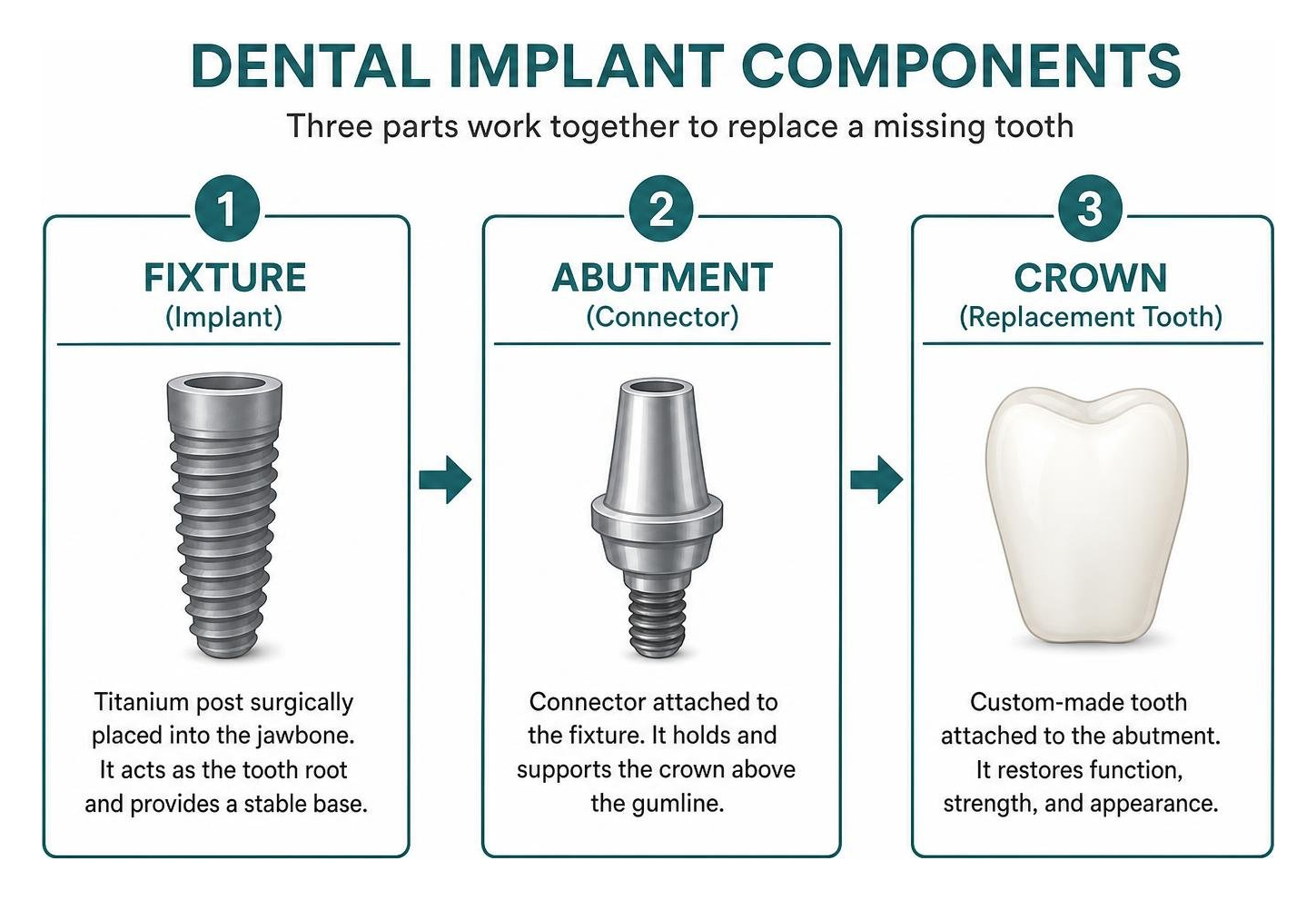
An advertised $400 implant quote often covers just the surgical placement of the titanium fixture. A complete, functioning tooth requires three core components: the implant fixture, the connecting abutment, and the custom crown.
Transparent clinics provide an itemized outline upfront. When evaluating an estimate, ensure it includes:
High-resolution 3D Cone Beam Computed Tomography (CBCT) imaging
Computer-guided surgical stents
Abutments (custom vs. stock titanium or zirconia)
Provisional (temporary) load-bearing teeth
Final permanent prosthetics milled from monolithic zirconia or high-grade porcelain
Necessary preparatory extractions
Understanding what goes into an itemized quote is critical, as detailed in our affordable dental implants complete guide.
Hidden Travel Expenses and Total Costs of Dental Implants Abroad
Calculating true savings requires adding non-clinical travel expenses to the treatment quotes:
Multi-Trip Airfare: Full integration generally requires two round-trip flights spaced months apart.
Lodging and Meals: Expect 5 to 8 nights per surgical trip in clean, accessible hotels near the clinic.
Lost Wages: Time away from work for international travel and recovery days back home.
Companion Travel: Traveling with a support person for full-mouth restorations adds duplicate flight and food costs.
Emergency Transit: Unplanned return flights for postoperative bite adjustments or component issues.
Factoring in these logistics provides an accurate financial picture, as outlined in our dental implant cost USA guide 2026.
Multi-Stage Treatment Timelines and Healing Intervals
Bone fusion—known scientifically as osseointegration—cannot be rushed. Systematic reviews show an average 94.6% 10-year implant survival rate when standard biological healing protocols are respected.
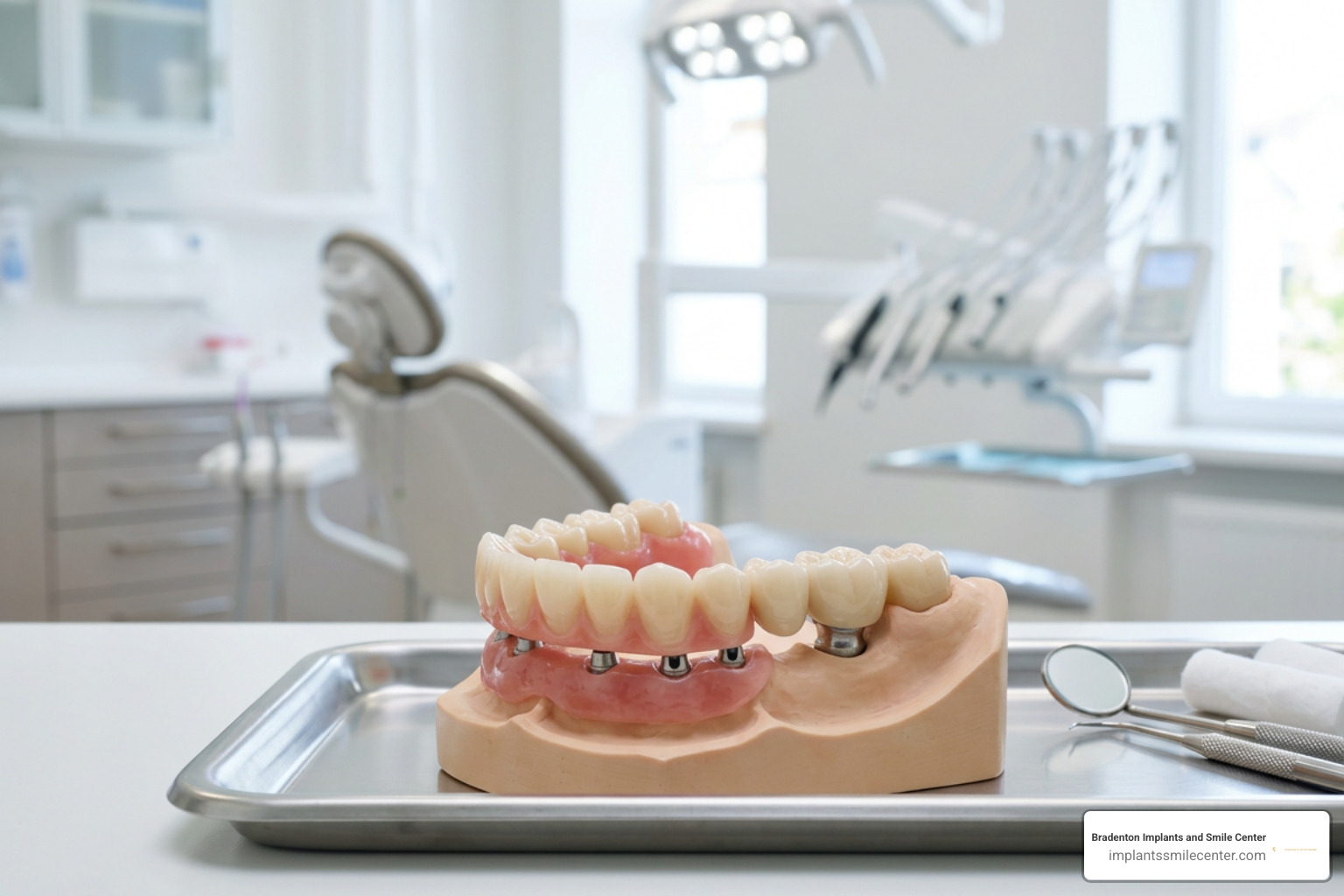
A standard international treatment timeline spans across two distinct phases:
Phase 1 (Trip 1, 4–7 Days): Diagnostic 3D scans, tooth extractions, bone grafting, implant fixture placement, and attachment of temporary healing teeth.
Healing Gap (3–6 Months): The patient returns home while bone cells fuse directly to the biocompatible titanium threads.
Phase 2 (Trip 2, 3–7 Days): Digital impressions, try-in rehearsals, and torque-testing the final monolithic zirconia or ceramic bridge.
Skipping the healing gap with poorly planned immediate-load protocols can increase the risk of early failure. For a deeper look at biological integration, read our dental implants procedure complete guide, or discover how selective candidates benefit from same-day teeth in a day options.
Comparing Top International Destinations for Restorative Surgery
Choosing an overseas destination involves balancing flight accessibility, currency convenience, clinical standards, and language barriers. For comprehensive reconstructions, our full mouth dental implants complete guide outlines what to expect during total smile rehabilitation.
Central and South American Hubs: Mexico, Costa Rica, and Ecuador
For North American patients, destinations in Latin America offer shorter flight routes and simple logistical coordination.
Mexico (Tijuana, Los Algodones, Cancun): Easy border crossing and short domestic flights make Mexico popular. Top clinics feature bilingual staff and modern digital imaging suites.
Costa Rica (San José): Features a high concentration of US-accredited specialists and globally recognized implant facilities.
Ecuador (Cuenca): Known for UNESCO colonial architecture and modern dental clinics. Ecuador utilizes the U.S. dollar, eliminating currency conversion fees for American travelers while offering 60% to 70% savings.
European and Mediterranean Centers: Turkey, Hungary, Albania, and Croatia
European hubs cater heavily to Western European travelers, offering bundled packages with clinic transfers and hotel accommodations.
Turkey (Istanbul, Antalya): Renowned for full-package medical tourism, modern facilities provide comprehensive All-on-4 restorations with savings up to 75%.
Hungary (Budapest): The historic dental capital of Central Europe, adhering strictly to European Union medical device directives.
Albania (Tirana): Emerging destination offering modern surgery centers providing premium European components with low overhead.
Croatia (Zagreb, Split): Combines seaside recovery with single implant restorations starting around €730.
Before selecting a destination for extensive full-arch treatment, compare those options with specialized domestic full-arch restoration services.
Clinical Risks, Material Standards, and Revision Realities
Undergoing invasive oral surgery in a different country introduces clinical variables that require careful consideration.
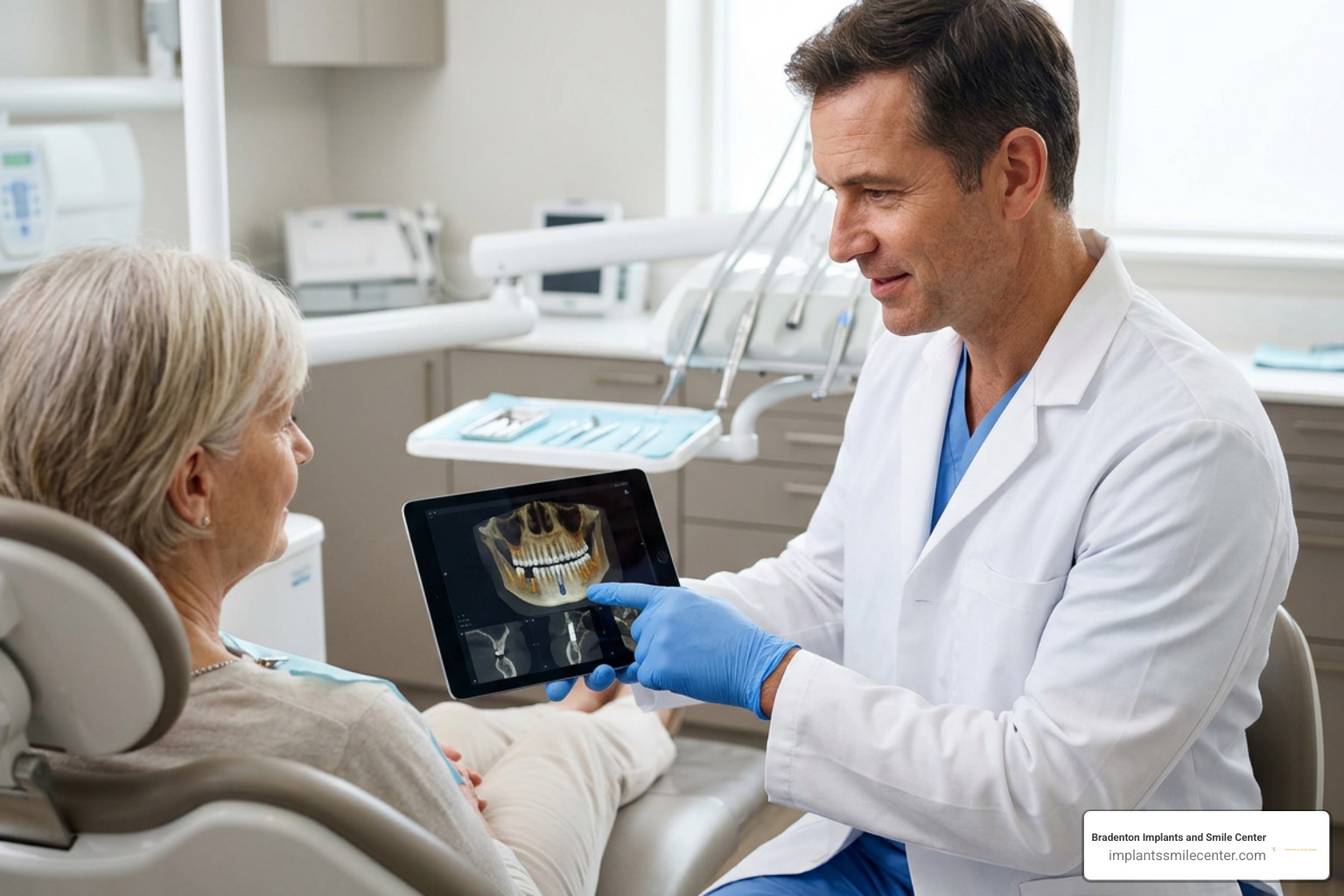
Suboptimal bone mapping or improperly angled fixtures can significantly increase the risk of peri-implantitis—an inflammatory condition causing progressive bone loss around the implant threads. Managing severe peri-implant infections or mechanical complications back home can cost thousands of dollars in specialist care. When foundational bone volume is insufficient, safe treatment relies on proper preparatory bone grafting procedures rather than forcing implants into inadequate anatomical sites.
Global Implant Brands vs. Off-Brand Component Compatibility
Over 200 implant manufacturers operate worldwide, but only a fraction are globally supported:
Tier-1 Global Brands (Straumann, Nobel Biocare, Zimmer Biomet, BioHorizons): Backed by extensive clinical documentation, standardized screw geometries, and worldwide component availability.
Generic / Regional Brands: Cloned or localized systems that reduce upfront production costs. If a proprietary retaining screw loosens, strips, or shears years later, a domestic dentist may not possess the matching driver kit or replacement prosthetic parts to service it.
Always request the implant system's exact brand name, model, lot numbers, and genuine manufacturer warranty documentation.
The Astronomical Costs and Complexities of Corrective Revision Surgery
When foreign dental implants fail or suffer biological complications, domestic corrective treatment is technically demanding. While controlled specialty practices with structured follow-up achieve high long-term success rates exceeding 95% to 98%, overseas procedures without long-term local monitoring present higher rates of unmanaged failure.
Correcting a compromised or failing full-arch case domestically often costs between $35,000 and $60,000+. This complex process involves explanting failed fixtures ($750–$1,500 each), extensive site reconstruction and bone grafting ($1,500–$3,500 per site), managing soft-tissue defects, and fabricating a new definitive prosthesis. For predictable and durable long-term results, explore proven restorative dental implants solutions.
Key Safety Questions to Ask Before Getting Dental Implants Abroad
To protect your health and investment, ask these critical questions before committing:
What exact brand and model of implant fixture and abutment will be placed?
Can you provide your surgeon's specific board certifications, training credentials, and implant case volume?
What happens if an implant fails to integrate during the healing phase—who covers the revision and travel costs?
Do you use 3D CBCT digital planning and computer-milled surgical guides for placement?
What are the in-clinic pain management protocols and advanced sedation options?
Frequently Asked Questions About Traveling for Dental Treatment
Why are dental implants significantly cheaper in other countries?
Lower prices abroad stem primarily from reduced clinical overhead, lower property leases, lower lab technician labor fees, lower malpractice insurance costs, and the absence of high student loan debt for clinicians—not necessarily inferior hardware.
Can my local dentist at home fix or adjust an overseas implant?
Domestic dentists often face liability restrictions and technical barriers when servicing overseas implants. If the clinic abroad used a generic or proprietary system, local practitioners may lack the specific restorative drivers or matching prosthetic components required to make simple adjustments.
What happens if a dental implant fails after I return home?
If an implant fails to integrate, international warranties typically require you to travel back to the original overseas clinic at your own expense for corrective surgery. Alternatively, you must pay out-of-pocket for a local implant specialist to safely remove the fixture, treat surrounding infections, graft the site, and place a new implant.
Conclusion
Traveling abroad for dental implants can offer attractive upfront sticker savings, but it requires careful evaluation of travel logistics, healing timelines, component compatibility, and long-term maintenance. When you factor in multi-trip travel, accommodations, lost wages, and the potential costs of managing complications away from home, the financial gap narrows considerably.
At Bradenton Implants & Smile Center in Bradenton, FL, we believe every patient deserves transparent, compassionate, and technically precise care. We utilize advanced 3D CBCT guided imaging, top-tier global implant systems, and tailored financing plans to make life-changing restorations predictable and accessible. Schedule your consultation with our experienced team today to explore our comprehensive dental implants services.