
A Practical Guide to Comparing Full Set Teeth Implants
What Full Set Teeth Implants Can Restore
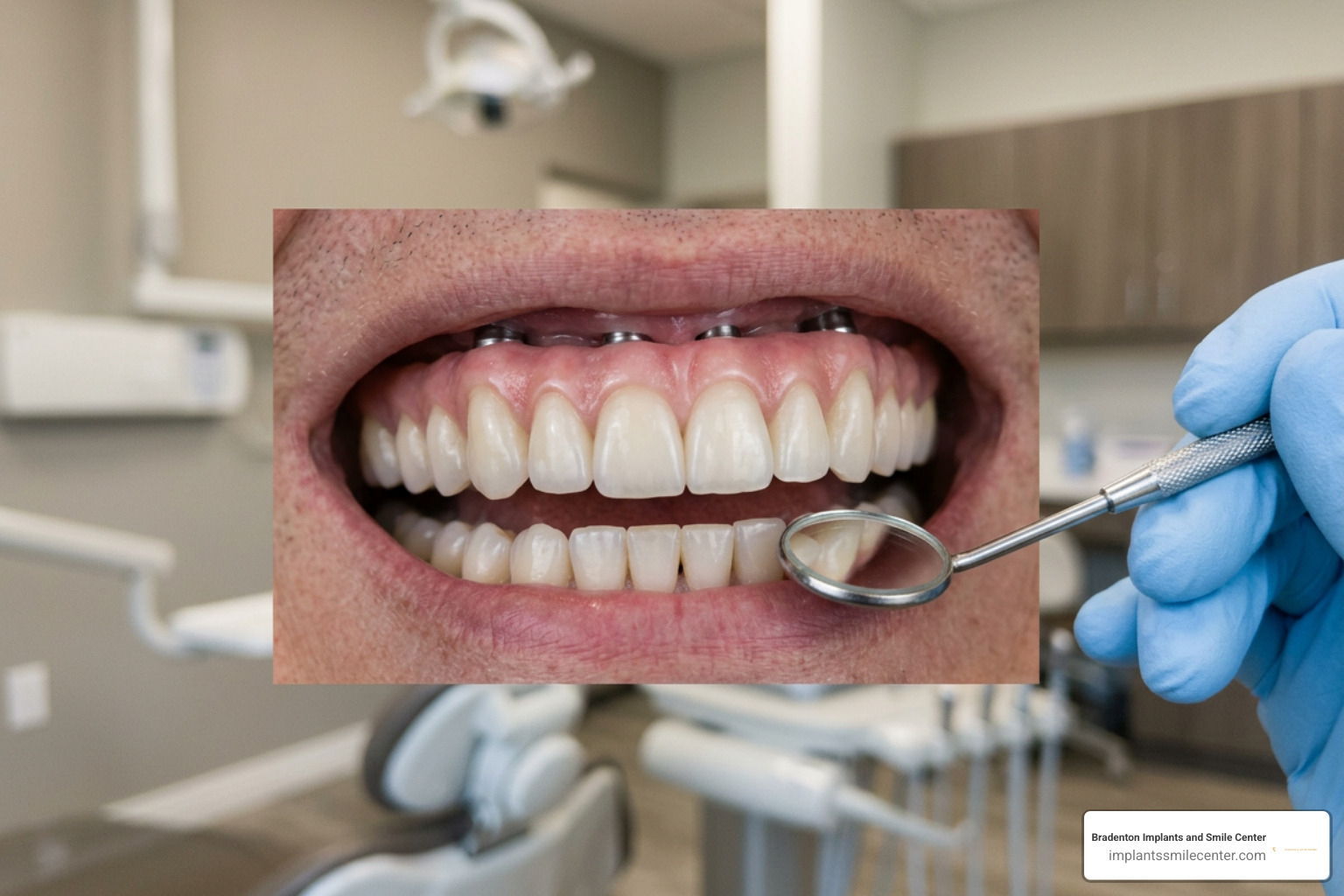
Full set teeth implants replace an entire upper arch, lower arch, or both with a fixed bridge supported by implants placed in the jawbone. Most full-arch plans use four to six implants per jaw. Unlike removable dentures, the bridge stays in place, does not need overnight soaking, and helps preserve the bone that supports facial shape.
For many people with failing, missing, or loose teeth, the practical path is:
Get a full exam and 3D scan to check bone, gums, bite, and health needs.
Review whether a fixed implant bridge, removable implant-supported denture, or another option fits your goals and budget.
Ask for a written plan that separates surgical, temporary-teeth, final-bridge, and maintenance costs.
A temporary fixed bridge can often be placed on surgery day. After the implants bond with the jawbone over roughly 3 to 6 months, your dentist places the final bridge.
I am Dr. John Hegazin, owner of Bradenton Implants and Smile Center, with more than eight years of experience providing implant care, including full set teeth implants, Teeth in a Day, bone grafting, and denture alternatives. In this guide, I will help you compare the options, process, materials, costs, and long-term care needs.
Understanding Full Set Teeth Implants vs. Conventional Dentures
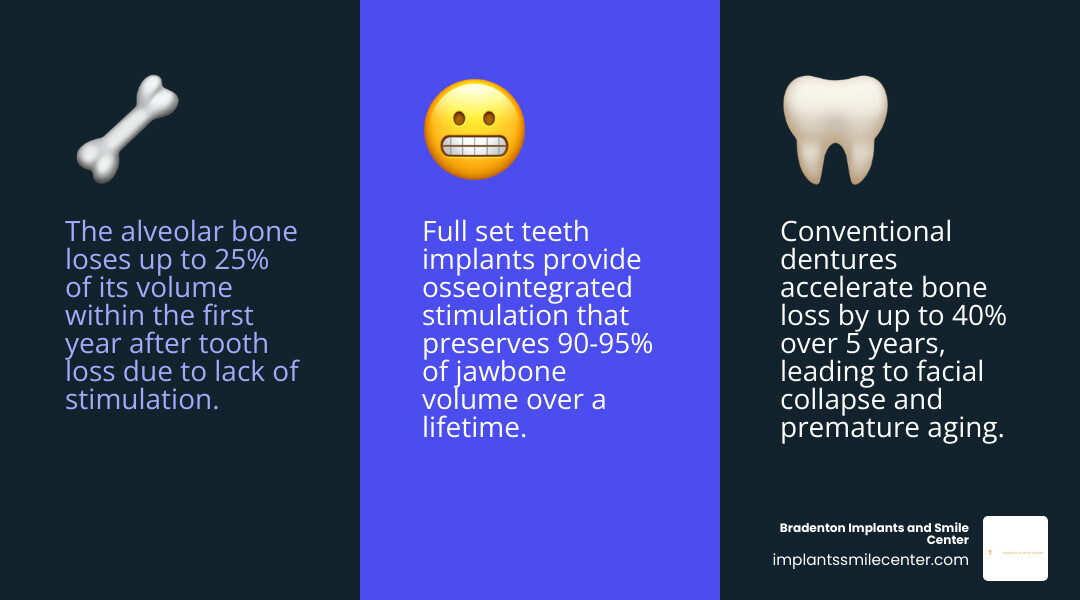
Living with extensive tooth loss affects far more than your ability to chew your favorite foods; it impacts your speech, self-confidence, and structural facial support. When teeth are lost, the alveolar bone—the portion of the jawbone that anchored the natural tooth roots—lacks stimulation. Over time, the body resorbs this unused bone tissue, leading to progressive jawbone recession. This anatomical deterioration causes the lower third of the face to collapse inward, creating premature wrinkles and a sunken facial appearance.
Conventional dentures rest on top of the gums and rely on natural suction or messy adhesives for retention. While they offer a fast way to restore the visual presence of teeth, they do not replace the biological tooth roots. As a result, the jawbone underneath continues to shrink, causing traditional dentures to loosen, click, slip during meals, and require frequent relines.
In contrast, permanent teeth implants address both the root and the crown of the missing teeth. A complete full-arch restoration consists of three core components:
Titanium Implant Fixtures: Small, medical-grade screws placed directly into the jawbone that serve as prosthetic roots and stimulate the surrounding bone.
Abutment Connectors: Precision-milled metal collars secured to the top of the implants that project slightly through the gum line to support the restoration.
Fixed Full-Arch Prosthesis: A custom-crafted bridge containing 10 to 14 realistic prosthetic teeth that screws directly onto the abutments, remaining firmly locked in place.
By replacing missing roots, full mouth dental implants transmit natural biting forces into the jawbone, halting bone resorption and preserving your natural facial structure.
Feature Conventional Removable Dentures Full Mouth Dental Implants Stability & Retention Rests on gums; can slip, click, or shift Anchored to bone; completely fixed and non-removable Bite Force Efficiency Restores roughly 20% to 30% of natural chewing force Restores up to 80% to 90% of natural chewing force Jawbone Preservation Accelerates bone loss due to pressure on gum tissue Stimulates bone tissue to halt facial collapse Palate Coverage (Upper Arch) Full acrylic plate covers roof of mouth, altering taste Horseshoe-shaped bridge leaves palate open and unobstructed Daily Maintenance Removed nightly, soaked in solutions, needs messy glue Brushed and flossed naturally in the mouth like real teeth Longevity Requires replacement or relining every 5 to 7 years Implants can last a lifetime; bridges last 10 to 20+ years
Surgical Techniques and Full Arch Treatment Protocols
Modern full-arch implant dentistry combines advanced digital workflows with minimally invasive surgical techniques to maximize precision, comfort, and predictability. The entire surgical journey follows a meticulously orchestrated series of steps.
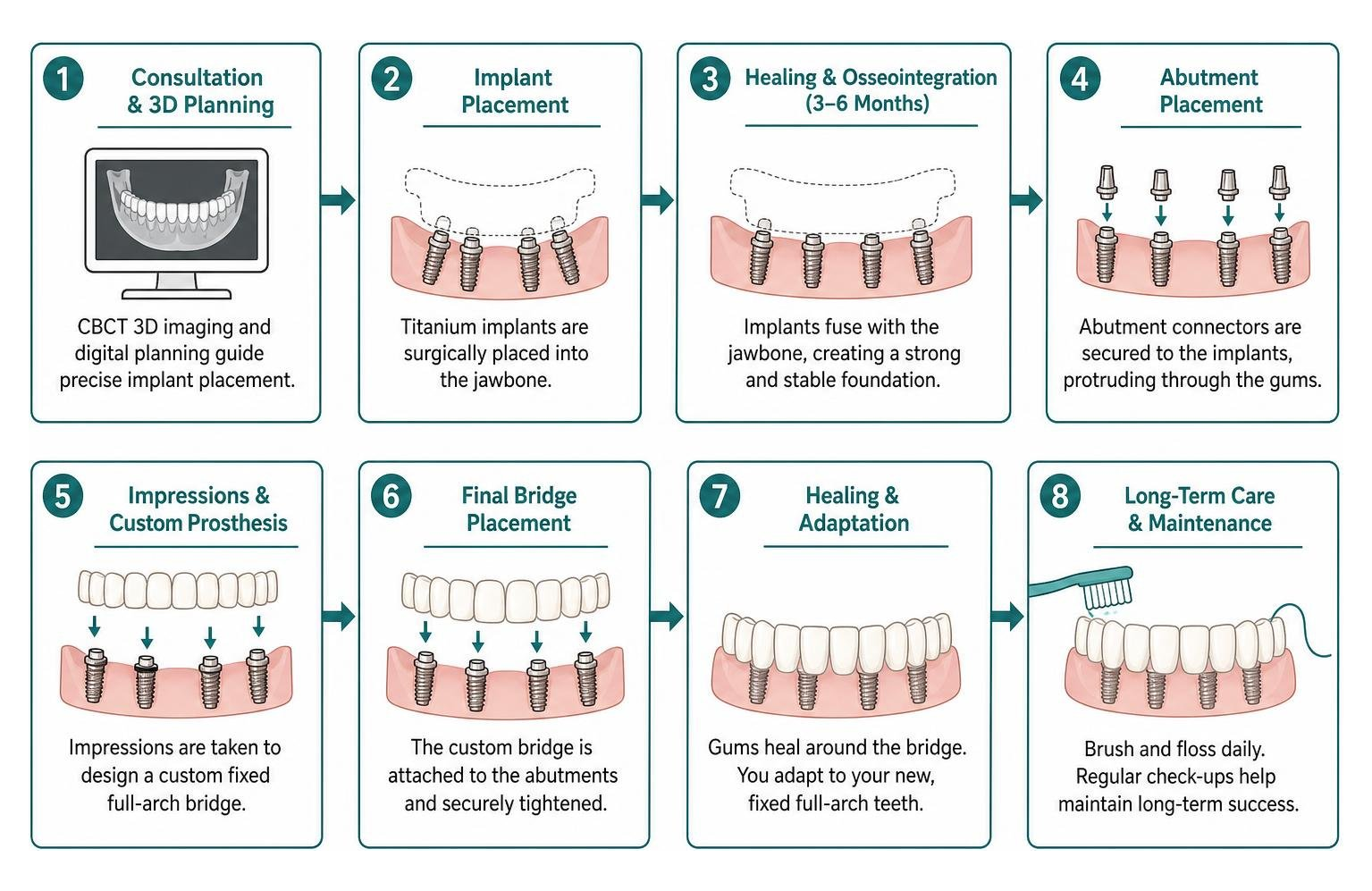
Every successful case begins with advanced diagnostics. We utilize high-resolution Cone Beam Computed Tomography (CBCT) 3D imaging to capture detailed scans of your jawbone architecture, nerve pathways, and sinus cavities. Using specialized implant-planning software, our team creates a virtual simulation of your surgery before you ever sit in the operatory chair. Custom computer-guided surgical templates are fabricated using 3D printing technology, ensuring each implant fixture is inserted at the exact angle, position, and depth required for maximum bone contact.
For a detailed breakdown of what occurs during surgical visits, review our dental implants procedure complete guide.
All-on-4 vs. All-on-6 for Full Set Teeth Implants
When planning a fixed full-arch restoration, selecting the appropriate number of implant posts is a primary clinical decision. The popular All-on-4 protocol utilizes four strategically placed implants per jaw. To maximize structural support, the two anterior (front) implants are placed vertically, while the two posterior (back) implants are tilted at angles between 30 and 45 degrees. Angling the posterior implants accomplishes two critical goals: it increases surface contact with denser bone and bypasses anatomical obstacles such as the maxillary sinus cavity in the upper jaw or the mental nerve canal in the lower jaw.
For patients seeking in-depth clinical insights, consulting prosthodontic clinical guidance on implant-supported full arch restorations offers extensive background on biomechanical loading and prosthetic design.
While four implants provide a stable baseline, an All-on-6 protocol places six implants across the arch. Adding two additional fixtures provides broader occlusal load distribution, which can be advantageous for patients with higher bite forces, individuals with larger jaw dimensions, or those with softer bone quality in the upper arch. If you are comparing specific surgical protocols, take a look at our guide on all on four dental implants price factors to see how structural planning influences overall investment.
Teeth-in-a-Day and Immediate Provisionalization
One of the most remarkable breakthroughs in modern implant dentistry is immediate provisionalization, commonly referred to as "Teeth in a Day." In many eligible cases, any remaining damaged teeth are extracted, implants are placed, and a customized temporary fixed bridge is secured onto the abutments during the very same appointment.
This temporary acrylic bridge serves essential functions:
It stabilizes the implants by splinting them together during early healing.
It allows you to leave our office with an immediate, functional, natural-looking smile.
It protects the underlying surgical sites while your gum tissue contours around the abutments.
Following placement, a crucial 2 to 6 month window of osseointegration occurs. During this phase, your living bone cells fuse directly to the microscopic porous surface of the titanium implants, anchoring them permanently into your jaw. Once complete osseointegration is confirmed and your soft tissues have fully matured (which generally takes about two weeks of localized tissue adaptation following final abutment adjustments), we fabricate and deliver your permanent, high-strength bridge. To understand the mechanics of immediate loading, explore our teeth in a day implants complete guide.
Prosthesis Materials and Patient Candidacy
Comparing Prosthetic Materials: Zirconia vs. Acrylic Titanium
The material chosen for your permanent full-arch bridge dictates its long-term durability, aesthetic appearance, and maintenance needs. Today, two primary restorative categories dominate full-arch dentistry:
Monolithic Zirconia: Milled from a solid block of ultra-durable ceramic material, monolithic zirconia represents the gold standard in modern prosthetics. It offers exceptional fracture resistance, will not chip or stain over time, and closely mimics the light-translucent properties of natural tooth enamel. Because it is non-porous, it resists plaque accumulation and is gentle on gum tissue. It is especially ideal for patients who clench or grind their teeth (bruxism).
Acrylic Fused to Titanium Bar: This classic hybrid design consists of a rigid, custom-milled titanium framework wrapped in pink dental acrylic that holds individual denture-grade composite teeth. It offers a slight natural "cushion" during chewing and is easier to repair or adjust chairside if a tooth wears down over time. However, acrylic is more porous than ceramic, making it more susceptible to staining and requiring prosthetic maintenance or tooth replacement after 7 to 10 years of heavy use.
Porcelain-Fused-to-Metal (PFM): Featuring individual porcelain crowns fused over a cast metal framework, PFM bridges provide high aesthetics and proven strength. However, porcelain can be prone to localized chipping if subject to extreme occlusal stress, and fabrication costs are typically higher.
Evaluating Candidacy for Full Set Teeth Implants and Bone Loss
Most adult patients suffering from widespread tooth decay, advanced periodontal disease, or failing dental work are excellent candidates for full arch restorations. During your clinical evaluation, we assess several structural and systemic markers:
Available Bone Height and Width: Even if you have experienced moderate to severe bone loss, angled implants often eliminate the need for extensive bone grafting. For the upper jaw, minor sinus lifts can create sufficient vertical depth. In cases of extreme upper jaw atrophy, zygomatic implants (anchored into the cheekbones) provide an alternative foundation.
Periodontal and Oral Health: Active gum infections must be fully treated and cleared prior to or during surgical intervention.
Systemic Wellness: Controlled conditions such as managed type 2 diabetes or well-regulated blood pressure rarely prevent implant placement. However, active smoking, untreated systemic diseases, or certain medications (like high-dose IV bisphosphonates) require careful planning to ensure proper bone healing.
For a deeper look into clinical candidacy criteria, read our full arch implants ultimate guide.
Cost Breakdown and Financial Considerations for 2026
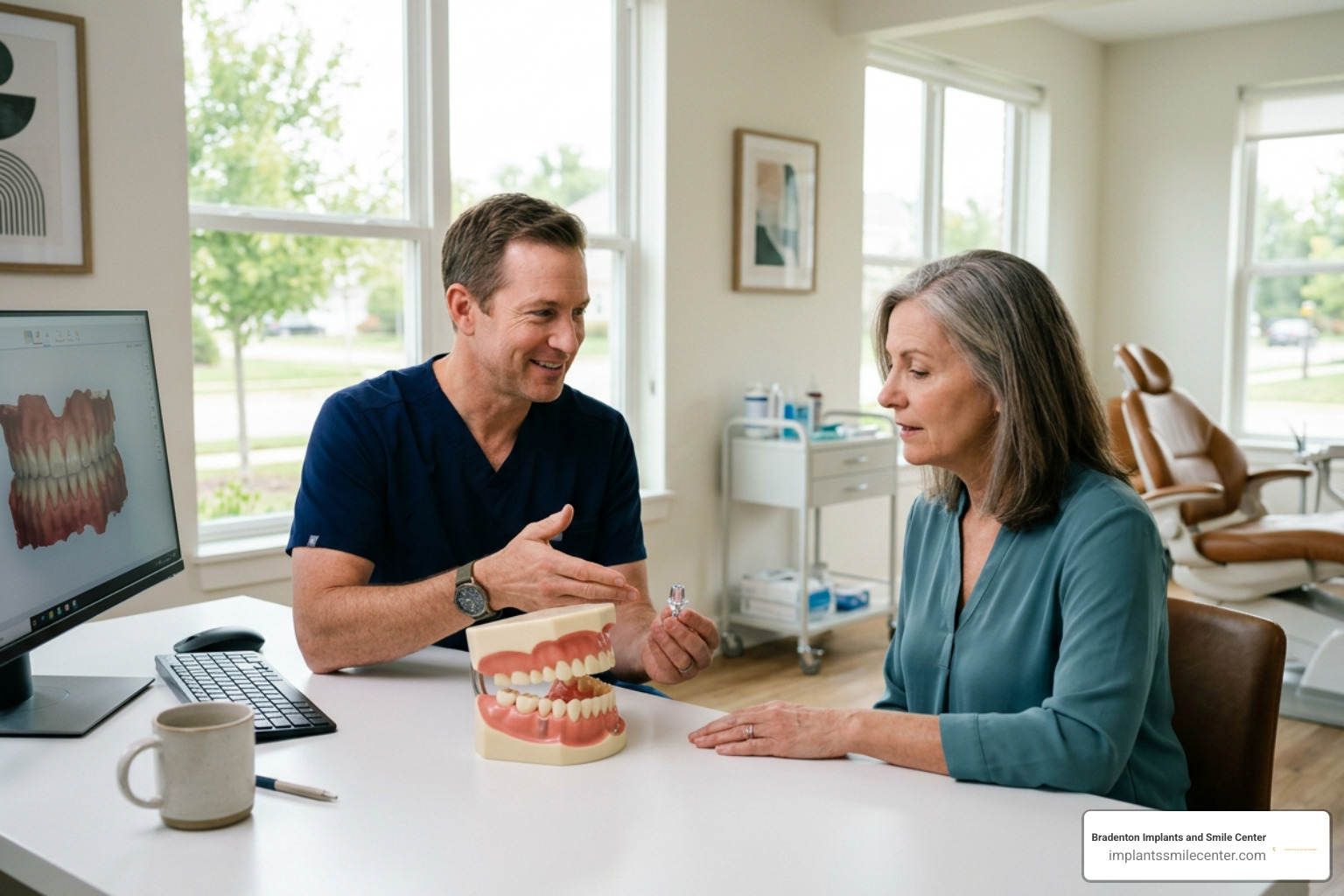
Restoring an entire arch with dental implants is a comprehensive surgical and prosthetic rehabilitation. As of 2026, the national average cost for a full arch implant restoration typically ranges from $20,000 to $50,000 per arch, depending on individual surgical complexity, material selections, and necessary pre-treatments.
Several variables influence where your treatment falls within this range:
Pre-Surgical Treatments: Necessary extractions, extensive bone grafting, or sinus elevation procedures.
Number of Implants: Choosing between a 4-implant or 6-implant foundation per arch.
Prosthetic Materials: Premium monolithic zirconia bridges require advanced CAD/CAM milling and higher lab fees compared to standard titanium-acrylic hybrids.
Sedation Preferences: The choice between local anesthesia with oral conscious sedation or deeper IV sedation administered by a specialist.
While traditional dental insurance plans often categorize full-arch implant bridges as a major restorative procedure with annual benefit caps (typically covering between $1,000 and $2,500 total), several financial strategies can make care accessible. Many patients utilize third-party healthcare financing options (such as CareCredit or Proceed Finance), which offer flexible monthly payment plans with low or zero-interest terms.
To help evaluate investment variables, read our breakdown of dental implants full mouth price and review our practical financing full mouth dental implants guide. While the upfront expense is higher than traditional dentures, full set implants represent a permanent, lifetime investment in your overall health, preventing recurring dental repairs, relines, and ongoing bone loss.
Recovery Timeline and Long-Term Maintenance
Understanding the post-surgical healing curve helps ensure a comfortable, predictable recovery. Most patients report that full-arch surgery is far less uncomfortable than they anticipated, often comparing it favorably to simple extractions.
Acute Healing (Days 1 to 7)
Swelling and Bruising: Mild to moderate swelling and minor bruising around the cheeks and jaw peak within 48 to 72 hours and subside by day 5 to 7. Cold compresses applied during the first 48 hours help minimize swelling.
Discomfort Management: Post-surgical soreness is readily managed with prescribed pain relievers or a combination of over-the-counter ibuprofen and acetaminophen.
Returning to Daily Life: Patients with non-strenuous desk jobs routinely return to work within 2 to 5 days following surgery.
Suture Removal: If non-resorbable sutures are used, they are comfortably removed in our office within 7 to 10 days.
Nutritional Guidelines (Months 1 to 4)
While your temporary bridge looks and feels like natural teeth, the implants underneath are actively integrating with your bone. You must adhere to a soft-food diet for the first 8 to 12 weeks. Stick to nutritious foods that can be easily cut with a fork—such as scrambled eggs, soft fish, pasta, steamed vegetables, avocados, and protein smoothies—avoiding hard, crunchy, sticky, or chewy foods that could exert excessive lateral forces on healing implants.
Daily Hygiene and Long-Term Maintenance
A fixed implant bridge cannot get cavities, but the supporting gum and bone tissues remain susceptible to peri-implantitis (inflammation caused by plaque bacteria). Protecting your investment requires diligent daily care:
Water Flossing: Use a water flosser on a low-to-medium setting daily to flush out food particles and biofilm trapped under the bridge.
Interdental Brushes: Use specialized soft-coated micro-brushes to clean around the implant abutments without scratching the metal surfaces.
Specialized Floss: Thread thick, spongy bridge floss (such as Super Floss) beneath the prosthesis once a day.
Non-Abrasive Toothpaste: Brush twice daily with a soft-bristle manual or sonic toothbrush and non-abrasive gel toothpaste.
Professional Cleanings: Visit your dental provider every 3 to 6 months for professional maintenance, where specialized titanium or plastic instruments are used to clean around the fixtures, assess tissue health, and verify screw torques.
With excellent home hygiene and routine maintenance, your titanium implant fixtures can last a lifetime, while your prosthetic bridge typically provides 10 to 20+ years of dependable function before requiring refurbishment or replacement.
Frequently Asked Questions About Full Arch Restorations
How long does recovery take after full mouth implant surgery?
Acute recovery—including the management of minor swelling, bruising, and localized soreness—typically takes 3 to 7 days. Most patients return to desk work and normal light routines within 2 to 5 days. However, the complete biological healing process (osseointegration), during which the titanium implants bond securely with your jawbone, takes between 3 to 6 months while you wear a fixed temporary bridge on a soft-food diet.
Can you get full arch implants if you have severe bone loss?
Yes. Modern techniques such as the All-on-4 protocol angle posterior implants at 30 to 45 degrees to anchor firmly into denser existing bone, frequently eliminating the need for invasive bone grafting. In instances of severe maxillary bone resorption, advanced alternatives such as sinus lift bone augmentation or zygomatic implants (anchored into the cheekbone) allow even patients with significant bone atrophy to receive a fixed full-arch restoration.
How do you clean and care for a fixed full arch bridge?
Because a fixed bridge is permanently attached to your implants, you clean it directly in your mouth without removing it. Daily home care involves brushing twice daily with a non-abrasive toothpaste, using a water flosser to irrigate the space between the bridge and your gums, and passing specialized implant floss or interdental brushes around each abutment. You will also need professional implant maintenance and checkups every 3 to 6 months.
Conclusion
Restoring your smile with full set teeth implants is a transformative investment that reclaims your natural chewing power, preserves your facial bone structure, and gives you back the freedom to smile with complete confidence. Unlike traditional removable dentures that slip and accelerate bone loss, fixed implant bridges offer a permanent, stable, and aesthetically lifelike solution designed to last for decades.
At Bradenton Implants & Smile Center, we are dedicated to providing personalized, compassionate care utilizing modern 3D technology, advanced surgical techniques, and flexible financing options tailored to your needs. If you are ready to explore your restorative options, schedule a consultation with our experienced team today by visiting our services - dental implants page or calling our Bradenton, FL office. We look forward to helping you achieve a strong, healthy, and radiant smile.