
The Ultimate Guide to Immediate Implant Placement
What Is Immediate Implant Placement — and Is It Right for You?
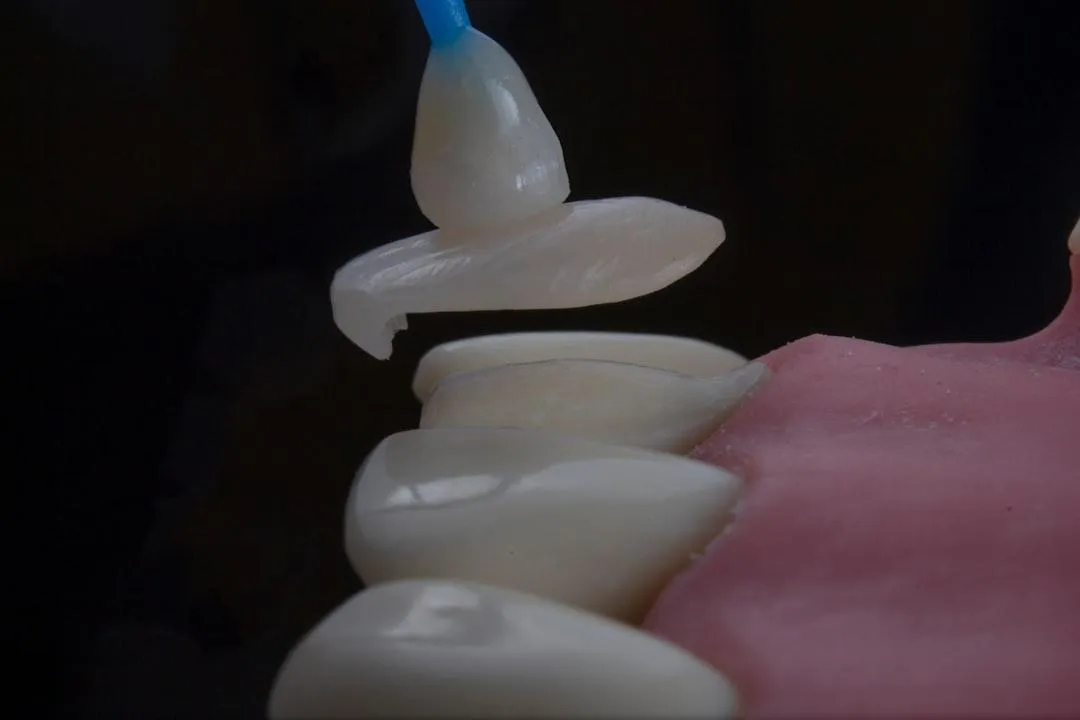
Immediate implant placement is the practice of inserting a dental implant directly into a tooth socket on the same day as extraction — no waiting months for the site to heal first.
Here's a quick overview of what that means for you:
What it is: Your dentist removes the damaged tooth and places the implant in the same appointment
Who it's for: Patients with healthy bone, intact socket walls, and no active infection at the site
Key benefit: Fewer surgeries, shorter total treatment time, and preserved bone structure
What to expect: A temporary crown is often placed the same day; the final crown follows after healing
Survival rate: Studies report a one-year survival rate of 97.1% for immediately placed single-tooth implants in the esthetic zone
Losing a tooth — or facing an extraction — can feel overwhelming. For many patients between 45 and 70, the fear isn't just about the gap in their smile. It's the thought of a long, multi-step process with months of waiting, multiple surgeries, and temporary solutions that don't feel or look right.
That's where immediate implant placement changes the picture entirely.
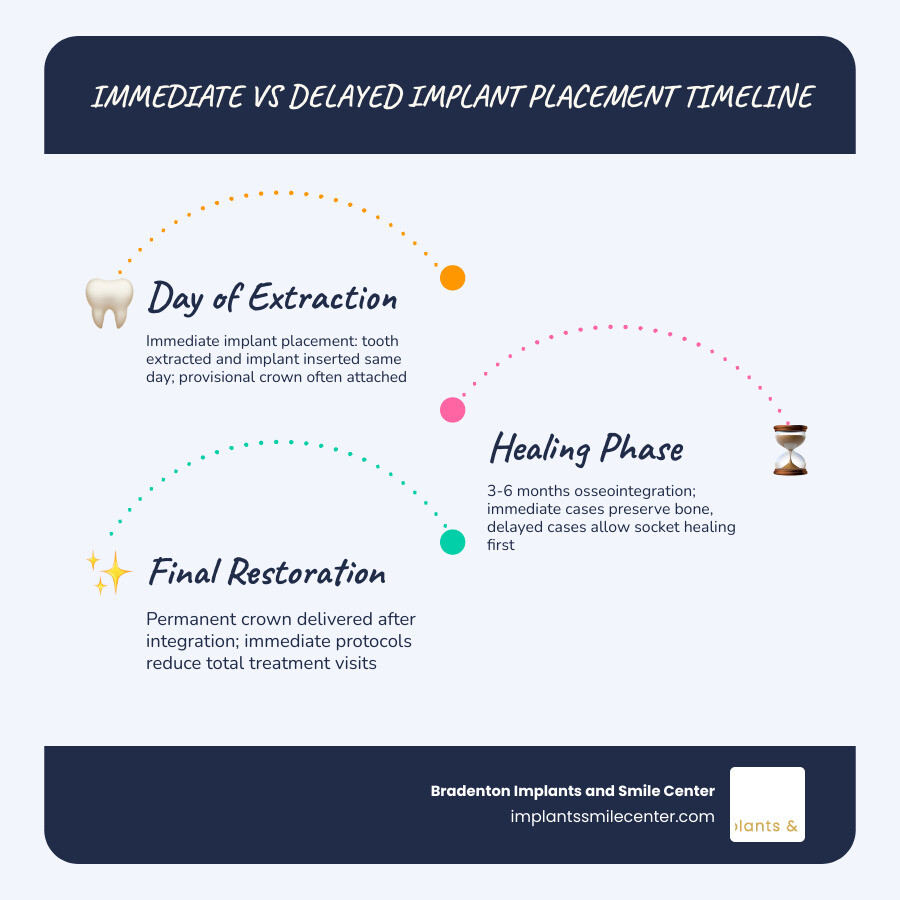
Instead of waiting 3 to 6 months after extraction before even beginning the implant process, this approach compresses the timeline dramatically. The implant goes in the same day the tooth comes out. In many cases, a temporary crown is attached the same visit — so you leave with something that looks and functions like a tooth.
Research backs this up. According to a scoping review published in the Journal of Clinical Medicine, delayed implant placement shows survival rates of 98.3%–100%, while immediate placement shows rates of 83.7%–100% — a comparable range when proper patient selection is followed. The difference comes down to how the case is planned and executed.
This isn't the right approach for every patient or every situation. But when the conditions are right, it can be a genuinely life-changing option — fewer visits, less disruption, and results that protect both your bone and your smile.
I'm Dr. John Hegazin, owner of Bradenton Implants and Smile Center, and with over 8 years of experience in implant dentistry — including immediate implant placement procedures — I've helped many patients restore their smiles in fewer steps than they expected. In this guide, I'll walk you through everything you need to know to understand whether this approach is right for you.
Defining Immediate Implant Placement vs. Delayed Protocols
To understand why immediate implant placement (IIP) has become such a sought-after technique, we have to look at how it compares to traditional methods.
In the early days of implant dentistry, clinicians followed the classic Brånemark protocol. This required extracting the tooth, waiting 6 to 8 months for the bone in the socket to completely heal, and then performing a second surgery to place the implant. Today, we classify implant timing into four distinct categories based on the ITI (International Team for Oral Implantology) consensus:
Type 1 (Immediate): The implant is placed in the fresh extraction socket during the same surgical session as the tooth extraction.
Type 2 (Early with soft tissue healing): Placed 4 to 8 weeks post-extraction, allowing the gum tissue to fully heal over the socket.
Type 3 (Early with partial bone healing): Placed 12 to 16 weeks post-extraction, when significant bone has filled the socket.
Type 4 (Delayed/Late placement): Placed 6 months or more post-extraction, once the socket is completely healed and mature.
The primary difference between Type 1 and Type 4 protocols lies in the timing, surgical approach, and biological rationale. Delayed implant placement (DIP) relies on a completely healed bony ridge, which provides a highly predictable environment but requires a much longer treatment duration and multiple surgical interventions. You can read more about standard timelines in our comprehensive dental implants guide.
Biologically, the moment a tooth is removed, the surrounding bone begins to remodel. The thin bone that once supported the tooth's root (known as bundle bone) naturally resorbs because it no longer receives nutrition from the periodontal ligament. Placing an implant immediately aims to capitalize on the existing bone envelope, though it does not entirely stop this natural remodeling.
To explore the deeper scientific differences, you can read this scientific review of immediate vs delayed protocols. For those looking at broader treatment options, we also offer detailed information on our main dental implant services.
Biological Healing Dynamics and Biomarkers
When we place an implant immediately, we are asking the body to perform two complex biological tasks at the same time: heal a fresh extraction wound and osseointegrate a foreign titanium or ceramic post.
During the initial peri-implant healing phase, a blood clot forms in the gap between the implant and the socket wall. Over the first few weeks, this clot is replaced by woven bone, which gradually matures into lamellar bone. This process is heavily influenced by molecular biomarkers—such as inflammatory cytokines and growth factors—found within the peri-implant crevicular fluid.
Because the bundle bone resorbs rapidly after extraction, managing this gap is critical to maintaining bone-to-implant contact (BIC) and preventing the overlying gum tissue from collapsing.
Clinical Prerequisites and Patient Selection
As exciting as immediate implant placement is, it is not a "one-size-fits-all" procedure. Achieving a predictable, long-term result requires strict adherence to clinical prerequisites. We must carefully evaluate your bone phenotype (the thickness of your jawbone) and your soft tissue phenotype (the thickness and quality of your gums).
To ensure the highest level of safety and predictability, we utilize the ITI SAC (Straightforward, Advanced, Complex) classification system to evaluate the difficulty of each case. We also rely heavily on digital planning and guided surgery.

Using a high-resolution 3D CBCT scan, we can visualize your bone structure in three dimensions before we ever touch a dental instrument. This allows us to plan the exact size, angle, and depth of the implant to match your unique anatomy. To learn more about what to expect during these initial phases, read our dental implant procedures guide.
Patient Selection Criteria for Immediate Implant Placement
For a patient to be an ideal candidate for an immediate protocol, several key criteria must be met:
Intact Buccal Bone Wall: The thin wall of bone at the front of the tooth socket must be fully intact. If this wall is damaged or missing, immediate placement is usually contraindicated.
Thick Gingival Biotype: Patients with naturally thick, robust gum tissue experience far less recession and show much more predictable esthetic outcomes.
Absence of Acute Infection: While chronic, well-debrided periapical issues can sometimes be managed, active, acute infections with pus or swelling require delayed protocols.
Ability to Achieve Primary Stability: The implant must be locked tightly into the bone at the time of placement. This requires engaging the bone beyond the root tip (apical) and along the inner (palatal/lingual) walls of the socket. We measure this using insertion torque (aiming for at least 35 to 45 Ncm) or an Implant Stability Quotient (ISQ) of over 70.
For more details on how these factors influence long-term tissue health, consult the EAO consensus guidelines on tissue stability.
Advantages and Disadvantages of Immediate Protocols
Every clinical decision involves weighing the pros and cons. Here is a clear breakdown of how immediate implant protocols compare to traditional delayed protocols:
Feature / Outcome Immediate Implant Placement (IIP) Delayed Implant Placement (DIP) Treatment Time Significantly reduced (saves 3 to 6 months) Longer (requires multiple healing phases) Surgical Interventions Usually just one combined surgery Two or more separate surgical procedures Alveolar Bone Preservation Helps support and maintain existing tissue contours Requires ridge preservation to prevent collapse Esthetic Outcomes Excellent when temporary crown is placed immediately Highly predictable, but takes longer to shape gums Patient Comfort High (fewer appointments, immediate temporary tooth) Moderate (requires temporary partials or flippers) Survival Rates 83.7% to 100% (97.1% average in esthetic zone) 98.3% to 100% Complication Rates Higher technique sensitivity; ~3% higher failure risk Lower risk of mid-facial recession and malposition
While the convenience of immediate protocols is unmatched, patients must understand that it is a highly technique-sensitive procedure. If you are exploring full-arch replacement options, you might also find our full mouth dental implants guide helpful, or you can read about finding affordable dental implants to fit your budget.
Surgical and Biological Protocols for Immediate Implant Placement
The surgical execution of an immediate implant requires absolute precision. First, the tooth must be removed using an ultra-gentle, "atraumatic" extraction technique. We use specialized instruments to carefully separate the tooth from the surrounding bone without damaging the delicate outer socket wall.
Once the tooth is out, we thoroughly clean and debride the socket. Because dental implants are round and natural tooth roots are often irregular or oval, a gap naturally exists between the implant and the socket wall—especially at the front (buccal) side.
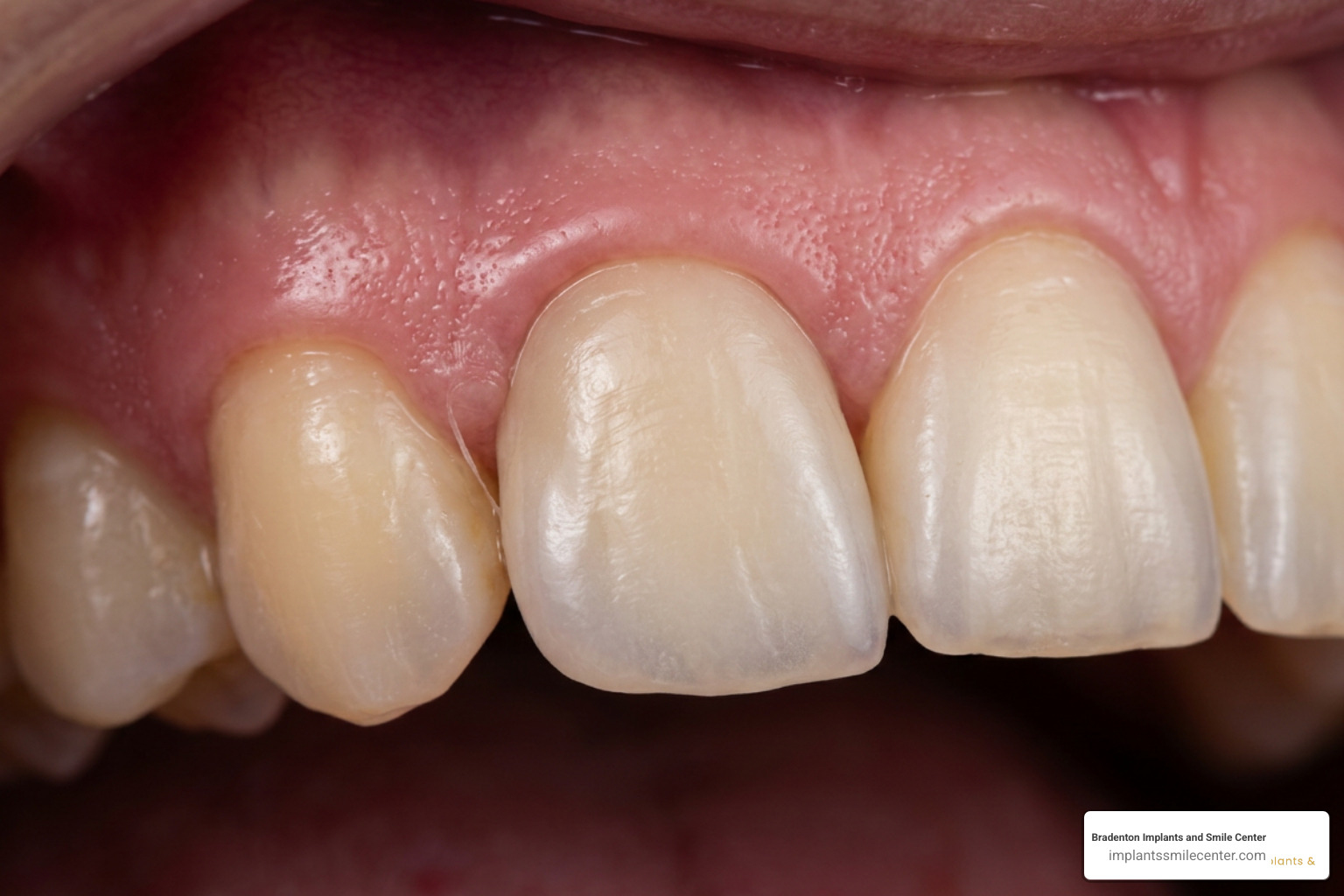
Managing this gap and supporting the surrounding soft tissues is what separates a good result from an exceptional, natural-looking smile. To understand how we rebuild and support these bone structures, you can read our guide to bone grafting.
Hard and Soft Tissue Augmentation Strategies
To prevent the outer bone wall from collapsing inward during healing, we routinely perform "gap grafting." If the gap between the implant and the buccal bone is greater than 1.25 mm to 2 mm, we fill it with a bone substitute.
We typically use deproteinized bovine bone mineral (DBBM), which resorbs very slowly and provides long-term structural support. In many cases, we also perform a soft tissue graft (such as a connective tissue graft) to thicken the gums at the front of the tooth.
Clinicians must also choose between "open healing" (leaving a healing abutment exposed to the oral cavity) and "closed healing" (covering the implant completely with a cover screw and suturing the gums over it). To see how these techniques impact esthetics, read this clinical study on soft-tissue management.
Immediate Provisionalization and Loading Protocols
If we achieve excellent primary stability during surgery (an insertion torque of 35 to 45 Ncm), we can often place a nonfunctional provisional (temporary) restoration on the same day. This temporary crown is carefully adjusted so that it does not contact your opposing teeth when you bite or chew, protecting the healing implant from heavy forces.
The temporary crown plays a vital biological role: it acts as a customized template that supports and shapes the surrounding gum tissue as it heals. By customizing the "critical" and "subcritical" contours of this temporary crown, we can perfectly replicate the natural emergence profile of a real tooth.
To learn more about this technique, review this guide to tissue profile preservation. If you are interested in walk-in, same-day options, you can read more about same day teeth and our teeth in a day services.
Risk Mitigation and Complication Management
While immediate implants offer incredible benefits, they are not without risks. The most common complications include mid-facial recession (where the gum line pulls upward, exposing the metal or ceramic of the implant) and marginal bone loss. Research indicates that advanced mid-facial recession of more than 1 mm occurs in up to 21% of immediate cases in the esthetic zone, particularly in patients with a thin tissue biotype.
To minimize these risks, we use state-of-the-art, fully tapered implant designs. These implants are engineered to compress and grip the bone at the bottom of the socket, providing exceptional primary stability even in challenging extraction sites.
To explore the clinical performance of these modern designs, read this clinical evaluation of fully tapered implants.
Technical Challenges in Immediate Implant Placement
One of the greatest technical challenges in IIP is avoiding "implant malposition." Because the extraction socket is naturally sloped, a standard drill will tend to slide along the slippery back wall of the socket, pushing the implant too far forward. This can destroy the thin front bone wall and lead to severe esthetic failure.
To prevent this, we use a prosthetic-driven planning approach and guided surgical templates. We deliberately direct our osteotomy toward the palatal-apical wall (the back and bottom of the socket) to anchor the implant securely in dense, pristine bone.
For a complete clinical overview of these techniques and loading protocols, you can read the ITI Treatment Guide 14 on immediate loading.
Frequently Asked Questions about Immediate Implants
We know that deciding to move forward with a dental implant is a big step, and you likely have several questions. Here are some of the most common things our patients ask us:
Is immediate implant placement painful?
We perform the entire procedure under highly effective local anesthesia, meaning you won't feel pain during the surgery. For patients who feel anxious or are undergoing more extensive extractions, we also offer advanced sedation options. You can read more about how we keep you comfortable in our guide to IV sedation.
After the anesthesia wears off, most patients report only mild to moderate discomfort, which is easily managed with standard over-the-counter or prescribed pain relievers.
What is the success rate of immediate dental implants?
When performed on properly selected candidates by an experienced clinician, immediate implants are incredibly reliable. Clinical studies show a one-year survival rate of 97.1% in the esthetic zone. While there is a slightly higher risk of minor complications (like minor gum recession) compared to delayed placement, the overall long-term success rates are highly comparable.
How long does the immediate implant process take?
On the day of your appointment, the extraction, implant placement, bone grafting, and placement of your temporary crown are all completed in a single visit, typically lasting 1 to 2 hours. After a healing period of 3 to 6 months—which allows the implant to fully fuse with your jawbone—you will return to our office to have your beautiful, custom-made final restoration placed.
Conclusion
Immediate implant placement represents a massive leap forward in modern dentistry, allowing us to restore your smile faster, with fewer surgeries, and with incredibly natural-looking results. However, because this procedure requires absolute precision, choosing the right team is the most important decision you will make.
At Bradenton Implants & Smile Center, we combine years of specialized surgical expertise with the latest in 3D digital planning and warm, compassionate care. Whether you need a single tooth replaced or are exploring more comprehensive restorative options, we are here to guide you every step of the way.
We invite you to visit us at our state-of-the-art office located at 7270 55th Ave E, Bradenton, FL 34203. Ready to find out if you're a candidate for an immediate implant? Schedule a consultation at Bradenton Implants & Smile Center today, and let us help you smile with confidence again!