
Ultimate Checklist for Finding the Best Full Mouth Dentist
How to Choose the Best Full Mouth Dentist
The best full mouth dentist is not simply the one with the lowest price or the most dramatic smile photos. Look for a provider who can assess your teeth, gums, jawbone, and bite as one connected system - then explain a clear plan for restoring comfort, chewing, speech, and appearance.
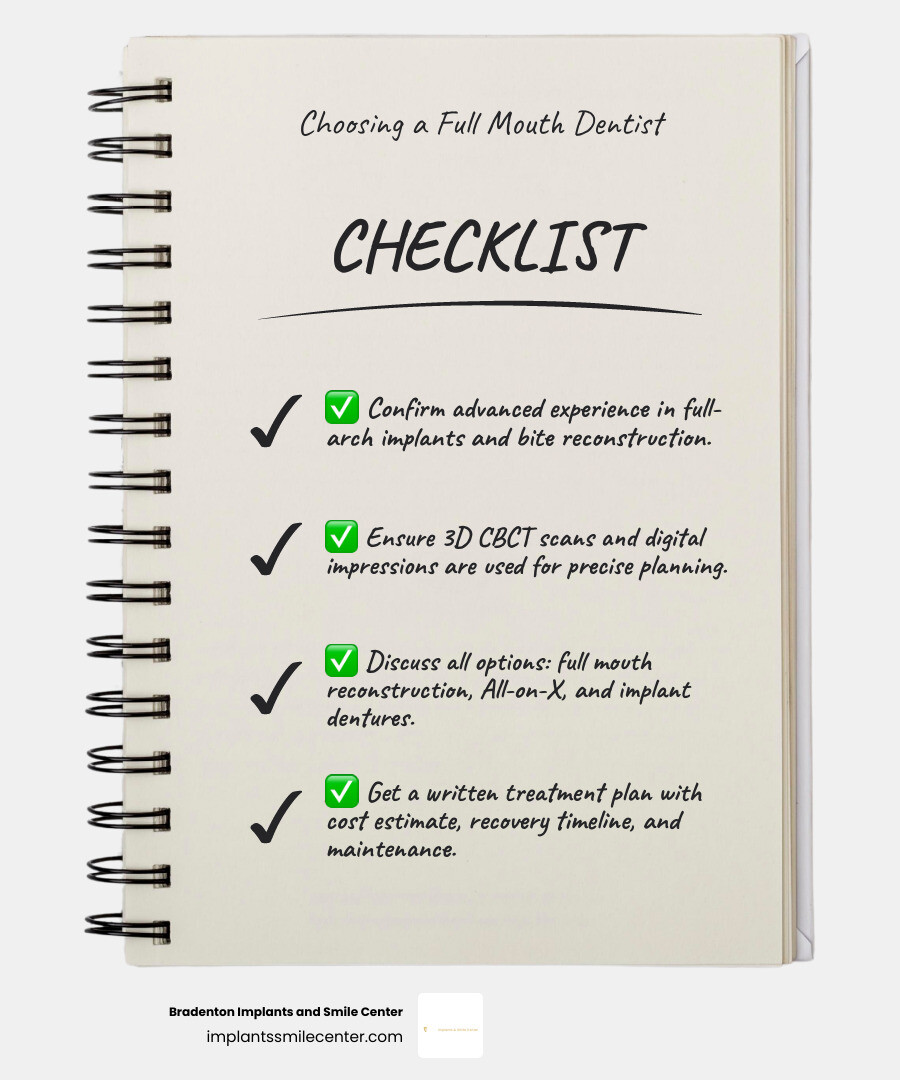
Before choosing a specialist, confirm that they:
Have advanced experience with complex restorative care, including full-arch implants and bite reconstruction.
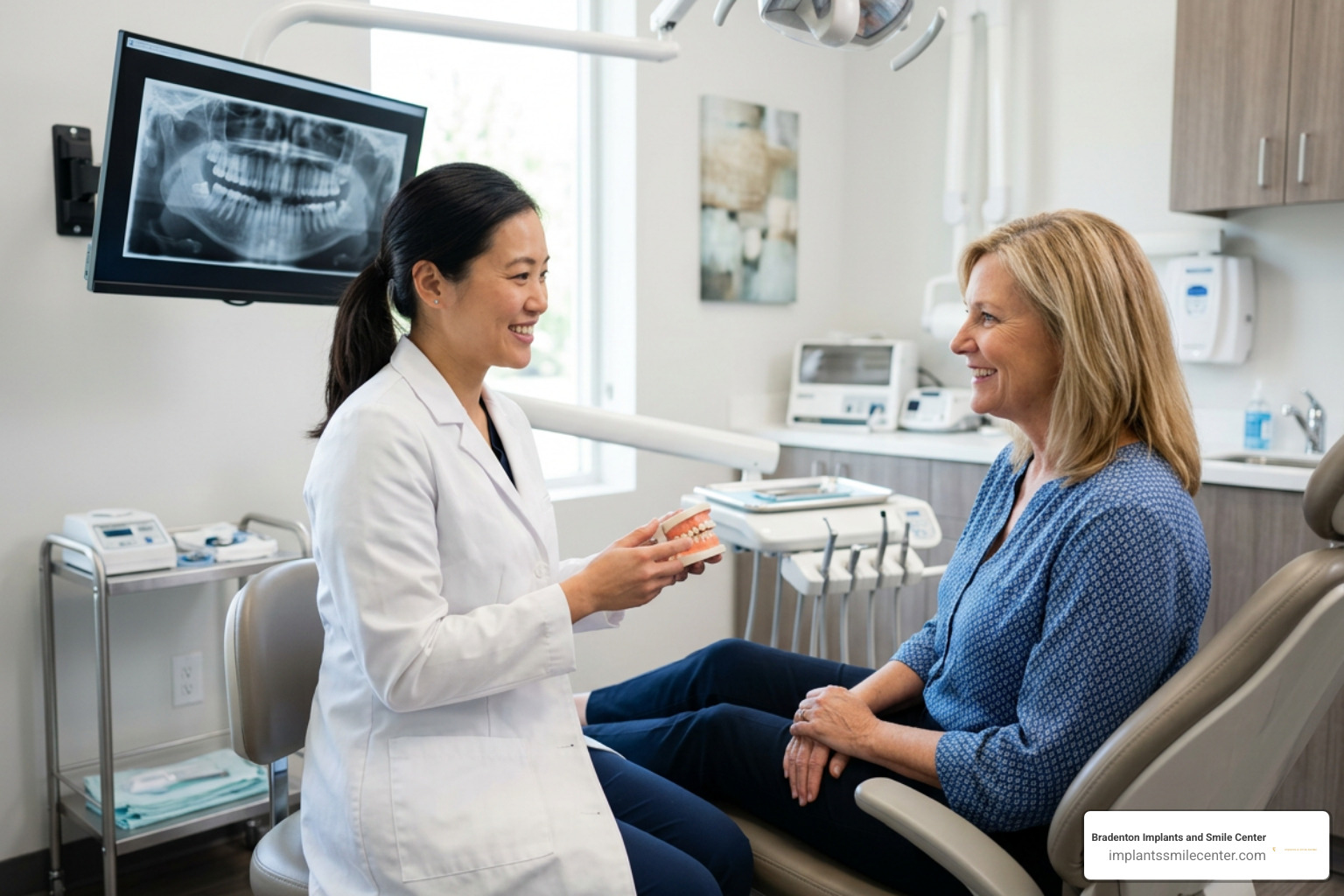
Use detailed diagnostics, such as 3D CBCT scans and digital impressions, to plan treatment precisely.
Discuss every reasonable option, including full mouth reconstruction, All-on-X implants, and removable implant dentures.
Provide a written treatment sequence, complete cost estimate, recovery expectations, and long-term maintenance plan.
Offer comfort options, including sedation, and take time to address dental anxiety and health concerns.
Full mouth care may involve saving healthy natural teeth with crowns or bridges, replacing failing teeth with implants, or rebuilding an entire arch with fixed implant-supported teeth. The right answer depends on your bone levels, gum health, medical history, bite, goals, and budget - not a one-size-fits-all sales pitch.
I’m Dr. John Hegazin, a dentist with more than eight years of experience providing restorative and implant care, including bone grafting, dentures, Teeth in a Day, and full mouth dental implants. In the sections ahead, I’ll show you how to evaluate the qualifications, technology, treatment options, and support that can help you find the best full mouth dentist for your needs.
Understanding Full Mouth Reconstruction vs. All-on-X and Dentures
Rebuilding a smile is never an off-the-shelf procedure. Depending on the state of your natural teeth, bone levels, and soft tissues, your treatment plan will fall into one of several distinct clinical categories. Understanding these differences ensures you receive a solution customized to your anatomy rather than whatever treatment a clinic happens to sell the most.
A full mouth reconstruction (often referred to as a comprehensive full mouth restoration) focuses on saving, restoring, and structurally rehabilitating your natural dentition whenever clinically viable. If you suffer from extensive tooth wear, severe decay, cracked enamel, or bite collapse caused by untreated TMJ disorder, this approach systematically rebuilds your bite. Using a combination of custom crowns, onlays, bridges, and targeted full mouth cosmetic dentistry, we restore proper vertical dimension, muscular balance, and chewing efficiency. For many individuals, this journey begins as a cosmetic and structural overhaul, often explored as a comprehensive full mouth smile makeover.
When teeth are non-restorable, broken down beyond repair, or already missing, full-arch implant protocols—such as All-on-X or fixed full mouth implants—become the premier standard of care. Unlike removable appliances, full-arch restorations anchor a complete bridge of prosthetic teeth directly to 4, 6, or 8 surgically placed implants. This stabilizes the jaw, halts progressive jawbone loss through natural osseointegration, and restores near-natural biting force. For patients seeking a balance between stability and lower upfront costs, snap-in overdentures or all on four dentures offer a stable, implant-retained bridge or plate that snaps onto dental posts while remaining removable for daily cleaning.
Traditional dentures, by contrast, sit directly on the gum tissue without mechanical anchoring. While they offer an economical upfront fix, they do not stimulate the alveolar bone. Over time, the jaw resorbs, resulting in ill-fitting plates, friction sores, compromised chewing, and premature facial sagging.
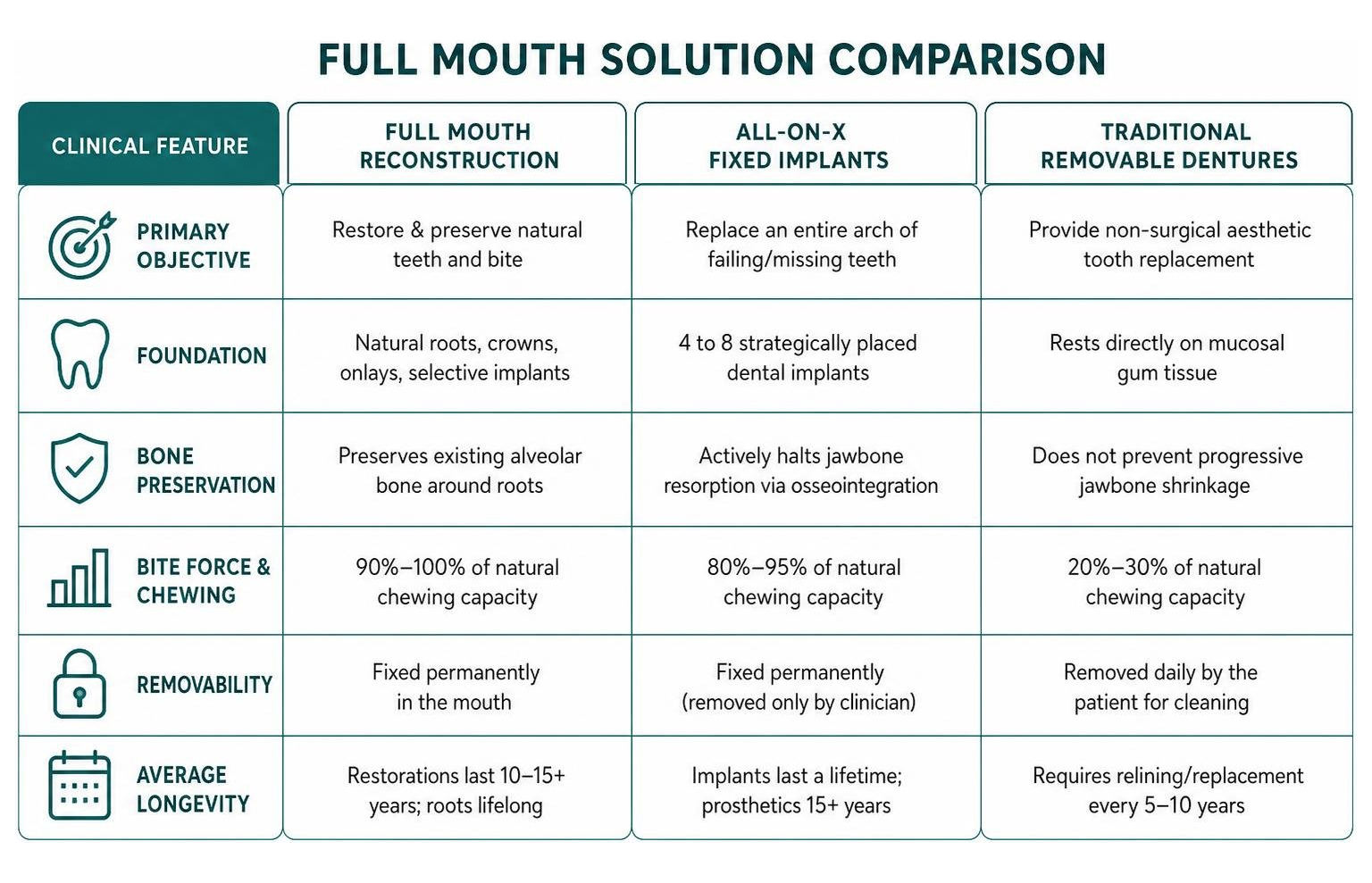
Clinical Feature | Full Mouth Reconstruction | All-on-X Fixed Implants | Traditional Removable Dentures |
|---|---|---|---|
Primary Objective | Restore & preserve natural teeth and bite | Replace an entire arch of failing/missing teeth | Provide non-surgical aesthetic tooth replacement |
Foundation | Natural roots, crowns, onlays, selective implants | 4 to 8 strategically placed dental implants | Rests directly on mucosal gum tissue |
Bone Preservation | Preserves existing alveolar bone around roots | Actively halts jawbone resorption via osseointegration | Does not prevent progressive jawbone shrinkage |
Bite Force & Chewing | 90%–100% of natural chewing capacity | 80%–95% of natural chewing capacity | 20%–30% of natural chewing capacity |
Removability | Fixed permanently in the mouth | Fixed permanently (removed only by clinician) | Removed daily by the patient for cleaning |
Average Longevity | Restorations last 10–15+ years; roots lifelong | Implants last a lifetime; prosthetics 15+ years | Requires relining/replacement every 5–10 years |
Whether you need targeted salvage of your biological teeth or complete full-arch rehabilitation, clinical guidance is essential. Many patients begin by researching standard dental implants or reviewing an in-depth full mouth dental implants complete guide to understand which path aligns with their long-term health goals.
Essential Standards for Choosing the Best Full Mouth Dentist
Rebuilding an entire oral cavity requires a mastery of occlusion, periodontics, surgery, and materials science. It is among the most demanding disciplines in all of healthcare. When evaluating potential clinicians, holding your prospective provider to rigid clinical benchmarks will protect your health, your time, and your financial investment.
First and foremost, look for extensive surgical and restorative case volume. A general dental provider who places one or two single implants a month does not possess the routine surgical fluidity required for immediate-load full-arch prosthetics or complex bite reconstructions. You want a clinician who routinely handles advanced tissue management, bone grafting, sinus lifts, and full-arch immediate loading.
Equally critical is a commitment to patient-centered comfort and advanced anxiety management. Modern full-arch procedures should never be an agonizing ordeal. High-caliber practices provide comprehensive sedation options—from nitrous oxide and oral conscious sedation to IV sedation managed by qualified professionals. Under deep conscious sedation, patients remain completely comfortable, often feeling as though they took a brief "cat nap" while their surgical transformation was seamlessly performed.
Before committing to care, review verified patient feedback and authentic clinical results. Take the time to read through comprehensive patient reviews to evaluate consistency, clinical demeanor, and post-operative support.
Why Prosthodontic Credentials Define the Best Full Mouth Dentist
Prosthodontics is the only dental specialty recognized by the American Dental Association (ADA) dedicated specifically to the restoration and replacement of teeth. While general dentists are legally permitted to perform restorative procedures, prosthodontists complete three additional years of intense, hospital- and university-based post-doctoral surgical and restorative residency training.

This advanced education focuses heavily on complex occlusion (how the upper and lower teeth meet), TMJ mechanics, maxillofacial rehabilitation, and the biomaterials science behind high-end ceramics. Rebuilding a bite requires acute mathematical and structural precision; miscalculating the vertical dimension of occlusion by even a fraction of a millimeter can lead to chronic neuromuscular pain, speech impediments, broken restorations, or premature implant failure. Providers who hold prosthodontic credentials or advanced surgical fellowships bring an elevated level of diagnostic discipline to complex cases. Many patients seek insight from specialized academic literature and comprehensive full mouth reconstruction resources to appreciate the architectural depth required for complete oral rehabilitation.
Diagnostic Technology Utilized by the Best Full Mouth Dentist
World-class clinical skill must be supported by state-of-the-art diagnostic and surgical equipment. The era of manual freehand implant surgery and messy, gag-inducing impression trays is in the past. Today’s premier practices utilize an interconnected digital workflow:
High-Resolution 3D Cone Beam CT (CBCT): Provides a 360-degree three-dimensional view of your jawbone density, nerve pathways, sinus cavities, and anatomical landmarks, eliminating guesswork during surgical placement.
Precision Intraoral Digital Scanners: Rapidly capture thousands of optical data points per second, generating hyper-accurate 3D digital models of your teeth and soft tissues without physical impression putty.
Computer-Guided Surgical Templates: 3D-printed surgical guides act like a high-precision GPS for your jaw, ensuring implant fixtures are placed at the exact angle, depth, and trajectory planned in the diagnostic software.
Digital Smile Design (DSD) & Occlusal Simulation: Allows you and your clinician to visualize, test, and refine your aesthetic proportions, tooth length, and bite harmony before surgical treatment begins.
Reviewing authentic, unedited dental implants before and after imagery planned with this digital workflow gives you a clear window into the structural precision and aesthetic quality your provider delivers.
Material Selection: Titanium Implants vs. Metal-Free Zirconia
When planning full-arch restorations, selecting the optimal material for your implant posts and prosthetic teeth is a pivotal decision. Today, patients have two exceptional, clinically validated implant materials: medical-grade titanium alloy and ceramic zirconia.
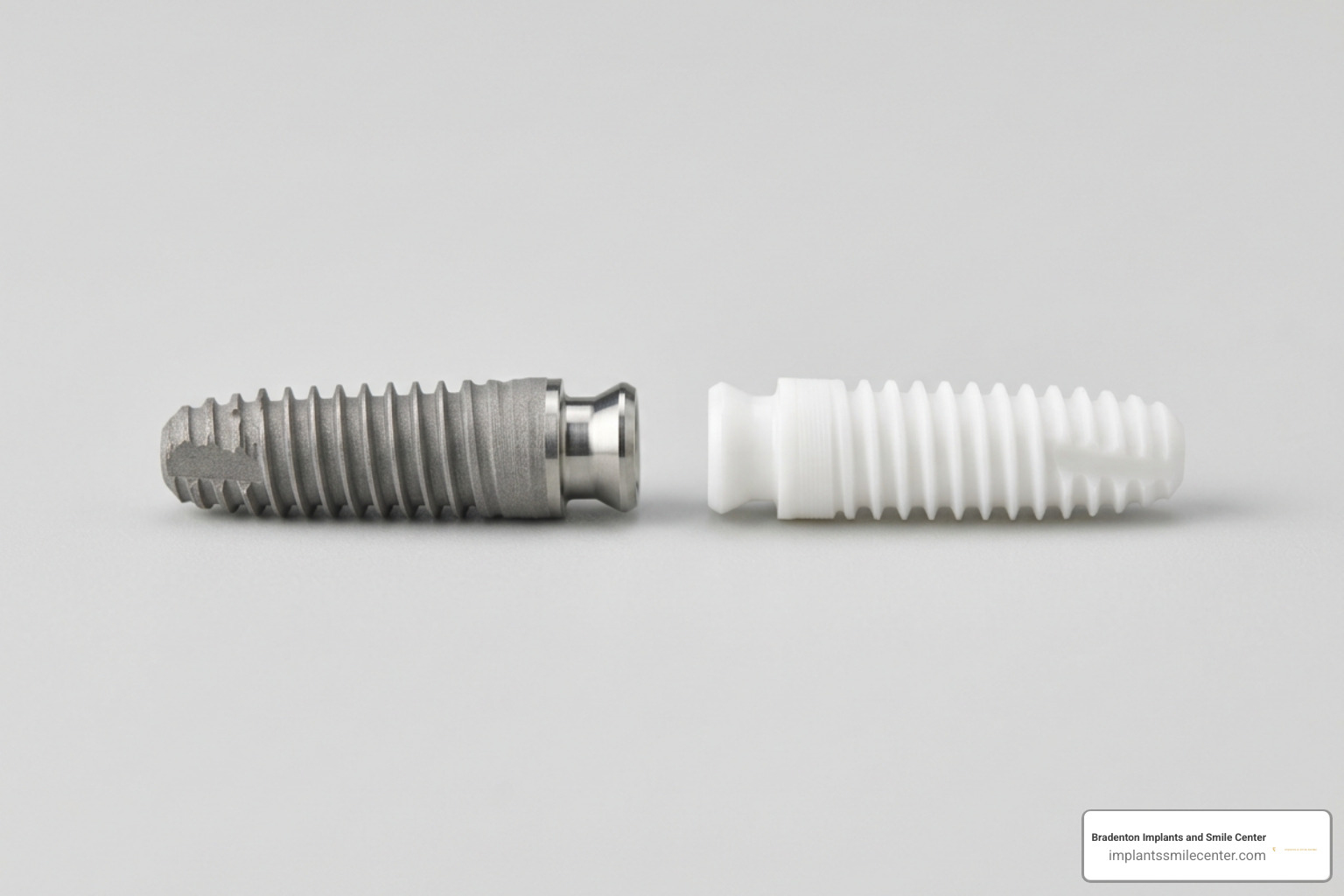
Titanium has served as the undisputed gold standard of implant dentistry for more than six decades. Backed by thousands of peer-reviewed clinical studies, titanium boasts an exceptional overall success rate of up to 98%. It provides outstanding flexural strength, adapts exceptionally well to angled surgical placements (such as the tilted posterior implants used in All-on-4 configurations), and achieves robust osseointegration with human jawbone tissue.
Zirconia (zirconium dioxide) represents an advanced, 100% metal-free, ceramic alternative. Approved by the FDA for dental implant use since 2007, zirconia has more than 20 years of research backing its clinical performance. Between 2018 and 2020 alone, over three new brands of zirconia implants received FDA clearance in the United States, reflecting rapid technological maturation.
Zirconia is fully biocompatible, hypoallergenic, and naturally tooth-colored, completely eliminating any possibility of a dark metal margin showing through thin or receding gum lines. Furthermore, ceramic surfaces exhibit very low plaque affinity, which helps maintain pristine peri-implant soft-tissue health. However, because zirconia is extremely rigid with less flexural give than titanium, it requires strict parallel placement and demands advanced surgical expertise. Patients dealing with diagnosed metal hypersensitivities, systemic autoimmune conditions, or holistic lifestyle preferences often seek out full mouth zirconia implants as their treatment of choice.
For the final teeth attached to these implants, monolithic zirconia bridges have largely replaced traditional acrylic-fused-to-metal dentures. Monolithic zirconia resists chipping, staining, and wear, delivering lifelike translucency and unmatched structural strength for long-lasting permanent teeth implants.
Treatment Timeline, Recovery Protocols, and Financial Planning
A comprehensive full mouth restoration is a structured journey designed to deliver predictable, permanent results without rushing biological healing. While every smile is unique, the clinical roadmap follows a clear step-by-step sequence.
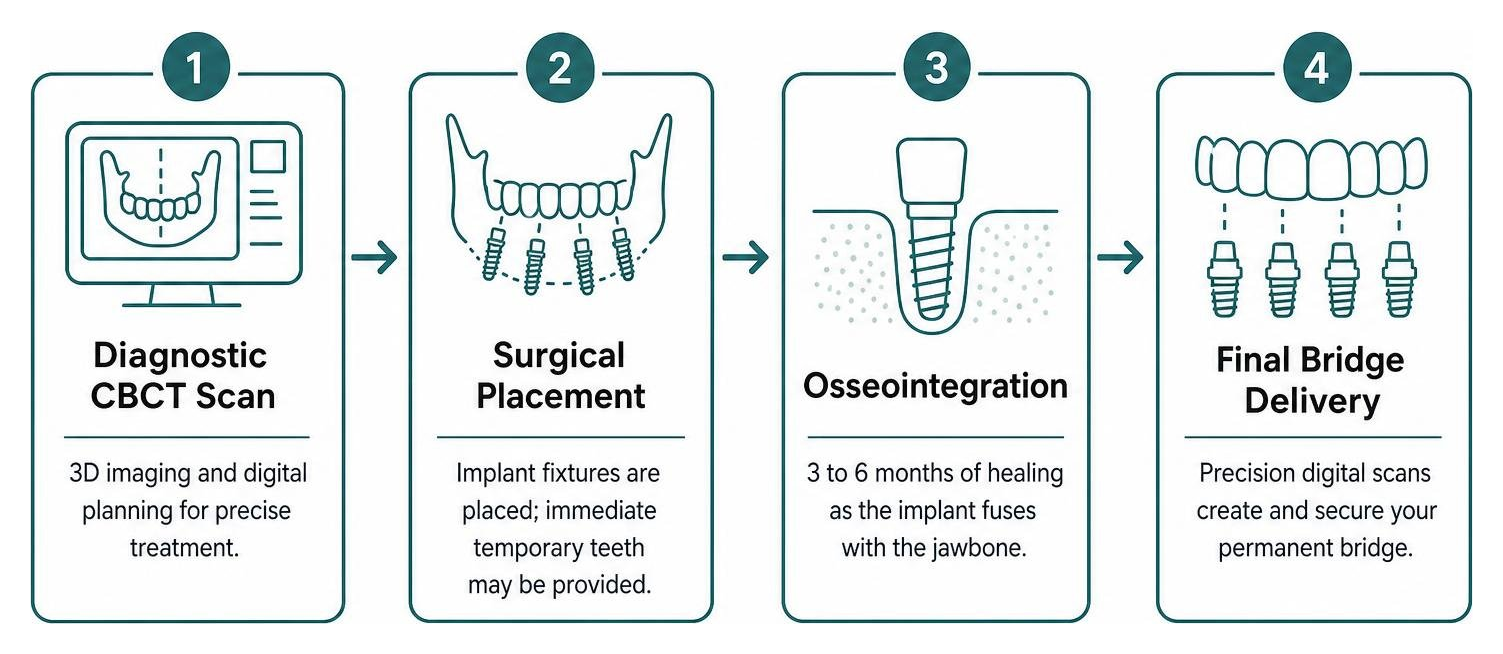
Comprehensive Diagnostic Evaluation: 3D CBCT imaging, digital scans, facial photography, occlusal analysis, and personalized treatment planning.
Pre-Surgical Preparation: Addressing periodontal infections, extracting non-salvageable teeth, or completing preliminary bone grafting and sinus augmentations if needed.
Surgical Placement & Immediate Temporization: Surgical placement of implant fixtures. In many cases, patients qualify for immediate fixed provisional teeth, allowing them to walk out the same day with functional, aesthetic teeth—a protocol detailed in our teeth in a day implants complete guide or our overview of same day teeth.
Osseointegration & Tissue Maturation: A 3 to 6-month healing window where your jawbone fuses permanently to the implant surfaces while you comfortably wear your customized temporary bridge.
Final Prosthetic Fabrication & Delivery: Capturing final precision digital scans to craft and secure your permanent monolithic zirconia or custom porcelain bridge, adjusting your bite for lifelong balance.
Understanding the investment requires clear financial transparency. Private practice fees for a single tooth implant with a crown generally average around $4,500 across the United States, while specialized clinics or community dental initiatives may offer single units starting around $1,540 under specific clinical circumstances. For full-arch care, traditional implant-assisted overdentures can range from $3,500 per arch in non-profit or donor-assisted settings to upwards of $12,000 to $30,000+ per arch in private specialty practices depending on whether the bridge is removable or permanently fixed.
Navigating these numbers is straightforward when you review our detailed breakdown on the cost of full mouth dental implants guide 2026 and evaluate our dedicated guide to full mouth implants affordable options. You can also research regional variations via our dental implants Bradenton Florida guide or compare overall dental implants cost parameters.
While standard dental insurance rarely covers the entire cost of full-arch reconstructions, policies often contribute toward foundational elements such as extractions, bone grafting, or initial diagnostic imaging. To bridge any out-of-pocket balance, leading practices partner with reputable third-party healthcare lenders (such as CareCredit, Proceed Finance, or Sunbit) to provide flexible, low-interest monthly financing.
Key Questions to Ask During Your Consultation:
How many full-arch implant cases have you personally planned and surgically placed?
Do you use dynamic computer-guided surgery or custom 3D-printed surgical guides for placement?
What specific implant brand and bridge material (e.g., monolithic zirconia vs. acrylic) are included in my quote?
Are all extractions, bone grafts, temporary prosthetics, and follow-up visits included in the fee, or are there separate facility charges?
What sedation options are available during surgery, and who monitors my vitals throughout the procedure?
Frequently Asked Questions about Full Mouth Restoration
Is the full mouth dental implant procedure painful?
No. The surgical procedure itself is completely painless. During surgery, your mouth is thoroughly numbed using advanced local anesthetics, and patients typically opt for oral conscious sedation or IV sedation. Under sedation, you remain relaxed, at ease, and completely insensitive to pain, often remembering very little of the appointment afterward.
Post-operative discomfort is generally mild to moderate and peaks within the first 48 to 72 hours. Most patients manage their recovery easily with prescribed or over-the-counter anti-inflammatory medications (such as ibuprofen and acetaminophen). Because dental implants are placed cleanly within the bone—which lacks pain-sensing nerve fibers—most patients report far less post-operative soreness than they anticipated following routine tooth extractions.
How long do full mouth restorations typically last?
Dental implants have an exceptional long-term success rate of up to 98% and are engineered to last a lifetime when properly integrated into healthy bone. While the titanium or zirconia posts anchored in the jawbone are permanent, the prosthetic components attached to them experience normal mechanical wear.
Individual implant crowns or full-arch bridges may require maintenance, polishing, screw replacement, or renewal after 10 to 15+ years of daily chewing. By comparison, traditional tooth-supported dental bridges typically last 5 to 15 years, and conventional removable dentures usually require relining or replacement every 5 to 10 years due to progressive jawbone changes. Diligent daily oral hygiene, using a water flosser, wearing a nightguard if you clench your jaw, and attending regular professional hygiene cleanings will maximize the lifespan of your restoration.
What happens if a full arch dental implant fails?
While full-arch implant failure is rare, complications can occasionally occur if an implant fails to integrate with the bone (early failure) or develops a localized bacterial infection known as peri-implantitis (late failure). Warning signs include localized swelling, persistent discomfort, bleeding around the gums, or mobility of the prosthetic bridge.
If an implant fixture fails, it can be gently removed under local anesthesia. The surrounding area is thoroughly cleaned and treated to eliminate bacterial contamination, often accompanied by localized bone grafting to rebuild bone volume. After an 8 to 12-week healing phase, a replacement implant can typically be placed in the newly restored bone. In full-arch configurations supported by 6 or 8 implants, the existing bridge can often remain functional on the remaining stable implants while the isolated site heals.
Conclusion
Reclaiming your smile, your bite, and your self-confidence is one of the most rewarding investments you will ever make in your long-term health. Choosing the right clinician requires looking past marketing claims and focusing on real surgical expertise, prosthodontic mastery, cutting-edge 3D diagnostic technology, and genuine, compassionate care.
At Bradenton Implants & Smile Center, located at 7270 55th Ave E, Bradenton, FL 34203, we provide personalized, comprehensive restorative, general, and implant dentistry for adults and seniors across the greater Bradenton community. Whether you need to restore your natural teeth through a full mouth reconstruction or rebuild your smile using advanced, permanent dental implants, our team is dedicated to guiding you through every step with absolute transparency and comfort.
Take the first step toward a functional, radiant smile today. Schedule a consultation for full mouth dental implants and let us design a customized treatment plan tailored specifically to your life.