
Everything You Need to Know About All-on-4 Implants
A Dentist All on 4 Can Restore a Full Smile With Four Implants
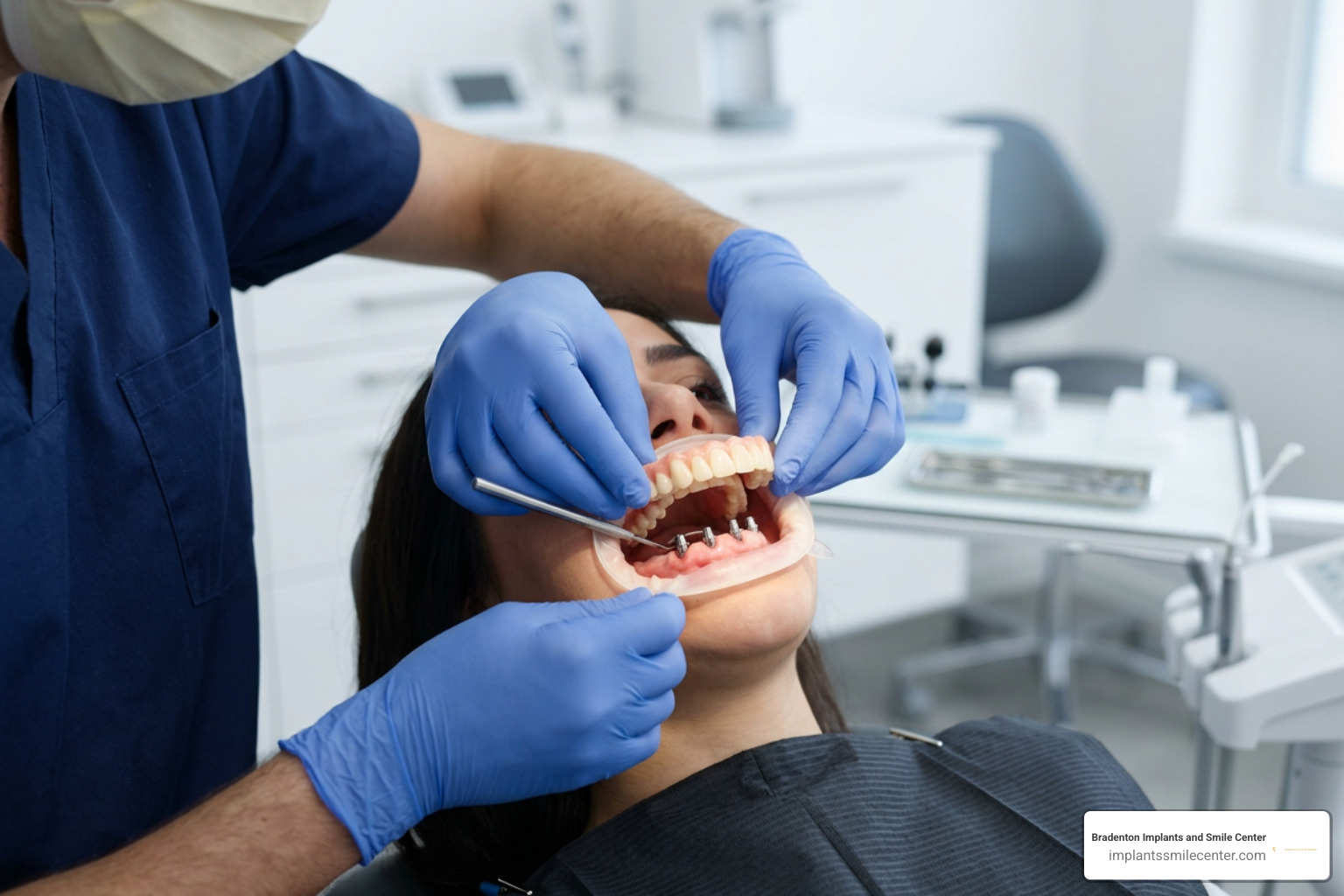
A dentist all on 4 provider restores an entire upper or lower arch of teeth using four strategically placed dental implants and a fixed bridge. This treatment may be an option for people with many missing, failing, or severely damaged teeth who want a stable alternative to removable dentures.
Four implants are placed in the jaw to support a full arch of replacement teeth.
The back implants are often angled to make the best use of available bone.
Many patients can leave surgery with a temporary set of fixed teeth, though healing and a final restoration still take time.
A complete exam, 3D imaging, and health review determine whether All-on-4 is the right fit.
All-on-4 is not the same as replacing every tooth with its own implant. It is a full-arch solution designed to restore appearance, speech, and everyday chewing with fewer implants. It can also reduce the need for bone grafting in some cases, but each patient's jawbone, gum health, medical history, and goals matter.
I am Dr. John Hegazin, owner of Bradenton Implants and Smile Center, with more than eight years of patient-centered dental experience and a focus on implant dentistry, full-mouth restoration, and Teeth in a Day care. As a dentist all on 4 provider, I help patients understand their options and build treatment plans around their health, comfort, and long-term goals.
What Are All-on-4 Dental Implants and How Do They Work?
When you lose teeth, your jawbone naturally begins to shrink over time due to a lack of physical stimulation. Traditional implant methods often require replacing each lost tooth individually or placing six to eight implants across a single arch, which frequently demands extensive bone grafting beforehand.
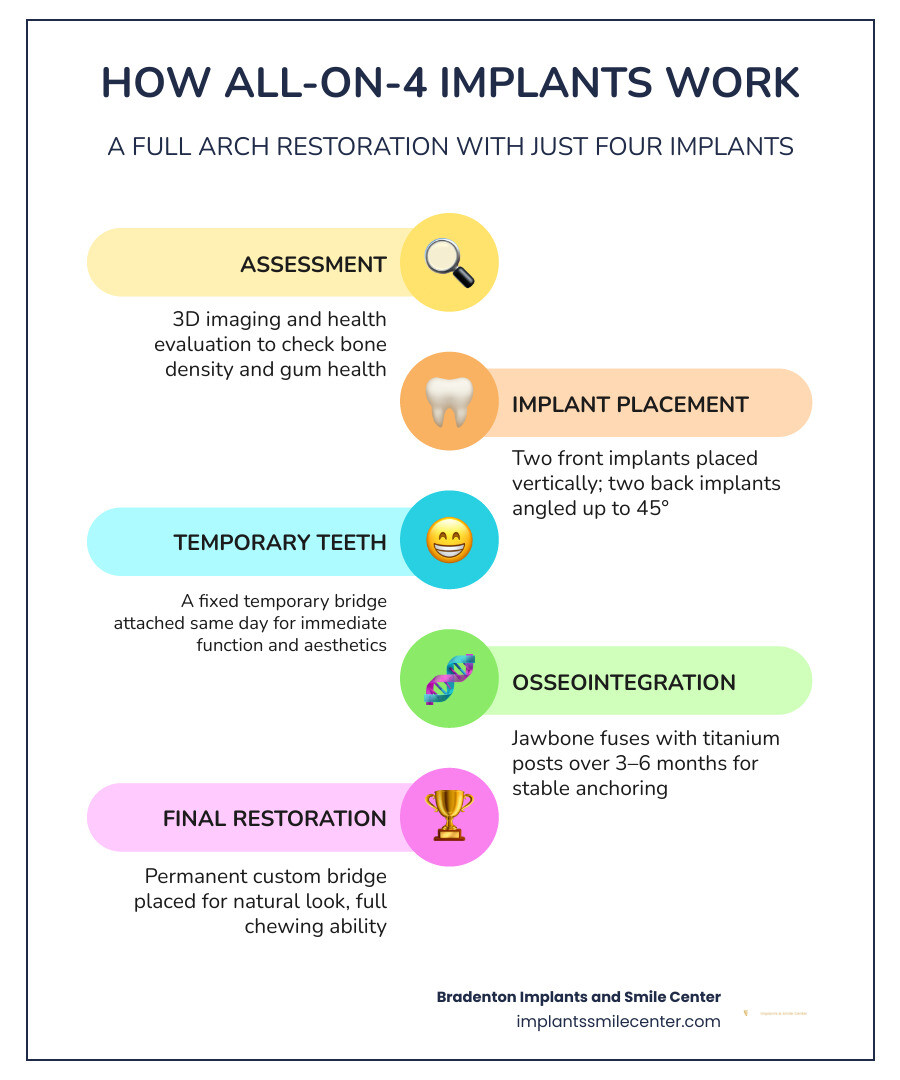
An All-on-4 full arch procedure reimagines this approach using modern biomechanics. By placing just four titanium posts into precise locations within the upper or lower jaw, we can secure a complete set of artificial teeth. Two implants are inserted vertically near the front of the jaw where bone density is naturally strongest. The remaining two posterior implants are angled up to 45 degrees toward the back of the mouth.
This angled insertion provides a major advantage: it maximizes contact with the existing native bone structure and bypasses sensitive anatomical features like the sinus cavities or nerve channels. Through a process called osseointegration, the jawbone fuses directly with the biocompatible titanium surfaces over a period of three to six months, forming a foundation capable of enduring full bite force. To learn more about full arch options, visit our page on Full Mouth Implants.
How Four Implants Support a Full Arch
It might sound hard to believe that just four small titanium posts can securely hold a full bridge of 12 to 14 teeth, but physics makes it possible. By placing two vertical implants in the front and two tilted implants in the rear, we construct a wide foundation known as a tripod effect.
This arrangement spreads bite forces evenly across the full arch prosthesis rather than putting pressure on a single point. As a result, you can bite into an apple, enjoy a steak, or chew crunchy vegetables without worrying about slipping prosthetics or uncomfortable friction against your gums.
The Role of Pterygoid Implants for Severe Bone Loss
While standard angled implants eliminate the need for bone grafting in many cases, some patients present with extreme upper jaw bone loss (resorption). In these challenging situations, traditional bone grafting might require a long recovery before implants can be set.
For severe upper jaw bone loss, advanced options like pterygoid implants serve as a sturdy alternative. Pterygoid implants anchor directly into the dense pterygoid process of the sphenoid bone located at the back of the upper jaw. Because this bone area does not resorb like the rest of the upper jaw, it offers solid anchor points without requiring lengthy bone grafting procedures. This allows even patients with severe bone loss to receive a fixed full arch bridge safely.
All-on-4 vs Traditional Implants and Tooth Replacement Alternatives
Choosing how to replace missing teeth is a major decision that impacts your daily comfort, appearance, and dietary freedom. Comparing All-on-4 with other fixed or removable solutions helps clarify which approach fits your budget and lifestyle.
Comparing All-on-4 to Snap-On and Hybrid Dentures
Conventional removable dentures rest directly on top of gum tissue, relying on suction or messy adhesives to stay in place. Over time, as jawbones reshape, removable dentures often loosen, causing sore spots and limited chewing strength.
Snap-On Dentures utilize two to four implants as anchors. While they offer far better stability than traditional dentures, snap-on prosthetics are still removable for nightly cleaning and can exhibit slight movement during heavy chewing.
Hybrid Dentures and All-on-4 fixed bridges, by contrast, are screwed tightly onto the implants. Only your dentist can remove them during routine maintenance visits. Because they are fixed directly in place, they feel, look, and perform like natural teeth without covering the roof of your mouth, allowing you to taste food fully and speak clearly.
Key Differences Between All-on-4 and Traditional Dental Implants
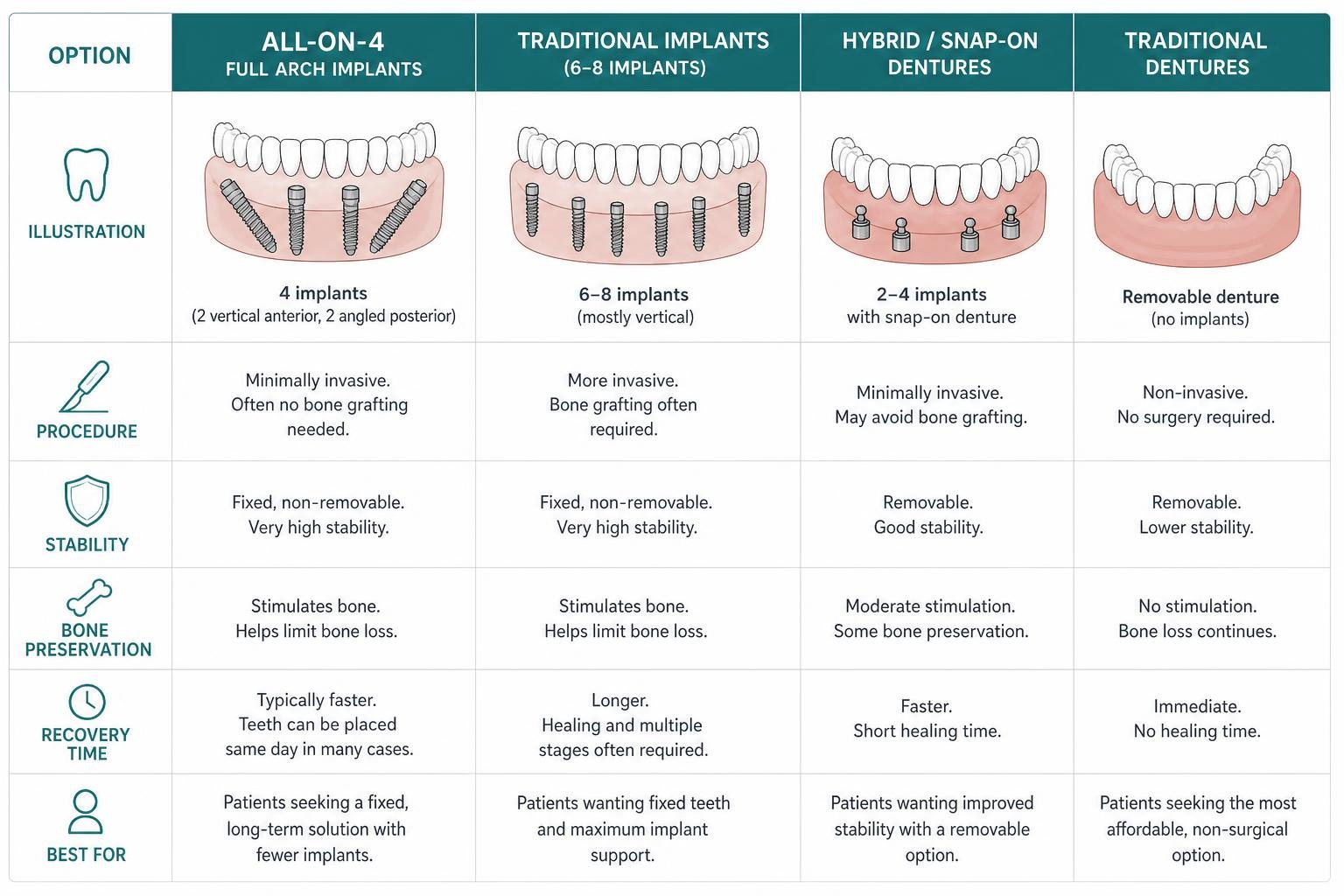
To highlight how these techniques compare, here is a helpful breakdown:
Feature All-on-4 Dental Implants Traditional Dental Implants Number of Implants per Arch Exactly 4 (occasionally 6 for extra support) 6 to 8 or more per arch Need for Bone Grafting Minimal to none; angled posts utilize dense front bone Frequently required if bone loss has occurred Treatment Timeline Teeth placed in a single day (immediate temporary) 6 to 12+ months involving multiple surgeries Chewing Efficiency Restores up to 90-95% of natural chewing force Restores up to 95% of natural chewing force Palate Coverage Open palate; does not block taste buds Open palate for full arch fixed bridges Overall Cost Lower overall cost due to fewer surgical procedures Higher total cost due to multiple implants and grafts
Candidacy, Procedure Timeline, and Recovery Expectations
Understanding who qualifies for full-arch implant therapy—and what to expect on surgery day—helps remove uncertainty from your restorative journey.
Am I a Candidate for Teeth-in-a-Day?
Most adults suffering from severe tooth decay, widespread mobility, or advanced gum disease are potential candidates for an All-on-4 restoration. Key criteria include:
Good Overall Health: Uncontrolled systemic conditions like unmanaged diabetes or immune disorders can slow bone healing. However, controlled diabetes is generally not a barrier.
Healthy Gums: Active infections must be managed prior to implant placement to protect the surgical site.
Non-Smokers or Committed Quitters: Tobacco use lowers blood flow and elevates the risk of implant failure.
Adequate Bone Density: While angled placement maximizes existing bone, a 3D CT scan confirms if the jaw can support standard or pterygoid implants.
Through our Teeth in a Day protocol, patients can swap failing natural teeth or loose dentures for fixed Same Day Teeth during one comfortable appointment.
The All-on-4 Surgical Process and Post-Operative Recovery
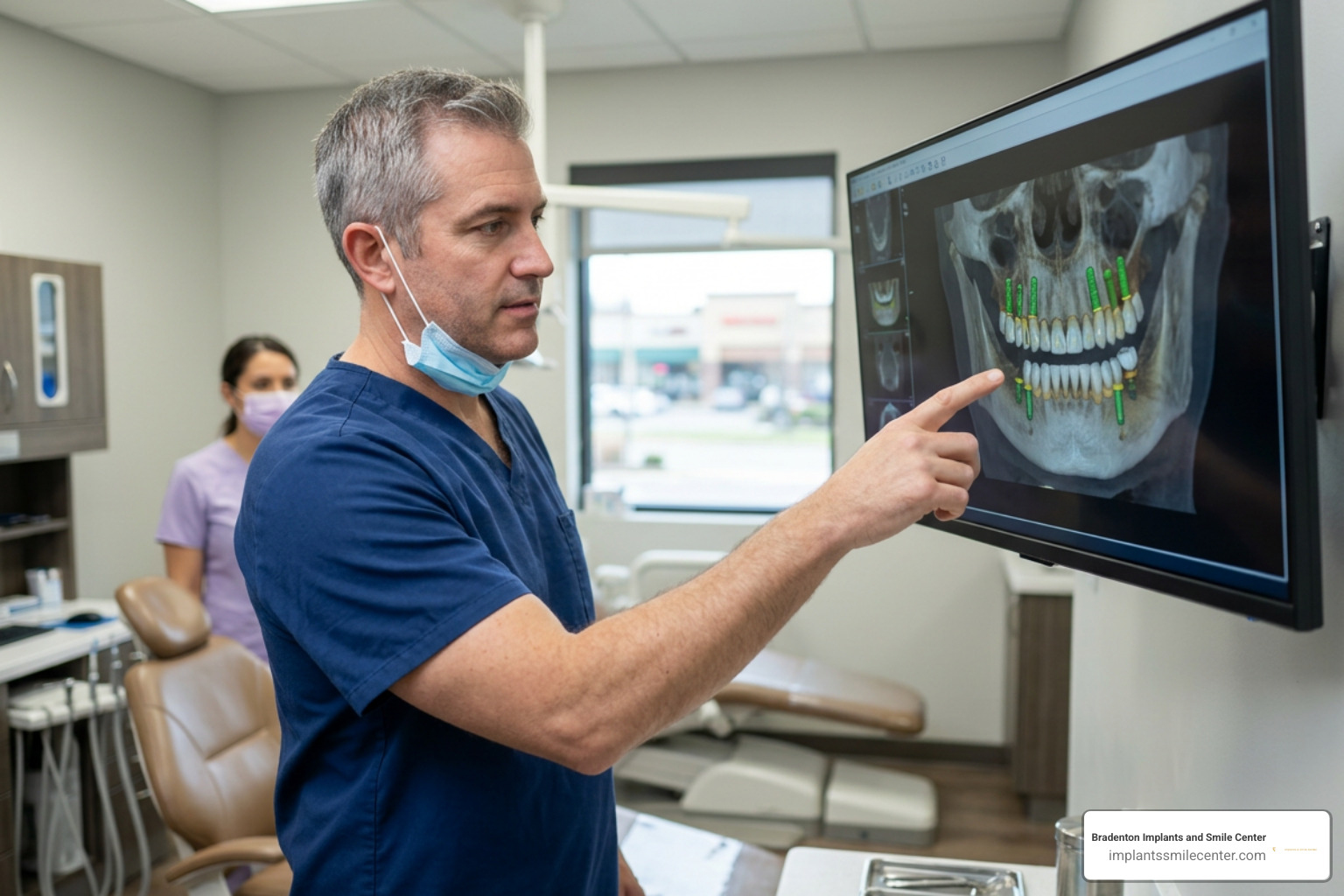
Detailed Evaluation: We start with advanced 3D CBCT scans to build a detailed virtual map of your nerve pathways, jawbone structure, and sinus cavities.
Surgical Day: Under local anesthesia or IV sedation, remaining non-restorable teeth are removed, the bone ridge is leveled, and four implants are gently positioned.
Temporary Bridge Attachment: On the exact same day, a custom temporary fixed bridge is secured to the posts so you never leave our office without a full set of functional teeth.
Initial Healing (Months 1–3): You will follow a soft food diet for several weeks to prevent excessive forces on the healing implants while osseointegration occurs.
Final Restoration: Once your bone fuses fully with the implants, we swap your temporary teeth for a custom-crafted final ceramic or zirconia arch built for long-term wear.
How to Choose the Best Dentist All on 4 Specialist and Advanced Technology
Full arch implant placement requires a skilled team, detailed preparation, and reliable technological support. Choosing an experienced dentist all on 4 professional ensures your surgical outcomes are accurate and predictable.
When reviewing potential specialists, look for clinicians who focus heavily on full-arch restorative dentistry and maintain comprehensive post-operative care. Explore complete treatment background options through our Dental Implants Complete Guide.
What to Expect During Your Dentist All on 4 Consultation
Your initial consultation is a friendly, stress-free opportunity to learn about your mouth and outline your treatment goals. During this visit, we perform a detailed oral exam and review your medical history to ensure surgical safety.
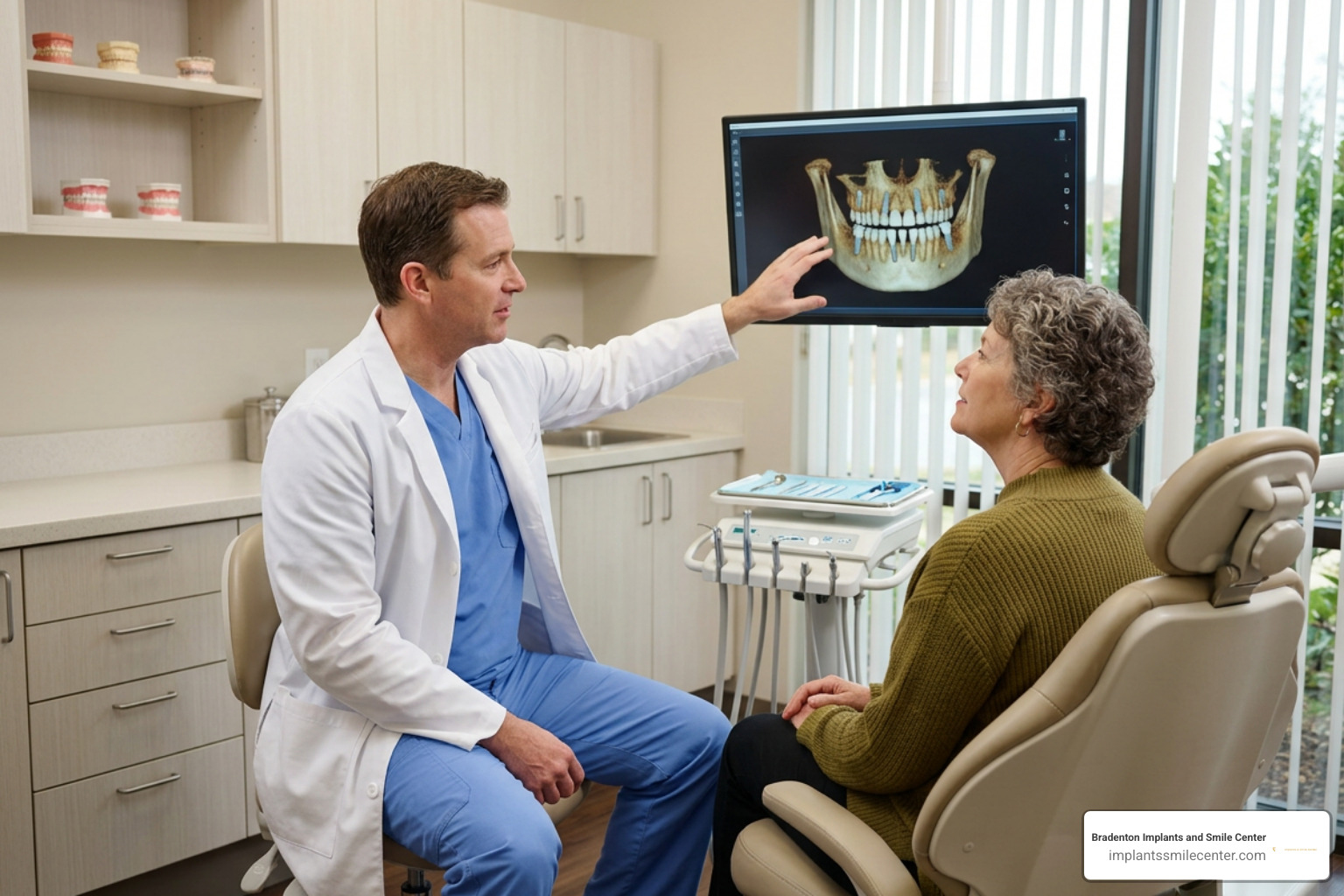
We also take high-definition 3D cone beam CT (CBCT) images that show us your jawbone structure from every angle. This digital data allows us to plan your implant placement down to the exact millimeter before surgical day. You can also review real patient cases in our Before and After Gallery to visualize what full-mouth rehabilitation can look like.
How a Dentist All on 4 Specialist Uses Yomi Robotic Guidance
Implant dentistry has advanced considerably with the arrival of computer-guided systems and robotic assistance like the Yomi robotic platform.
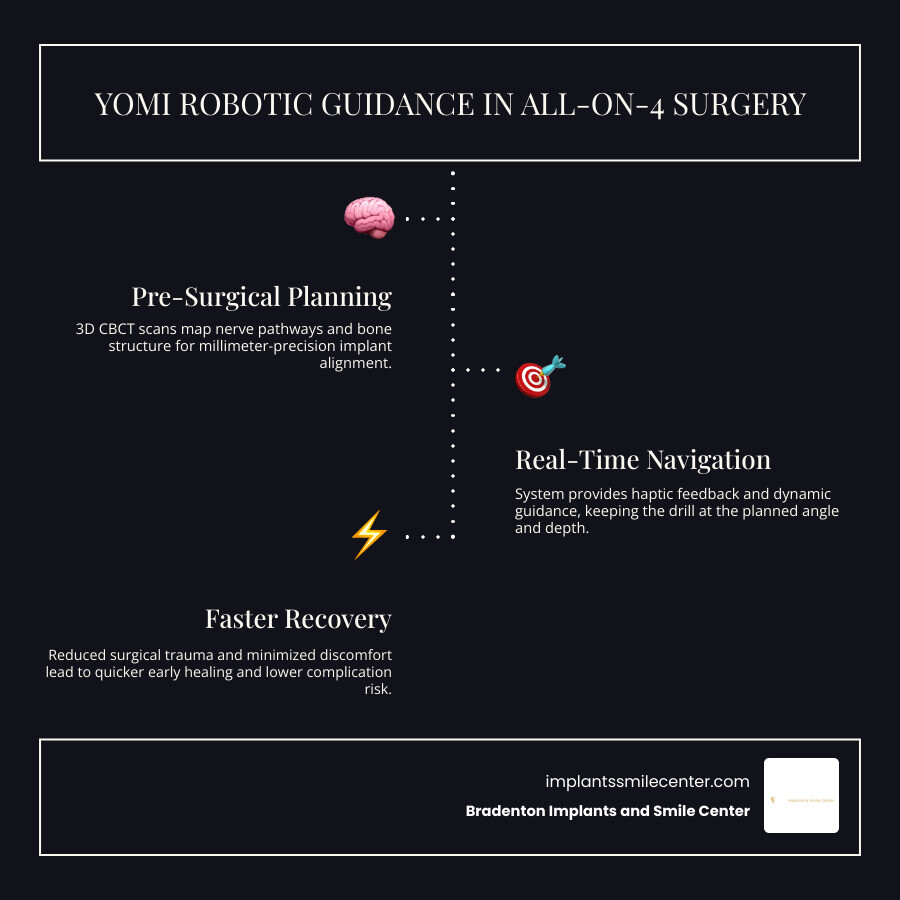
Robotic assistance gives surgeons dynamic, real-time guidance and physical haptic feedback during surgery. The surgeon maintains full control throughout the process, while the system keeps the implant drill aligned precisely with the pre-planned angle and depth. This level of precision protects sensitive anatomical boundaries, lowers surgical trauma, minimizes discomfort, and speeds up early healing times.
All-on-4 Costs, Longevity, and Potential Complications
Investing in a permanent smile transformation requires clear, simple information regarding treatment fees, payment arrangements, and long-term maintenance.
Understanding All-on-4 Pricing and Financing Options
The cost of an All-on-4 dental implant procedure varies based on customized care needs, surgical complexity, bone grafting requirements, and chosen bridge materials (such as acrylic, composite, or high-durability zirconia).
While a full arch procedure is a significant financial step, it replaces a lifetime of root canals, crowns, extractions, and denture relines. To make care manageable, flexible third-party financing arrangements allow patients to divide treatment expenses into reasonable monthly payments. For detailed financial information, explore our guides on All-on-Four Dental Implants Price and Full Arch Implants Cost.
Success Rates, Longevity, and Risk Management
Clinical studies show full-arch titanium dental implants maintain a long-term success rate near 98%. With good oral hygiene and consistent dental cleanings, your implant posts can last a lifetime.
However, potential surgical risks do exist:
Peri-Implantitis: Similar to gum disease around natural teeth, bacterial plaque accumulation can cause inflammation and localized bone loss around implants. Daily flossing and professional maintenance prevent this condition.
Failed Osseointegration: In rare cases, an implant post fails to bond properly with surrounding bone tissue. If this happens, the post can be replaced after the tissue heals.
Structural Wear: While titanium posts endure indefinitely, provisional temporary bridges or acrylic teeth show natural wear over time and may require polishing or adjustment.
If bone volume is inadequate in specific areas, minor Bone Grafting for Implants can be performed prior to or alongside placement to guarantee long-term implant survival.
Frequently Asked Questions About Full Arch Restorations
How long do All-on-4 dental implants last?
The titanium implants placed in your jawbone are built to last a lifetime with proper hygiene and routine dental care. The custom bridge attached to the implants is highly durable and often lasts 15 to 20 years or longer before requiring routine maintenance or prosthetic adjustments.
Is the All-on-4 dental implant procedure painful?
During surgery, local anesthesia and dental sedation keep you completely comfortable and pain-free. After the procedure, mild swelling, tenderness, or bruising around the gums is normal for a few days, but these symptoms are easily managed with prescribed or over-the-counter medication.
How do I clean and maintain my All-on-4 temporary and final teeth?
Cleaning your fixed bridge is straightforward. Use a soft-bristled toothbrush twice daily along with a water flosser (oral irrigator) to flush away food particles beneath the prosthetic bridge. Regular dental cleanings allow us to verify tissue health and inspect your implant hardware.
Conclusion
A healthy, complete smile improves eating comfort, speech clarity, and overall self-confidence. By working with an experienced dentist all on 4 team at Bradenton Implants & Smile Center, you can restore your oral health using state-of-the-art implant methods tailored to your personal goals.
If you are ready to replace loose dentures or failing teeth with a secure, natural-looking solution, contact our team today at our Bradenton, FL practice located at 7270 55th Ave E, Bradenton, FL 34203. Schedule your initial consultation to explore our comprehensive Dental Implants services and take your first step toward a functional, lasting smile.