

What to Look For in a Senior Dental Implant Center
Why Finding the Right Senior Dental Implant Center MattersWhen searching for a senior dental implant center, here's what to look for at a glance:
What to Look For Why It Matters Experience with older patients Seniors have unique health needs that affect treatment Sedation options (IV, oral) Reduces anxiety and improves comfort Bone grafting capability Many seniors have reduced bone density Medical coordination Manages medications and systemic health conditions Transparent pricing & financing Implants are a significant investment 3D imaging and modern tech Improves precision and safety
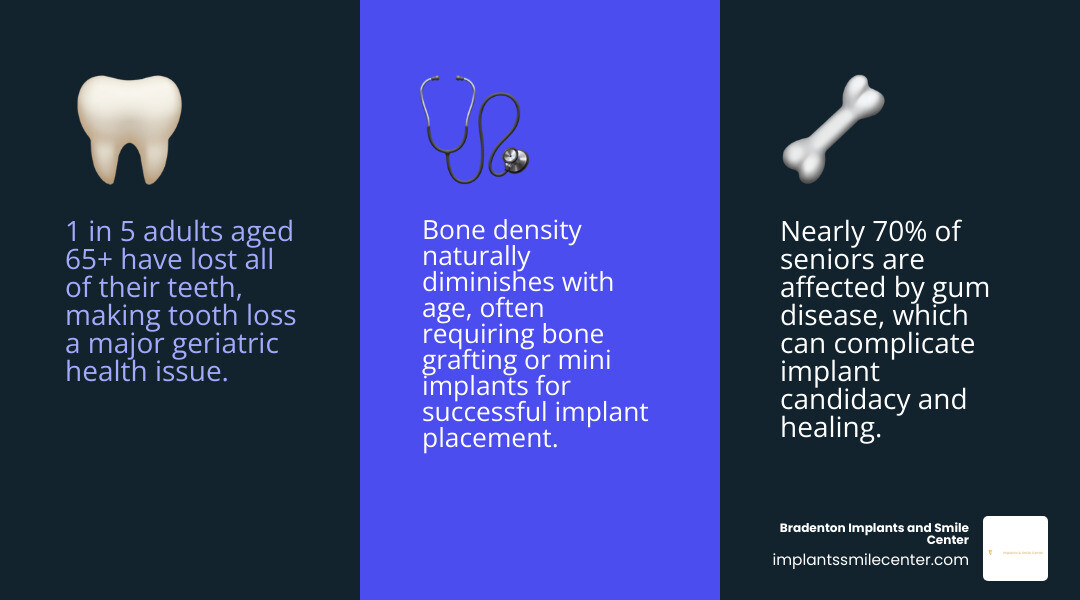
Tooth loss is one of the most common — and most overlooked — health challenges facing older adults. About 1 in 5 adults aged 65 and older have lost all of their teeth, and nearly 70% are affected by gum disease. These aren't just cosmetic problems. Missing teeth affect how well you eat, how you feel about yourself, and even how your jawbone holds up over time.
Not every dental clinic is equipped to handle the complexity that comes with senior implant care. Seniors often take multiple medications, have lower bone density, and may need extra precautions during surgery. A general dentist may offer implants — but a center that specializes in senior patients will have the technology, training, and protocols to manage those extra layers safely.
That's exactly the kind of care this guide is designed to help you find.
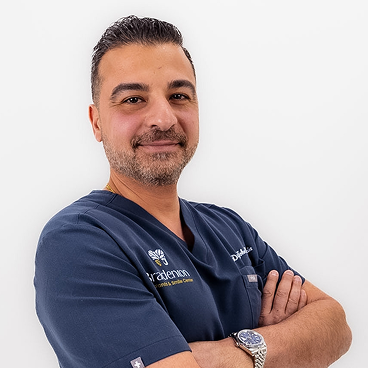
I'm Dr. John Hegazin, owner of Bradenton Implants and Smile Center, and with over 8 years of experience in implant dentistry — including full mouth dental implants, bone grafting, and sedation procedures — I work closely with senior patients at our senior dental implant center every day. In the sections ahead, I'll walk you through everything you need to know to make a confident, informed decision.
Why Choose a Dedicated Senior Dental Implant Center Over a General Dentist?
Choosing where to receive treatment for missing teeth is one of the most important health decisions you will make in your golden years. While general family dentists provide wonderful routine checkups and fillings, restoring smiles for older adults requires an entirely different depth of clinical expertise. A dedicated senior dental implant center focuses heavily on geriatric dentistry, tailoring every phase of treatment to accommodate the physical, physiological, and medical realities of older patients.
As we age, our bodies change, and so do our mouths. Bone density naturally diminishes, healing speeds can slow, and systemic conditions like high blood pressure or diabetes become far more common. In a general dental office, an implant might be performed only once or twice a week among routine cleanings. In a specialized center, advanced restorative procedures are performed daily. This deep focus creates a higher standard of safety, speed, and long-term success for complex senior cases.
Specialized Care Criteria for a Senior Dental Implant Center
When you step into a practice dedicated to senior implant dentistry, the entire experience is designed around comfort, safety, and personalized medical coordination. Here are the core criteria that set a specialized facility apart:
Comprehensive Medication Management: Older adults frequently rely on blood thinners, bone density medications, or heart prescriptions. A specialized center understands exactly how to adjust surgical protocols, consult with primary care physicians, and timing procedures safely without requiring patients to blindly cease necessary prescriptions.
Tailored Sedation Options: Anxiety or physical discomfort should never stand between you and a healthy mouth. Specialized facilities offer tailored IV sedation and oral conscious sedation to keep patients completely relaxed and pain-free throughout surgery.
Integrated Medical Clearance: Before any surgery begins, a thorough review of cardiovascular health, blood glucose control, and general wellness is conducted to ensure you are entirely fit for treatment.
Customized Surgical Treatment: No two senior jaws are identical. Treatment plans are customized based on 3D bone volume analysis rather than a one-size-fits-all formula.
For those worried about logistics and budgeting, finding options for senior affordable dental implants within a center that provides this level of specialized care ensures both safety and peace of mind.
Comparing Dentures, Bridges, and Dental Implants for Seniors
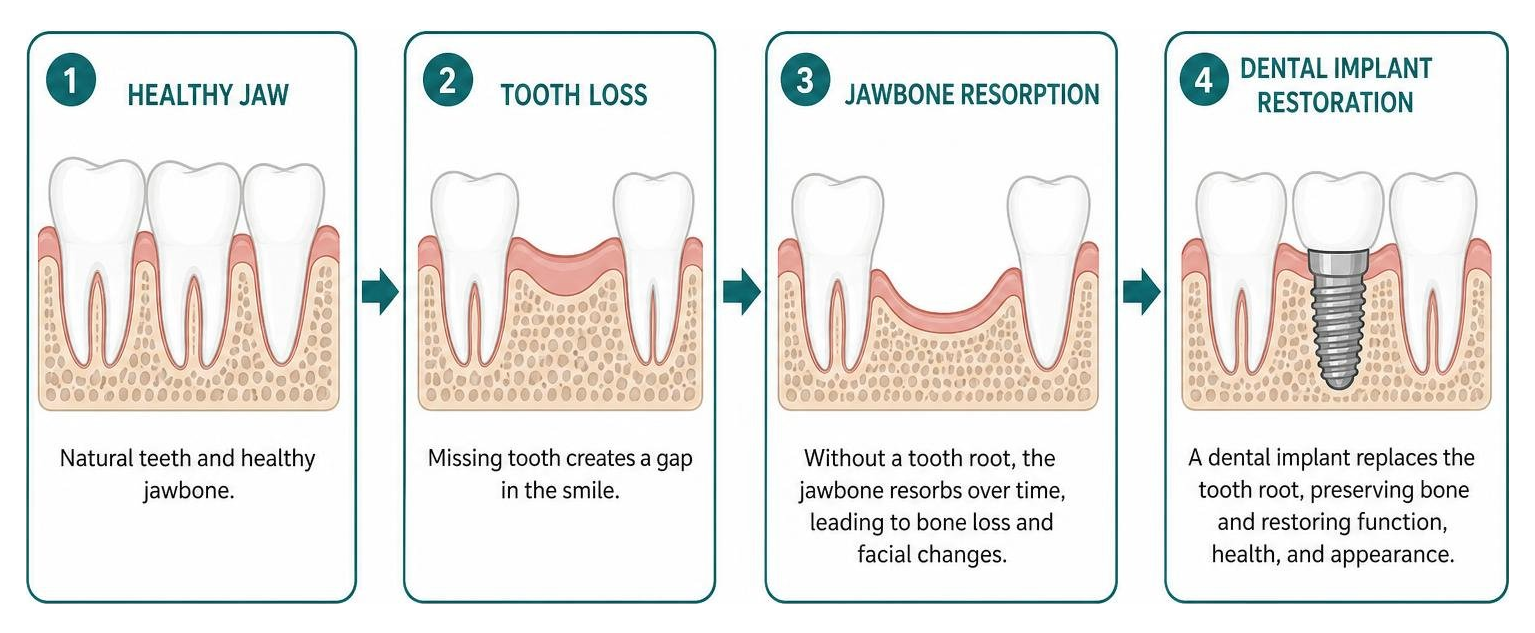
For decades, traditional removable dentures were considered the standard solution for senior tooth loss. However, modern clinical science has revealed significant drawbacks to traditional dentures—most notably progressive jawbone decay and severe loss of chewing force.
To help evaluate your options, let's examine how the three primary tooth replacement methods stack up against each other:
Feature / Benefit Traditional Removable Dentures Fixed Dental Bridges Permanent Dental Implants Jawbone Preservation None (accelerates bone loss) None (underneath missing teeth) 100% (stimulates bone growth) Chewing Efficiency ~20% to 30% of natural strength ~50% to 60% of natural strength 90% to 95% of natural strength Impact on Adjacent Teeth Relies on natural gums/ridge Requires grinding down adjacent healthy teeth Does not affect nearby healthy teeth Longevity Replaced every 5 to 7 years Replaced every 7 to 10 years Can last a lifetime with proper care Slippage / Relining Requires adhesives & frequent relines Fixed in place Permanently anchored; no slipping
Studies demonstrate that older adults who transition from dentures to dental implants report an immediate 30% improvement in overall chewing efficiency and overall quality of life. Implants act like natural tooth roots, directly stimulating the jawbone when you chew. This prevents the sunken facial appearance caused by progressive bone loss.
To explore the mechanics and long-term health advantages of permanent tooth replacement, consult our dental implants complete guide.
Common Senior Dental Issues and Candidate Qualifications
Edentulism—the complete loss of natural teeth—affects approximately 20% of adults aged 65 and older, according to statistics from the Centers for Disease Control and Prevention. Additionally, nearly 70% of seniors suffer from some form of periodontitis (advanced gum disease). Over time, chronic gum disease destroys the supporting soft tissue and bone, eventually causing teeth to loosen and fall out.
Despite these common obstacles, age alone is never a disqualifying factor for receiving dental implants. Whether you are 65, 78, or 92, your chronological age matters far less than your overall physical health and the condition of your jaw.
Health Factors Evaluated at a Senior Dental Implant Center
During an initial candidate evaluation at a senior dental implant center, we carefully assess several health factors to create a safe, predictable path forward:
Bone Density & Osteoporosis: Osteoporosis is widespread among older adults, particularly postmenopausal women. While low bone density requires careful planning, it rarely prevents implant placement. Through bone grafting or modified implant design, strong support can almost always be established.
Controlled Diabetes: Uncontrolled diabetes can impair immune response and delay healing. However, seniors whose blood sugar levels (HbA1c) are well-managed are excellent candidates with success rates virtually equal to non-diabetic patients.
Cardiovascular Disease & Blood Thinners: Heart conditions are common in senior patients. We coordinate closely with your physician regarding medications like warfarin, aspirin, or Plavix so procedures are completed safely without uncontrolled bleeding risks.
Active Periodontitis: Any active gum infection must be treated and eliminated prior to implant surgery to ensure the newly placed implants integrate into healthy tissue.
By reviewing these health factors holistically, we can routinely transform individuals who thought they were "too old" or "too unhealthy" into successful implant recipients. Learn more about navigating these qualifications in our resource on affordable implants for seniors.
Key Benefits of Implants for Older Adults

The transformation experienced by older adults after receiving dental implants extends far beyond aesthetics. When you restore the ability to chew comfortably and smile freely, every aspect of daily living improves:
Dramatically Improved Nutrition: Missing teeth or ill-fitting dentures force many seniors onto soft, carbohydrate-heavy diets, leading to deficiencies in fiber, vitamins, and protein. Implants restore full chewing power, allowing you to enjoy crisp apples, hearty meats, fresh vegetables, and nuts once again.
Preservation of Jawbone & Facial Structure: When teeth are lost, the jawbone underneath quickly shrinks from lack of stimulation. Implants preserve the bone, maintaining your natural jawline and preventing premature facial collapse or sagging lips.
Enhanced Confidence & Mental Health: Struggling with loose dentures or hidden gaps can cause social withdrawal, embarrassment, and self-consciousness. Restoring your smile instills renewed confidence in family gatherings, public speaking, and everyday interactions.
Speech Clarity: Ill-fitting prosthetics can cause slurring, clicking, or whistling. Implants remain firmly anchored, allowing for natural, effortless speech.
To learn more about how replacing missing teeth revitalizes your well-being, explore our dedicated services for dental implants.
The Senior Dental Implant Procedure and Healing Considerations
The process of receiving dental implants as a senior is designed to be gentle, precise, and completely predictable. Clinical success rates for dental implants in older adults consistently exceed 95% when proper oral hygiene and regular checkups are maintained.
Modern technology eliminates guesswork. High-resolution 3D Cone Beam CT (CBCT) imaging allows us to view your jaw's anatomical structures, bone height, density, and nerve pathways in three dimensions before any surgical incision is made.
Modified Surgical Techniques for Reduced Bone Density
When bone density has diminished over years of tooth loss, advanced surgical techniques allow us to securely place implants without extensive or uncomfortable procedures:
Computer-Guided Surgery: Using digital 3D templates, implants are positioned with millimeter precision. This reduces surgical time and minimizes soft tissue disturbance.
Flapless Implant Placement: In suitable cases, implants are placed through tiny circular openings without laying back gum tissue or placing traditional sutures. This dramatically lowers post-operative discomfort and speeds up recovery.
Sinus Lifts & Bone Grafting: If the upper jaw or sinus cavity lacks adequate depth, minor bone grafting restores necessary height to support long-lasting implants safely.
Mini Implants & Angled Placement: Specialized narrow or strategically angled implants utilize existing dense bone, often avoiding the need for extensive bone augmentation altogether.
Recovery, Healing Time, and Long-Term Maintenance

Recovery after implant placement is typically much smoother than most seniors expect. Many patients report less discomfort after an implant placement than after a routine tooth extraction!
During the initial healing period—which generally ranges from 3 to 6 months—a natural process called osseointegration takes place. During this time, your jawbone cells grow directly around the biocompatible titanium implant, fusing it solidly to your skeleton.
Immediate Post-Op Care: For the first 7 to 10 days, a soft food diet is recommended to protect the surgical site while initial tissue healing occurs.
Pain Management: Mild over-the-counter pain relievers or prescribed anti-inflammatories easily control any short-term tenderness or minor swelling.
Preventing Peri-Implantitis: Just like natural teeth, implants require routine maintenance. Regular brushing, specialized interdental flossing, and professional hygiene cleanings prevent peri-implantitis (inflammation around the implant post).
Costs, Financing, and Insurance Options for Senior Patients
Understanding the investment involved in dental implants is essential for seniors living on fixed incomes or retirement savings. While dental implants represent a significant upfront financial commitment, their durability and life-changing benefits make them a highly cost-effective long-term choice.
Understanding Treatment Costs and Medicare Limitations
One of the most frequent surprises for older patients in 2026 is learning that traditional Medicare (Parts A and B) does not cover routine dental care or dental implants. Standard Medicare is designed for general medical hospitalizations and doctor visits, excluding dental restorations entirely except under rare inpatient medical emergencies.
However, there are several avenues to help offset out-of-pocket expenses:
Medicare Advantage (Part C): Many private Medicare Advantage plans offer supplemental dental coverage that may provide allowances toward extractions, diagnostic 3D imaging, or crown restorations.
Private Supplemental Dental Insurance: Independent dental policies can help cover initial evaluations, preventive cleanings, and preparatory treatments.
Flexible Spending & HSA Accounts: Tax-advantaged health savings accounts can be utilized to cover surgical costs.
For a comprehensive breakdown of national pricing trends and component costs, see our guides on dental implants cost and the affordable dental implants guide 2026.
Financing Plans and Senior Budget Solutions
At Bradenton Implants & Smile Center, we believe financial concerns should never prevent an individual from receiving the dental care they desperately need. A quality senior dental implant center offers flexible budget solutions tailored to fit fixed retirement incomes.
Options to manage your treatment investment include:
Flexible Payment Plans: Customized monthly payment arrangements that spread costs comfortably over 12 to 60 months.
Healthcare Financing Loans: Specialized medical/dental financing through third-party lenders with low-interest or promotional zero-percent interest periods.
Government & Community Assistance Programs: Local grant opportunities and senior dental health initiatives designed to assist low-income retirees.
To learn more about manageable payment structures, explore our guides on financing full mouth dental implants guide, finding dentists that do payment plans, and exploring government loans for dental work.
Key Criteria for Selecting the Right Senior Implant Facility
Selecting the ideal practice for your care is the single most vital factor in guaranteeing a successful outcome. To ensure you receive compassionate, top-tier clinical treatment, look for the following essential qualities during your initial consultation:
Extensive Geriatric & Implant Experience: Choose a practitioner who specializes in complex bone reconstruction and full-mouth rehabilitation rather than general family checkups.
Advanced In-House Technology: Look for a clinic equipped with digital 3D CBCT scanners, intraoral digital impressions, and computer-guided surgical technology under one roof.
Comprehensive Sedation Options: Ensure the clinic offers calibrated sedation options—ranging from nitrous oxide to full IV conscious sedation—administered and monitored by trained professionals.
Transparent Pricing & Written Treatment Plans: A trustworthy center will provide clear, itemized pricing without hidden add-on costs or surprising billing additions halfway through treatment.
Verified Patient Reviews & Before/After Portfolios: Take time to read real testimonials from other senior patients who have undergone similar procedures at the facility.
If you are considering replacing a complete upper or lower arch of missing teeth, review our full overview of full mouth dental implants.
Frequently Asked Questions About Senior Dental Implants
Are dental implants safe for adults over 70 or 80?
Yes, dental implants are exceptionally safe for older adults in their 70s, 80s, and beyond. Clinical research confirms that age alone does not decrease the success rate of dental implants, which remains above 95%. As long as a senior patient undergoes thorough medical clearance and has controlled systemic health, advanced age is no barrier to enjoying a fully restored, functional smile.
What medications can interfere with implant integration?
Certain medications require special management before undergoing implant placement:
Oral & IV Bisphosphonates: Used for osteoporosis, these can affect bone remodeling and require close consultation with your prescribing physician.
Blood Thinners (Anticoagulants): Medications like warfarin or Eliquis require precise surgical planning to prevent excess bleeding while keeping cardiovascular risks managed.
Immunosuppressants & Corticosteroids: Long-term steroid use can slow soft tissue healing and osseointegration times.
Always provide your implant doctor with a complete, updated list of all prescription and over-the-counter medications during your consultation.
How long does the full senior implant recovery take?
While soft tissue and gum healing generally occur within 10 to 14 days following surgery, complete jawbone integration (osseointegration) typically takes between 3 and 6 months. During this healing window, patients are never left without teeth—comfortable, functional temporary restorations are worn so you can eat and smile normally until your permanent porcelain teeth are attached.
Conclusion
Tooth loss does not have to be an inevitable consequence of growing older, nor should it diminish your health, comfort, and happiness during retirement. By choosing a dedicated senior dental implant center, you gain access to gentle surgical techniques, advanced 3D technology, comfortable sedation, and compassionate care tailored specifically for mature adults.
At Bradenton Implants & Smile Center, located at 7270 55th Ave E, Bradenton, FL 34203, our entire team is devoted to delivering personalized, state-of-the-art restorative care in a warm, welcoming environment. Whether you need a single tooth replacement or a life-changing full-arch transformation, we are here to help you smile and eat with complete confidence.
Ready to take the next step toward a restored smile? Visit our page on full mouth dental implants or contact our friendly team today to schedule your comprehensive senior consultation!