
How to Get Dental Sealants for Adults in Florida
Why Florida Adult Tooth Sealants Deserve Your Attention
Florida adult tooth sealants are a simple, painless preventive treatment that protects the chewing surfaces of your back teeth from cavities — and they work just as well for adults as they do for kids.
Quick answer: What you need to know
Sealants are thin plastic coatings applied to the grooves of molars and premolars
Adults without existing fillings or decay in their back teeth are good candidates
Cost in Florida ranges from $34 to $65 per tooth (average $49) without insurance
The procedure is painless, requires no drilling, and is done in a single visit
Sealants can last 5 to 10 years with regular dental check-ups
Some insurance plans cover sealants for adults as part of preventive care benefits
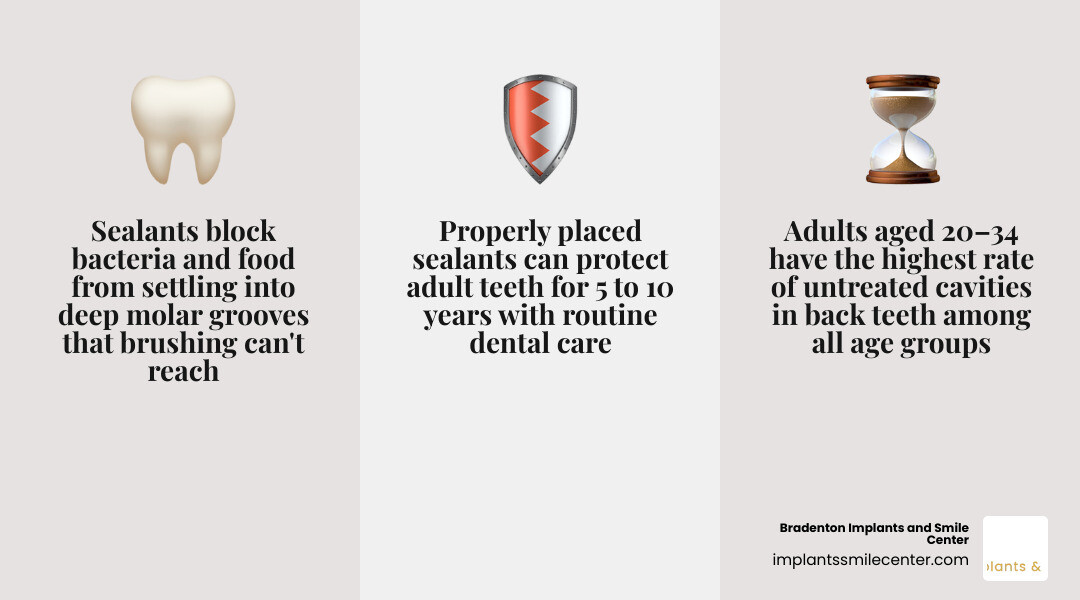
Most people think sealants are just for kids. But adults face real cavity risk too — young adults aged 20–34 have more untreated cavities in their back teeth than any other age group. Deep grooves in molars are hard to clean, no matter how well you brush.
If you've managed to keep your back teeth cavity-free into adulthood, sealants can help you keep them that way. If you've had cavities before, sealants can protect your remaining healthy teeth from the same fate.
I'm Dr. John Hegazin, owner of Bradenton Implants and Smile Center, with over 8 years of experience providing preventive care — including Florida adult tooth sealants — to patients throughout the Bradenton and Lakewood Ranch area. In this guide, I'll walk you through everything you need to know to decide if sealants are right for you.
What Are Dental Sealants and How Do They Protect Adult Teeth?
When we talk about preventive dentistry, we often focus on brushing, flossing, and regular cleanings. While these habits are vital, they sometimes aren't enough to protect the highly textured chewing surfaces of your back teeth. This is where dental sealants for adults come into play.
A dental sealant is a thin, medical-grade plastic or resin coating painted directly onto the chewing surfaces of your permanent back teeth—specifically your molars and premolars. Once applied, this liquid material flows into the deep, microscopic grooves of your teeth and quickly hardens, creating a durable, smooth physical barrier.
This barrier is highly effective because it seals out the two primary culprits behind tooth decay: plaque and acid. In the dental hygiene community, clinical publications like Not Just For Kids have long advocated for expanding the use of sealants into adult populations. While children's teeth are highly vulnerable as they erupt, adult teeth remain susceptible to decay throughout our lives. By sealing off these vulnerable areas, we prevent food and bacteria from settling into places your toothbrush bristles simply cannot reach.
How Sealants Prevent Cavities
To understand why sealants are so effective, we have to look closely at the anatomy of our molars. If you run your tongue over your back teeth, you will feel ridges, valleys, and deep grooves. In dental terms, these are called pits and fissures.
These pits and fissures are often narrower than a single bristle of your toothbrush. This means that even if you brush meticulously twice a day, microscopic food particles and bacteria will inevitably get trapped at the bottom of these valleys. Over time, the bacteria feast on the sugars in your food, producing acidic byproducts that slowly eat away at your natural tooth structure, eventually causing a cavity.
By applying a dental sealant, we essentially "pave over" these microscopic valleys. The sealant fills the grooves, turning a rough, hard-to-clean chewing surface into a smooth, easily sweepable shield. Bacteria can no longer settle in the deep crevices, and your toothbrush can easily wipe away any remaining plaque.
Who is a Candidate for Florida Adult Tooth Sealants?
Are you a good candidate for this preventive shield? While sealants are widely recommended for children, they are highly beneficial for many adults in Florida. You should strongly consider getting adult tooth sealants if you experience any of the following:
Deep Grooves and Fissures: If your natural molars have naturally deep pits and valleys that constantly trap food, sealants provide an immediate line of defense.
Dry Mouth (Xerostomia): Saliva is your mouth’s natural defense mechanism; it washes away food particles and neutralizes decay-causing acids. Many adults and seniors experience chronic dry mouth due to medications, systemic health conditions, or natural aging. If you struggle with dry mouth, you are at a much higher risk for rapid tooth decay, making preventive care for seniors and adults with xerostomia absolutely crucial.
Frequent Snacking or Sugary Diets: If your lifestyle involves frequent grazing, sipping on sweet tea, or consuming acidic beverages, your teeth are under constant acid attack.
Undergoing Orthodontic Treatment: Wearing braces or clear aligners makes maintaining perfect oral hygiene much more challenging. Sealants can keep your molars safe while your teeth are being realigned.
A History of Cavities: If you have already had several fillings in your lifetime, it indicates that your oral environment is highly conducive to decay. Sealing your remaining healthy, unfilled molars is a smart way to break the cycle of decay.
The Clinical Efficacy of Sealants in Adults

Many patients ask us: "Do sealants actually work for adults, or is this just a pediatric treatment?" The scientific consensus is clear. Clinical trials have repeatedly demonstrated that dental sealants are incredibly effective at preserving natural tooth structure and preventing decay in adults.
According to data from the Centers for Disease Control and Prevention (CDC), sealants protect against 80% of cavities for the first two years after placement. Even after four years, they continue to shield teeth against 50% of cavities. In adult populations, studies show that a one-time sealant application can reduce overall decay on treated surfaces by over 50% over a span of 15 years, provided the sealants are monitored and maintained.
Bioactive vs. Fluoride-Releasing Florida Adult Tooth Sealants
As dental technology has evolved, so have the materials we use for sealants. Historically, sealants were passive plastic barriers. Today, we have advanced options, including traditional fluoride-releasing sealants and cutting-edge bioactive sealants.
Traditional fluoride-releasing sealants (such as Clinpro) work by slowly releasing fluoride ions into the surrounding enamel over time, helping to strengthen the tooth structure.
On the other hand, bioactive sealants utilize advanced "SmartCap" technology (such as Biocoat). These materials do not just release fluoride; they actively release essential minerals like calcium and phosphate. This active ionic release helps to actively remineralize the enamel beneath and around the sealant, creating a highly protective microenvironment.
A landmark 24-month clinical trial on bioactive sealants published in the PMC database compared the performance of bioactive sealants against traditional fluoride-releasing sealants on permanent teeth. The results were highly revealing:
Bioactive Sealants (Biocoat): Achieved an outstanding 93.75% success rate after 24 months.
Traditional Fluoride Sealants (Clinpro): Achieved a 65.62% success rate after 24 months.
Risk Comparison: The study found that bioactive sealants carried an 82% lower risk of failure and 89% lower odds of failure compared to traditional fluoride sealants over the two-year period.
Feature Bioactive Sealants (e.g., Biocoat) Traditional Fluoride-Releasing (e.g., Clinpro) 24-Month Clinical Success Rate 93.75% 65.62% Risk of Failure 82% lower risk Baseline Primary Mechanism Active release of calcium, phosphate, and fluoride Passive release of fluoride Enamel Remineralization High (actively rebuilds tooth minerals) Moderate
Arresting Early Non-Cavitated Lesions
One of the most remarkable benefits of adult sealants is their ability to stop very early decay in its tracks. In the past, if a dentist noticed a tiny spot of early decay (known as an incipient carious lesion or ICDAS stage 1 or 2), the standard approach was often to "watch and wait" until it grew into a full cavity that required drilling and filling.
Today, conservative dentistry advocates for a much more proactive, minimally invasive approach. If we detect a non-cavitated, early-stage lesion in the grooves of your molar, we can apply a sealant directly over it.
How does this work? The sealant completely cuts off the bacteria’s supply of oxygen and dietary carbohydrates. Without these essential nutrients, the decay-causing bacteria cannot survive or produce acid. They become sterile, and the early decay stops progressing entirely. This represents a massive win for adult dental sealant benefits, allowing us to preserve your natural tooth structure without ever picking up a dental drill.
The Cost and Insurance Coverage of Florida Adult Tooth Sealants
When considering any dental treatment, understanding the financial aspect is important. Fortunately, dental sealants represent one of the most cost-effective, budget-friendly preventive treatments available in modern dentistry.
Out-of-Pocket Costs in Florida
If you do not have dental insurance, or if your plan does not cover adult preventive sealants, the out-of-pocket cost in Florida is highly reasonable.
On average, dental sealants without insurance cost between $34 to $65 per tooth in Florida, with a statewide average of about $49 per tooth.
To put this into perspective, think about the long-term cost savings. If you choose not to get a sealant and eventually develop a cavity in that molar, a composite filling can easily cost between $150 and $300. If the decay spreads deeper, requiring a root canal and a protective porcelain crown, your costs can quickly climb to $1,500 or more per tooth. Furthermore, managing gum health and advanced decay can lead to high periodontal cleaning costs. Spending under $50 today to protect a healthy tooth is an incredibly smart investment in your oral health and your wallet.
Dental Insurance and Adult Coverage
Does dental insurance cover sealants for adults? The answer is: sometimes, but coverage varies widely.
Most dental insurance plans fully cover sealants for children and adolescents (usually up to age 18 or 19) because they are classified as essential preventive care. However, many insurance companies impose strict age limitations on sealant coverage, meaning they may not cover them for adults over 19.
That being said, some premium dental plans and modern PPO policies do offer partial or full coverage for adult sealants, recognizing their long-term cost-saving value. When you visit our office, our team will gladly contact your insurance provider directly to verify your benefits and help you maximize your coverage.
The Dental Sealant Application Process
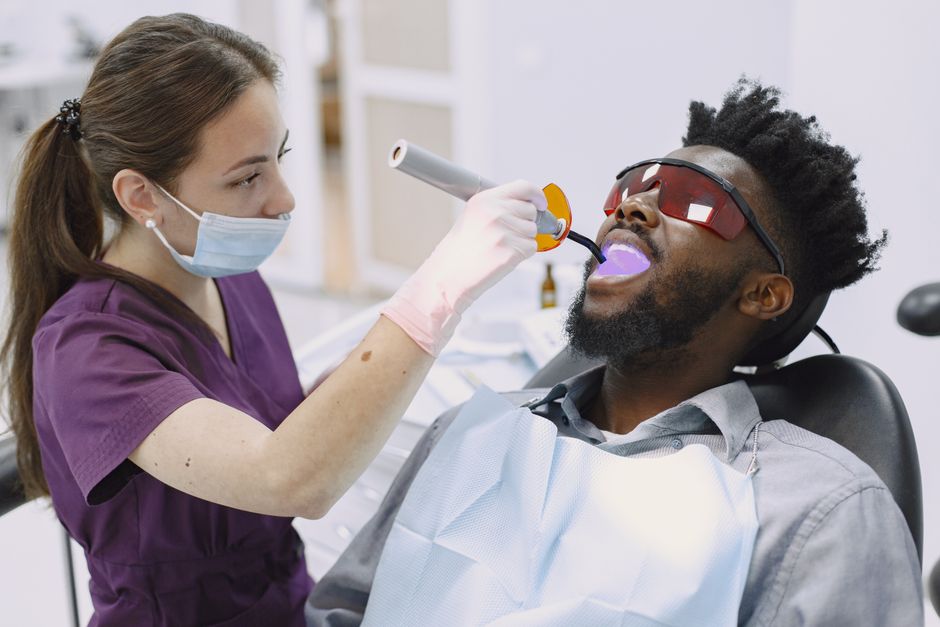
If you are nervous about dental procedures, you can take a deep breath. The process of getting Florida adult tooth sealants is quick, entirely non-invasive, and completely painless. There is absolutely no drilling of the natural tooth structure, and no local anesthesia (numbing injections) is required.
Step-by-Step Application
The entire process typically takes only a few minutes per tooth and is performed in a single comfortable visit:
Thorough Cleaning: First, we thoroughly clean the target teeth to remove all traces of plaque, food debris, and bacteria from the deep grooves. This may involve a professional scaling and polishing to ensure the surface is perfectly clean.
Tooth Conditioning (Etching): We apply a mild, medical-grade acid etching gel (usually a 37% phosphoric acid solution) to the chewing surface of the tooth for about 20 seconds. This microscopically roughens the enamel, creating a textured surface that allows the sealant material to bond securely to your tooth.
Rinsing and Drying: We wash away the etching gel with water and thoroughly dry the tooth. Keeping the tooth completely dry during this step is critical for a strong bond.
Sealant Application: We paint the liquid sealant resin directly onto the chewing surface. The liquid naturally flows deep into the pits and fissures, filling them completely.
Curing: We shine a specialized blue curing light onto the tooth for about 60 seconds. This light activates the resin, causing it to instantly harden into a durable shield.
Bite Evaluation: Finally, we check your bite to ensure the sealant sits flush and does not interfere with how your teeth come together. If necessary, we can easily smooth down any minor high spots in seconds.
Longevity and Maintenance
Once applied, dental sealants can protect your teeth for 5 to 10 years. However, they are subjected to daily wear and tear from chewing, grinding, and crunchy foods.
To ensure they continue to protect your teeth, it is essential to maintain regular routine dental cleanings and check-ups. During your six-month exams, we will inspect your sealants for any signs of chipping, cracking, or lifting.
If a portion of a sealant has worn away or chipped, the repair protocol is incredibly simple. We do not have to remove the entire sealant; we simply clean the exposed area, apply a brief etch, and place a small touch-up of new sealant material to restore your tooth's protective shield in under two minutes.
Frequently Asked Questions about Adult Sealants
Do dental sealants hurt during or after application?
No, not at all! The entire procedure is completely painless and non-invasive. Since we are only painting a protective coating onto the outer enamel of your tooth—which has no nerve endings—there is no drilling, no cutting, and no need for numbing needles. The experience is even gentler than a standard cleaning or advanced laser teeth cleaning. You can walk out of our office and immediately eat, drink, and return to your normal daily activities.
Can I get sealants if I already have fillings?
Sealants can only be applied to healthy, natural, and unfilled tooth surfaces. If a molar already has an amalgam (silver) filling, a composite (tooth-colored) filling, or a dental crown, it cannot be sealed. However, most adults only have fillings in a few of their molars. If you have other back teeth that are still natural, healthy, and completely unfilled, those teeth are excellent candidates for sealant protection.
How do sealants compare to fluoride varnish?
Sealants and fluoride varnishes are both fantastic preventive tools, but they work in completely different ways:
Fluoride Varnish: This is a highly concentrated fluoride liquid applied to all surfaces of your teeth. It is absorbed into the enamel, helping to chemically strengthen the tooth structure. It is highly effective at preventing decay on the smooth, flat surfaces of your teeth (such as the sides and front).
Dental Sealants: Sealants provide a physical, plastic barrier specifically designed to protect the deep, pitted chewing surfaces of your back teeth.
Rather than choosing between them, we recommend viewing them as complementary treatments. Fluoride protects the smooth sides of your teeth, while sealants defend the highly vulnerable, hard-to-clean chewing surfaces.
Schedule Your Preventive Consultation Today
At Bradenton Implants & Smile Center, we believe that the best, most conservative dentistry is the dentistry that prevents problems before they ever start. Our team is dedicated to providing personalized, compassionate care using modern technology, advanced techniques, and flexible financing options to keep your smile healthy and beautiful.
If you live in Bradenton, Lakewood Ranch, or the surrounding Florida areas, we invite you to take a proactive step for your oral health. Whether you need a routine check-up, general dentistry in Bradenton, or want to find out if you are a candidate for Florida adult tooth sealants, we are here to help.
Visit us at our convenient office located at 7270 55th Ave E, Bradenton, FL 34203. Schedule an appointment today to protect your smile for years to come!