

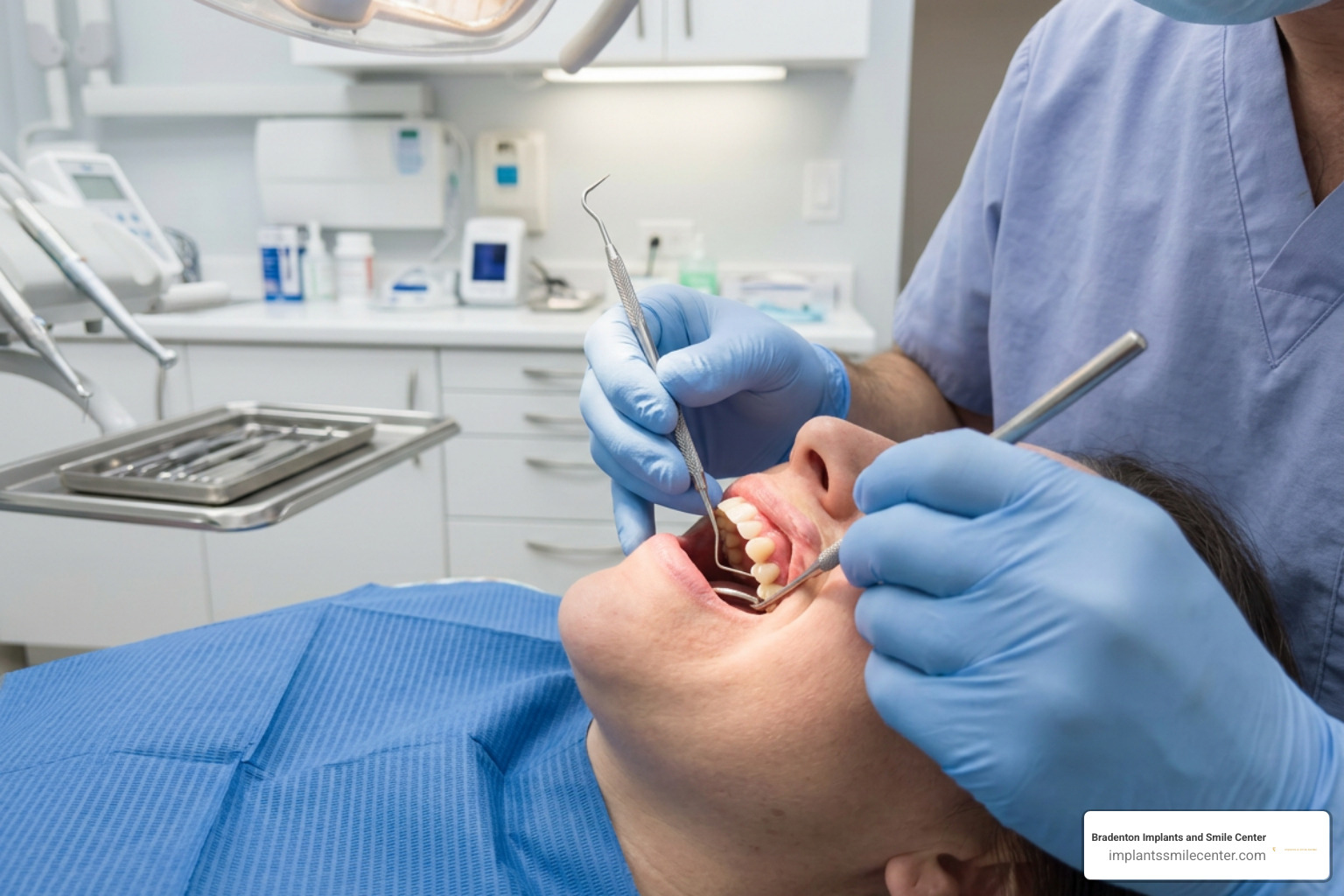
The Ultimate Guide to Gum Pocket Surgery Recovery
What Gum Pocket Surgery Is and Why It Matters for Your Oral Health
Gum pocket surgery — also called osseous surgery or pocket reduction surgery — is a procedure that removes bacteria from deep pockets around your teeth and reshapes damaged bone to stop gum disease from getting worse.
Here's what you need to know quickly:
What it treats: Periodontal pockets 5mm or deeper that don't respond to deep cleaning
What happens: A periodontist folds back gum tissue, cleans the roots, and reshapes the bone
How long it takes: 30 to 60 minutes per area treated
Recovery time: 2 to 4 weeks for initial healing; full healing takes 3 to 6 months
Does it work? Yes — it reduces pocket depth by 2 to 3mm on average, with 90% of results staying stable over 5 to 10 years
Cost: $1,000 to $3,500 per quadrant; most dental insurance covers 50% to 80%
If your dentist or periodontist has recommended this procedure, you're not alone. Many adults between 45 and 70 face advanced gum disease that simply can't be controlled with brushing, flossing, or even professional cleanings alone. Left untreated, deep periodontal pockets keep destroying the bone and tissue that hold your teeth in place — eventually leading to loose teeth or tooth loss.
This guide walks you through everything: what the procedure involves, what recovery really looks like day by day, what it costs, and how to protect your results long term.
I'm Dr. John Hegazin, owner of Bradenton Implants and Smile Center, with over 8 years of experience providing advanced gum therapy and surgical treatments — including gum pocket surgery — for patients dealing with periodontal disease. I'll walk you through everything you need to know so you can move forward with confidence.
What Is Gum Pocket Surgery and How Does It Work?
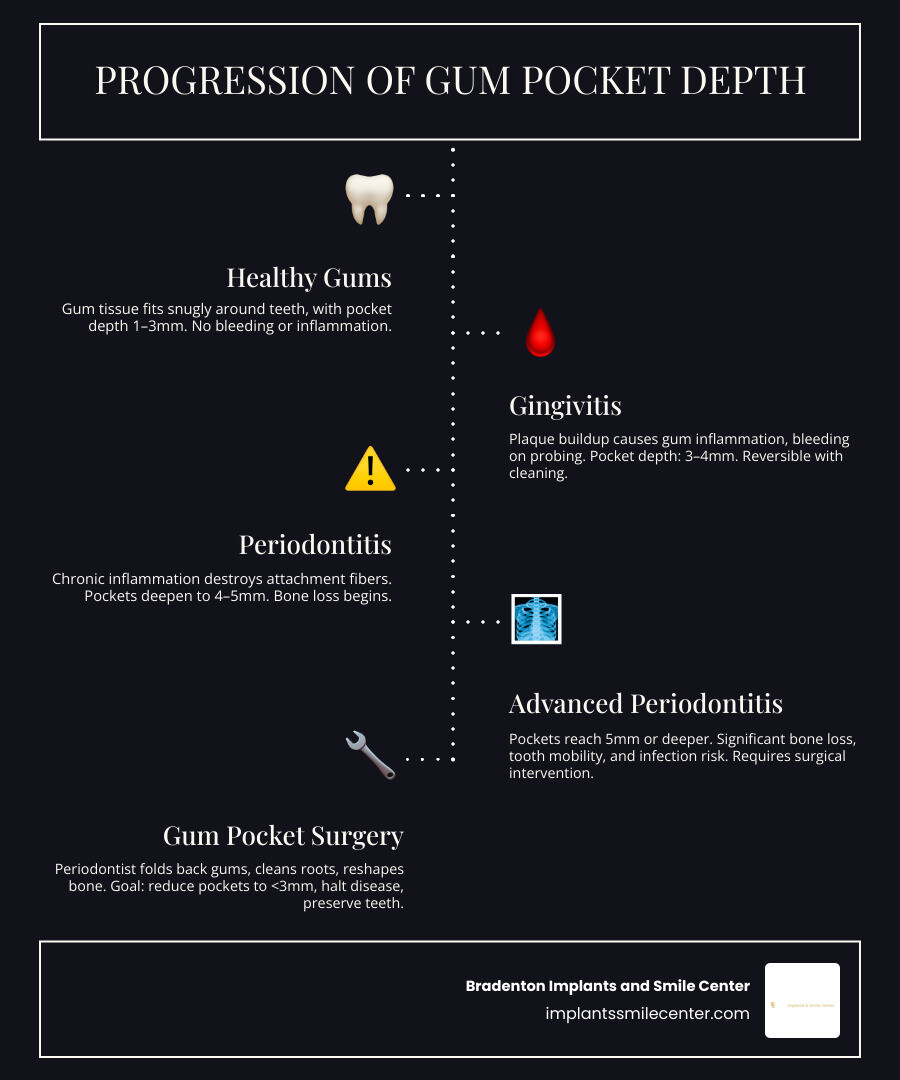
In a healthy mouth, your gum tissue fits snugly around each tooth like a fitted turtleneck sweater, leaving a shallow gap or sulcus measuring between 1 and 3 millimeters deep. When plaque and tartar build up along the gumline, bacteria trigger chronic inflammation known as periodontitis. This inflammation destroys the attachment fibers and supporting jawbone, causing the gums to pull away and create deep gaps called periodontal pockets.
When these pockets reach 5 millimeters or deeper, toothbrush bristles and floss cannot reach the bottom. Harmful anaerobic bacteria thrive in these dark, oxygen-deprived environments, continuing to eat away at bone tissue.
Gum pocket surgery (medically referred to as osseous surgery or pocket reduction surgery) is designed to solve this exact problem. During the procedure, we carefully fold back (reflect) the outer gum tissue to gain direct visibility of the underlying root surfaces and bone. We thoroughly remove hidden tartar (calculus) and bacterial colonies, recontour irregularities in the eroded jawbone, and suture the gum tissue closer to the bone level.
By eliminating the pocket depth, we make the tooth roots accessible so you can effectively clean them at home with daily brushing and flossing. A fundamental anatomical principle behind this surgery is preserving or re-establishing the biological width — the natural 2-millimeter band of soft tissue attachment (comprising 1mm of junctional epithelium and 1mm of connective tissue attachment) above the bone crest. When the gum margin aligns naturally with this biological width, chronic inflammation subsides and tissues heal.
Gum Pocket Surgery vs. Deep Cleaning
Patients often ask us why they need surgery if they have already had a "deep cleaning." While both treatments target gum disease, they serve different stages of infection:
Scaling and Root Planing (SRP): This is a non-surgical deep cleaning performed under local anesthesia. The hygienist or dentist uses specialized hand scalers and ultrasonic instruments to scrape away plaque and tartar beneath the gumline. SRP is highly effective for mild to moderate periodontitis with pocket depths of 4 to 5 millimeters.
Gum Pocket Surgery: When pockets are 5mm or deeper, non-surgical instruments cannot reliably reach the base of the infection without clear visual access. Surgery physically opens the area, allowing us to see every particle of calculus and smooth out rough, cratered bone that harbors bacteria.
If non-surgical treatment fails to reduce pocket depths or stop bleeding on probing, surgical pocket reduction becomes necessary to halt progressive bone loss. To explore how non-surgical options compare to surgical intervention, read our guide on Periodontal Pocket Reduction Surgery.
Types of Pocket Reduction Procedures
Depending on the extent of bone loss and tissue recession, we tailor pocket reduction using several specialized techniques:
Open Flap Debridement: The standard pocket reduction approach where the gum tissue is gently lifted, root surfaces are scrubbed clean, and tissue is sutured back into place.
Apically Positioned Flap: In this technique, the gum flap is repositioned slightly lower (toward the root tip) than its original location. This creates shallow, easy-to-clean pockets while respecting natural tissue contours. Learn more details about this approach in this comprehensive study on Apically Positioned Flap Surgery: Pocket Elimination — DentalPedia.
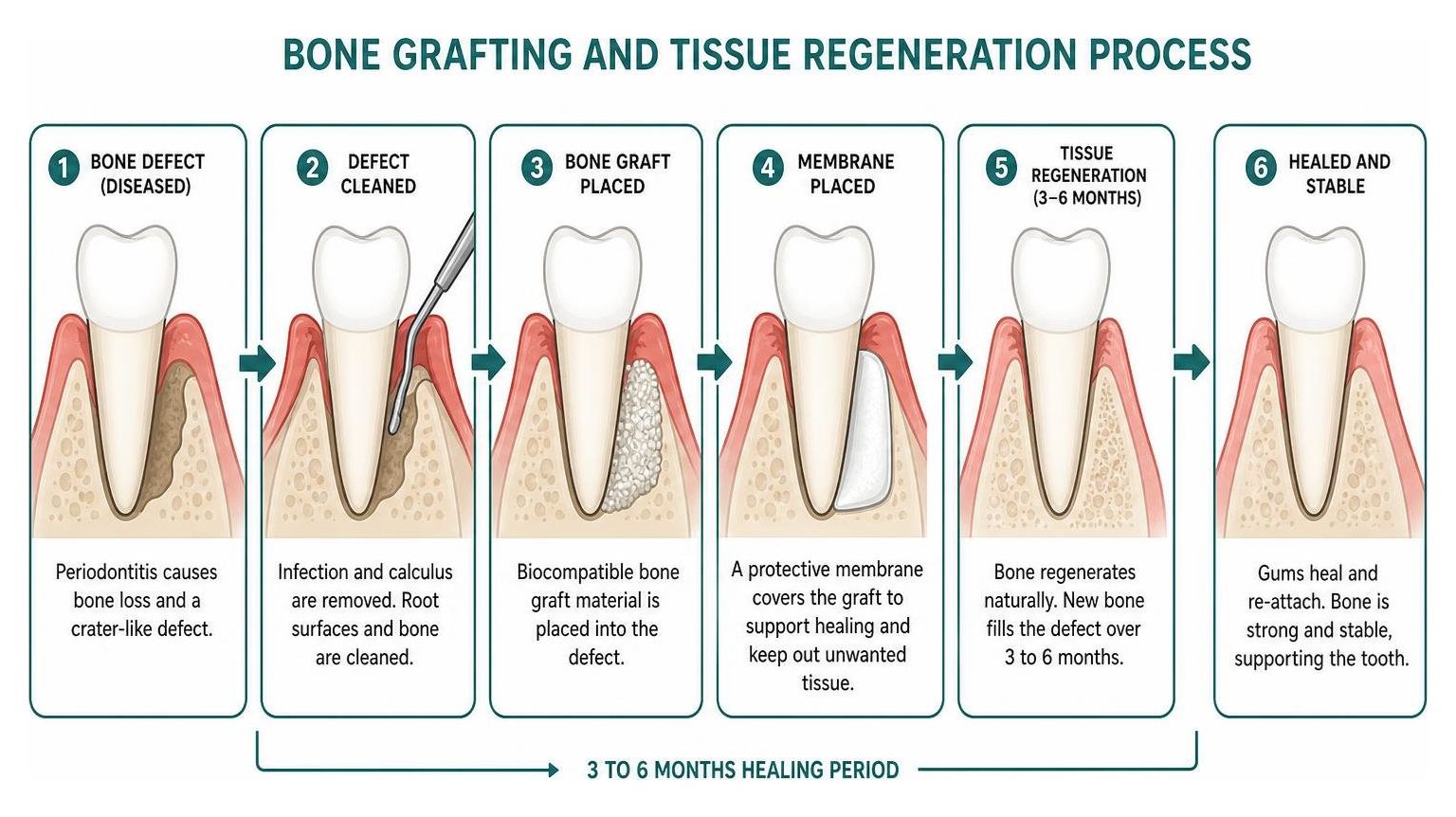
Bone Grafting and Guided Tissue Regeneration: When periodontitis creates deep crater-like defects in the bone around a tooth, simply smoothing the bone isn't enough. We place biocompatible bone grafting material into the defect and cover it with a protective membrane. Over 3 to 6 months, your body uses this scaffold to rebuild natural bone structure. If you are also planning for future tooth replacement, read about Bone Grafting for Implants.
Candidates, Risks, and Benefits of Osseous Surgery
Understanding whether you are a suitable candidate for gum pocket surgery involves evaluating both your oral health status and your commitment to ongoing maintenance care.
Who Needs Pocket Reduction Surgery?
You may be a prime candidate for pocket reduction surgery if you exhibit:
Persistent periodontal pockets measuring 5mm or deeper following scaling and root planing.
Active signs of infection, such as bleeding on probing or pus around the gums.
Progressive localized or generalized bone loss visible on digital dental X-rays.
Areas where bone loss has created irregular hollows or craters around tooth roots.
Certain systemic factors can accelerate periodontitis and impact surgical success. Smoking, uncontrolled type 2 diabetes, chronic stress, and systemic inflammatory conditions increase tissue breakdown and delay healing. To learn more about how medical conditions and lifestyle factors influence periodontal health, explore our guide on Periodontal Disease Risk Factors.
Expected Surgical Benefits and Common Side Effects
The clinical benefits of osseous surgery are backed by decades of clinical research, but like any surgical procedure, it comes with predictable side effects.
Surgical Outcome / Aspect Clinical Expected Benefit Potential Risks & Side Effects Pocket Depth Reduction Average reduction of 2 to 3mm, restoring manageable 2-3mm pockets Minor localized tissue shrinkage Infection Control 80% to 90% reduction in bleeding on probing Temporary increase in localized inflammation during early healing Tissue Attachment Clinical attachment gain exceeding 2mm in over 90% of cases Initial soreness and tenderness at incision sites Tooth Preservation Prevents future tooth loss by halting bone destruction Temporary root sensitivity to cold and hot temperatures Gum Aesthetics Halts destructive tissue breakdown and stabilizes gum level 2 to 4mm of permanent gingival recession (teeth appear longer)
The most common side effect following surgery is gingival recession averaging 2 to 4 millimeters. As infected, swollen tissue heals and tightens around the lowered bone line, more of the tooth root becomes exposed. While teeth may appear slightly longer and feel temporarily sensitive to temperature, this trade-off is essential to eliminate the dark, bacteria-filled pockets and preserve your natural teeth.
For additional clinical perspectives on procedure expectations, review this detailed Gum Pocket Reduction Surgery Guide.
Step-by-Step Surgical Procedure and Preparation
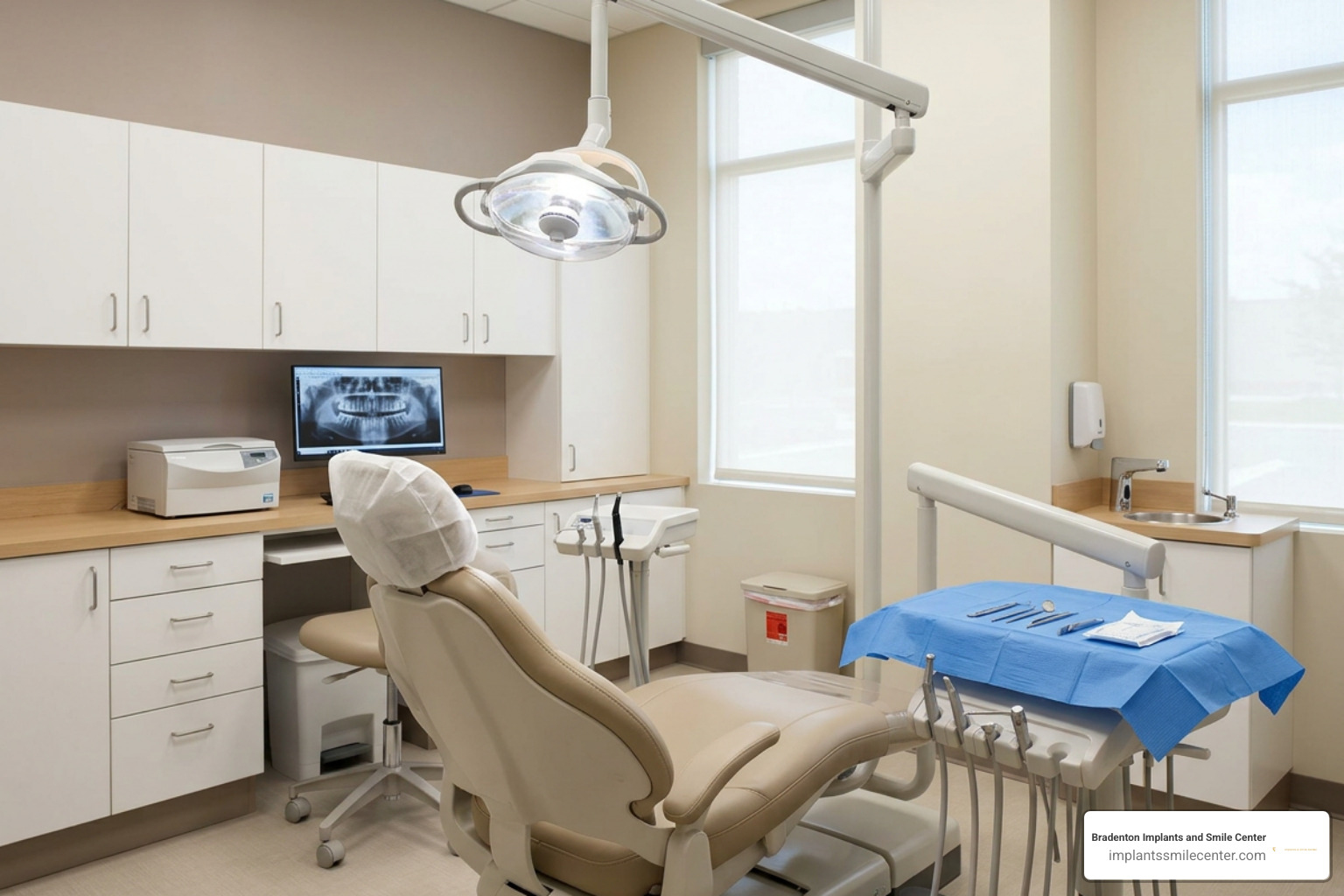
Knowing what to expect before and during your surgery helps ease anxiety and ensures a seamless experience.
Pre-Surgical Consultation and Preparation
Before scheduling surgery, we perform a detailed periodontal examination, measuring pocket depths around every tooth and taking digital X-rays to assess bone structure. We also review your medical history:
Medication Adjustments: If you take blood thinners like aspirin, warfarin, or direct oral anticoagulants, we coordinate with your primary care physician to safely adjust your dosage prior to surgery.
Diet & Rest: Eat a nutritious meal before your appointment, as your mouth will be numb and sensitive for several hours post-procedure.
Transportation: If you opt for oral or IV sedation, arrange for a trusted friend or family member to drive you home.
What Happens During the Surgery
Anesthesia and Comfort: We thoroughly numb the surgical area using local anesthetic so you won't feel any pain. For patients experiencing severe dental anxiety, we offer relaxed sedation options. Read more about how we keep you comfortable with Sedation Dentistry Bradenton FL and our specialized Dental Anxiety Solutions.
Flap Elevation: Precise incisions are made along the gumline, and the gum tissue is gently separated from the teeth and bone.
Debridement and Root Planing: We remove all deep-seated tartar, bacterial toxins, and diseased tissue from the root surfaces.
Osseous Resecting and Reshaping: Small bone contours and sharp edges left by infection are smoothed using delicate hand or rotary instruments.
Regeneration (if needed): Bone grafts or growth proteins are placed in deep bone defects.
Suturing and Dressing: The gum tissue is repositioned closer to the bone level and secured with tiny sutures. A putty-like periodontal dressing (packing) may be placed over the site to protect it while healing.
The complete procedure usually takes 30 to 60 minutes per quadrant. If multiple quadrants are treated in one visit, the appointment may last up to 2 hours.
Timeline and Post-Op Care for Recovery
Proper post-operative care is critical for smooth healing and achieving long-term stability.
Immediate Aftercare and Pain Management
Here is what your healing timeline typically looks like:
First 24 Hours: Rest quietly with your head elevated on pillows. Apply an ice pack to the outside of your cheek in 20-minute intervals (20 minutes on, 20 minutes off) to minimize swelling. Slight bleeding or pink-tinged saliva is normal. Avoid swishing, spitting vigorously, or drinking through a straw, as suction can dislodge blood clots.
Days 1 to 7: Localized swelling and mild to moderate discomfort peak around day 2 or 3. Take prescribed pain relievers or over-the-counter ibuprofen (400–600mg every 6 hours) as directed. Do not brush directly over the surgical site or periodontal dressing; instead, gently roll a prescribed chlorhexidine antimicrobial mouthwash around your mouth twice daily.
Weeks 2 to 4: At your 7 to 14-day follow-up, we remove any non-dissolvable sutures or remaining dressing. Tissue surface healing is largely complete, and you can begin brushing the area gently with an extra-soft toothbrush.
Months 3 to 6: Deep tissue reattachment and bone maturation continue beneath the surface. Full tissue remodeling is stabilized around 3 to 6 months.
For step-by-step guidance on managing your post-op routine, check our article on care After Osseous Surgery.
What to Eat During Recovery
Stick to soft, nutrient-rich foods that require minimal chewing during the first two weeks:
Scrambled eggs and omelets
Smoothies and protein shakes (eaten with a spoon, no straws!)
Mashed potatoes, sweet potatoes, or mashed avocado
Lukewarm soups and broths
Yogurt, cottage cheese, and pudding
Well-cooked oatmeal or cream of wheat
Macaroni and cheese or soft pasta
Avoid crunchy, hard, spicy, acidic, or seed-filled foods (like popcorn, nuts, chips, and berries) that can lodge beneath healing gums.
Long-Term Recovery After Gum Pocket Surgery
Once the initial recovery phase concludes, long-term success depends on consistent maintenance. Clinical long-term studies demonstrate that pocket reduction surgery achieves stable results in 90% of cases over 5 to 10 years.
Disease relapse occurs in only 5% to 10% of cases, almost exclusively linked to poor daily home oral hygiene or tobacco use. Because reduced pockets remain sensitive to plaque re-accumulation, you will be transitioned to a 3-month periodontal maintenance cleaning schedule. These specialized cleanings allow us to monitor pocket depths, clean hard-to-reach root surfaces, and keep gum disease in remission.
If you are looking for localized specialist care, check our guide to finding Periodontics Near Me.
Financial Considerations: Costs, Insurance, and Alternatives
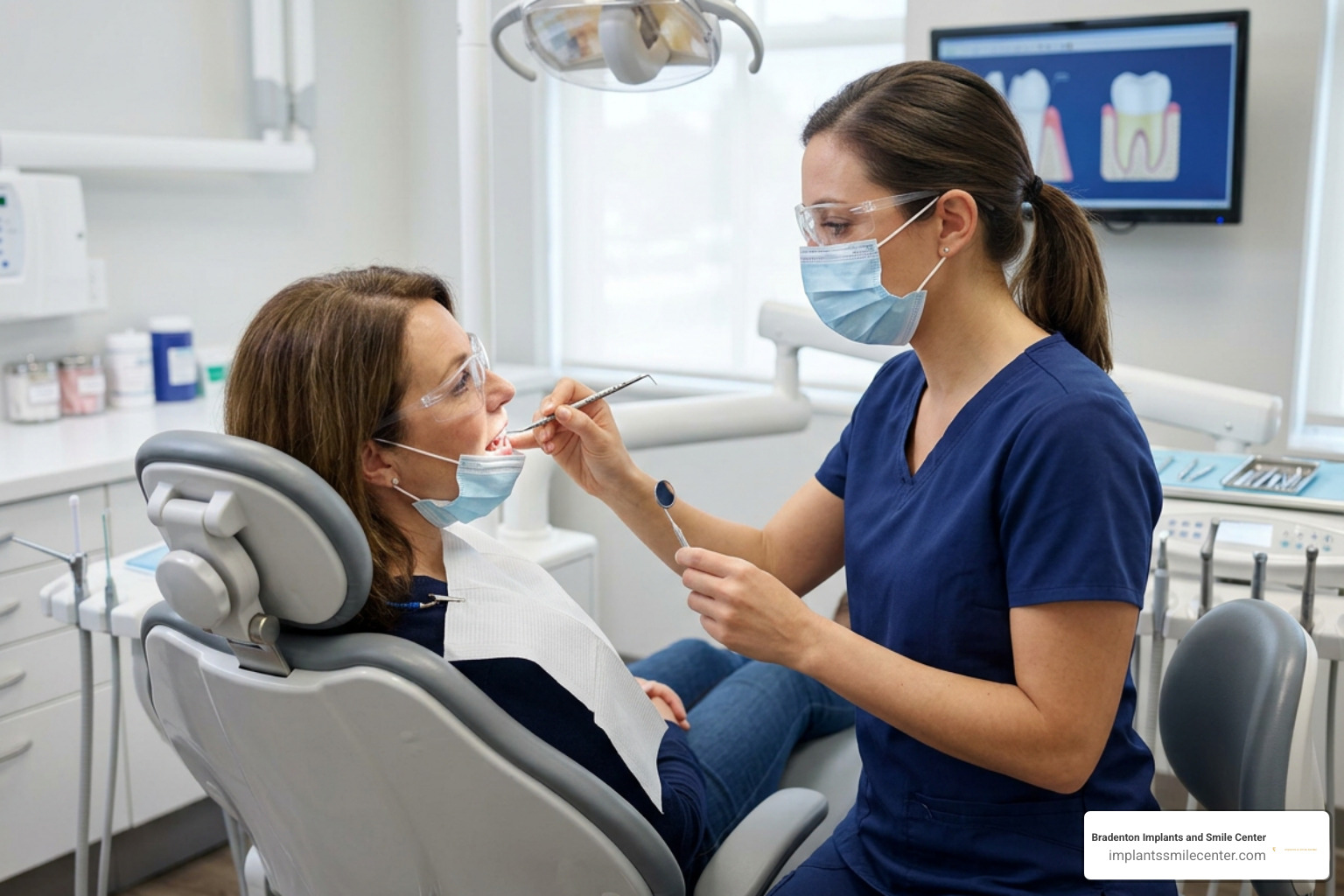
Understanding the investment required for pocket reduction helps you plan treatment effectively.
Cost Breakdown and Insurance Coverage
The cost of gum pocket surgery varies based on the severity of bone loss and the number of teeth treated:
Root Scaling and Planing: Approximately $120 per tooth (or $200–$300 per quadrant)
Gum Pocket Surgery (Osseous Surgery): $1,000 to $3,500 per quadrant
Bone Grafting (if required): $1,500 to $3,000 per area
Full-Mouth Periodontal Treatment Plan: Averages between $4,000 and $6,000, though severe cases involving extensive grafting can range from $8,000 to $10,000.
Because pocket reduction is medically necessary to prevent tooth loss, most dental insurance plans cover 50% to 80% of the approved cost under major surgical services. Our team works directly with insurance providers to maximize your benefits and offers flexible financing options. For detailed financial guidance, visit our resource on Periodontal Cleaning Cost With Insurance.
Non-Surgical and Laser Alternatives (LANAP)
Patients often ask if non-surgical alternatives exist:
Extended Non-Surgical Therapy: In mild cases, repeat scaling, localized antibiotic gels, and laser decontamination may control light inflammation. However, for 5mm+ deep pockets with bone craters, non-surgical approaches cannot remove deep subgingival tartar with full predictability.
LANAP (Laser-Assisted New Attachment Procedure): LANAP uses a specific laser wavelength to target infected pocket lining and kill bacteria without traditional scalpel incisions or sutures. While LANAP offers reduced post-op swelling and faster early comfort, traditional osseous surgery remains the gold standard for reshaping severely damaged bone contours.
Frequently Asked Questions About Pocket Reduction
How long does recovery take after osseous surgery?
Initial soft tissue recovery takes 1 to 2 weeks, allowing most patients to return to light work and routine daily activities within 24 to 48 hours. Complete internal tissue reattachment and bone healing mature over 3 to 6 months.
Is gum pocket surgery painful?
You will not feel pain during the surgery because the site is thoroughly numbed with local anesthesia. Afterward, most patients experience mild to moderate soreness for 3 to 5 days, which is easily managed with prescribed or over-the-counter pain medications like ibuprofen and acetaminophen.
Do gums grow back after pocket surgery?
No, gum tissue destroyed by periodontitis does not naturally grow back upwards. Osseous surgery reduces pocket depth by positioning the gums slightly lower to align with healthy bone levels. If exposed roots cause cosmetic concerns in your smile zone later on, specialized soft tissue gum grafting can be considered after periodontitis is fully controlled.
Conclusion
Gum pocket surgery is one of the most effective, clinically proven procedures available to stop advanced periodontal disease, eliminate hidden infection, and save your natural teeth from extraction. While the idea of gum surgery can feel intimidating, modern surgical techniques, effective anesthesia, and structured post-operative care make recovery smooth and manageable.
At Bradenton Implants & Smile Center, located at 7270 55th Ave E, Bradenton, FL 34203, we provide personalized, compassionate periodontal care supported by modern dental technology. If you have been diagnosed with deep periodontal pockets or bleeding gums, don't wait for bone loss to worsen.
Schedule your consultation today by visiting our Gum Treatment page and take the first step toward a healthier, permanent smile!