

From Flap Surgery to Lasers: The Ultimate Guide to Gum Pocket Treatment
Why Gum Pocket Treatment Could Save Your Teeth
Gum pocket treatment is often the deciding factor between keeping your natural teeth and losing them to gum disease. Nearly half of all adults in the United States have some form of gum disease — and most don't know it until the damage is already underway.
Here's a quick overview of your treatment options based on pocket depth:
Pocket Depth What It Means Typical Treatment 1-3mm Healthy gums Routine cleaning and home care 4mm Early warning sign Improved hygiene, monitoring 5-6mm Moderate gum disease Scaling and root planing 7-8mm+ Severe gum disease Surgery (flap, laser, osseous)
The good news: when caught early, gum disease is manageable — and sometimes reversible. The bad news: deeper pockets (5mm and beyond) can't be cleaned with a toothbrush alone. They need professional care.
This guide walks you through every level of gum pocket treatment, from non-surgical deep cleaning to flap surgery and laser therapy, so you know exactly what to expect and when to act.
I'm Dr. John Hegazin, owner of Bradenton Implants and Smile Center, with over 8 years of experience providing gum therapy and advanced periodontal care to patients in the Bradenton area. My team and I take a personalized approach to gum pocket treatment, combining modern technology with compassionate care to help you protect your smile for the long term.
What Are Gum Pockets and How Do They Form?
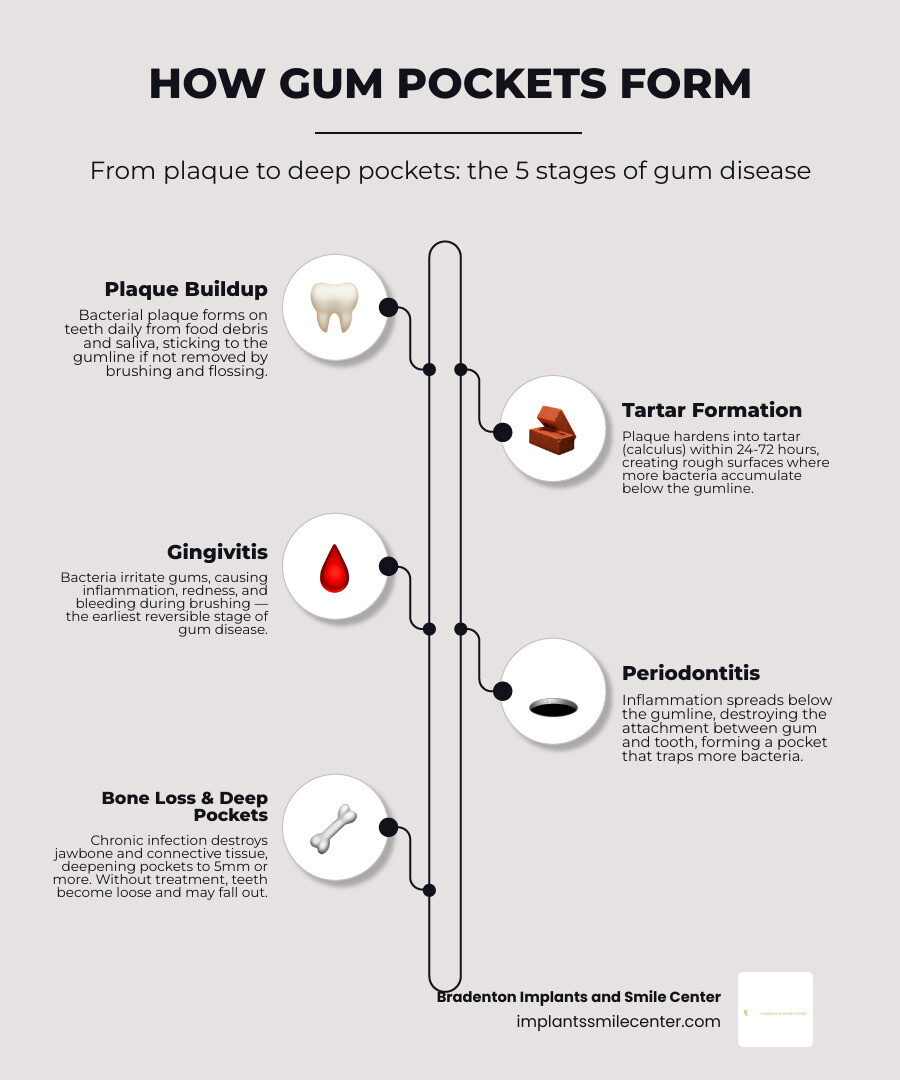
To understand how gum pockets form, it helps to think of your gums as a frame holding a picture. In a healthy mouth, your gum tissue fits snugly around each tooth like a well-tailored collar. However, when oral hygiene slips, bacterial plaque—a sticky, colorless film of bacteria—constantly forms on your teeth.
If plaque isn't thoroughly brushed and flossed away, it hardens into a tough, mineralized substance called tartar (or calculus). Tartar acts like a magnet for more plaque, creating a shield for bacteria right at the gumline.
As bacteria multiply, they release toxins that trigger an immune response, leading to inflammation. This early stage of gum inflammation is known as gingivitis. If left untreated, gingivitis progresses to periodontitis. During periodontitis, the body's inflammatory response begins to break down the bone and connective tissues holding your teeth in place.
As these supporting structures dissolve, the gums pull away from the teeth, creating deep spaces known as periodontal pockets. Once these pockets form, they become a perfect hiding spot for more bacteria, plaque, and tartar, accelerating gum recession and bone loss. Learn more about the stages of gum disease to understand how this process progresses.
Signs and Symptoms of Deep Gum Pockets
Because periodontal disease is often silent in its early stages, many people do not realize they have deep pockets until the damage is advanced. However, there are several key warning signs you should watch out for:
Bleeding gums: Healthy gums do not bleed when you brush or floss. If you notice blood in the sink, it is a clear sign of inflammation.
Persistent bad breath: Bacteria trapped deep in gum pockets release volatile sulfur compounds, causing chronic bad breath (halitosis) that doesn’t go away with mouthwash.
Loose or shifting teeth: As supporting bone dissolves, teeth may begin to wiggle, shift, or develop new gaps.
Swollen, red, or tender gums: Gums that appear puffy, dark red, or feel sensitive to the touch are actively fighting an infection.
Painful chewing: Deep infections can make the roots of your teeth highly sensitive, leading to discomfort or pain when you bite down.
Measuring the Depth: What Your Numbers Mean
During your routine dental checkup, we use a specialized tool called a periodontal probe to measure the depth of the space between your teeth and gums. This probe is gently inserted into the pocket at six specific points around each tooth.
The depth is measured in millimeters (mm). To get a complete picture of your oral health, we combine these physical measurements with dental X-rays, which show whether the infection has begun to destroy the underlying jawbone.
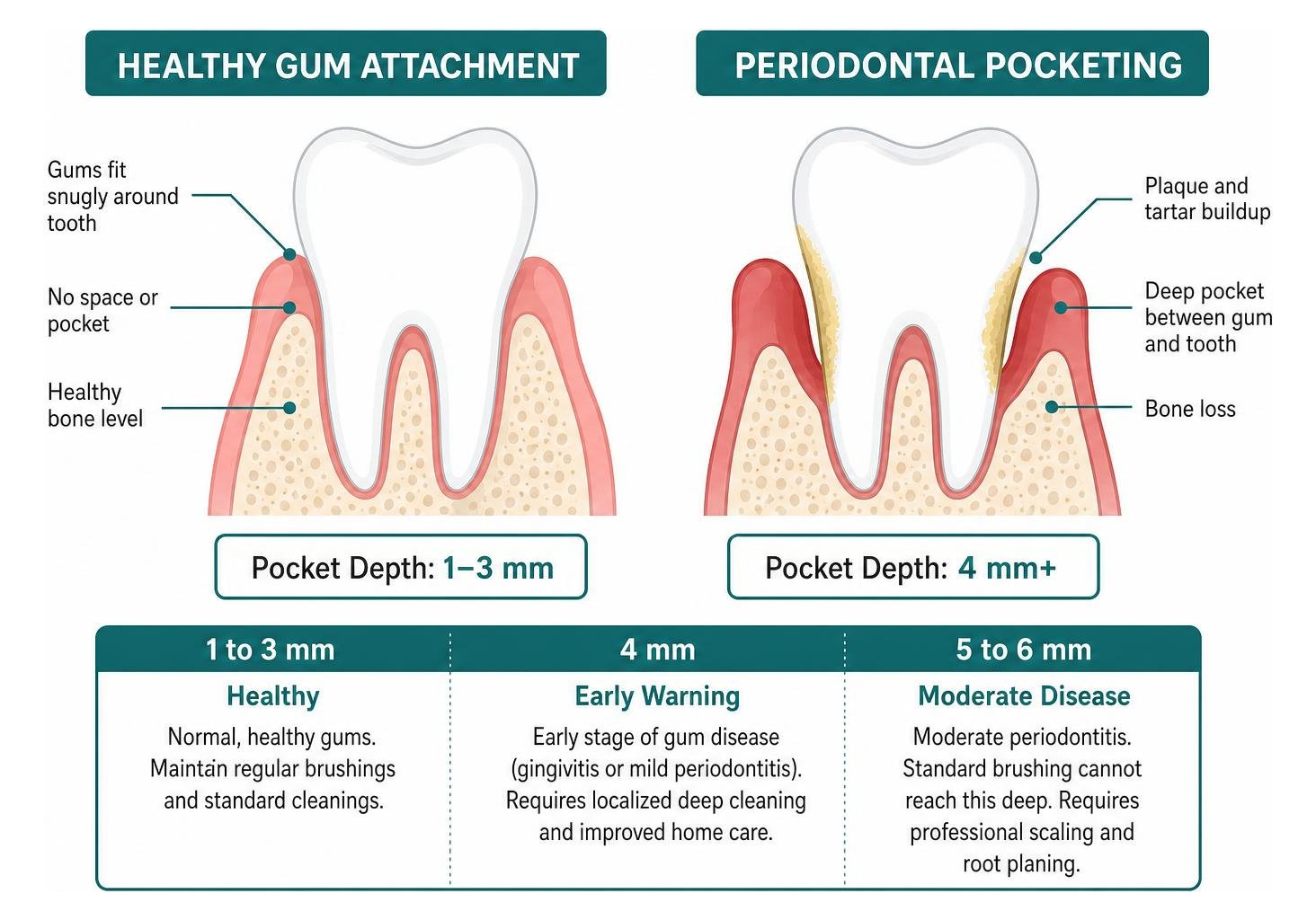
Pocket Depth Classification Health Status & Actions Required 1 to 3 mm Healthy Normal, healthy gums. Maintain regular brushings and standard cleanings. 4 mm Early Warning Early stage of gum disease (gingivitis or mild periodontitis). Requires localized deep cleaning and improved home care. 5 to 6 mm Moderate Disease Moderate periodontitis. Standard brushing cannot reach this deep. Requires professional scaling and root planing. 7 mm or deeper Severe Disease Advanced periodontitis. High risk of bone loss and tooth loss. Often requires surgical intervention.
Healthy Gums vs. Early Warning Signs
A measurement of 1 to 3 mm indicates a healthy mouth. At this depth, your toothbrush and dental floss can easily reach the bottom of the pocket to clear away plaque.
A 4 mm reading is an early warning sign. While not yet severe, a 4 mm pocket means the gum tissue has started to pull away, and plaque is beginning to collect below the gumline where standard bristles cannot easily reach. This is the ideal window to take action and reverse the damage before bone loss occurs. Read our dental cleaning guide to see how professional hygiene maintenance keeps early warning signs in check.
Moderate to Severe Periodontal Disease
Once your pockets reach 5 to 6 mm, you are dealing with moderate periodontal disease. At this depth, the pocket is too deep to be cleaned by routine home care. Bacteria are actively destroying the periodontal ligament and bone.
Measurements of 7 to 8 mm or deeper indicate severe, advanced periodontitis. At this stage, the infection has destroyed a significant portion of the supporting bone, often resulting in tooth mobility. Without immediate professional gum pocket treatment, tooth loss is highly likely. To learn more about how specialists diagnose these severe stages, you can review the Mayo Clinic's guide on periodontitis diagnosis.
Non-Surgical Gum Pocket Treatment Options
For pockets that measure 4 to 6 mm, we always start with non-surgical treatments. The goal of these therapies is to eliminate the bacterial infection, clean out the deep pockets, and allow the gum tissue to heal and reattach to the clean tooth surfaces.
To ensure your absolute comfort during these deep cleaning procedures, we perform them under local anesthesia to completely numb the treatment areas.
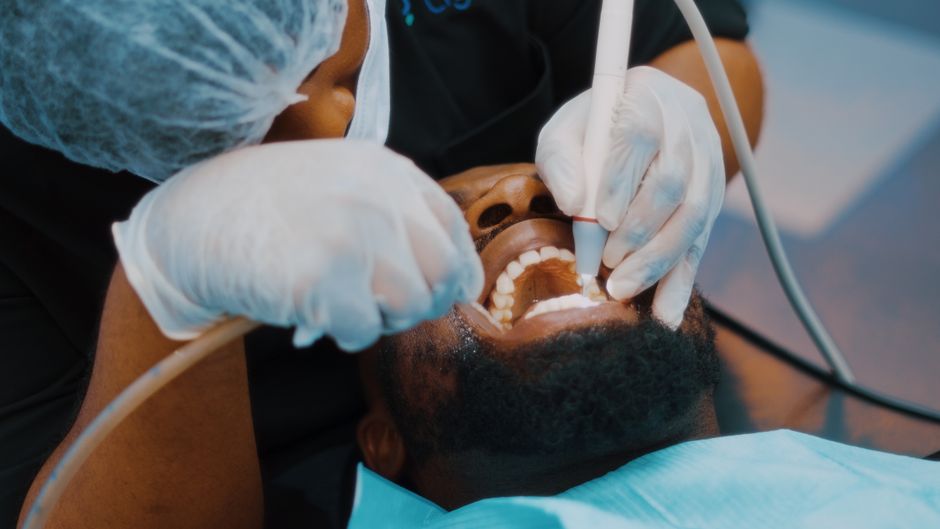
If you are experiencing early signs of gum irritation, you can schedule a scaling and polishing session to restore your gum health.
Scaling and Root Planing
Scaling and root planing (SRP) is the gold standard of non-surgical gum pocket treatment. It is a two-step deep cleaning process:
Scaling: We use specialized hand instruments and ultrasonic scalers to meticulously remove plaque, tartar, and subgingival bacterial toxins from both above and below the gumline.
Root Planing: We smooth out the rough spots on the root surfaces of your teeth. Smoothing the roots removes embedded bacterial byproducts and makes it much harder for plaque and tartar to re-adhere in the future, allowing your gums to shrink and firmly reattach.
For patients looking for the most comfortable and modern deep cleaning experience, you can also explore laser teeth cleaning options which use light energy to target bacteria with extreme precision.
Antibiotics and Antimicrobial Rinses
To support the physical cleaning of scaling and root planing, we often use targeted antimicrobial therapies. This may include placing a localized topical antibiotic gel directly into the deep pockets after cleaning to slowly release medication over several days.
We may also prescribe a therapeutic mouth rinse containing chlorhexidine gluconate (CHX), a powerful prescription-strength antimicrobial that controls bacterial growth while your gums heal. In some cases of acute infection, oral antibiotics may be prescribed to help your body fight off the bacteria from the inside out.
Surgical Gum Pocket Treatment: From Flap Surgery to Lasers
When periodontal pockets measure 5 millimeters or deeper and do not respond fully to scaling and root planing, surgical intervention becomes necessary. Surgical gum pocket treatment allows us to directly access the deep roots of the teeth and the damaged bone structure to eliminate deep-seated bacteria and reshape the tissue.
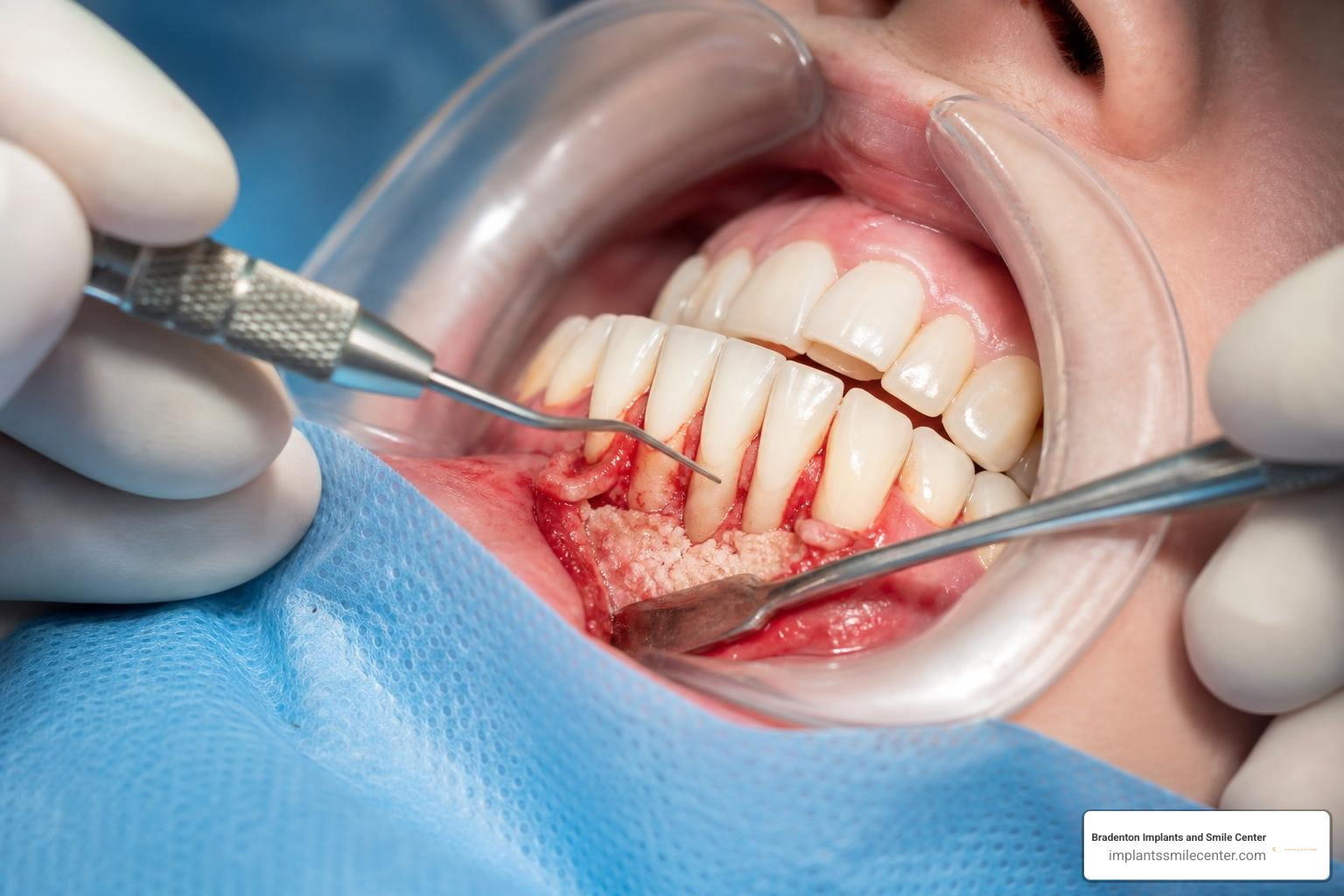
If you have been advised that you need advanced care, you can read our comprehensive guide to periodontal pocket reduction surgery to learn how these modern techniques protect your teeth.
Traditional Flap Surgery and Osseous Surgery
Traditional pocket reduction surgery—often called flap surgery or osseous surgery—is a highly effective, time-tested method for treating deep pockets. During this procedure, a periodontist makes tiny, precise incisions in the gum tissue to create a "flap." This flap is gently folded back, giving the specialist direct visualization and access to the tooth roots and underlying bone.
Once the roots are thoroughly cleared of deep bacterial buildup, the periodontist addresses any bone damage. Periodontitis often leaves the supporting bone with irregular, crater-like defects where bacteria easily hide. During osseous surgery, the specialist reshapes these damaged bone contours to eliminate these hiding spots. Finally, the gum tissue is secured back in place with small stitches.
On average, osseous surgery reduces pocket depths by 2 to 3 millimeters, turning unmanageable 7mm pockets into cleanable 4mm spaces. For a detailed clinical breakdown of this procedure, you can review the American Academy of Periodontology guide on pocket reduction as well as this comprehensive Gum Pocket Reduction Surgery Guide.
Laser Therapy and Regenerative Techniques
For patients seeking a less invasive alternative, modern periodontal care offers advanced laser therapies and regenerative techniques:
Laser Therapy (LANAP): Laser-Assisted New Attachment Procedure uses a specific light wavelength to target and vaporize diseased tissue and bacteria inside the pocket without harming healthy gums. This promotes faster healing and less post-operative discomfort.
Bone Grafting: If periodontitis has destroyed the bone supporting your teeth, we can place bone grafting material into the defects to stimulate your body to rebuild new, healthy bone.
Guided Tissue Regeneration (GTR): This technique uses a small, biocompatible membrane barrier placed between the healing gum tissue and the bone. The membrane blocks fast-growing gum tissue from filling the void, giving the slower-growing bone tissue the time and space it needs to regenerate.
PRF and PRP Therapies: Platelet-Rich Fibrin and Platelet-Rich Plasma are derived by spinning a small sample of your own blood in a centrifuge. These growth-factor-rich materials are applied to the surgical site to dramatically accelerate healing and minimize discomfort.
Tissue-Stimulating Proteins: Specialized gels containing enamel matrix proteins can be applied to diseased roots during surgery to actively trigger the natural regeneration of bone and soft tissue attachment.
When to Seek Professional Gum Pocket Treatment
You should seek a consultation with a periodontist if your pocket depths remain at the 5mm threshold or deeper after an initial deep cleaning, or if you present with severe symptoms like shifting teeth, painful chewing, or recurring gum abscesses. A periodontist is a dental specialist who focuses exclusively on the prevention, diagnosis, and treatment of gum disease. If you are looking for specialized care in the Bradenton area, you can easily find periodontics near me to meet with our dedicated team.
The Cost of Surgical Gum Pocket Treatment
The cost of surgical gum pocket treatment varies depending on the severity of your condition and how many areas of your mouth require treatment. On average, osseous surgery typically costs $1,000 to $3,500 per quadrant.
The good news is that because periodontal surgery is medically necessary to save your teeth, many dental insurance plans cover 50% to 80% of the cost under "major services." To help you navigate your financial options, we encourage you to understand periodontal cleaning cost with insurance and explore our flexible in-office financing solutions.
Recovery, Healing, and At-Home Maintenance
Your recovery after gum pocket treatment depends on whether you received non-surgical or surgical therapy. After a deep cleaning (scaling and root planing), you may experience mild tooth sensitivity and gum tenderness for a few days, but you can usually return to your normal routine immediately.
Following surgical treatments like osseous surgery, the initial recovery phase takes about 1 to 2 weeks. To ensure smooth healing, we recommend these best practices:
Stick to a soft-food diet: Enjoy foods like yogurt, scrambled eggs, smoothies, and mashed potatoes for the first week. Avoid hot, spicy, crunchy, or seedy foods.
Manage swelling: Apply ice packs to the outside of your cheek in 20-minute intervals during the first 24 hours.
Avoid brushing the surgical site: Do not brush or floss directly over the treated gums until cleared by your periodontist. Instead, use your prescribed chlorhexidine rinse to keep the area clean.
Commit to smoking cessation: Smoking impairs blood flow to your gums and is the single greatest threat to your healing process.
Maintain 3-month periodontal maintenance: After treatment, professional cleanings every 3 months are essential to prevent bacteria from recolonizing your healing pockets.
The Role of Water Flossers and Specialized Tips
While traditional flossing is limited in how deep it can reach, a water flosser (such as a Waterpik) is an outstanding tool for maintaining healthy pockets at home.
Using a specialized soft rubber tip, such as the Pik Pocket tip, allows you to gently access up to 90% of the depth of a 6mm pocket. Clinical research shows that water flossing with a diluted 0.06% chlorhexidine (CHX) rinse twice a day significantly improves overall periodontal health by flushing out bacteria from areas your toothbrush simply cannot reach.
Frequently Asked Questions About Gum Pocket Treatment
Can gum pockets be reversed or cured at home?
Only the earliest stage of gum disease, gingivitis, is completely reversible at home with diligent brushing and flossing. Once bone loss has occurred and true periodontal pockets have formed, the condition is no longer curable at home.
While excellent home care is a vital "support act," professional intervention is required to clean deep pockets and halt the disease. To learn more about managing this condition long-term, read Cleveland Clinic's guide to periodontal health.
What happens if deep gum pockets are left untreated?
If deep pockets are left untreated, bacteria will continue to destroy the supporting bone and tissue. This leads to painful gum infections, loose teeth, and eventual tooth loss.
Furthermore, the chronic inflammation associated with periodontitis allows bacteria to enter your bloodstream, increasing your risk for systemic health conditions like heart disease, stroke, and poorly controlled diabetes.
How long does it take for gum pockets to heal after treatment?
Following professional treatment, initial soft tissue healing and pocket shrinkage occur within 1 to 2 weeks. However, full healing of the deeper bone and connective tissues takes between 3 to 6 months. During this long-term healing phase, you will notice a significant reduction in pocket depths and much firmer, healthier pink gums.
Conclusion
Taking care of your gums is just as important as taking care of your teeth. If you have noticed bleeding gums, persistent bad breath, or have been told you have deep periodontal pockets, early intervention is key to saving your smile.
At Bradenton Implants & Smile Center, we provide personalized periodontal care using modern dental technology and advanced techniques right here in Bradenton, FL. Let us help you protect your oral health and smile with confidence again. Schedule your gum treatment today to take the first step toward healthier gums.